

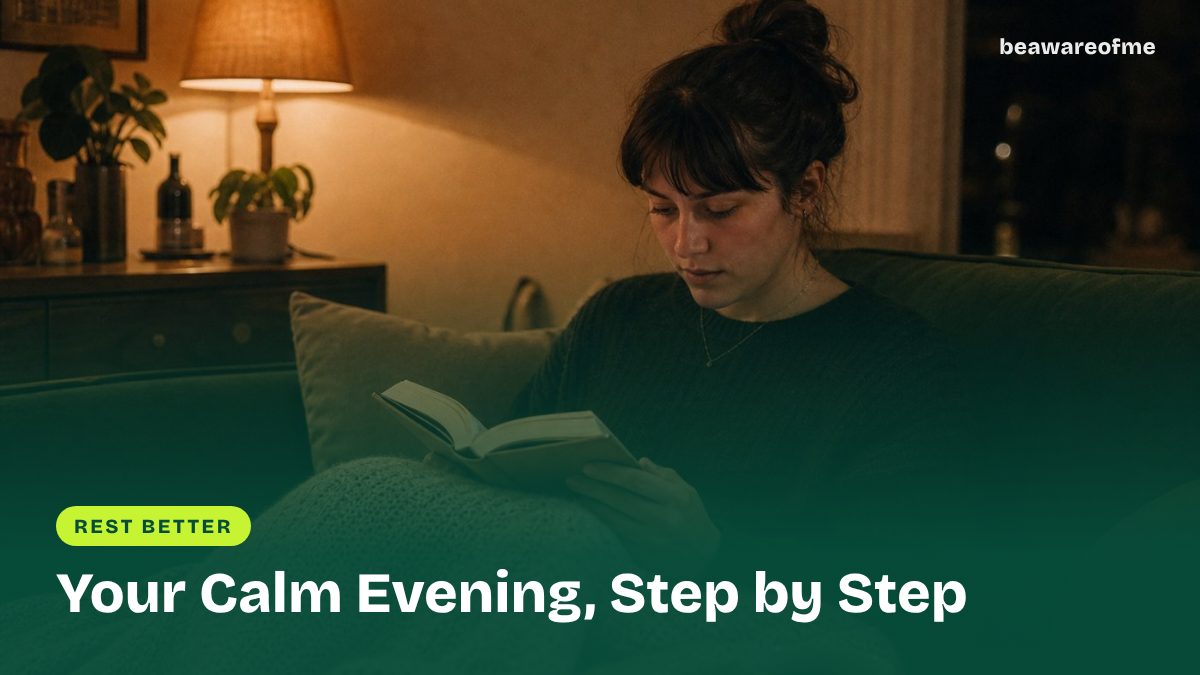
Evenings can feel like a slow build: the house gets quiet, the screens go dark, and suddenly every worry you pushed aside all day wants a turn. Willpower rarely wins at that hour, but a simple routine often does. This guide gives you a timed wind-down that starts 90 minutes before bed, plus an exact in-bed script to calm anxiety at night. Follow it as written for two weeks, then shape it to fit your life.
🌱 Key takeaways
Why a Script Helps You Calm Anxiety at Night Better Than Willpower
A fixed script works because it removes decisions at the exact moment your brain is worst at making them. When you are tired and anxious, every choice (“Should I read? Check one email?”) becomes another chance to worry. A routine turns those choices into autopilot, which is the quiet secret of how to calm anxiety at night.
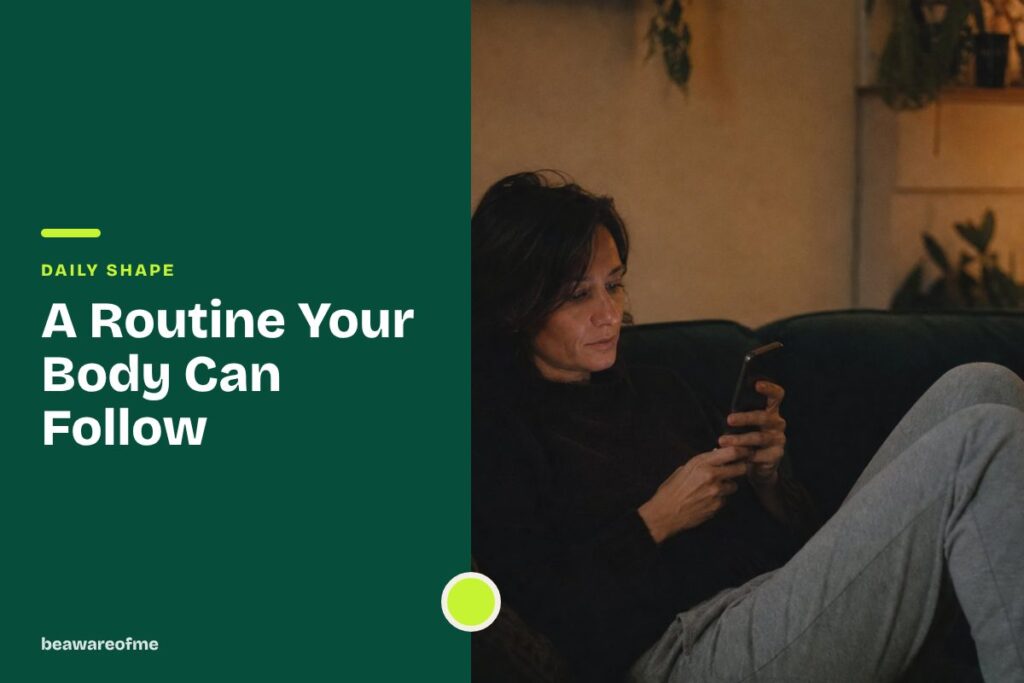
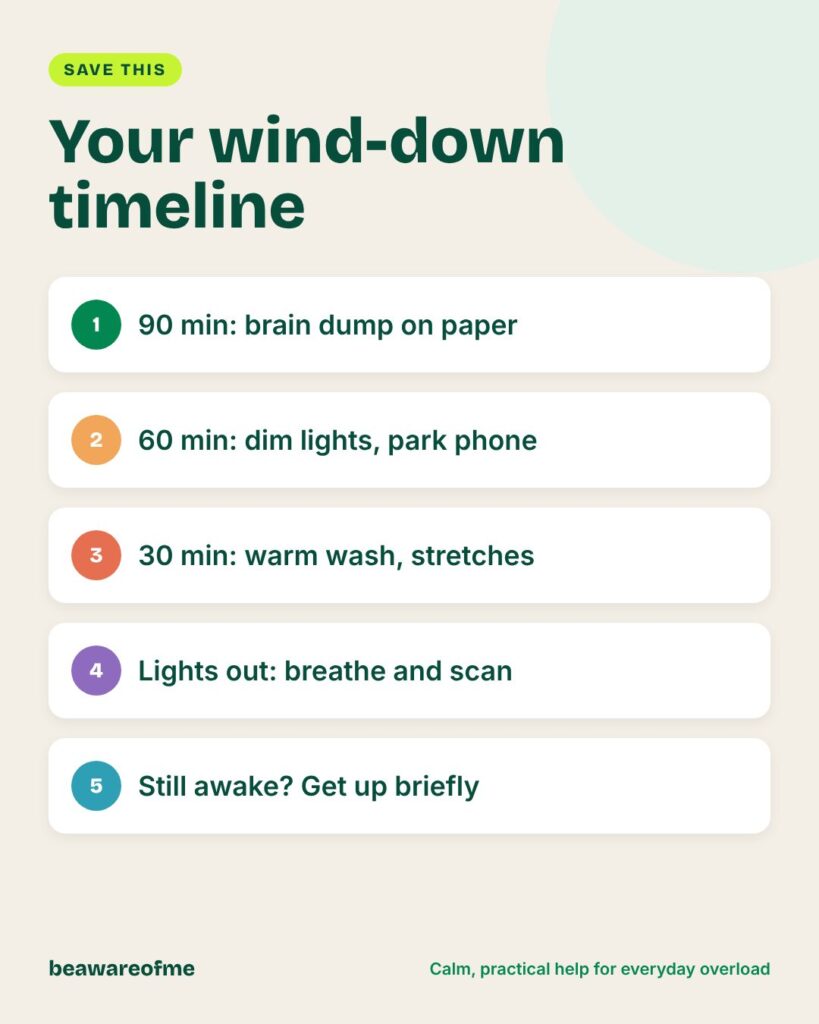
Here is the full timeline. Print it, screenshot it, or copy it onto a card for your bedside table.
| When | What you do | Why it helps |
|---|---|---|
| 90 minutes before bed | Brain dump and tomorrow list | Closes open loops so they stay on paper |
| 60 minutes before bed | Dim lights, park the phone | Removes fresh triggers and bright light |
| 30 minutes before bed | Warm wash, slow stretches | Releases tension your body is holding |
| Lights out | Breathing, body scan, focus task | Gives the mind a calm track to follow |
| Still awake? | Get up to a dim room for a while | Keeps bed linked with sleep, not worry |
Your Body Learns Cues Faster Than Your Mind Learns Logic
You cannot argue yourself into feeling calm. You can, however, repeat the same steps until your body links them with sleep. A warm shower, a dim lamp and the same few words each night become signals. After a couple of weeks, the routine starts doing some of the calming for you.
7+ hours
Sleep most adults aged 18 to 60 need each night.
CDC
30 min
How early to put screens away before bed.
CDC
6 hours
How long to avoid tea, coffee and alcohol before bed.
NHS
Why Evenings Feel Worse Than Daytime
During the day, tasks and people keep worry in the background. At night those distractions disappear, and you are tired, which makes problems feel bigger. If you want the full picture of why this happens, our guide to nighttime anxiety causes and solutions explains it. This guide focuses on what to do about it, minute by minute.
What a Good Routine to Calm Anxiety at Night Needs
A routine that helps you calm anxiety at night has three jobs. It moves worries out of your head, it lowers the stimulation around you, and it relaxes your body. Most generic sleep tips cover only one of these, which is why they feel thin on anxious nights.
The timeline above covers all three in order. Each block builds on the last, so by lights out you are not starting from zero. That stacking effect is what lets a simple plan calm anxiety at night when single tricks fall flat.
90 Minutes Before Bed: Close the Day’s Open Loops
The first step to calm anxiety at night happens long before you get into bed: you move your thoughts out of your head and onto paper. An unfinished task acts like an open browser tab. Your brain keeps checking it, and bedtime is when it checks most.
Do a Five-Minute Brain Dump
Sit at a table, not on your bed. Set a timer for five minutes and write down everything on your mind: tasks, worries, conversations, half-ideas. Do not organise or solve anything yet. The goal is simply to empty the tank.
If you like writing things out, our guide to journaling for anxiety has prompts that work well in this slot.
Turn the Dump Into Tomorrow’s Top Three
Now pick three things from the list that matter tomorrow. Write them on a fresh line with a tiny first step beside each. For worries you cannot act on, write “parked until tomorrow”. Your brain relaxes when it sees a plan, even a small one. People who skip this step often find it harder to calm anxiety at night, because the list simply moves into bed with them.
Check the Day’s Last Coffee and Workout
The NHS Every Mind Matters sleep guide recommends avoiding tea, coffee and alcohol for at least 6 hours before bed and avoiding exercise in the 4 hours before bed. If either habit lands too late, move it earlier. That one change can make the rest of this routine far easier.
☀️ Try this today: your 90-minute checklist
☐ Five-minute brain dump at a table.
☐ Top three tasks for tomorrow, each with a first step.
☐ Worries you cannot act on marked “parked”.
☐ Kitchen closed for heavy meals and alcohol.
60 Minutes Before Bed: Dim the Lights and Put the Phone to Bed
An hour before sleep, your job is to stop feeding your brain new material. Bright light and fresh information both tell your system it is daytime. Lowering them is one of the most practical ways to calm anxiety at night.
Give Your Phone Its Own Bedtime
The CDC suggests putting away phones, tablets and other screens at least half an hour before bed. Many anxious people do better with a full hour. Charge your phone in the kitchen or hallway and use a cheap alarm clock instead. Out of reach means out of mind, and it is far easier to calm anxiety at night without a glowing screen inches away.
💡 Tip: Tell the people who might message you late that you go offline at a set time. It removes the fear of missing something and makes the habit easier to keep.
Switch to Low, Warm Light
Turn off big overhead lights and use one or two lamps instead. Warm, low light feels like evening and helps your body follow its natural rhythm. Keep the bedroom quiet, relaxing and cool, as the CDC also recommends.
Choose a Calm, Slightly Dull Activity
Pick something you enjoy but will not get gripped by. The test is simple: could you stop at any moment without wanting “just one more”? Activities that pass that test help you calm anxiety at night instead of keeping you up.
| Good evening choices | Why they work | Swap these out |
|---|---|---|
| Paper book or magazine | Gentle focus with no glow | Thrillers you cannot put down |
| Puzzle or colouring | Busy hands, quiet mind | Competitive phone games |
| Calm music or audio | Soft background for the brain | News podcasts |
| Tidying one small area | Sense of order before sleep | Big cleaning projects |
| Chatting with someone at home | Connection eases tension | Arguments or big decisions |
30 Minutes Before Bed: A Body Reset That Settles Your Nerves
Thirty minutes before bed, shift from the mind to the body. Anxiety lives in muscles as much as in thoughts: a tight jaw, raised shoulders, a clenched stomach. Loosening them sends a direct message that it is safe to rest, which is often how people finally calm anxiety at night.
Use Warmth on Purpose
A warm shower, bath or even a warm flannel on your face and hands can feel deeply soothing. Follow it with a cool, comfortable bedroom. Many people find that the move from warm to cool helps them feel sleepy, and it is one of the easiest ways to calm anxiety at night.
Try Progressive Muscle Relaxation
Progressive muscle relaxation means gently tensing one muscle group, holding for a few seconds, then letting it go. It teaches your body the difference between tense and relaxed. Use soft effort, never strain, and skip any area that hurts.
Curl your toes and tighten your calves for five seconds, then release.
Press your knees together gently, hold, then let them fall loose.
Make two soft fists, hold, then open your fingers wide and relax.
Lift them toward your ears, hold, then drop them down slowly.
Scrunch your face, hold, then let your jaw hang slightly open.
Add Three Slow Stretches
Finish with a forward fold while seated, a gentle twist and a child’s pose or lying knee hug. Hold each for five slow breaths. For more short ideas, see our quick relaxation techniques for anxiety relief.
Lights Out: The In-Bed Script to Calm Anxiety at Night
Once you are in bed, follow the same short script every night. Repetition matters more than perfection. This in-bed sequence takes about ten minutes and gives your mind one calm track to follow instead of a hundred worried ones.
Lie on your back or side. Let your full weight sink into the mattress.
“The day is done. Nothing needs solving now.”
In gently for a count of up to 5, out for the same or slightly longer.
Move attention from your toes to your scalp, softening each part.
Think of a word, then simple unrelated things starting with each letter.
Stop doing the steps the moment you feel drowsy.
The Breathing Step, in Detail
The NHS breathing exercise for stress suggests breathing in gently while counting from 1 to 5, then letting it flow out to the same count, for at least five minutes. In bed, let the out-breath run slightly longer if it feels comfortable. If counting to five feels hard, start with three. Slow, steady breathing is the backbone of any plan to calm anxiety at night.
Prefer a visual guide? The free box breathing coach paces each breath for you, which helps on nights when counting feels like effort.
The Words That Calm Anxiety at Night
Some nights you will need more than breathing. Keep this short script in your head or on a card by the bed. Read it slowly, then go back to your breath.
☀️ Try this today: your in-bed script
☐ Read it once while calm so it feels familiar.
☐ Keep it short enough to remember half asleep.
“I did enough today. My list is on paper and it will wait for morning. My body is safe and warm. I do not have to fall asleep; I only have to rest. Breathe in, and let the out-breath go a little longer. Whatever comes up, I can look at it tomorrow.”
The Random-Object Trick for a Busy Mind
If thoughts keep racing, choose a calm word like “garden”. For each letter, picture simple unrelated objects: g for grapes, glove, gate. Then move to a. This gentle, pointless task crowds out worry without waking you up, and many people drift off before they finish the word. It is a surprisingly gentle way to calm anxiety at night when breathing alone is not enough.
If Your Mind Won’t Switch Off: The Backup Plan
Some nights the script will not be enough, and that is normal. Having a clear plan B stops a bad night from turning into a panic about sleep itself. The goal is to calm anxiety at night without turning your bed into a battleground.
Get Up After About 10 to 20 Minutes
The Sleep Foundation guide to CBT-I (cognitive behavioural therapy for insomnia, a structured drug-free approach) advises getting out of bed if you have been lying awake for more than about 10 minutes. Return only when you feel tired again. Judge it by feel, not by staring at the clock.
What to Do in the Other Room
Sit in low light with something calm: a paper book, a puzzle, gentle stretches or a warm caffeine-free drink. Avoid the phone, work and anything bright. When your eyes feel heavy, go back to bed and restart the script from the breathing step. This simple reset helps you calm anxiety at night without a fight.
You do not have to win the night. You only have to give your body a fair chance to rest.
— beawareofme
If You Wake Again in the Early Hours
Waking around 3am with a racing mind is a slightly different pattern with its own fixes. Our guide to why you wake up at 3am with anxiety covers the first ten minutes after that kind of wake-up.
⚠️ Watch out: If anxiety at bedtime builds into sudden waves of panic, use a grounding exercise first. Our grounding techniques library lists options by sense, and many work lying down.
How to Make Your Wind-Down Stick in 14 Nights
A routine only helps if you actually do it, so build it slowly. Most people quit because they try every step at once. Start small, repeat, and add one piece at a time.
Week One: Two Steps Only
For the first seven nights, do just two things: the brain dump and the in-bed script. Keep everything else as it is. When those feel automatic, you have the foundation to calm anxiety at night in place.
Week Two: Add the Phone and the Body Reset
In the second week, add the phone bedtime and the 30-minute body reset. By night fourteen, you will have the full routine running with very little effort. Keep your wake time steady, even after a rough night.
Adapting the Plan When Life Gets in the Way
Late shifts, small children and travel will knock the timeline off sometimes. When that happens, keep the order and shrink the blocks. Ten minutes of brain dump, phone away and the in-bed script will still help you calm anxiety at night on a short evening.
If you share a bed, tell your partner what you are doing. A low lamp on your side and a quiet agreement about late conversations make the whole thing easier for both of you.
✨ Quick win: Choose your phone’s overnight spot tonight, before you need it. For more evening ideas, see our tips to relax before bed.
When to Ask for Extra Help
If poor sleep goes on for months, routines have not helped, or tiredness makes daily life hard, talk to a doctor. Anxiety that fills most of your day, not only your evenings, is also worth raising. Support works best when you ask early. Trying to calm anxiety at night on your own is a good start, but it does not have to be the whole plan.
📝 Note: If your night-time thoughts turn to harming yourself, please reach out now. In the US call or text 988. In the UK and Ireland call Samaritans on 116 123, or find a local line at findahelpline.com.
5 Mistakes That Undo Your Evening Routine
These mistakes are easy to make because each one feels reasonable in the moment. Spot the ones you do and swap in the fix.
Mistake 1: Going to Bed the Moment You Feel Anxious
It is tempting to head to bed early to escape a stressful evening. Yet lying in the dark while still wound up gives worry an empty stage. Follow the routine first, and go to bed when you feel sleepy, not just tired of the day.
Mistake 2: Solving Problems in Bed
Planning in bed feels productive, but it keeps your brain switched on. If a real task appears, write it on the bedside pad in a few words. The problem goes on paper, and you go back to the script that helps you calm anxiety at night.
Mistake 3: Changing the Routine Every Night
New techniques are fun to try, but constant change stops the routine from becoming a cue. Pick your steps and keep them the same for two weeks. Adjust only after that, once you know which parts truly help you calm anxiety at night.
Mistake 4: Using Alcohol to Switch Off
A drink can feel calming at first. Many people find it leads to lighter, broken sleep later in the night and more anxiety the next day. Try a warm, caffeine-free drink instead and see how you feel after a week.
Mistake 5: Judging the Routine After One Bad Night
One rough night does not mean the plan has failed. Sleep varies, especially under stress. Judge it over two weeks, and read our guide to anxiety and sleep for how the two affect each other over time.
📚 Keep reading
Anxiety at night: sleep betterCalm anxiety quicklyMindfulness for better sleepAll anxiety guidesQuestions People Ask About Night-Time Calm
How can I calm anxiety at night quickly?
The quickest way to calm anxiety at night is to slow your breathing and relax your body before you try to think differently. Breathe in gently for a count of up to five, out for the same or slightly longer, for a few minutes. Then soften your jaw and shoulders. Write any nagging task on a bedside pad so your mind can let it go.
What is a good wind-down routine for anxiety?
A good routine starts about 90 minutes before bed. Do a brain dump and tomorrow list first, then dim the lights and put your phone away an hour before sleep. Thirty minutes out, have a warm wash and do gentle stretches or muscle relaxation. In bed, use the same short breathing and body scan script every night.
Why does my anxiety get worse at night?
Anxiety often feels worse at night because the day’s distractions disappear and you are tired, which makes problems seem bigger. Lying in a dark, quiet room gives worries more space. Caffeine, alcohol, late screens and unfinished tasks can add to it. A routine that closes the day on paper and calms the body helps reduce this.
What should I say to myself when I feel anxious in bed?
Use short, kind and practical lines you can remember half asleep. For example: “The day is done. My list is on paper. I do not have to fall asleep, I only have to rest.” Say it slowly, then return to your breathing. The aim is not to argue with worries but to give your mind a calmer track.
Should I get out of bed if I cannot sleep because of anxiety?
Yes. If you have been lying awake for a while and feel more alert or frustrated, get up and sit somewhere dim. Sleep experts using CBT-I suggest doing this after about 10 minutes awake. Do something calm without screens, then go back to bed when you feel sleepy. This keeps your bed linked with sleep.
How long does it take for a bedtime routine to help?
Many people notice small changes within a week, but give a routine about two weeks before judging it. Your body needs repetition to link the steps with sleep. Start with two steps, such as a brain dump and an in-bed script, then add more. If sleep problems last for months, talk to a doctor.
You do not need to force your mind quiet; you need a routine your body can follow while your mind catches up. Start tonight with the brain dump and the in-bed script, add one step each week, and give it a fair two weeks. Learning to calm anxiety at night is a skill, and like any skill, it gets easier with every evening you practise it.
📝 Please read: Educational content, not a substitute for professional care. If you are struggling, talk to a doctor or a qualified professional. If you are thinking about harming yourself, contact local emergency services or a crisis line now (US 988, UK and Ireland Samaritans 116 123, or findahelpline.com).