
Why Am I Stuck?
A quick quiz about the thing you keep meaning to start. You get a map of what is holding you in place and three small moves to get going again.
Anonymous. Different questions each time. A general structure for everyday life, not medical or psychological advice.
There is a thing you keep meaning to start, and every week it slides again. This page helps you see what is really holding you in place, and gives you small moves that make starting feel possible.
Each answer adds points to Overwhelm, Energy, Fear, Clarity, Habits and Environment. Your result reads the strongest areas and turns them into a named pattern, a chart, three small steps and the guides that fit. Questions change every time you play.
Why Am I Stuck: what is really going on
Feeling stuck is when you know what you want to do, or at least that something needs to change, but you cannot get moving. It might be a project, a job search, a tidy-up, a habit or a hard conversation. Stuck is rarely about laziness. It usually means something is blocking the start: too much at once, too little energy, a quiet fear, or a goal that is still blurry. Once you see the block, it gets much easier to move.
Everyday life makes stuck very easy. Work, family and admin fill the hours, and the thing that matters to you has no deadline, so it waits. Each week it waits, it grows a little heavier. You start to feel guilty when you think of it, so you think of it less. Phones and endless small tasks make it simple to stay busy without moving forward. Before long, the task feels like a mountain.
Stuck shows up in different ways. Some people make plans and lists but never begin. Some start strong and fade after a few days. Others avoid the task completely, then feel a rush of shame late at night. You might wait for the right mood, the perfect time or more information. You might start tidying, researching or helping others instead. All of these are common ways the mind avoids discomfort.
A structure helps because each kind of stuck needs a different key. Overwhelm needs a smaller pile. Low energy needs better timing and rest. Fear needs a safe, tiny first try. A blurry goal needs one clear sentence. Habits need a cue and a routine, and your space may need a small change. Seeing which block is biggest stops you from trying the wrong fix and gives you a first step that fits.
What each area means
Overwhelm
Overwhelm is when there is so much to do that you cannot pick a starting point. Seeing the whole pile at once can freeze you before you begin.
- Your to-do list feels too long to look at.
- Everything seems urgent, so nothing goes first.
- You plan and re-plan instead of doing.
- You feel behind before the day starts.
- Write every task down, then circle just three.
- Pick one task that would make tomorrow easier and do only that.
- Break the biggest task into a five-minute first step.
- Move 'someday' items to a separate list.
Energy
Sometimes the will is there but the fuel is not. Poor sleep, long days and constant stress leave little for anything beyond the basics.
- You plan to start after work but are too tired by then.
- Weekends go on recovering.
- Small tasks feel heavy.
- You rely on caffeine to get through the afternoon.
- Do the stuck task at your best time of day, even for ten minutes.
- Protect a regular bedtime for a week.
- Shrink the task to fit your energy, not your hopes.
- Take short breaks before you are drained.
Fear
Fear keeps many people stuck without them noticing. Fear of failing, of being judged, or even of succeeding and then having to keep it up.
- You wait until you feel ready or confident.
- You keep polishing instead of sharing.
- You imagine how it could go wrong.
- You avoid telling others what you want to do.
- Make a 'rough first try' on purpose, meant to be imperfect.
- Ask: what is the smallest version I could try safely?
- Keep a list of small wins to remind you that you can do hard things.
- Share your plan with one supportive person.
Clarity
It is hard to move toward something vague. If the goal or the next step is fuzzy, the mind tends to drift to easier, clearer tasks.
- You know you want 'something different' but not what.
- Your goal is a feeling, not an action.
- You are torn between several options.
- You do not know what the first step is.
- Write your goal in one sentence starting with a verb.
- Name the very next physical action, like 'open the file'.
- Choose one option to test for two weeks, not forever.
- Ask: what would done look like?
Habits
Some things only change through repeated small actions. Without a routine, good intentions depend on mood, which comes and goes.
- You start strong, then stop after a few days.
- Your best plans depend on 'when I feel like it'.
- Old routines pull you back.
- Missing one day turns into missing a month.
- Attach the new action to something you already do, like after coffee.
- Make it tiny enough to do on your worst day.
- Track it with a simple tick on paper.
- If you miss a day, restart the next day without guilt.
Environment
Your space and surroundings shape what is easy. A cluttered desk, a busy home or a phone within reach can quietly block the start.
- Your work space is also where you relax or eat.
- Clutter makes it hard to begin.
- Notifications pull you away.
- There is nowhere quiet to think.
- Clear one small surface just for the stuck task.
- Put your phone in another room for one session.
- Lay out what you need the night before.
- Try a different place, like a library or café.
What your score means
A low score means you are mostly moving, with only small snags. Keep what works: clear next steps, a regular time and small wins. Check in again when life gets busier.
A middle score means one or two blocks are slowing you down. That is very common when life is full. Pick your biggest block and try one matching step this week.
A high score means you feel very stuck right now, and that is tiring in itself. Start with something tiny, five minutes on one clear action, and count it as a win. If feeling stuck comes with low mood, lost interest or hopelessness that lasts for weeks, please talk to a doctor or a counselor.
5 small steps that help
Pick one stuck thing
Choose the single task or change that bothers you most. Write it at the top of a page. Working on one thing beats worrying about five.
Name the block
Look at your result and write which block is biggest, like overwhelm or fear. Then write one line on how it shows up for you. Naming it makes it feel smaller and points to the right fix.
Shrink the first step
Turn the task into a first action that takes five to ten minutes. 'Open the document and write one heading' is better than 'work on the report'. Make it small enough that saying no feels silly.
Book a time and place
Choose a day, a time and a spot for that first step, and put it in your calendar. Clear the space and move your phone away beforehand. A set time removes the daily debate.
Track and restart
Tick each day you take a small step. If you miss one, just restart the next day. Over a week, the ticks show you that you are moving, which makes the next step easier.
The guides that turn this into a plan
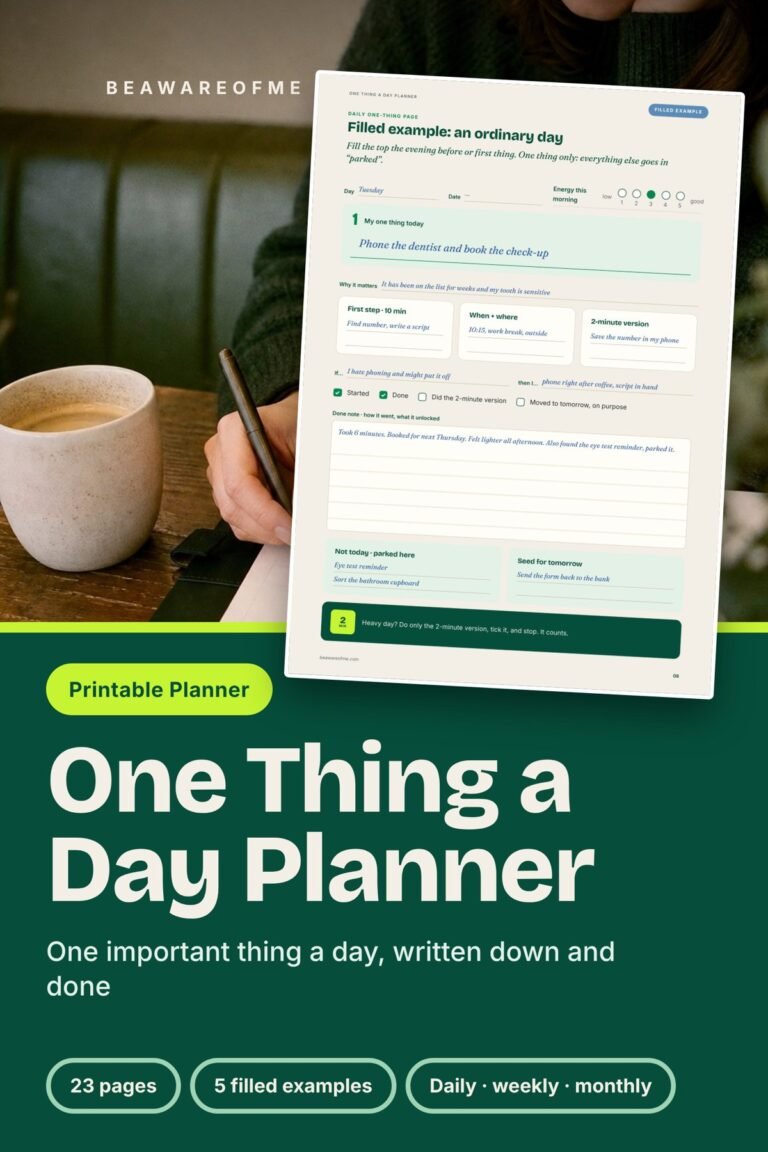 Planner
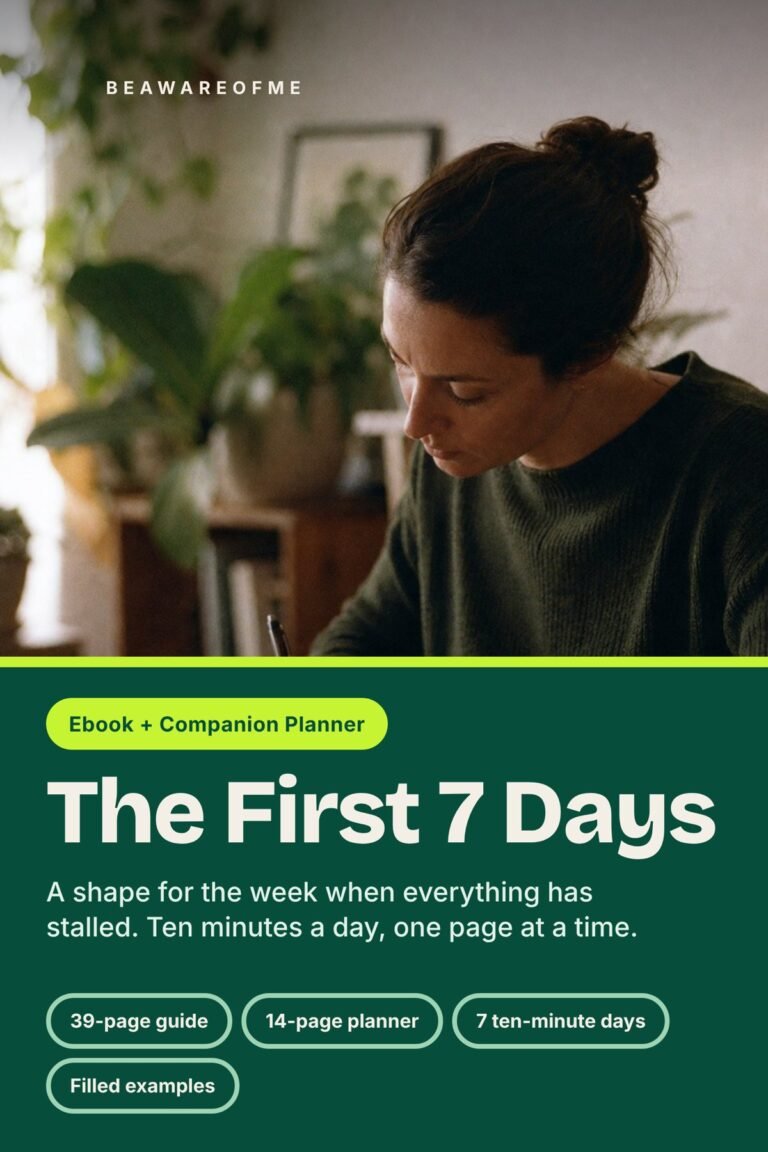
One Thing a Day Planner
One important thing a day, sized to fit your energy.
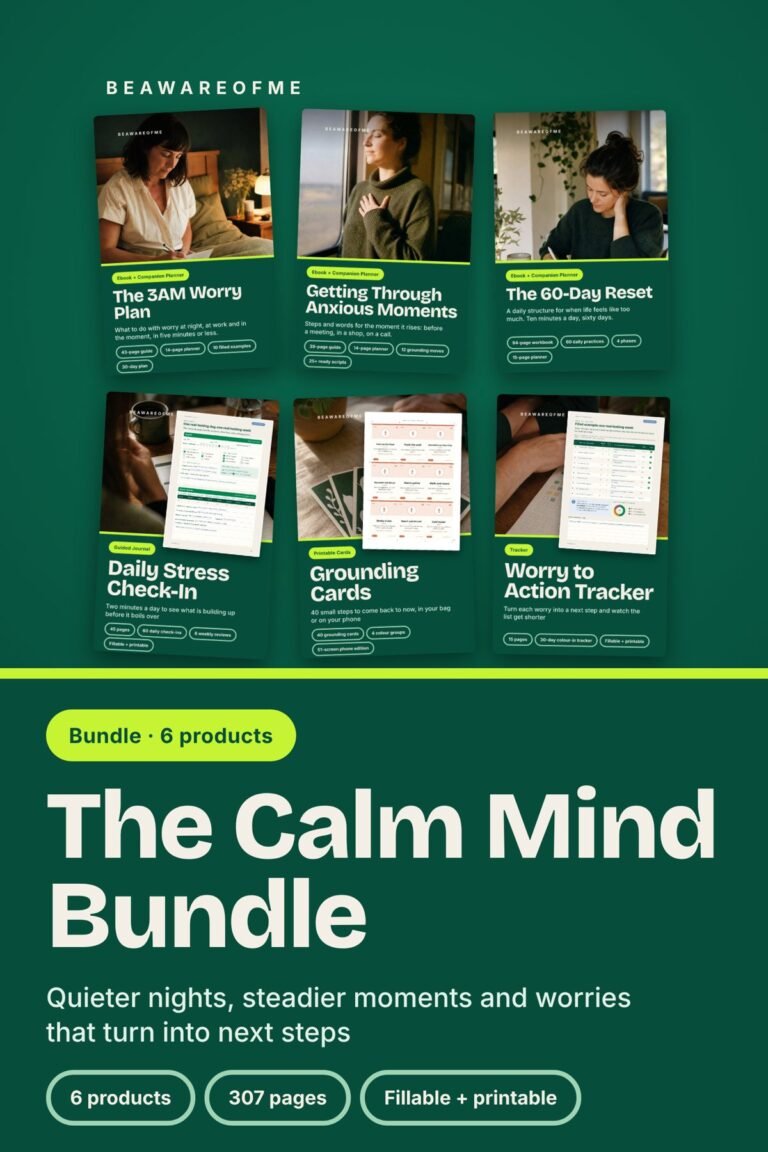
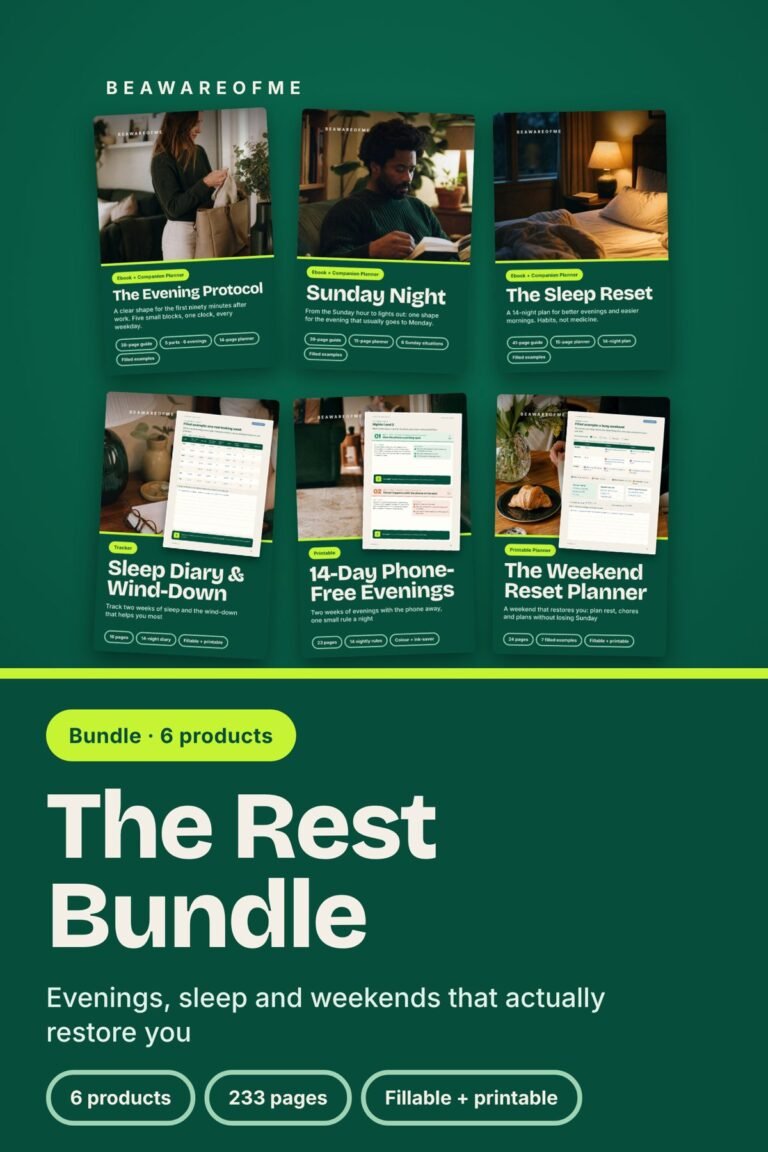
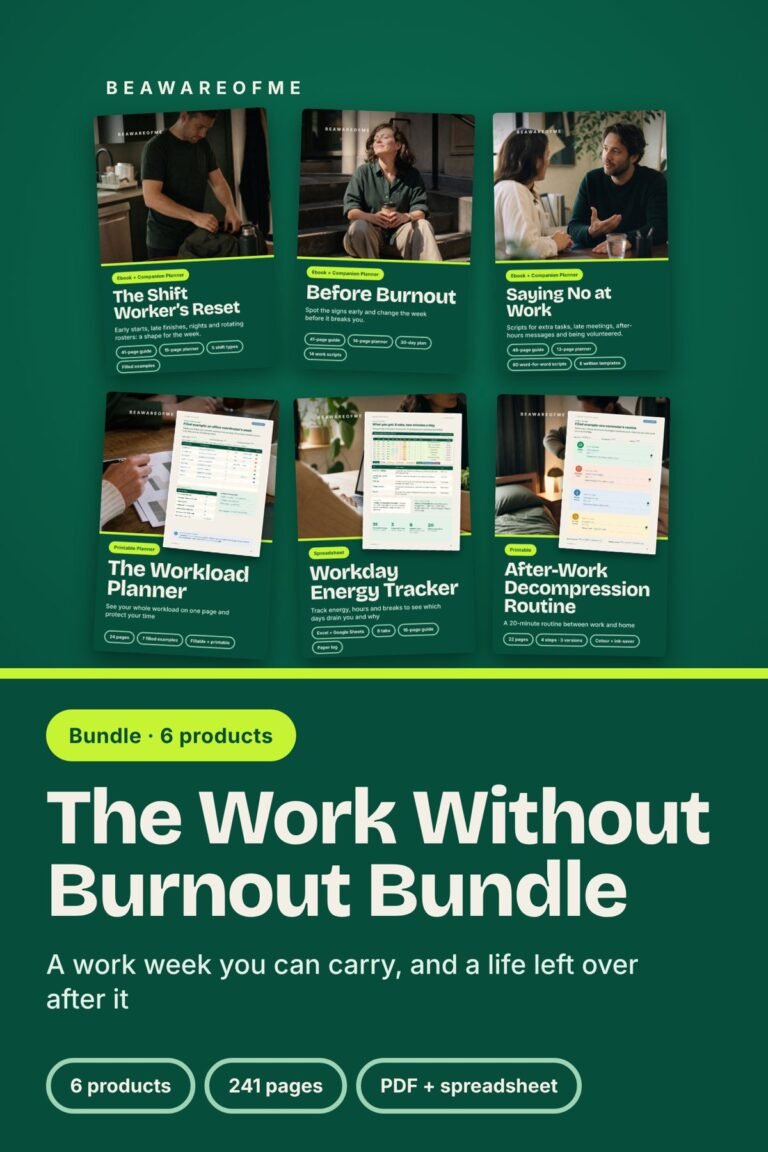
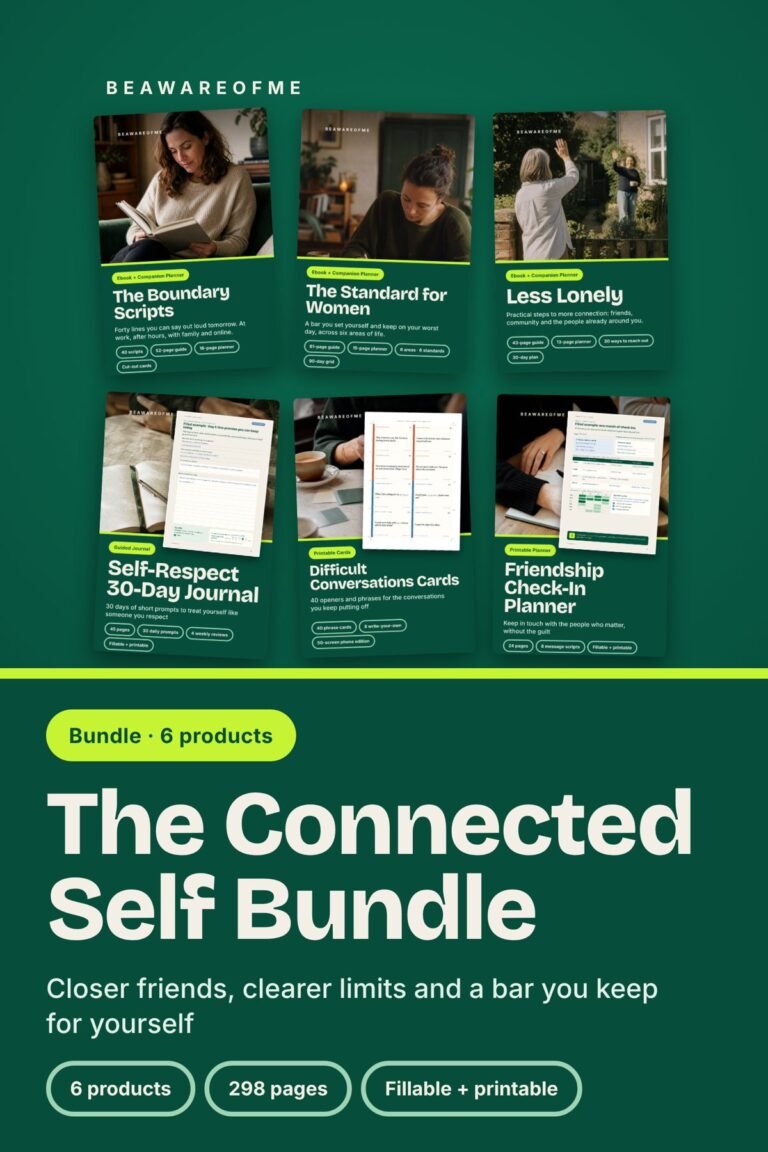
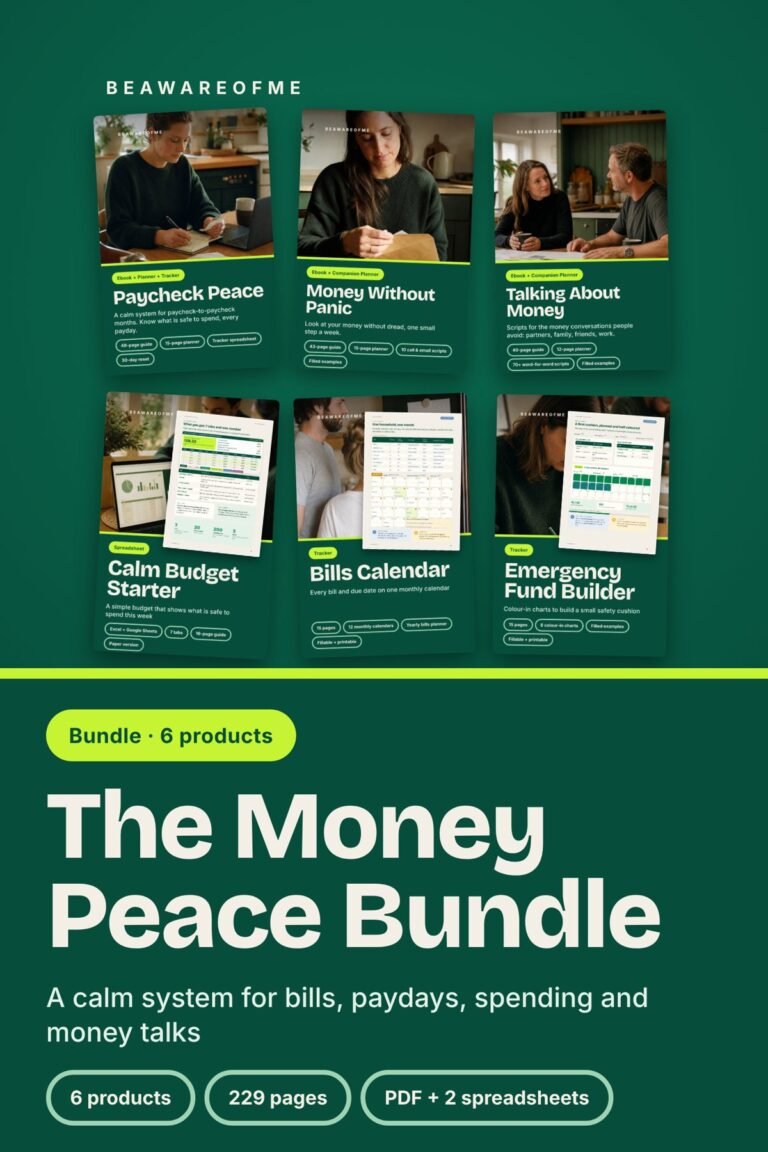
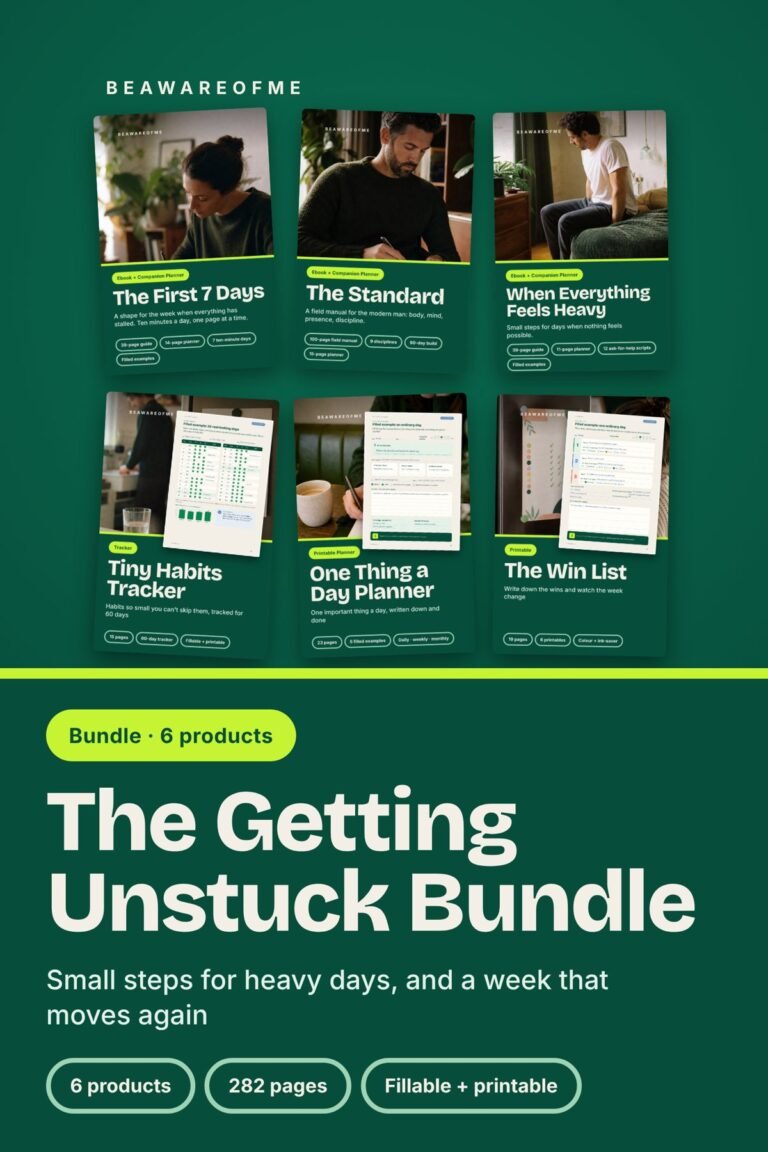 Bundle · 6 products
The Getting Unstuck Bundle
Small, visible steps for heavy, stuck weeks.
Six products sold separately for $88, here together for $37.
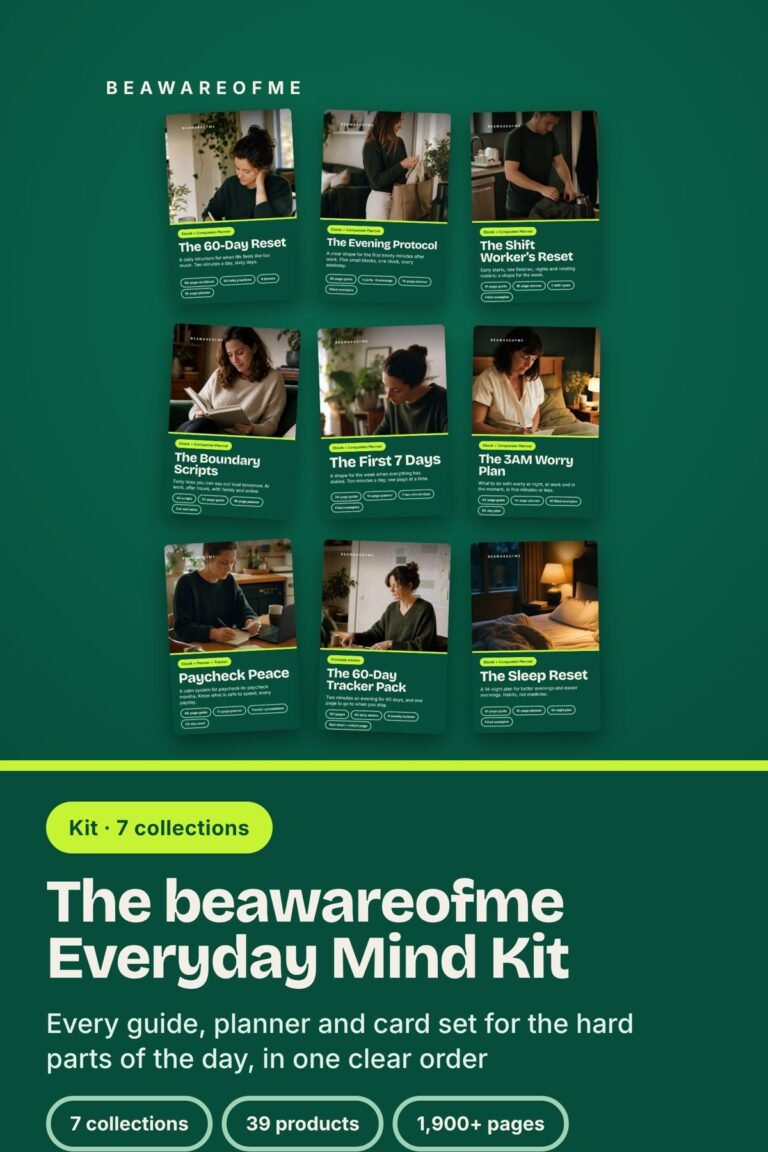 Kit · all collections
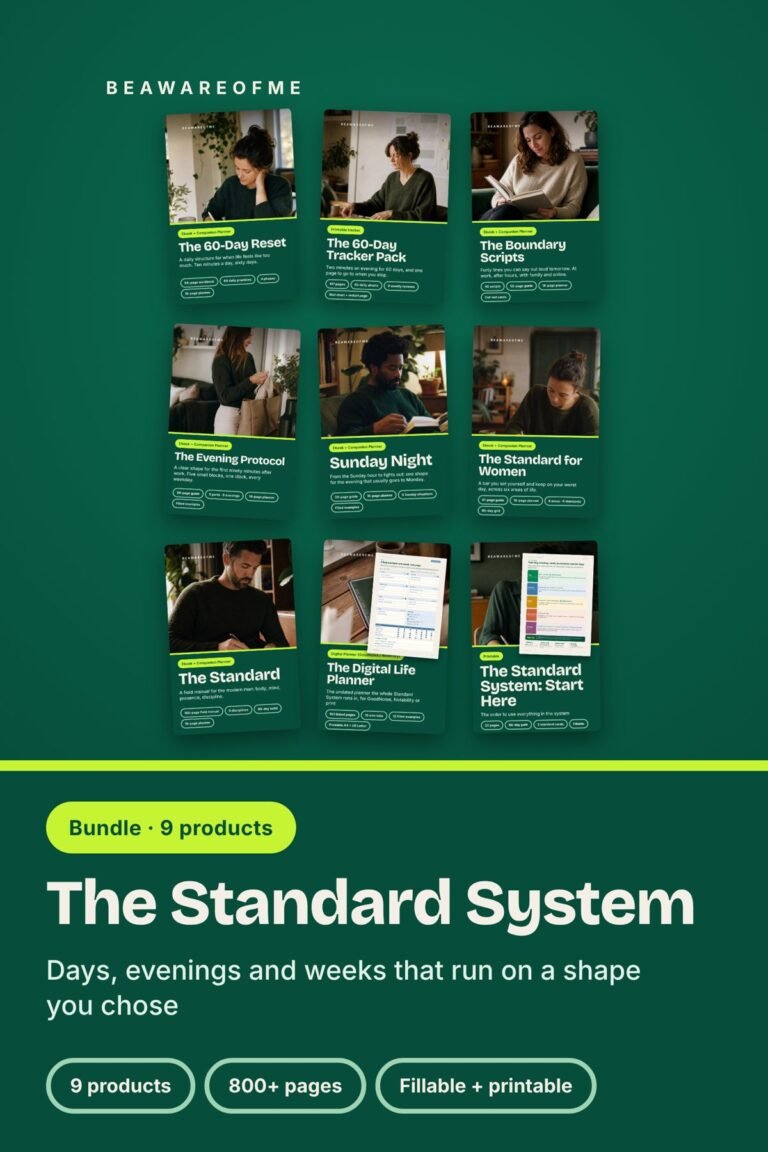
The beawareofme Everyday Mind Kit
Every beawareofme collection in one download, in a clear order.
The Standard System and all six bundles cost $289 bought separately; the kit is $127.
Instant download · Digital download · All sales final
Myths and calmer facts
✗ I am stuck because I am lazy.
✓ Stuck is usually a sign of a block, such as overwhelm, fear or low energy, not a lack of character. Finding the block works better than blaming yourself.
✗ I need to feel motivated before I start.
✓ Motivation often follows action. A tiny start tends to create the energy to keep going.
✗ If I cannot do it properly, there is no point starting.
✓ Small, imperfect steps add up. A rough first try gives you something to improve, while waiting gives you nothing.
When to get help
Talk to a doctor, counselor or other qualified professional if feeling stuck comes with low mood most days, loss of interest in things you used to enjoy, or changes in sleep and appetite that last for weeks. It is also worth asking for help if you cannot manage daily tasks like work, meals or bills. If you are thinking about harming yourself, please contact a crisis line now: in the US call or text 988, in the UK and Ireland call Samaritans on 116 123, or find a line near you at findahelpline.com.
Frequently asked questions
Why do I procrastinate on things I actually want to do?
Things that matter to us often carry more pressure, so they feel riskier to start. The mind turns to easier tasks for quick relief. Shrinking the first step and lowering the stakes can help.
How do I get unstuck when I feel overwhelmed?
Get everything out of your head onto paper, then choose just one item for today. Break it into a five-minute action. Doing one small thing often loosens the freeze.
What if I do not know what I want?
That is a clarity block. Instead of choosing forever, pick one option to test for a short time, like two weeks. Doing teaches you more than thinking.
How do I stay consistent once I start?
Link the action to an existing routine, keep it small, and track it with a simple tick. Plan for missed days by restarting the next day without guilt.
Is feeling stuck a sign of something more serious?
For many people it is a normal part of busy life. But if it comes with low mood, hopelessness or loss of interest for weeks, it can be a sign to talk to a doctor or counselor.
Is this quiz a professional assessment?
No. It is a general self-reflection tool, not therapy or medical advice. It helps you see your likely blocks and gives ideas for small next steps.
Is this check a diagnosis?
No. Your answers point to a pattern, not a diagnosis. It is a general structure for everyday life, not medical or psychological advice.