


Box Breathing Coach
Breathe in for 4, hold for 4, out for 4, hold for 4. Four rounds with a guide on screen, plus a quick before-and-after check.
Anonymous. Different questions each time. A general structure for everyday life, not medical or psychological advice.
Your shoulders are up, your breath is short and your mind will not slow down. This page guides you through four rounds of box breathing and shows you how to use it any time the day gets too tight.
Each answer adds points to Tension, Breath, Mind and Body. Your result reads the strongest areas and turns them into a named pattern, a chart, three small steps and the guides that fit. Questions change every time you play.
Box Breathing Coach: what is really going on
Box breathing is a simple way to slow your breath using four equal steps. You breathe in for a count of four, hold for four, breathe out for four, and hold again for four. Picture tracing the four sides of a square. It is easy to learn, needs no equipment, and you can do it sitting at a desk, waiting in a car or lying in bed. Many people use it to settle before a hard moment or to come down after one.
In everyday life, stress often shows up in the breath first. When you rush, worry or feel under pressure, breathing tends to get quick, shallow and high in the chest. You might hold your breath while reading emails or clench your jaw in traffic. Over a busy day, this keeps the body on alert. Slow, steady breathing gives the body a different signal: you can ease off a little now.
Tension shows up in many small ways. Tight shoulders, a fast heartbeat, busy hands, a racing mind or a short temper are all common. You may not notice until the end of the day, when you suddenly feel drained. Box breathing does not fix the cause of stress, but it can take the edge off in the moment and give you enough space to think clearly about your next step.
A structure helps because counting gives a busy mind something simple to hold. The before-and-after check lets you notice how tense you feel, how your breath feels, how busy your mind is and how your body feels, then see what shifts after four rounds. Practicing when you are fairly calm makes it easier to use when you are stressed, because your body already knows the pattern.
What each area means
Tension
Tension is your overall sense of being wound up right now. It is the mix of pressure, rush and stress you carry in the moment.
- You feel on edge or keyed up.
- Patience is running low.
- Your day feels heavy or rushed.
- Small things annoy you more than usual.
- Do one more round of box breathing.
- Drop your shoulders and unclench your jaw.
- Step outside for two minutes of fresh air.
- Write down the one thing stressing you most.
Breath
This looks at how your breathing feels right now. Stress often makes breath fast, shallow or held without you noticing.
- Breathing feels quick or shallow.
- Your breath sits high in your chest.
- You catch yourself holding your breath.
- Deep breaths feel hard to take.
- Put a hand on your belly and breathe so it rises.
- Breathe in through your nose for four and out for six.
- Loosen tight waistbands and sit back.
- Hum quietly for five slow breaths.
Mind
Mind is how busy and noisy your thoughts feel. A racing mind can make it hard to focus, decide or rest.
- Thoughts jump from one thing to the next.
- You find it hard to focus.
- You replay conversations or worries.
- You feel scattered.
- Count each breath silently, from one to ten, then start again.
- Write a quick list of what is on your mind.
- Pick one task to do next and ignore the rest for now.
- Look around and name five things you can see.
Body
Body is the physical side of stress: tight muscles, restlessness and aches that build up when you are under pressure.
- Your neck, shoulders or jaw feel tight.
- You feel restless or fidgety.
- Your hands feel tense.
- You notice headaches or a tight stomach.
- Roll your shoulders slowly, five times each way.
- Shake out your hands for ten seconds.
- Stretch your arms up, then let them fall.
- Take a slow five-minute walk.
What your score means
A low score means you feel fairly calm right now. This is a great time to practice, because the pattern will be easier to use when stress hits. Try a round once a day to keep it fresh.
A middle score means some tension is building, in your breath, mind or body. Four rounds can take the edge off. Add a short movement break or a glass of water afterwards.
A high score means you feel very tense right now, which is hard. Go gently: if holding your breath feels uncomfortable, shorten the counts to three or skip the holds. If you feel this tense most days, or have chest pain or trouble breathing, please talk to a doctor.
5 small steps that help
Find a comfortable position
Sit with your feet on the floor and your back supported, or lie down. Rest your hands in your lap or on your belly. Let your shoulders drop.
Do four rounds
Breathe in through your nose for four, hold for four, breathe out for four, hold for four. Repeat four times. Follow the guide on screen if it helps.
Adjust the count
If four feels too long, use three. If it feels easy, try five. The count should feel calm, never strained.
Link it to a daily moment
Choose a moment you already have each day, like after you park, before a meeting or when you get into bed. Do one round there every day this week. Linking it to a routine helps it become a habit.
Use it before hard moments
Before a difficult call, a presentation or a tense conversation, do two to four rounds. Notice how you feel afterwards. Over time, your body learns that this pattern means slowing down.
The guides that turn this into a plan
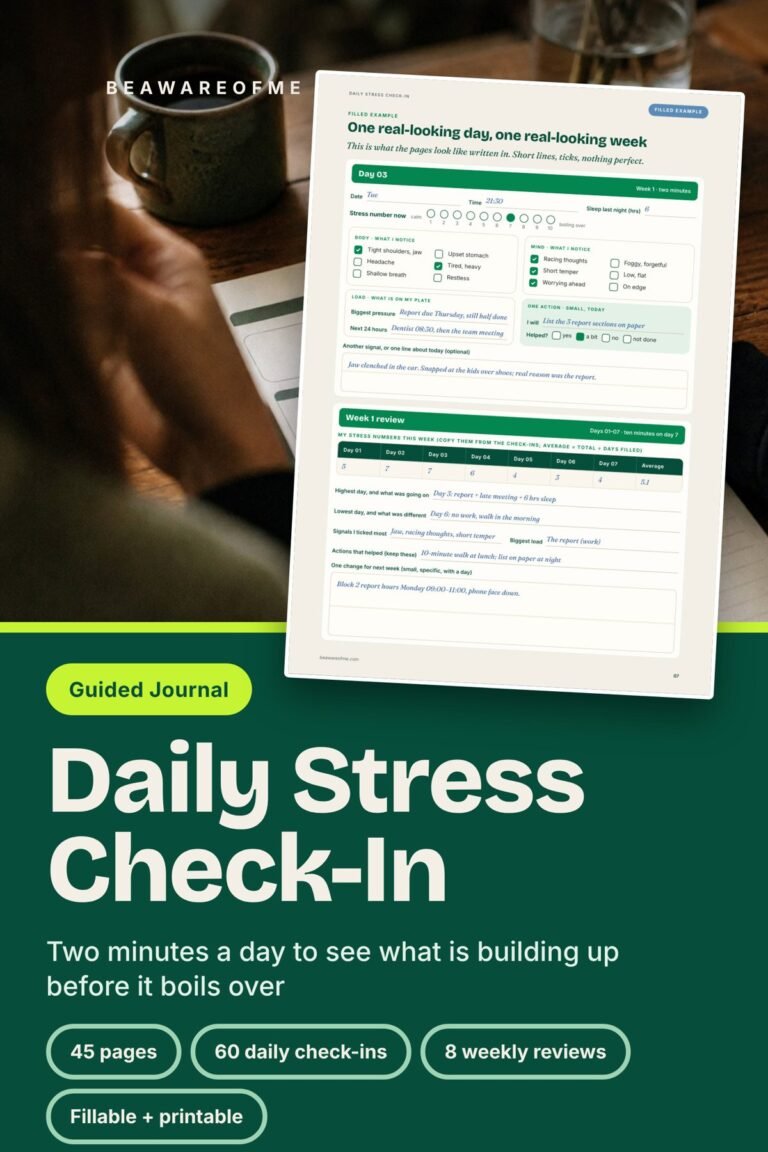 Journal
Daily Stress Check-In
Two minutes a day to catch stress before it builds.
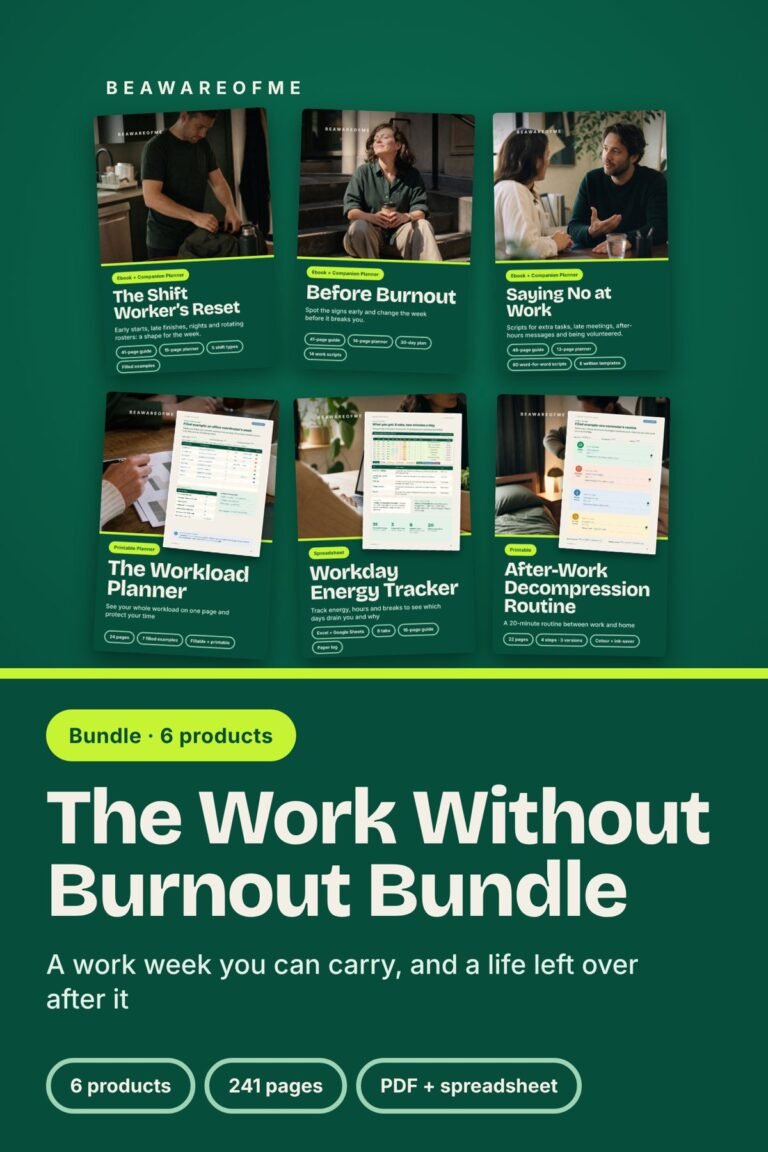
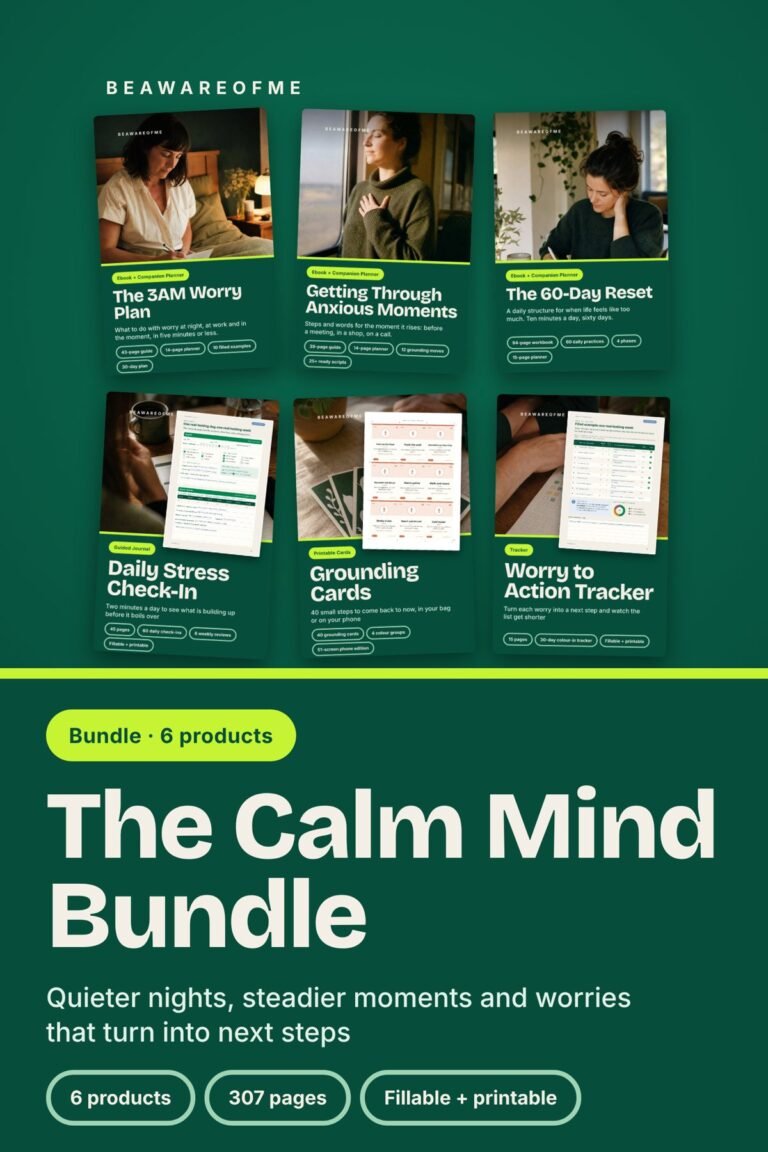 Bundle · 6 products
The Calm Mind Bundle
Simple plans for everyday worry, stress and hard moments.
Six products sold separately for $91, here together for $37.
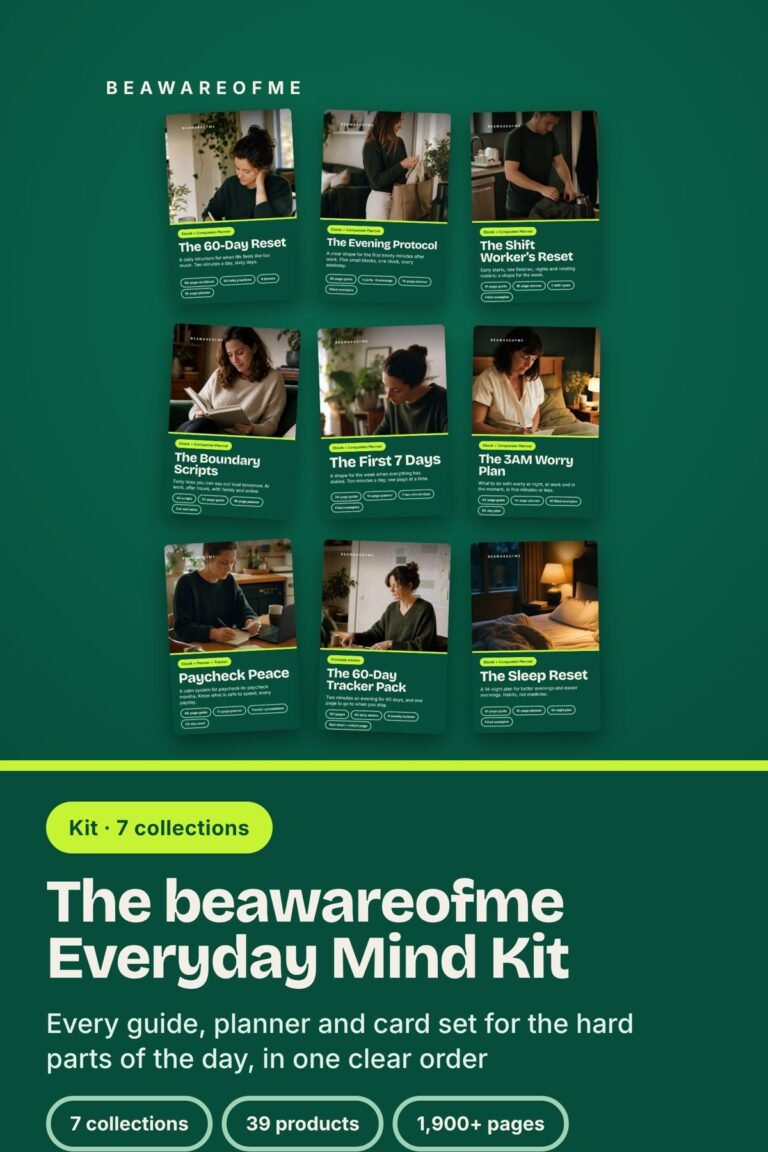 Kit · all collections
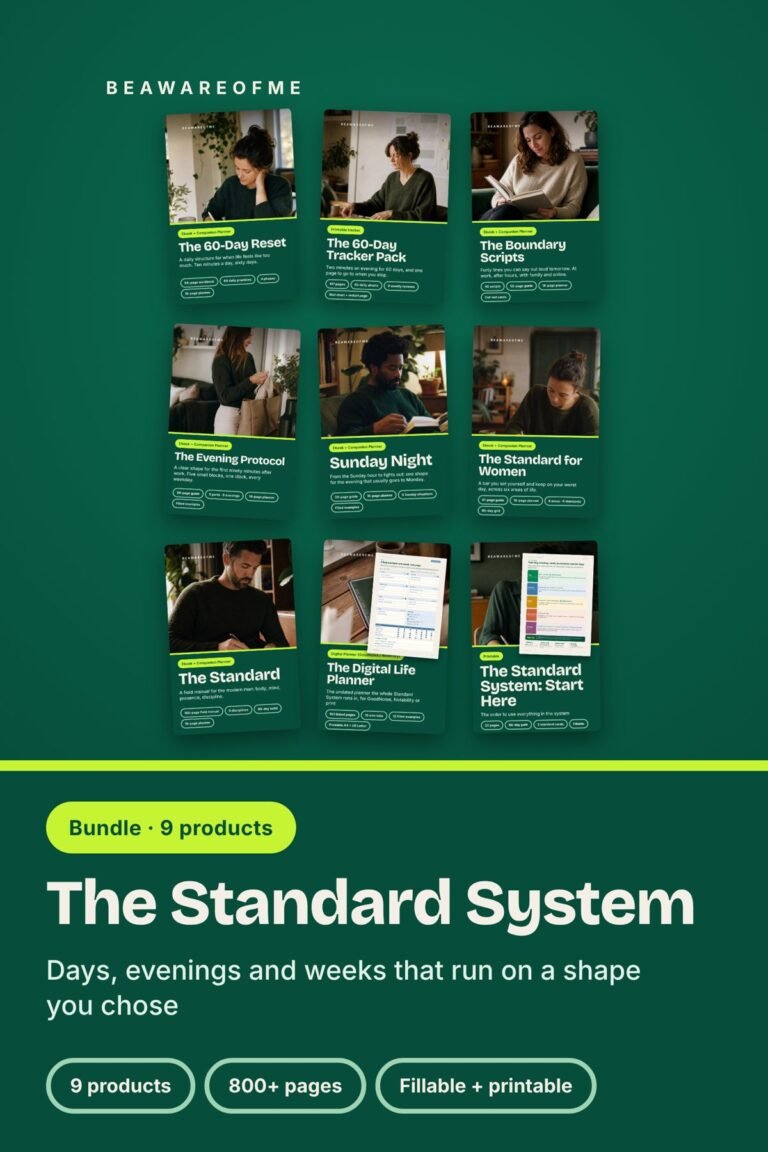
The beawareofme Everyday Mind Kit
Every beawareofme collection in one download, in a clear order.
The Standard System and all six bundles cost $289 bought separately; the kit is $127.
Instant download · Digital download · All sales final
Myths and calmer facts
✗ Breathing exercises only work if you do them for a long time.
✓ Even a minute or two of slow breathing can help many people feel a little calmer. Short, regular practice is more useful than rare long sessions.
✗ You have to breathe as deeply as possible.
✓ Box breathing is about slow and steady, not huge breaths. Breathing too hard can make you feel lightheaded, so keep it gentle.
✗ If it does not calm me right away, it does not work for me.
✓ Like any skill, it gets easier with practice. Try it daily for a week when you are fairly calm, then use it under stress.
When to get help
Box breathing is for everyday stress, not a treatment. Talk to a doctor if you often feel short of breath, have chest pain, feel dizzy or faint, or have panic-like episodes that come back. Stop the exercise if you feel lightheaded and breathe normally. It is also worth getting support if stress or worry is with you most days for weeks. If you are thinking about harming yourself, please contact a crisis line now: in the US call or text 988, in the UK and Ireland call Samaritans on 116 123, or find a line near you at findahelpline.com.
Frequently asked questions
What is box breathing?
It is a breathing pattern with four equal steps: breathe in, hold, breathe out, hold, each for a count of four. Picturing a square can help you keep the rhythm.
How long should I do box breathing?
Four rounds take about a minute. You can do more if it feels good, for example a few minutes before sleep or a stressful event.
Can box breathing help me sleep?
Many people find slow breathing helpful as part of a wind-down routine. Try a few rounds in bed with the lights off, and keep the count gentle.
Is it okay to skip the holds?
Yes. If holding feels uncomfortable, simply breathe in for four and out for four, or out for six. Comfort matters more than the exact pattern.
Why do I feel dizzy when I do it?
You may be breathing too deeply or too fast. Make the breaths smaller and gentler, shorten the count, and stop if dizziness continues.
Is this a medical treatment?
No. It is a general calming exercise, not therapy or medical advice. If you have breathing problems, heart conditions or frequent panic, check with a doctor.
Is this check a diagnosis?
No. Your answers point to a pattern, not a diagnosis. It is a general structure for everyday life, not medical or psychological advice.