


Why Do I Wake Up Tired?
Ten quick questions about your evenings, your room and your mornings. You get a map of what is most likely draining your sleep, plus three small things to try tonight.
Anonymous. Different questions each time. A general structure for everyday life, not medical or psychological advice.
You went to bed, you slept, and you still woke up feeling like you never really switched off. This page helps you find the most likely reasons in your own evenings, your room and your rhythm, and gives you small, practical changes to try tonight.
Each answer adds points to Bedtime, Screens, Caffeine & food, Racing mind, Bedroom and Rhythm. Your result reads the strongest areas and turns them into a named pattern, a chart, three small steps and the guides that fit. Questions change every time you play.
Why Do I Wake Up Tired: what is really going on
Waking up tired is one of the most common complaints adults have, and it rarely has one single cause. For most people it is a stack of small things: a bedtime that keeps sliding, a phone in bed, a late coffee, a busy mind, a warm room and a wake-up time that changes every weekend. Each one takes a little off the night. Together they can leave you groggy, slow and reaching for caffeine before you have even sat up.
Part of the problem is that sleep gets squeezed from both ends. The evening is often the only time that feels like yours, so it stretches. The morning is fixed by work, school runs or commutes, so it cannot move. The hours in between shrink without anyone deciding they should. Add screens and a busy mind, and even a full night in bed can feel thin.
Tiredness also shows up in ways people do not always link to sleep. It can look like snapping at people, struggling to focus mid-morning, craving sugar in the afternoon, needing the snooze button three times or a heavy slump after lunch. Many people get used to this and decide it is just how they are. Often it is not a personality trait at all. It is the sum of habits that can be adjusted, one at a time.
That is why a structure helps more than another list of sleep tips. When you can see which areas are pulling hardest, you can start there instead of trying to fix everything at once. This check looks at six areas: bedtime, screens, caffeine and food, a racing mind, the bedroom itself and your daily rhythm. Pick the biggest one, change one thing for a week, and notice how your mornings respond.
What each area means
Bedtime
This is about how many hours you actually give sleep, and how steady your lights-out time is. When bedtime drifts later, the alarm stays put and the night simply gets shorter.
- You often go to bed later than you meant to.
- You get a second wind around 10pm and push past it.
- Weeknights feel shorter than weekends by an hour or more.
- You stay up because it is the only quiet time you get.
- Choose one lights-out time for work nights and set a reminder 30 minutes before.
- Start your wind-down at the first yawn, not after one more episode.
- Move some me time earlier, straight after dinner.
- Shift bedtime 15 minutes earlier at a time until it sticks.
Screens
Phones, tablets and laptops keep the mind engaged and the eyes on bright light right up to sleep. Scrolling also has no natural stopping point, so it quietly eats into the night.
- The last thing you see before sleep is a screen.
- Your phone sleeps on the pillow or bedside table.
- You check it when you wake in the night.
- One quick look often turns into half an hour.
- Charge your phone outside the bedroom or across the room.
- Use an old-fashioned alarm clock so the phone is not needed.
- Set a screen curfew 30 to 60 minutes before lights out.
- Swap the last scroll for a paper book, music or a short stretch.
Caffeine and food
Caffeine stays in the body for hours, so an afternoon coffee can still be working at bedtime. Heavy late meals and alcohol can also make sleep lighter and more broken, even if they help you drop off.
- You have coffee, tea, cola or energy drinks after lunch.
- Dinner is late, large or eaten on the sofa close to bed.
- A nightcap helps you fall asleep but you wake later.
- You rely on caffeine to get going every morning.
- Set a caffeine cut-off, such as no coffee after 2pm.
- Switch the afternoon cup to decaf or herbal tea.
- Aim to finish your main meal two to three hours before bed.
- Keep a glass of water by the bed instead of a late snack.
Racing mind
A busy mind is one of the most common reasons people lie awake or wake at 3am. Bedtime is often the first quiet moment of the day, so unsorted thoughts rush in.
- Your mind starts listing tomorrow as soon as you lie down.
- You replay conversations from the day.
- You wake in the night and start thinking straight away.
- You feel tired but wired at bedtime.
- Write tomorrow's to-do list an hour before bed, then close the notebook.
- Keep a pen and paper by the bed to park thoughts at night.
- Try slow breathing with a longer out-breath for a few minutes.
- If you cannot sleep after a while, get up and do something calm in dim light.
Bedroom
Your room sets the stage. A space that is too warm, too bright, too noisy or full of work and clutter makes it harder for the body to settle and stay asleep.
- You often feel too hot or kick off the covers.
- Street lights, standby lights or early sun get in.
- Noise from outside or inside wakes you.
- Your bed doubles as a desk or a sofa.
- Keep the room cool and air it before bed.
- Use blackout curtains, a sleep mask or cover small lights.
- Try earplugs or a steady background sound like a fan.
- Keep work, laptops and laundry piles out of sight from the bed.
Rhythm
The body likes regular timing. When wake-up times jump around between weekdays and weekends, it is a bit like flying across time zones every Monday.
- You sleep in two or more hours later at weekends.
- Monday mornings feel especially rough.
- Your meals and bedtimes shift a lot from day to day.
- You get little daylight in the morning.
- Keep your wake-up time within about an hour every day.
- Get outside or by a bright window soon after waking.
- Build a short, repeatable wind-down you do in the same order each night.
- If you need to catch up, go to bed earlier rather than sleeping in late.
What your score means
Your answers suggest your sleep habits are mostly working for you. Keep a steady wake-up time, and come back if your mornings start to feel heavier.
A few areas are taking something off your nights. Pick the one with the highest bar, change one habit there for a week, and see if your mornings feel a little lighter.
Your answers point to several things pulling on your sleep at once, and that is tiring in itself. Start with just one small change tonight, like charging your phone outside the bedroom, and if you still wake up exhausted after a few weeks of steady habits, talk to your doctor.
5 small steps that help
Fix your wake-up time first
Choose a wake-up time you can keep every day, including weekends, give or take an hour. A steady morning anchor makes it easier to feel sleepy at a sensible time at night.
Count back to a real bedtime
Work out how many hours you want in bed and count back from your alarm. Set a reminder 30 minutes before that time to start winding down.
Move the phone out of reach
Charge your phone across the room or outside the bedroom for the next five nights. Use a simple alarm clock so you are not tempted to check one last thing.
Set a caffeine cut-off
Pick a time after which you switch to decaf or herbal drinks, such as 2pm. Notice whether it is easier to drop off by the end of the week.
Park tomorrow on paper
About an hour before bed, write down what is on your mind and the first step for tomorrow. Close the notebook, and tell yourself the list will be there in the morning.
The guides that turn this into a plan
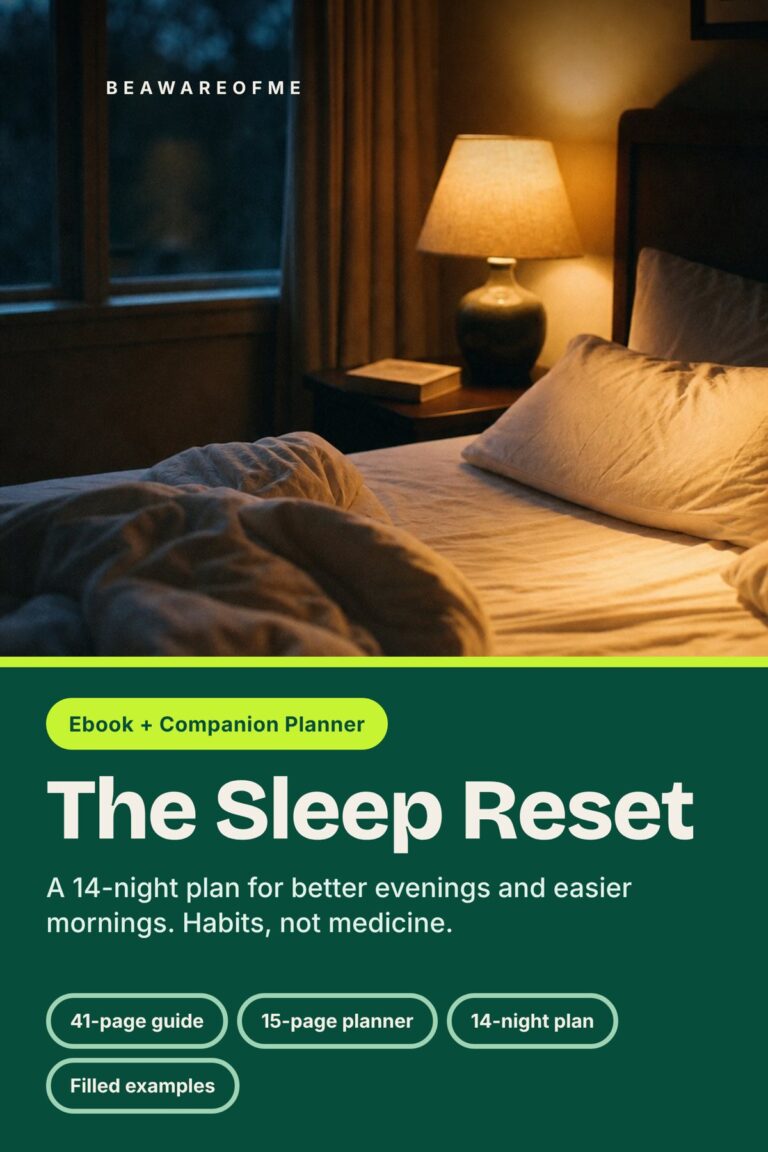 Ebook + Planner
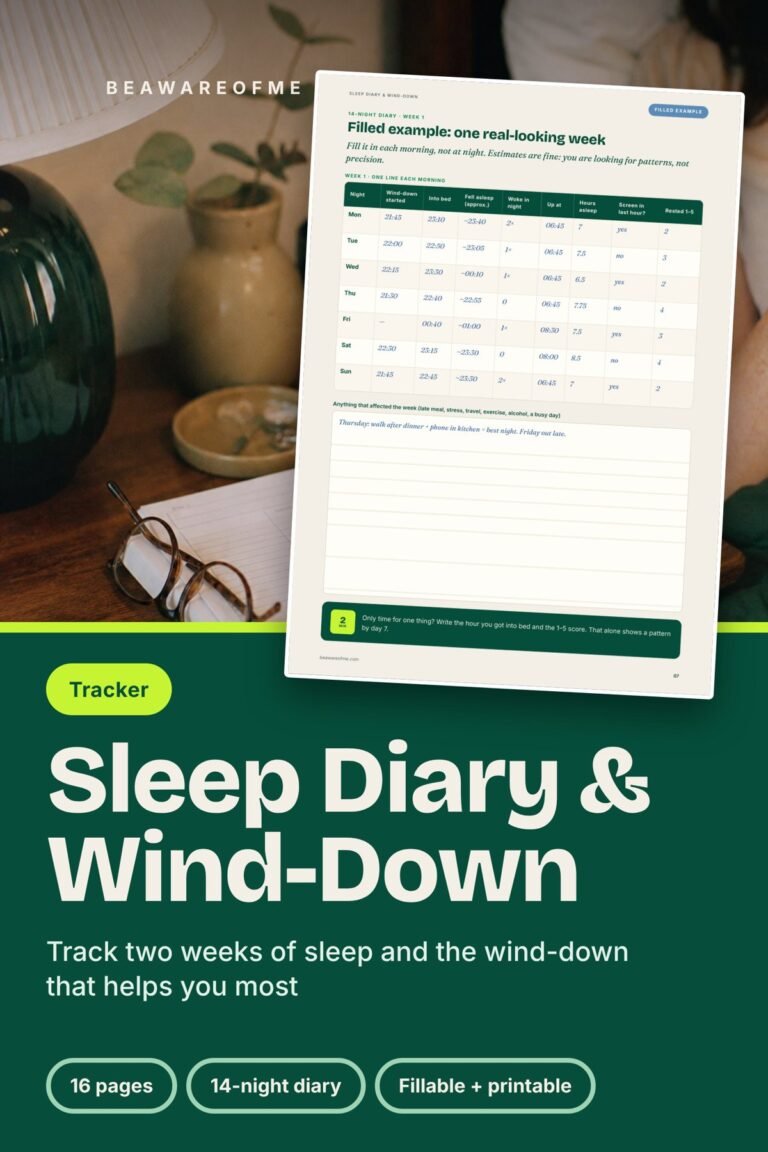
The Sleep Reset
A 14-night plan to reset your sleep with habits.
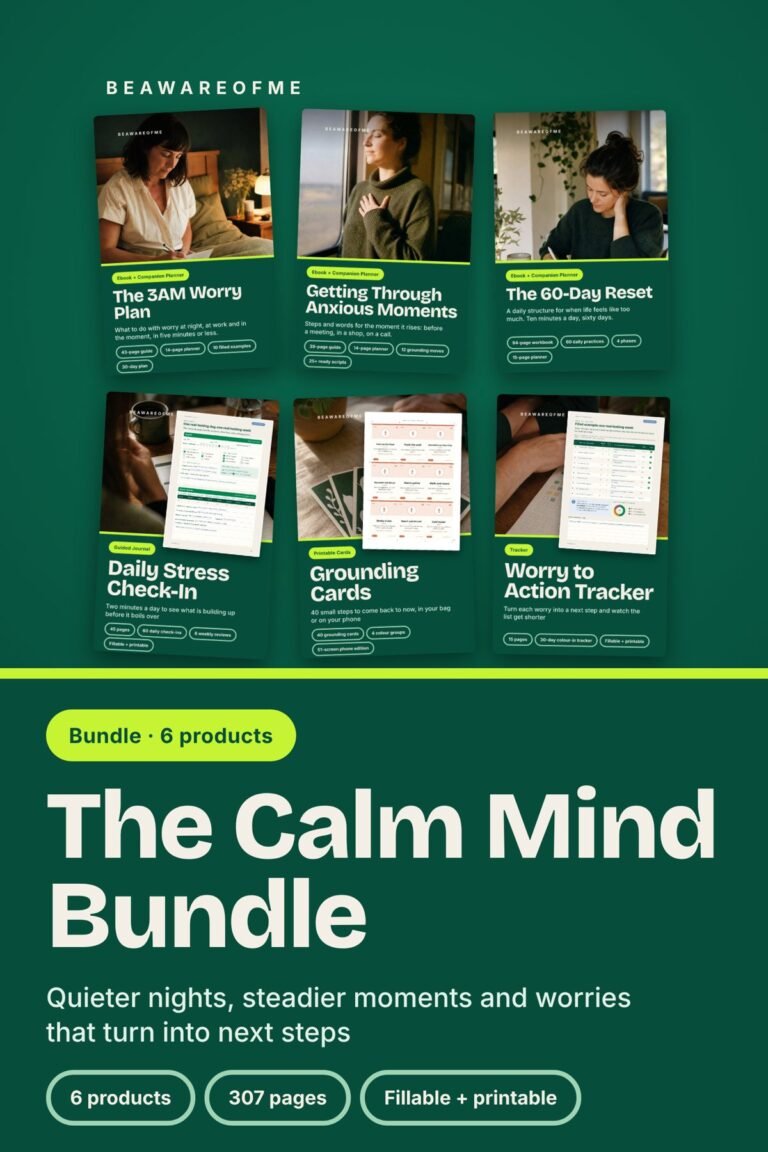
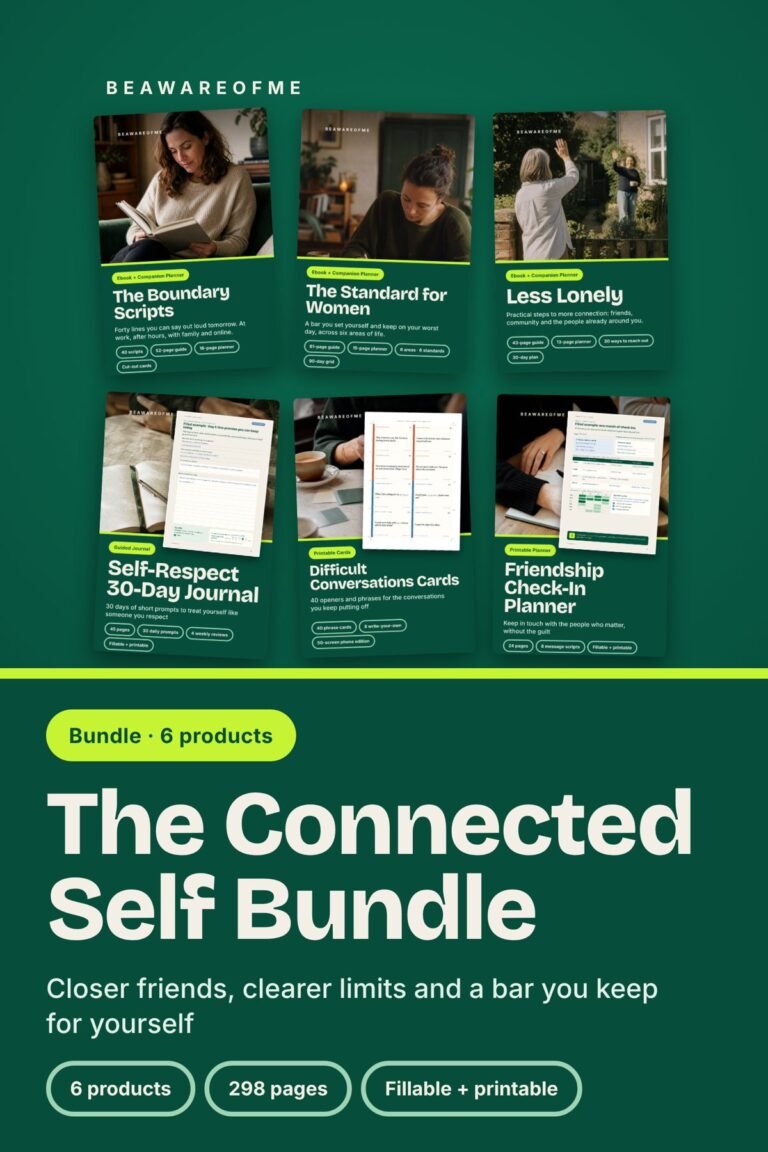
 Bundle · 6 products
The Rest Bundle
Calmer evenings, earlier nights and weekends that restore you.
Six products sold separately for $83, here together for $37.
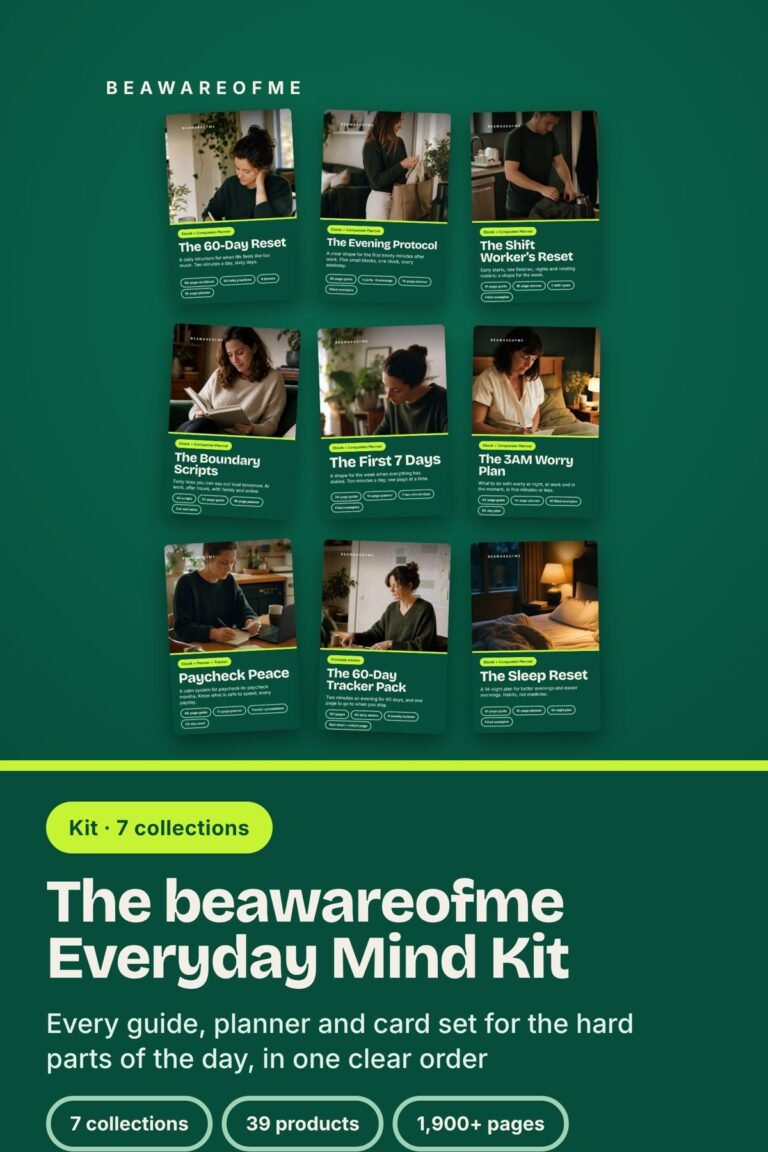 Kit · all collections
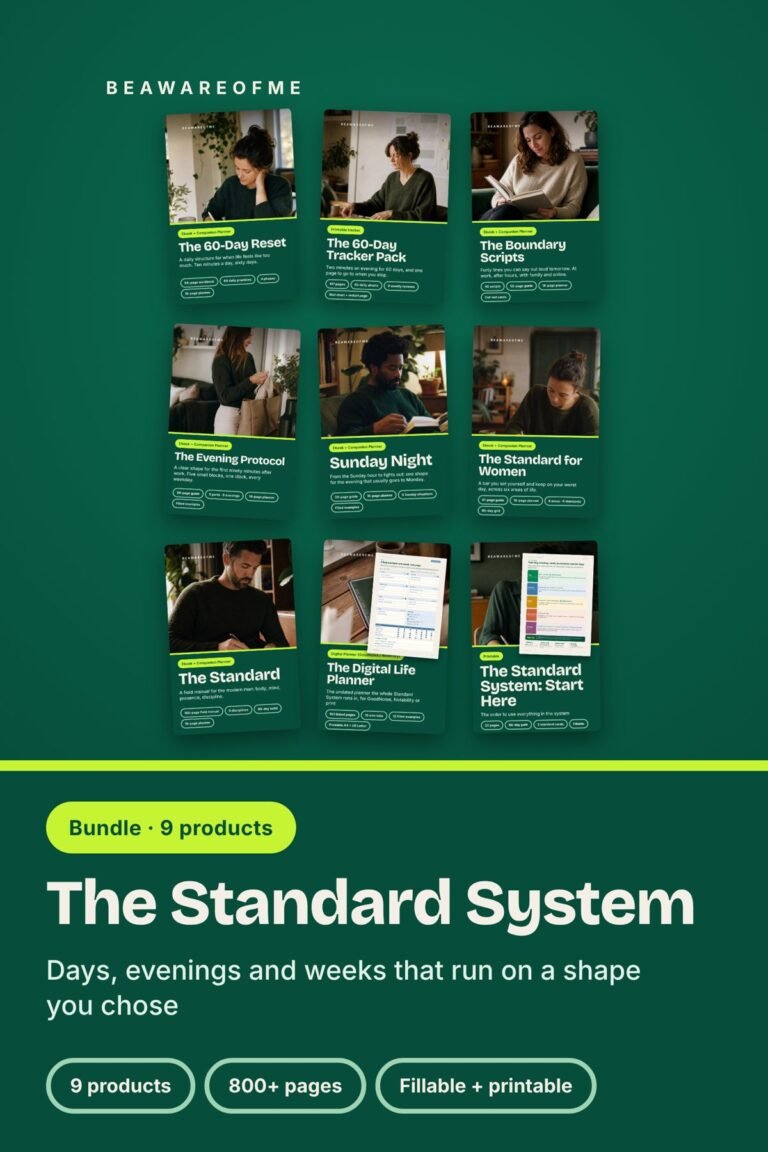
The beawareofme Everyday Mind Kit
Every beawareofme collection in one download, in a clear order.
The Standard System and all six bundles cost $289 bought separately; the kit is $127.
Instant download · Digital download · All sales final
Myths and calmer facts
✗ I can catch up on all my lost sleep at the weekend.
✓ A lie-in can help a little, but big swings in timing often make Monday harder. Steady sleep through the week usually feels better than a weekend rescue.
✗ Scrolling in bed helps me relax.
✓ It can feel relaxing, but it keeps the mind busy and pushes sleep later. A calm, screen-free activity tends to work better as the last thing of the day.
✗ A drink before bed helps me sleep.
✓ Alcohol can make you drowsy, but for many people it leads to lighter, more broken sleep later in the night, which can leave you more tired in the morning.
When to get help
If you are still waking up exhausted after a few weeks of steady sleep habits, it is worth talking to a doctor. Get checked sooner if someone notices loud snoring, gasping or pauses in your breathing, if you fall asleep during the day without meaning to, or if tiredness comes with low mood, weight changes or other symptoms that worry you. If you are struggling and thinking about harming yourself, please reach out now: call or text 988 in the US, call Samaritans on 116 123 in the UK and Ireland, or find a local line at findahelpline.com.
Frequently asked questions
Why do I wake up tired after eight hours of sleep?
Time in bed is not always the same as good sleep. Late caffeine, alcohol, a warm or noisy room, a phone that lights up in the night or a busy mind can all make sleep lighter and more broken.
How much sleep do adults need?
Most adults feel best with somewhere around seven to nine hours a night, though needs vary. A good guide is whether you wake without dragging yourself up and stay fairly alert.
Is it bad to hit snooze?
Snoozing gives you short, broken bits of extra sleep that rarely feel restful. Setting the alarm for the time you actually need to get up, and getting light soon after, usually leaves you feeling clearer.
What time should I stop drinking coffee?
Many people find a cut-off around early afternoon helps, because caffeine lasts for hours.
What should I do if I wake up at 3am and cannot get back to sleep?
Keep the lights low and avoid checking your phone. Try slow breathing, or write the thought down to deal with in the morning. If you are still awake after a while, get up and do something calm until you feel sleepy again.
Does a bedtime routine really help adults?
For many people, yes. Doing the same few calm things in the same order each night, like dimming lights, washing up and reading, gives the body a clear signal that the day is ending.
Is this check a diagnosis?
No. Your answers point to a pattern, not a diagnosis. It is a general structure for everyday life, not medical or psychological advice.