
You walk into a room and forget why. Names slip away mid-sentence, and your brain feels a little foggier than it used to. It’s natural to wonder whether what’s on your plate could help. This guide walks you through the Mediterranean diet foods most closely studied for memory and brain health, what the science actually shows, and easy ways to eat more of them this week.
🧠 Key takeaways
Focus on the overall eating pattern, because no single food has proven it can protect memory alone.
Add one serving of leafy greens and a handful of berries to your week before changing anything else.
Use olive oil as your main cooking fat and enjoy fish a couple of times a week if you eat it.
Treat headlines about “brain foods” with healthy caution, since most evidence is observational.
Pair Mediterranean diet foods with sleep, movement and social time, which all support memory too.
See your doctor about memory changes that worry you, rather than relying on diet alone.
Why Mediterranean Diet Foods Keep Showing Up in Memory Research
Researchers keep returning to Mediterranean diet foods because, across many studies, people who eat this way tend to keep sharper memories as they age. That’s an association, not proof. Still, it’s a consistent enough pattern that scientists now test it in clinical trials.

Here’s the article at a glance. Skim it now, then come back to the parts you want to try.
Mediterranean diet foods for memory at a glance
| Food group | Why researchers like it | Easy way to start |
|---|---|---|
| Leafy greens | Rich in folate, vitamin K and plant compounds | A handful of spinach in eggs or soup |
| Berries | Packed with colourful flavonoids | Frozen berries on yoghurt or oats |
| Extra virgin olive oil | Main source of healthy fat in the pattern | Swap it for butter when cooking |
| Oily fish | Supplies omega-3 fats the brain uses | Sardines on toast or baked salmon |
| Beans and lentils | Fibre and steady energy | Lentil soup or chickpeas in a salad |
| Nuts | Healthy fats and vitamin E | A small handful as a snack |
| Whole grains | Fibre and B vitamins | Oats, brown rice or wholegrain bread |
What the pattern actually looks like
According to the Mayo Clinic, the Mediterranean diet centres on vegetables, fruit, whole grains, beans, nuts, herbs and olive oil. Fish appears at least two to three times a week. Red meat stays limited, and processed meat even more so.
Notice what’s missing: strict rules, banned foods and complicated tracking. It’s a way of eating, not a short-term plan. That’s partly why people stick with it, and sticking with it is where any benefit lives.
📝 Note
The MIND diet is a close cousin. It blends Mediterranean and DASH eating and gives extra weight to leafy greens and berries. You’ll see both names in brain-health research, and the food lists overlap heavily.
What the Science Says (and What It Doesn’t Yet)
The honest summary: the evidence is promising but mixed. Observational studies look encouraging, while controlled trials show smaller effects. Knowing the difference keeps your expectations realistic and your choices calm. It also helps you enjoy Mediterranean diet foods without expecting miracles from them.
46%
more likely to age healthfully, among women with a Mediterranean-style pattern in one Harvard cohort
Harvard Nutrition Source
600
older adults took part in a recent MIND diet trial with a healthy comparison diet
National Institute on Aging
2-3x
a week: how often the Mediterranean pattern includes fish or shellfish
Mayo Clinic
What’s fairly well known
The National Institute on Aging notes that some, though not all, observational studies link Mediterranean eating with a lower risk of dementia. One analysis of MIND diet followers found slower cognitive decline among people who stuck to it most closely. Brain studies also found healthier-looking brain structure in people who ate this way.
Similarly, the Harvard Nutrition Source reports that women in the Nurses’ Health Study who followed a Mediterranean-style pattern were 46% more likely to age healthfully. Their definition included no major declines in thinking.
What’s still being studied
Observational studies can’t prove cause and effect. People who eat well often also exercise, sleep better and have more support. In the recent MIND diet trial, both the diet group and the comparison group showed small memory improvements, with little difference between them.
So researchers still don’t know whether changing your diet in later life prevents memory decline. Scientists are still running trials. Meanwhile, these foods support heart health, and what helps the heart often helps the brain.
How to read brain-food headlines calmly
News stories about Mediterranean diet foods often sound more certain than the studies behind them. Before you change your shopping list, run any headline through these four quick questions.
- Who took part? A study of older adults may not apply to a 30-year-old, and animal studies may not apply to people at all.
- What kind of study was it? Observational studies show links. Randomised trials test cause and effect, so they carry more weight.
- How big was the effect? “Slower decline” can mean a small difference that’s hard to notice day to day.
- Who paid for it? Research funded by a food or supplement brand deserves a second look.
If a headline passes all four, it’s worth taking seriously. If not, keep enjoying your Mediterranean diet foods and wait for more evidence.
⚠️ Watch out
Be wary of products promising to “boost memory” or “reverse brain ageing.” No supplement or single food has strong proof of that. Ask your doctor or pharmacist before taking any supplement, especially if you take other medicines.
9 Mediterranean Diet Foods Most Linked to a Sharper Mind
These nine Mediterranean diet foods appear again and again in brain research. You don’t need all of them. Pick two or three you already enjoy and build from there. The best Mediterranean diet foods for you are the ones you’ll happily eat every week.
The plant foods that do the heavy lifting
- Leafy greens. Spinach, kale, rocket and chard bring folate and vitamin K. In MIND research, greens rank near the top.
- Berries. Blueberries and strawberries contain flavonoids, the pigments that give them colour. Frozen ones count just as much.
- Beans and lentils. They offer fibre, protein and slow, steady energy. A tin of chickpeas makes this one easy.
- Whole grains. Oats, barley, brown rice and wholegrain bread add B vitamins and fibre.
- Other colourful vegetables. Tomatoes, peppers, carrots and onions widen the range of plant compounds on your plate.
The fats and proteins that round it out
- Extra virgin olive oil. The main fat in the pattern, used for cooking and drizzling. Our piece on olive oil and happiness looks at the mood side.
- Oily fish. Salmon, sardines, mackerel and trout supply omega-3 fats. Read more about omega-3s and mental health.
- Nuts. Walnuts, almonds and hazelnuts add healthy fats and vitamin E. A small handful works well.
- Herbs and spices. Garlic, oregano, rosemary and turmeric add flavour, so you need less salt.
💡 Tip
If fish isn’t for you, lean harder on beans, nuts, greens and olive oil. A plant-forward version still follows the heart of the pattern. A registered dietitian can help you cover omega-3s and other nutrients another way.
If you have a health condition
Mediterranean diet foods suit most adults, but some situations need extra care. If you take blood thinners, a sudden jump in leafy greens can affect how the medicine works because of vitamin K. If you have kidney disease, diabetes or food allergies, your needs may differ too. In any of these cases, talk to your doctor or a registered dietitian before you change your usual meals. They can help you enjoy Mediterranean diet foods safely.
How to Build a Brain-Friendly Plate in 5 Easy Steps
Building meals around Mediterranean diet foods is simpler than it sounds. You don’t need new recipes. You need a few small swaps repeated until they feel normal.
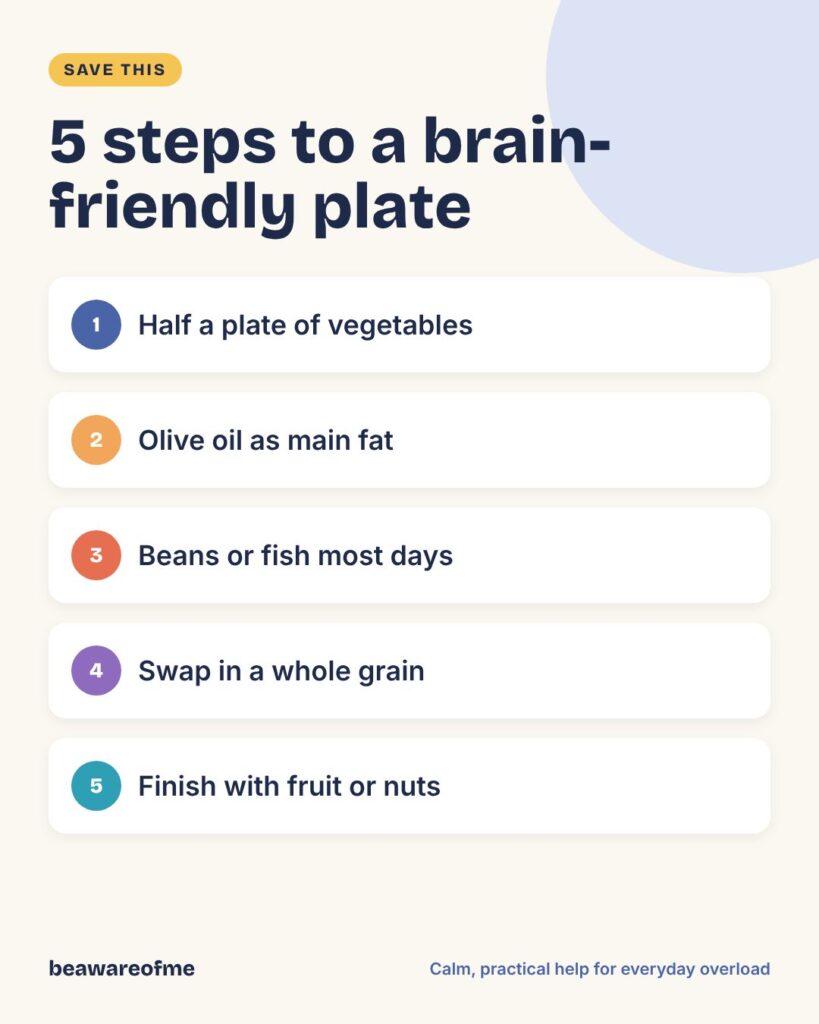
Your five-step brain-friendly plate
Start with half a plate of vegetables
Fill half your plate with vegetables or salad first, then add everything else.
Choose olive oil as your main fat
Cook, roast and dress salads with extra virgin olive oil instead of butter.
Add a plant or fish protein
Beans, lentils, fish or eggs most days; red meat only occasionally.
Swap in a whole grain
Brown rice, barley, wholegrain pasta or bread instead of white versions.
Finish with fruit or nuts
Berries or a small handful of nuts make an easy dessert or snack.
A sample brain-friendly day
Here’s what a normal, low-effort day could look like. Adjust it to your culture, budget and appetite. Every meal below uses everyday Mediterranean diet foods you can find in most supermarkets.
- Breakfast: Oats with frozen berries and a few chopped walnuts.
- Lunch: Lentil and vegetable soup with wholegrain bread and a drizzle of olive oil.
- Snack: An apple and a small handful of almonds.
- Dinner: Baked salmon or chickpeas with roasted vegetables and brown rice.
- Drinks: Mostly water, plus tea or coffee if they suit you.
✨ Quick win
Keep three “brain staples” in your kitchen at all times: a bag of frozen berries, a tin of chickpeas and a bottle of olive oil. With those, a quick Mediterranean meal is always five minutes away.
If you want a ready-made list for your cupboards, our anti-anxiety pantry guide shows what to stock and why.
Mediterranean vs Western Eating: What Changes for Your Brain
The biggest difference between the two patterns is what fills most of the plate. A typical Western diet leans on refined grains, processed meat and sugary snacks. The Mediterranean pattern flips that, so plants and healthy fats lead.
Two plates side by side
| Part of the meal | Typical Western plate | Mediterranean plate |
|---|---|---|
| Main fat | Butter, margarine, fried oils | Extra virgin olive oil |
| Grains | White bread, white pasta | Oats, barley, wholegrain bread |
| Protein | Processed and red meat | Beans, lentils, fish, eggs |
| Snacks | Crisps, biscuits, sweets | Fruit, nuts, yoghurt |
| Drinks | Sugary soft drinks | Water, tea, coffee |
Why the swap may matter for memory
Researchers think several features of Mediterranean diet foods could support the brain together. More fibre and fewer refined foods may help steadier energy. Healthy fats replace saturated ones, which supports the heart and blood vessels. And plant compounds from colourful foods may help calm inflammation.
None of these mechanisms is fully proven for memory yet. Still, they make the pattern a sensible choice while science catches up. For the mood side of this comparison, read our guide to the Mediterranean versus Western diet and mental health.
🧭 Try this
Pick one Western habit you’d happily change, such as a sugary afternoon snack. Replace it with fruit and a few nuts for one week, then notice how your energy feels by late afternoon.
Mediterranean Diet Foods on a Budget: Smart, Simple Swaps
Eating for your brain doesn’t require expensive ingredients. Many core Mediterranean diet foods are among the cheapest items in the shop. Here’s how to keep costs low without losing the benefits. Tinned, frozen and dried Mediterranean diet foods often cost far less than fresh versions, and they keep well.
Budget-friendly swaps
| Instead of | Try | Why it works |
|---|---|---|
| Fresh salmon every time | Tinned sardines or mackerel | Same omega-3 fats, lower cost |
| Fresh berries out of season | Frozen berries | Picked ripe, keep for months |
| Pre-cut salad bags | Whole heads of greens | More food for less money |
| Expensive nut mixes | Plain walnuts or peanuts in bulk | Healthy fats without the markup |
| Ready meals | Big batch of bean stew | Several meals from one pot |
Shopping list for one week
Write this down before your next trip. It covers most of a brain-friendly week for one or two people.
- One bag of spinach or kale and one other green
- Two bags of frozen berries
- Two tins of beans and one bag of dried lentils
- Two tins of oily fish, or extra beans if you’re vegetarian
- Oats, brown rice and a wholegrain loaf
- Onions, garlic, tomatoes, carrots and peppers
- Extra virgin olive oil and a bag of walnuts
You don’t need a perfect diet. You need a few good foods you’ll actually eat, again and again.
beawareofme
Beyond the Plate: 4 Habits That Help Your Food Work Harder
Food is one piece of brain health, not the whole puzzle. The Mediterranean lifestyle also includes movement, shared meals and rest. These habits likely explain part of why the pattern looks so good in research. In other words, Mediterranean diet foods work best inside a Mediterranean-style life.
Four habits that support memory alongside food
- Move most days. Walking, cycling or dancing supports blood flow to the brain. The Mayo Clinic counts exercise as part of the pattern.
- Protect your sleep. Sleep helps the brain store memories. A steady bedtime matters as much as any meal.
- Eat with others when you can. Shared meals add connection, and loneliness can weigh on wellbeing.
- Manage stress gently. Ongoing stress makes concentration and recall harder. Short breaks and slow breathing help.
A simple weekly rhythm
Some people find it easier to plan by the week than by the day. Try a loose rhythm like this one, and adapt it freely.
- Fish twice: One tinned-fish lunch and one fish dinner, or bean dishes if you don’t eat fish.
- Beans three times: Soup, a salad or a stew with chickpeas, lentils or white beans.
- Greens daily: A handful in eggs, pasta, smoothies or on the side.
- Berries most days: Fresh or frozen, on breakfast or as dessert.
- Nuts most days: A small handful as a snack or sprinkled on salads.
This rhythm keeps Mediterranean diet foods on your table without tracking every bite. If a week goes off track, simply start again on the next meal.
If forgetfulness comes with heavy tiredness, our guide to what brain fog feels like can help you sort out possible causes. For daily memory habits, see Memory Lift: how to sharpen your mind.
Where inflammation fits in
The Mayo Clinic notes that this way of eating may lower inflammation in the body. That’s one reason scientists link it to brain health. Our anti-inflammatory diet and mental health guide explains the idea in more depth, and the gut-brain axis article covers how gut health fits in.
🍋 Try this today
☐Add a handful of leafy greens to one meal.
☐Swap butter for extra virgin olive oil once.
☐Put frozen berries on your shopping list.
☐Choose beans or fish instead of red meat for dinner.
☐Take a 10-minute walk after you eat.
5 Common Mistakes With Brain-Healthy Eating
Good intentions sometimes lead people down the wrong path. Avoid these mistakes and Mediterranean diet foods will serve you far better.
Mistake 1: Hunting for one magic food
Blueberries or walnuts won’t protect your memory on their own. Research points to the overall pattern instead. So build variety rather than loading up on a single superfood.
Mistake 2: Relying on supplements instead of food
Pills can’t recreate the mix of fibre, fats and plant compounds found in whole foods. Some supplements also interact with medicines. Talk to your doctor or pharmacist first, and focus on meals.
Mistake 3: Drizzling olive oil on a fast-food diet
Adding olive oil to otherwise heavily processed meals misses the point. The benefit seems to come from the whole pattern. Start by adding vegetables and beans, then let olive oil replace other fats.
Mistake 4: Starting to drink wine for your brain
Wine often appears in descriptions of this diet. However, the Mayo Clinic advises that people who don’t drink shouldn’t start for health reasons. Water remains the best everyday drink.
Mistake 5: Ignoring real memory changes
Diet can’t replace medical care. If forgetfulness worries you or others around you, see your doctor. Many causes of memory problems, such as poor sleep, low vitamin levels or medication effects, are treatable.
📚 Keep reading
Your Brain Food Questions, Answered
What are the best Mediterranean diet foods for memory?
Leafy greens, berries, extra virgin olive oil, oily fish, beans, nuts and whole grains appear most often in brain-health research. No single food stands out as a cure. Instead, studies point to the overall eating pattern. Choose the foods you enjoy and can afford, and eat them regularly. A registered dietitian can help tailor choices to your needs.
Can the Mediterranean diet improve memory?
Observational studies link Mediterranean eating with slower memory decline as people age. However, controlled trials show smaller, mixed results, so scientists can’t yet say diet alone improves memory. The pattern still supports heart health, which matters for the brain. Combine it with sleep, movement and social time, and talk to your doctor about any memory changes.
What is the difference between the MIND diet and the Mediterranean diet?
The MIND diet blends the Mediterranean and DASH eating patterns, with a special focus on foods studied for brain health. It places extra emphasis on leafy greens and berries and limits fried food, sweets and butter. The two share most core foods. Either works as a general healthy pattern; your doctor or dietitian can suggest which suits you.
How long does it take for diet to affect the brain?
There’s no clear answer, because most research follows people over several years rather than weeks. Some people notice steadier energy within days of eating more regularly. Long-term brain benefits, if they occur, likely build slowly. Think of Mediterranean eating as a lasting habit rather than a quick fix, and track how you feel instead of expecting fast changes.
Are eggs and dairy part of the Mediterranean diet?
Yes, in moderate amounts. Eggs, cheese and yoghurt appear in the Mediterranean pattern, though less often than vegetables, beans and whole grains. Plain yoghurt with fruit and nuts makes an easy breakfast. If you have high cholesterol or other health conditions, ask your doctor or a registered dietitian how much suits you.
Is coffee good or bad for memory?
Coffee is common in many Mediterranean countries, and moderate amounts suit many adults. It can help alertness in the short term. However, research on long-term memory is still developing. Too much caffeine can disturb sleep, which harms memory. If coffee makes you anxious or affects your sleep, cut back, and check with your doctor if you have health conditions.
Mediterranean diet foods won’t rewrite your memory overnight, but they give your brain steady, everyday support. Start with one swap this week, add another next week, and let small habits carry you forward. Your future self will thank you for every handful of greens.
🛟 Please read
Educational content, not a substitute for professional care. If you are struggling, talk to a doctor or a qualified professional. If you are thinking about harming yourself, contact local emergency services or a crisis line now (US 988, UK and Ireland Samaritans 116 123, or findahelpline.com).