

Your memory affects everything you do, from remembering names and dates to learning new things and doing your best. Getting a lasting memory boost isn’t about quick fixes, hacks, or tricks that only work for a short time. It’s about making a system that makes your brain stronger, helps you remember things better, and keeps your mind sharp for years.
This guide is meant to be a resource that lasts forever. It explains how memory works, habits that can improve it, and daily plans that really work and last.
The Key to a Memory Lift: Understanding Memory

Memory is more than just remembering things. It is a set of steps that work together to help you store and get information back safely:
Memory Processes
- Encoding: The process by which information gets into your brain
- Storage: How it stays in good shape over time
- Retrieval: How to get to it when you need it
Types of Memory
- Working memory: This is where you keep information for a short time while you use it.
- Short-term memory: Stores things that happen right away.
- Long-term memory: Keeps information, experiences, and skills for later use.
A real memory lift boosts all of these systems at once, making your brain work well for both simple and difficult tasks in everyday life.
Things That Can Make Memory Hard
Problems with memory don’t always mean decline. Many things we do every day make it harder to remember:

- Long-term stress and mental exhaustion
- Sleep that isn’t consistent
- Doing more than one thing at once and getting distracted
- Living a sedentary life
- Not eating enough and not drinking enough
- Too many feelings
The first step toward a lasting memory lift is to get rid of these problems.
The Five Parts of a Memory Lift That Lasts
Concentrate on five main pillars to create a lasting memory: attention, sleep, movement, nutrition, and mental strategy.
1. The First Step: Focus and Attention

Focus is the first step in memory. Your brain can’t encode information well if you don’t pay attention.
Steps you can take to improve your focus:
- Do one thing at a time when you learn or work.
- Get rid of things that will distract you, like phone alerts.
- Divide learning into short sessions of 25 to 45 minutes.
- Say or write down new information right after you hear or read it.
Example: If you pay close attention during the introduction, say the client’s name out loud, and connect it to a visual cue, you’ll find it easier to remember their name.
2. Sleep: The Place Where Your Brain Makes Memories

Sleep is the best natural way to improve memory. Your brain organizes information, strengthens connections, and stores memories while you sleep.
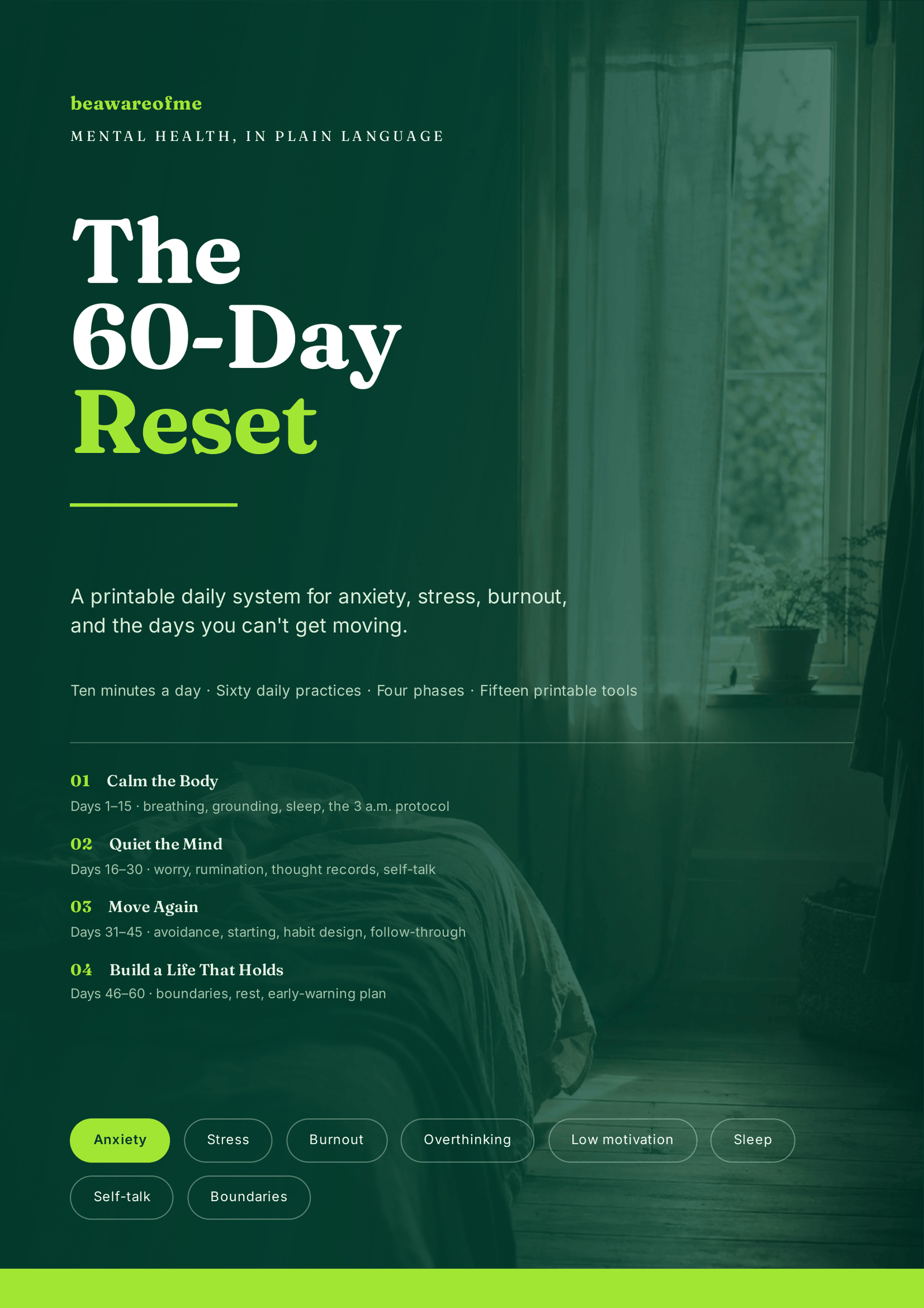
The 60-Day Reset
Everything on this page, sequenced into a printable ten-minute daily practice — 84 pages across anxiety, sleep, overthinking and low motivation, with a two-minute version of every day for the hard ones.
Instant PDF · 60 daily practices · 15 printable tools · Educational, not therapy
Ways to improve your memory while you sleep:
- Stick to a regular sleep schedule
- Spend less time in front of screens one hour before bed
- Make your sleeping area dark, quiet, and comfortable
- Short naps of 20 to 30 minutes can help you remember things you’ve just learned
Just one good night’s sleep can make a big difference in how well you remember things.
3. Movement: What Your Brain Needs

Regular exercise improves blood flow, oxygen delivery, and the brain’s ability to change—three important things for memory.
Tips for exercising that are good for your memory:
- 20 to 40 minutes of aerobic exercise every day, like walking, biking, or swimming
- Strength training or stretching to get more flexible
- Movement breaks while working or studying for a long time
Example: A professional might plan a 30-minute walk in the morning before starting difficult tasks. This easy habit gets the brain ready for a better memory boost all day long.

4. Nutrition: Give Your Memory Food

What you eat has an effect on how well your brain works and how well your long-term memory works.
Brain-friendly nutrition rules:
- Eat a healthy diet that includes fruits, vegetables, healthy fats, and lean proteins
- Drink plenty of water
- Don’t eat too much sugar or processed foods
- Eat regular, balanced meals to keep your blood sugar stable
A strong base of nutrition supports all the other parts of a memory lift.
5. Mental Techniques: Get Your Brain in Shape

Targeted mental strategies help even a healthy brain.
Some good strategies are:
- Active recall means testing yourself instead of just reading your notes again
- Spaced repetition: Look over information at longer and longer intervals
- Link new information to pictures or stories through visualization and association
- Teaching someone else: It helps you remember things better when you explain them
Tip: If you have trouble remembering a shopping list, picture each item along a path you know well in your home. This helps you remember things faster and easier.
Outside Help That Improves Memory

A memory lift isn’t just about how smart your brain is; it’s also about smart systems that make things easier for your brain.
- Lists of things to do and appointments
- Calendars for due dates and reminders
- Keys, wallet, and other everyday items should always be in the same place
- Routines that are set up so that repetition happens automatically
These tools help your brain focus on important tasks and remember things better.
Daily Routine for the Best Memory Boost

In the morning:

Most of what you read this week will be gone by Thursday.
That isn't a discipline problem. It's what happens to information you never write down. Beat Information Overload is a free 35-page workbook that turns reading into something that stays.
Get the free workbook No cost · unsubscribe in one click- Walking or doing light exercise
- 20 to 30 minutes of focused study
- Breakfast with a lot of protein and complex carbs
At noon:
- Take a short break every 60 to 90 minutes
- Water and mental refreshment
In the evening:
- Look over what you learned
- Less time in front of screens
- Regular sleep schedule
If you stick to this routine, you’ll see measurable improvements in your memory in just a few weeks.
Memory Boost at Different Stages of Life
- Students: Structured study, active recall, and short focus sessions
- Professionals: Get enough sleep, don’t do too many things at once, and take breaks for your mind
- Older people: Should do memory exercises based on their daily routines, get involved in social activities, and stay active
At any age, memory can get better. Good habits give you an advantage for life.
Common Misconceptions About Memory

- Myth: As you get older, your memory will always get worse
Truth: Your habits and lifestyle have a bigger effect on memory than your age - Myth: Only brain games can help you remember things
Truth: Real progress comes from habits that work together, not just games - Myth: The quickest fix is to take supplements
Truth: Sticking to the same habits is much more effective
How to Measure Your Memory Lift
Keep track of progress with:
- Less likely to forget tasks or appointments
- Better memory for names and other details
- Learning new things more quickly
- More faith in how well the mind works
A successful memory lift is one that shows steady progress over time.
Last Thoughts

A memory lift is not a quick fix; it’s a process. To improve your memory, you need to pay attention, get enough sleep, move around, eat well, think strategically, and get help from smart people outside of yourself. When you think of your brain as a system and build habits every day, things get better on their own.
Start with one habit, like learning in the morning after a short walk, and then add more. These steps will make your mind sharper, faster, and more reliable over time. They will give you a memory boost that lasts a lifetime.

Quiet the noise — without burning your phone in a field.
Get Beat Information Overload free, plus the occasional calm, no-hype note from me.