
Ever felt butterflies before a big talk, or lost your appetite on a stressful week? That’s your gut and brain talking, and the line between them runs both ways. The gut-brain axis is one of the most exciting areas of health research right now, which also makes it one of the most overhyped. This guide explains what’s actually known, what’s still being studied, and which everyday anti-inflammatory foods give your gut a kinder environment, without miracle claims or pricey powders.
🌱 Key takeaways
Picture the gut-brain axis as a two-way phone line: stress can upset your stomach, and gut signals can reach your brain.
Feed your gut microbes with variety, aiming for many different plants across the week, not one “perfect” food.
Add one fermented food a day, such as plain yoghurt, kefir, sauerkraut or kimchi, if it suits you.
Increase fibre slowly over two or three weeks, with water, so your gut has time to adjust.
Ask your doctor or pharmacist before buying probiotic supplements, especially if you have a health condition.
See a doctor about persistent gut symptoms like pain, blood, weight changes you didn’t expect, or ongoing changes in bowel habits.
📝 Note
This article shares general information only. Food can support your overall health, but it doesn’t treat anxiety, depression or digestive disease. If you have ongoing gut symptoms or low mood, talk to your doctor, and ask about a registered dietitian for personal eating advice.
What the Gut-Brain Axis Is, in Plain Words
The gut-brain axis is the set of connections that let your digestive system and your brain send messages to each other. Those messages travel along nerves, through hormones and immune signals, and via chemicals made by gut microbes. It works in both directions, all day long.

Here’s the guide on one screen. Each row links to a section below.
The gut-brain axis at a glance
| Topic | What to know | Try this first |
|---|---|---|
| The connection | Nerves, hormones, immune signals and microbes link gut and brain | Notice how stress shows up in your stomach |
| The evidence | Strong on the connection, early on food and mood effects | Read claims with a “may” in mind |
| Fibre and prebiotics | Fibre feeds helpful gut microbes | Add one plant food to each meal |
| Fermented foods | Yoghurt, kefir, kimchi and sauerkraut contain live microbes | Try one small serving a day |
| Supplements | Evidence varies by strain and condition | Ask your doctor or pharmacist first |
| Daily habits | Sleep, stress care and movement affect digestion too | Take three slow breaths before meals |
Your “second brain” lives in your gut
Your digestive tract has its own network of nerves called the enteric nervous system. Johns Hopkins Medicine describes it as two thin layers of more than 100 million nerve cells lining the gut from the oesophagus to the rectum. It runs digestion and stays in constant contact with the brain, as explained in its overview of the brain-gut connection.
Three ways messages travel along the gut-brain axis
- Nerves: the vagus nerve is a long nerve running from the brainstem to the gut. It carries signals in both directions, from brain to gut and from gut to brain.
- Chemical messengers: gut cells and microbes help make substances such as hormones and neurotransmitter building blocks. Researchers are studying how these may affect the gut-brain axis.
- Immune signals: much of the immune system sits along the gut wall, so immune activity there can send signals around the body.
You don’t need to memorise these routes. Just remember that the gut-brain axis is not one wire but several, which is why stress, sleep and food can all show up in your stomach.
The microbes in the middle
Trillions of bacteria and other microbes live in your gut, mostly in the large intestine. Together, scientists call them the gut microbiome. These microbes break down fibre your body can’t digest and produce substances that may affect your gut lining, your immune system and possibly signals that travel along the gut-brain axis.
100m+
Nerve cells in the two thin layers of the gut’s own nervous system.
Source: Johns Hopkins Medicine
30-40%
Share of people Johns Hopkins says have functional bowel problems at some point.
Source: Johns Hopkins Medicine
36
Healthy adults in a 10-week Stanford diet trial on fermented foods and fibre.
Source: Stanford Medicine
Known Versus Still Being Studied: An Honest Map
The connection between gut and brain is well established, but the details of how food changes mood are still emerging. Many exciting findings come from animal studies or small human trials. Keeping that in mind protects you from expensive hype.
What science says today
| Statement | Where the evidence stands |
|---|---|
| The gut has its own nervous system that talks to the brain | Well established |
| Stress can change digestion, appetite and gut comfort | Well established and common |
| Fibre feeds gut microbes and supports regular digestion | Well established |
| Fermented foods can change the gut microbiome | Promising early human evidence |
| Changing gut microbes changes mood in humans | Still being studied |
| A specific probiotic can treat anxiety or depression | Not established; don’t rely on it |
Why the direction of the arrow matters
Johns Hopkins notes that researchers once assumed anxiety and depression caused bowel problems. Newer work suggests the reverse may also happen: gut irritation may send signals to the brain that affect mood. Most likely, both directions matter, and they differ from person to person.
⚠️ Watch out
If a product promises to “fix” your mood through your gut, be careful. Researchers are still studying the gut-brain axis, and no food or supplement replaces medical care, therapy or prescribed treatment.
How Inflammation Links Your Gut and Your Brain
Inflammation is one of the routes researchers are exploring between gut and brain. Your gut lining acts as a barrier between what you eat and the rest of your body. Much of your immune system sits right next to it.
When that environment is calm, immune activity stays balanced. Researchers think a less diverse microbiome, ongoing stress and a heavily processed diet may nudge it towards low-level inflammation. They’re also studying whether those immune signals can affect the brain, although much of that work is early.
What this means for your plate
Inflammation is only one possible route along the gut-brain axis, but it’s a useful guide. You don’t need to understand every pathway to act on the sensible parts. The eating patterns linked with lower inflammation in general, rich in plants, fibre and healthy fats, also happen to feed gut microbes well. For a full beginner’s version, see our anti-inflammatory diet guide, and for the mood research, read our overview of inflammation and mental health.
Your gut doesn’t need a miracle food. It needs variety, fibre and a little patience.
beawareofme
4 Food Families That Feed a Healthier Gut
When people talk about eating for the gut-brain axis, they usually mean these four food families. They do most of the work of supporting a healthy gut environment. You probably eat some already. The aim is to eat a wider mix, more often.
1. Fibre-rich plants (the prebiotics)
Prebiotics are types of fibre that feed helpful gut microbes. You’ll find them in oats, beans, lentils, chickpeas, onions, garlic, leeks, asparagus, slightly green bananas and whole grains. Variety matters because different microbes prefer different fibres.
A simple goal many gut researchers like is eating lots of different plants across a week. Count vegetables, fruit, grains, beans, nuts, seeds, herbs and spices. A bag of mixed seeds or a tin of mixed beans boosts your count in one go.
2. Fermented foods (the probiotics on your plate)
Fermented foods are foods made with the help of microbes, and some still contain live cultures. Examples include plain yoghurt, kefir, sauerkraut, kimchi, miso, tempeh and kombucha.
In a small Stanford trial of 36 healthy adults, people who ate more fermented foods for ten weeks had greater gut microbe diversity, and 19 inflammatory proteins measured in their blood went down. The high-fibre group didn’t see those changes in that short window. Stanford Medicine’s summary of the fermented food study calls it early, and it doesn’t prove effects on mood.
💡 Tip
Choose fermented foods without lots of added sugar, and check labels for “live” or “active” cultures. Some jarred sauerkraut is pasteurised, which removes live microbes. Start with a spoonful or a small glass and build up.
3. Colourful plants rich in polyphenols
Polyphenols are natural plant compounds found in berries, apples, grapes, cocoa, green tea, coffee, olives, herbs and many vegetables. Gut microbes help break them down. Researchers are studying how this partnership may support the gut-brain axis, though human evidence is still developing.
4. Healthy fats from fish, nuts and olive oil
Olive oil, walnuts, flax, chia and oily fish like salmon and sardines fit naturally into a gut-friendly, anti-inflammatory pattern. Our guide to omega-3s and mental health explains what’s known about these fats and the brain.
Gut-friendly swaps for an ordinary day
| Meal | Instead of | Try |
|---|---|---|
| Breakfast | Sugary cereal | Oats with kefir, berries and seeds |
| Lunch | White bread sandwich | Wholegrain wrap with hummus and salad |
| Snack | Crisps | An apple and a few walnuts |
| Dinner | Ready meal | Lentil and veg stir-fry with a side of kimchi |
| Drink | Fizzy drink | Water, tea or unsweetened kombucha |
A Gentle 14-Day Gut-Friendly Plan
The kindest way to support your gut-brain axis is to change slowly. A sudden jump in fibre or fermented foods can cause wind and bloating. This two-week plan adds one small step every few days.
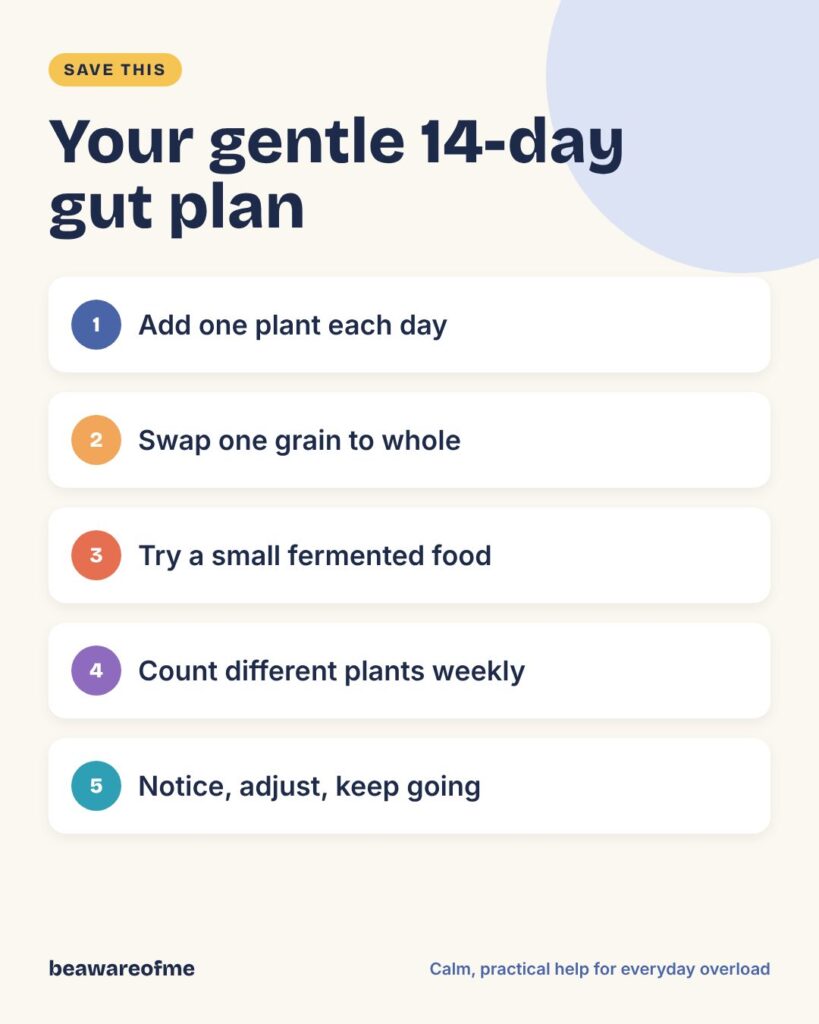
Your 14-day plan
Days 1-3: add one plant
Add one extra vegetable, fruit or bean portion to a meal each day. Drink a glass of water with it.
Days 4-6: swap one grain
Switch one refined grain to a whole one, such as porridge for cereal or brown rice for white.
Days 7-9: try a fermented food
Have a small serving of plain yoghurt, kefir, sauerkraut or kimchi once a day.
Days 10-12: count your plants
Aim for as many different plants as you can across these three days, including herbs and spices.
Days 13-14: notice and adjust
Jot down how your digestion, energy and sleep feel. Keep what works and slow down anything that doesn’t.
A sample gut-friendly day
- Breakfast: porridge with kefir or milk, frozen berries and a spoon of mixed seeds.
- Lunch: lentil soup with a slice of wholegrain bread and a side of salad.
- Snack: an apple, a few walnuts and a cup of green tea.
- Dinner: salmon or tofu with roasted vegetables, brown rice and a spoonful of kimchi.
That single day gives you more than a dozen different plants and two fermented foods. It isn’t a rule, just a picture of how gently you can support your gut-brain axis with ordinary meals.
Listen to your body as you go
Some extra wind is normal at first. However, if you get pain, persistent bloating or changes that worry you, stop and talk to your doctor. People with irritable bowel syndrome (IBS) often do better with specialist advice from a registered dietitian, because certain high-fibre foods can make their symptoms worse.
✨ Quick win
Keep a tub of mixed nuts and seeds on the counter and sprinkle a spoonful on breakfast, salads or soup. It’s the fastest way to add three or four plants to your weekly count.
Probiotic Supplements: What to Know Before You Buy
Probiotic supplements are capsules, powders or drinks containing live microbes, and the evidence for them varies widely. The US National Center for Complementary and Integrative Health says that for most conditions, it’s still unclear which strains help, how much to take and who would benefit.
The same agency’s page on probiotics and safety notes that probiotics seem generally safe for healthy people. Risks are higher for those with serious illnesses or weakened immune systems. It also reports that some products contain microbes not listed on the label.
Food first, supplements only with advice
Supplements are the most marketed corner of gut-brain axis research and one of the least settled. For most people, fermented foods and fibre-rich plants are an easy, low-risk starting point. If you’re curious about a supplement, talk to your doctor or pharmacist first, and never use one as a reason to delay getting gut symptoms checked. Our article on probiotics and gut support goes into more detail.
⚠️ Watch out
Don’t stop or change any prescribed medication because of a gut health product. If you take medicines, have a health condition or are pregnant, check with your doctor or pharmacist before trying any supplement.
Daily Habits Beyond Food That Support Your Gut-Brain Axis
Food matters, but your gut also responds to stress, sleep, movement and how you eat. Because the gut-brain axis runs both ways, calming your nervous system can make digestion feel better too. These habits cost nothing.
Slow down before you eat
Rushed meals are a small daily stress for the gut-brain axis. Eating while rushed or scrolling can leave your stomach unsettled. Before meals, take three slow breaths and put your phone face down. Chew a little longer than usual. It sounds small, yet it signals “safe to digest” to your body.
Want a guided rhythm? Our free box breathing coach walks you through a calm breathing pattern in under two minutes.
Protect sleep and move every day
Short or irregular sleep often shows up as cravings and an unsettled stomach the next day. A gentle daily walk supports regular digestion as well. You’ll find simple routines in our guide on how to manage stress for a calmer mind.
Build meals around connection
Eating with people you like turns food back into something warm, not a project. The Mediterranean way of eating does this well, and our page on the Mediterranean diet, anxiety and depression looks at what researchers have found so far.
🧭 Try this today: a gut-friendly reset
☐Add one fibre-rich plant to your next meal, such as beans, oats or an apple.
☐Take three slow breaths before you start eating.
☐Try a spoonful of plain yoghurt, kefir or sauerkraut if it suits you.
☐Swap one fizzy drink for water or tea.
☐Write down how your stomach feels tonight, so you can spot patterns later.
5 Common Mistakes That Hold Your Gut Back
Good intentions can still backfire when you start caring for your gut-brain axis. These five mistakes are common, easy to miss and simple to fix.
1. Buying the most expensive probiotic first
Expensive doesn’t mean effective, and many strains lack strong evidence. Start with food, which brings fibre and nutrients as well as microbes. Then, if you still want a supplement, ask your doctor or pharmacist which, if any, makes sense for you.
2. Eating the same “healthy” foods every day
A daily green smoothie is fine, but the same five foods feed the same few microbes. Variety across the week supports a more diverse microbiome. Rotate your vegetables, beans, grains and fruit.
3. Going from low fibre to high fibre overnight
A huge jump in beans and bran often brings bloating, and many people quit. Add fibre gradually over two or three weeks and drink water with it. Your gut microbes need time to adjust.
4. Treating every symptom as a “gut health” issue
Ongoing pain, blood in your stool, unexpected weight change or a lasting shift in bowel habits need a doctor, not a new food. Get symptoms checked first, then work on diet with professional advice.
5. Expecting food to fix your mood alone
Food can support your overall wellbeing, but it doesn’t treat anxiety or depression. If low mood or worry lasts for weeks, talk to your doctor or a mental health professional. Our self-care guide for low moods has kind first steps too.
📚 Keep reading
Gut and Brain Questions People Ask Most
What is the gut-brain axis in simple terms?
It’s the two-way communication system between your digestive system and your brain. Messages travel through nerves such as the vagus nerve, hormones, immune signals and substances made by gut microbes. That’s why stress can upset your stomach, and why gut discomfort can affect how you feel. Researchers are still learning how much each pathway matters day to day.
Which foods are best for gut health?
There isn’t one best food. A varied pattern works better: vegetables, fruit, beans, lentils, whole grains, nuts and seeds for fibre, plus fermented foods like plain yoghurt, kefir, sauerkraut or kimchi if they suit you. Olive oil and oily fish fit well too. Go easy on heavily processed foods, and ask a registered dietitian for personal advice.
Can improving my gut health reduce anxiety?
Researchers are studying links between gut microbes and mood, but there’s no proof that changing your diet treats anxiety. Some people simply feel better overall when they eat regularly and well. If anxiety affects your daily life, talk to your doctor or a mental health professional, who can suggest proven support alongside healthy eating habits.
Are fermented foods the same as probiotics?
Not exactly. Probiotics are specific live microbes tested for a health benefit, usually sold as supplements. Fermented foods are made using microbes, and some still contain live cultures, but their strains and amounts vary. Both can add microbes to your gut. For most people, fermented foods are an easy, low-risk place to start.
How long does it take to change your gut microbiome?
Your gut microbes respond to food changes fairly quickly, sometimes within days, but lasting shifts usually need consistent habits. In the Stanford trial, changes appeared over a ten-week diet. Think in months, not days. Keep adding variety and fibre gradually, and notice how your digestion, energy and comfort change over time.
Should I take a probiotic for my gut-brain axis?
Not without advice. Evidence for probiotic supplements depends on the strain and the health problem, and for mood it’s still early. Supplements aren’t right for everyone, especially people with serious illness or weakened immunity. Talk to your doctor or pharmacist first, and focus on fibre-rich plants and fermented foods as your everyday base.
Your gut and brain talk all day, and you can make that conversation a little calmer with plants, fibre, fermented foods and slower meals. The science on the gut-brain axis is still unfolding, so keep it simple, change things gently and lean on your doctor for anything that doesn’t feel right. Start with one small step today, and let your gut-brain axis do the rest at its own pace.
🛟 Please read
Educational content, not a substitute for professional care. If you are struggling, talk to a doctor or a qualified professional. If you are thinking about harming yourself, contact local emergency services or a crisis line now (US 988, UK and Ireland Samaritans 116 123, or findahelpline.com).