
You’ve heard that food can calm inflammation, but every list online seems to contradict the last one. One says ban bread, another says eat turmeric with everything, and a third wants you to buy powders you can’t pronounce. This anti-inflammatory diet guide cuts through the noise with a simple plate formula, a clear “lean on” and “go easy” list, and a gentle four-week plan you can start with the food already in your kitchen.
🥗 Key takeaways
Think of an anti-inflammatory diet as a pattern you repeat most days, not a strict plan you pass or fail.
Fill half your plate with vegetables or fruit, a quarter with whole grains or starchy veg, and a quarter with protein, then add a little healthy fat.
Swap one food at a time, such as white bread for wholegrain or soda for sparkling water, instead of changing everything on Monday.
Use frozen vegetables, canned beans and tinned fish freely, because cheap and convenient still counts.
Treat headlines about single “miracle” foods with caution, since research looks at whole eating patterns over time.
Talk to your doctor or a registered dietitian before big changes if you have a health condition, take medication or have a history of disordered eating.
📝 Note
This guide shares general information about everyday eating. It isn’t medical advice, it can’t treat any illness, and it isn’t a weight-loss plan. If you have a diagnosed condition, food allergies, digestive problems or a past or present eating disorder, talk to your doctor or a registered dietitian before changing how you eat.
What an Anti-Inflammatory Diet Really Means (and What It Doesn’t)
An anti-inflammatory diet is a long-term eating pattern rich in whole plant foods and healthy fats, with fewer heavily processed foods. It isn’t a trademarked plan, a cleanse or a quick fix. Think of it as a direction you lean towards, meal after meal.

Here’s the whole guide on one screen. Bookmark it, then come back to the sections you need.
Your anti-inflammatory diet at a glance
| Part | What it looks like | Your first step |
|---|---|---|
| The plate | Half plants, quarter grains, quarter protein, a little healthy fat | Build tonight’s dinner on this shape |
| Lean on | Vegetables, fruit, beans, whole grains, nuts, oily fish, olive oil | Add one portion of beans this week |
| Go easy on | Refined carbs, sugary drinks, fried food, processed meat | Swap one sugary drink a day |
| Shopping | Frozen veg, canned beans, tinned fish, oats, nuts | Buy two freezer staples |
| The plan | Four gentle weeks, one change at a time | Start Week 1 today |
| Support | Doctor or registered dietitian for health conditions | Write down your questions |
Inflammation in plain words
Inflammation is your immune system’s normal response to injury or infection. When you cut your finger and it turns red and warm, that’s short-term inflammation doing its job. Problems can start when low-level inflammation hangs around for a long time, which researchers call chronic inflammation.
Chronic inflammation doesn’t always cause obvious symptoms. Doctors connect it with a range of long-term health problems, and researchers are still working out how much daily habits like food, sleep, movement and stress shape it. If you want the mental health side of this story, our guide to inflammation and mental health explains it gently.
Known versus still being studied
Here’s the honest picture. Harvard Health says that to reduce levels of inflammation, you should aim for an overall healthy diet, and it points to the Mediterranean pattern as a good model in its guide to foods that fight inflammation. That’s well supported.
What’s still being studied is how much any single food, spice or supplement changes inflammation in real people. Many headlines come from lab or animal studies. So an anti-inflammatory diet works best as a whole pattern, and you can relax about getting every ingredient “right”.
⚠️ Watch out
Be wary of anyone selling an anti-inflammatory diet as a cure. Food supports your overall health, but it doesn’t replace medical care, prescribed medication or professional mental health support.
The 4-Part Plate That Makes Every Meal Easier
The simplest way to eat this way is to build each meal on one repeatable shape. You don’t need recipes, apps or a food scale. You just need a plate and a rough eye.
Build an anti-inflammatory plate in four moves
Half the plate: plants
Fill it with vegetables, salad or fruit. Frozen, fresh and canned all count, so pick whatever’s easiest today.
A quarter: slow carbs
Add whole grains or starchy veg, such as oats, brown rice, wholewheat pasta, quinoa or potatoes with skins.
A quarter: protein
Choose beans, lentils, tofu, eggs, fish, yoghurt or poultry. Beans and lentils add fibre too.
A thumb of healthy fat
Finish with olive oil, a few nuts or seeds, or some avocado for flavour and staying power.
A drink that helps
Pour water, sparkling water, tea or coffee instead of sugary drinks most of the time.
This plate is the heart of an anti-inflammatory diet. Once you know the shape, you can use it anywhere. A curry with rice and spinach fits. So does a jacket potato with beans and salad, or eggs on wholegrain toast with tomatoes.
What the plate looks like at breakfast, lunch and dinner
- Breakfast: porridge made with oats, topped with frozen berries and a spoon of nuts or seeds.
- Lunch: a wholegrain wrap with hummus, salad leaves, grated carrot and a tin of mackerel or chickpeas.
- Dinner: a tray of roasted vegetables with chickpeas and olive oil, served over brown rice.
- Snack: an apple with a small handful of almonds, or plain yoghurt with fruit.
Want a full week of menus? Our anti-inflammatory meal plan lays out days of meals in this same shape, so you can copy rather than plan.
💡 Tip
If half a plate of vegetables feels like a lot, start with a quarter. Add one extra handful a week until it feels normal. Gentle progress lasts longer than a dramatic overhaul.
7 Food Groups to Lean On Every Week
Seven everyday food groups do most of the heavy lifting in an anti-inflammatory diet. None is exotic or expensive. Most are already in a regular supermarket.
30g
Daily fibre the NHS recommends for adults, from a range of foods.
Source: NHS
20g
What most UK adults currently eat a day, according to the same NHS page.
Source: NHS
2
Portions of fish a week the NHS suggests, including 1 of oily fish.
Source: NHS
Vegetables and leafy greens
Greens are the backbone of any anti-inflammatory diet. Leafy greens such as spinach, kale and cabbage, plus colourful veg like peppers, carrots and tomatoes, give you fibre and a wide mix of plant compounds. Aim for variety across the week. A bag of frozen mixed veg is a perfectly good start.
Fruit, especially berries and citrus
Berries, cherries, oranges and apples are easy, sweet and portable. Frozen berries cost less than fresh and keep for months. Stir them into oats, yoghurt or a smoothie.
Beans, lentils and chickpeas
Pulses give you protein and fibre in one cheap tin, which makes them an anti-inflammatory diet staple. The NHS suggests adding beans, lentils or chickpeas to stews, curries and salads in its advice on getting more fibre. Rinse canned ones to cut extra salt.
Whole grains
Oats, brown rice, wholewheat pasta, barley, bulgur and wholegrain bread release energy more slowly than refined versions. If wholewheat pasta feels too different, try mixing half and half for a few weeks.
Nuts, seeds and olive oil
Walnuts, almonds, chia, flax and pumpkin seeds add healthy fats and crunch. Use olive oil for cooking and dressings in place of butter or lard. A small handful of nuts is a filling snack.
Oily fish and other proteins
Salmon, sardines, mackerel and trout provide omega-3 fats. The NHS advises at least two portions of fish a week, one of them oily, and pregnant people should check its limits. Read our guide to omega-3s and mental health for the brain side of the story.
Herbs, spices, tea and coffee
Garlic, ginger, turmeric, cinnamon and fresh herbs make plant-heavy meals taste great. Harvard Health also lists coffee among foods that may help. Enjoy them as flavour, not as medicine, and skip high-dose spice supplements unless your doctor agrees.
What to Limit Without Going All-or-Nothing
An anti-inflammatory diet asks you to eat less of a few food types, not to fear them. Harvard Health’s list of foods to limit includes refined carbs, fried food, sugary drinks, red and processed meat, and fats like margarine, shortening and lard. “Less often” is the goal, not “never”.
Strict bans tend to backfire, even on a well-meant anti-inflammatory diet. When a food feels forbidden, it often becomes more tempting, and one slip can make the whole plan feel ruined. A swap approach keeps the pattern moving in the right direction without the guilt.
Easy swaps that keep meals familiar
| Instead of | Try | Why it helps |
|---|---|---|
| White bread or pastries | Wholegrain toast or oats | More fibre, slower energy |
| Soda or sweet juice | Sparkling water with citrus, or tea | Less added sugar |
| Fries or crisps | Oven potatoes with skins, or unsalted nuts | Less deep-fried food |
| Sausages or ham | Beans, eggs, tinned fish or chicken | Less processed meat |
| Butter or lard for cooking | Olive or rapeseed oil | More unsaturated fat |
| Creamy ready sauce | Tinned tomatoes, garlic and herbs | More plants, less salt |
The 80/20 rule that keeps it human
Many people find it helpful to eat in this pattern most of the time and relax the rest. Birthday cake, a takeaway with friends and holiday food all belong in a normal life. One meal never undoes a steady pattern.
⚠️ Watch out
If you notice food rules making you anxious, guilty or isolated, pause the changes and talk to your doctor. Our page on orthorexia and healthy eating obsession explains the warning signs kindly.
You don’t need a perfect plate. You need a better plate, most days, for a long time.
beawareofme
A 4-Week Starter Plan That Fits a Busy Life
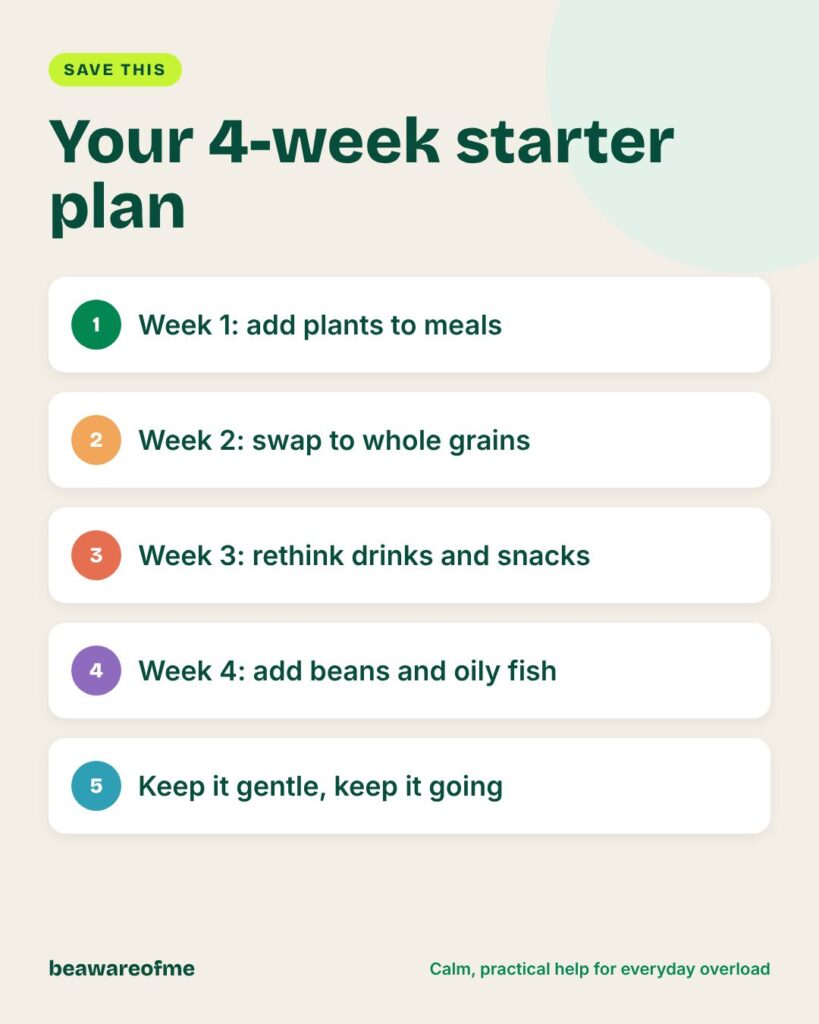
The easiest way to begin an anti-inflammatory diet is to add one habit a week for four weeks. Each step builds on the last. By the end, the pattern feels like your normal way of eating.
Week 1: add plants to what you already eat
Don’t remove anything yet. Just add one portion of vegetables or fruit to two meals a day. Throw spinach into pasta sauce, add berries to breakfast or keep cherry tomatoes on your desk.
Week 2: upgrade your grains
Swap one refined grain a day for a whole one. Choose porridge over sugary cereal, brown rice over white, or wholegrain bread for sandwiches. If your stomach needs time, increase fibre slowly and drink plenty of water.
Week 3: rethink your drinks and snacks
Replace one sugary drink a day with water, sparkling water or unsweetened tea. Then stock two easy snacks, such as nuts and fruit, where you’ll see them. When hunger hits at 4 pm, the easy choice is now a better one.
Week 4: bring in beans and oily fish
Add beans, lentils or chickpeas to three meals and have oily fish once, if you eat fish. Vegetarian or vegan? Lean on walnuts, chia and ground flax, and ask a registered dietitian about omega-3 needs.
🧭 Try this today: your 10-minute starter checklist
☐Look in your freezer and cupboard, and list three plant foods you already own.
☐Add one handful of vegetables or fruit to your next meal.
☐Put a tin of beans or chickpeas on this week’s shopping list.
☐Fill a water bottle and keep it where you can see it.
☐Write one swap you’ll try tomorrow, such as oats instead of a pastry.
Eating out and takeaways without stress
You don’t have to skip social meals to keep an anti-inflammatory diet going. Look for a dish with vegetables, a grilled or bean-based protein and a whole grain or potato. Ask for a side salad or extra veg, and enjoy the rest without guilt.
✨ Quick win
Pick the change that feels easiest, not the one that sounds most impressive. An easy win this week makes next week’s step far more likely.
Shopping, Budget and Batch Cooking Made Simple
You can follow an anti-inflammatory diet on a tight budget if you shop for staples rather than trends. The cheapest foods in this pattern are often the most useful ones. Oats, beans, lentils, frozen veg, carrots, cabbage and tinned fish cost little and keep well.
A 20-item basket that covers a week
- Freezer: mixed vegetables, spinach, berries, peas.
- Cupboard: oats, brown rice, wholewheat pasta, canned chickpeas, red lentils, tinned tomatoes, tinned sardines or mackerel.
- Fresh: onions, garlic, carrots, cabbage, apples, bananas, eggs, plain yoghurt.
- Extras: olive oil, a bag of walnuts or seeds.
Batch once, eat three times
Batch cooking is how an anti-inflammatory diet survives a busy week. Cook one big pot on a calmer day. A lentil and vegetable soup becomes lunch, then dinner with bread, then a freezer meal for a tired evening. Roast a full tray of vegetables on Sunday and add them to grains, eggs or wraps all week.
If cooking feels like too much right now, that’s okay. Our guide to nutrition for nervous exhaustion recovery shares low-effort meals for drained days.
💡 Tip
Frozen and canned produce is picked and packed close to harvest, and it doesn’t go off in your fridge. For an anti-inflammatory diet on a budget, your freezer is your best friend.
How an Anti-Inflammatory Diet Fits With Mood, Stress and Sleep
Food is one piece of a bigger picture that includes sleep, movement, stress and connection. Researchers are actively studying links between eating patterns, inflammation and mood. Even so, no diet treats anxiety or depression, and food should never replace professional care.
What we can say is simpler. Regular meals help keep your energy steadier through the day. Many people also feel better when their plates hold more whole foods and fewer heavily processed ones, even if science hasn’t mapped every reason yet.
Where to go next on beawareofme
Each of our food guides takes a different angle. Explore how an anti-inflammatory diet may support mental health for the research overview, then the gut-brain axis and anti-inflammatory foods for the gut side. For a food-by-food look, try 10 everyday “superfoods” for stress and inflammation, which also explains why that label is mostly marketing.
Habits that work alongside your plate
Your anti-inflammatory diet works best as one part of a calmer routine. These everyday habits support the same goal.
- Sleep: a regular bedtime helps more than any single food. Our sleep and self-care guide has simple steps.
- Movement: a daily walk counts.
- Stress care: short breathing breaks and real pauses between tasks.
- Connection: shared meals with people you like make food feel good again.
Waking up tired no matter what you eat? Try our free why do I wake up tired self-check to spot patterns worth raising with your doctor.
5 Common Mistakes That Quietly Derail Your Progress
Most people don’t give up because the food is hard. They give up because of a few avoidable traps. Here are five to watch for.
1. Treating it like a 30-day challenge
A short challenge feels exciting, but an anti-inflammatory diet works as a long-term pattern. When the 30 days end, old habits rush back. Instead, choose changes small enough to keep for a year.
2. Chasing single ingredients
Turmeric lattes and expensive powders get attention, yet the evidence points to whole eating patterns. Spending money on one trendy food while the rest of the plate stays the same rarely helps. Put that money into vegetables, beans and whole grains instead.
3. Cutting out whole food groups without advice
Some people drop all grains, dairy or nightshades because a post told them to. Cutting groups without a reason can make it harder to get enough nutrients. If you suspect a food bothers you, talk to your doctor or a registered dietitian before removing it.
4. Adding fibre too fast
Jumping from little fibre to lots of beans and bran overnight can leave you bloated and uncomfortable. Then it’s tempting to quit. Increase fibre gradually over a few weeks and drink water alongside it.
5. Starting supplements on your own
Fish oil, turmeric and other capsules can interact with medicines, including blood thinners. More isn’t automatically better. Ask your doctor or pharmacist before taking any supplement, and let food come first.
📚 Keep reading
Your Questions About Eating to Calm Inflammation, Answered
What can I eat on an anti-inflammatory diet?
You can eat a wide range of foods. Build meals around vegetables, fruit, beans, lentils, whole grains, nuts, seeds and olive oil, with fish a couple of times a week if you eat it. Eggs, yoghurt and poultry fit too. Go easy on refined carbs, sugary drinks, fried foods and processed meat, but you don’t have to ban them completely.
How long does it take to notice a difference?
There’s no fixed timeline, and it varies from person to person. Some people notice steadier energy or better digestion within a few weeks of eating more whole foods. Changes inside the body are harder to feel and take longer to measure. Focus on habits you can keep for months rather than looking for quick, dramatic results.
Is the Mediterranean diet the same thing?
They overlap a lot. The Mediterranean pattern, rich in vegetables, fruit, whole grains, beans, nuts, fish and olive oil, is often used as a model for eating to reduce inflammation. Harvard Health points to it as a good example. If you like its flavours, it’s an easy and well-studied way to follow the same ideas.
Do I need to give up coffee, dairy or gluten?
Most people don’t. Harvard Health lists coffee among foods that may help with inflammation, and plain dairy like yoghurt can fit a balanced plate. Gluten only needs avoiding if you have coeliac disease or a diagnosed sensitivity. If a food seems to upset you, talk to your doctor or a registered dietitian before cutting it out.
Can this way of eating help with anxiety or low mood?
Food can support your general wellbeing, and researchers are studying links between diet, inflammation and mood. But no diet treats anxiety or depression. Regular, balanced meals may help steady your energy, which can make hard days feel a little easier. If low mood or anxiety lasts for weeks, talk to your doctor or a mental health professional.
Is it safe for everyone to change their diet this way?
For most adults, eating more vegetables, fruit, beans and whole grains is a safe direction. However, people with kidney disease, digestive conditions, diabetes, food allergies, a history of eating disorders, or who are pregnant should get personal advice first. Always talk to your doctor or a registered dietitian before making big changes, especially if you take medication.
An anti-inflammatory diet isn’t a test you pass or fail. It’s a gentle direction: more plants, better fats, fewer heavily processed foods, repeated on ordinary days. Pick one change from this guide today, keep it going for a week, and let your anti-inflammatory diet grow one easy plate at a time.
🛟 Please read
Educational content, not a substitute for professional care. If you are struggling, talk to a doctor or a qualified professional. If you are thinking about harming yourself, contact local emergency services or a crisis line now (US 988, UK and Ireland Samaritans 116 123, or findahelpline.com).