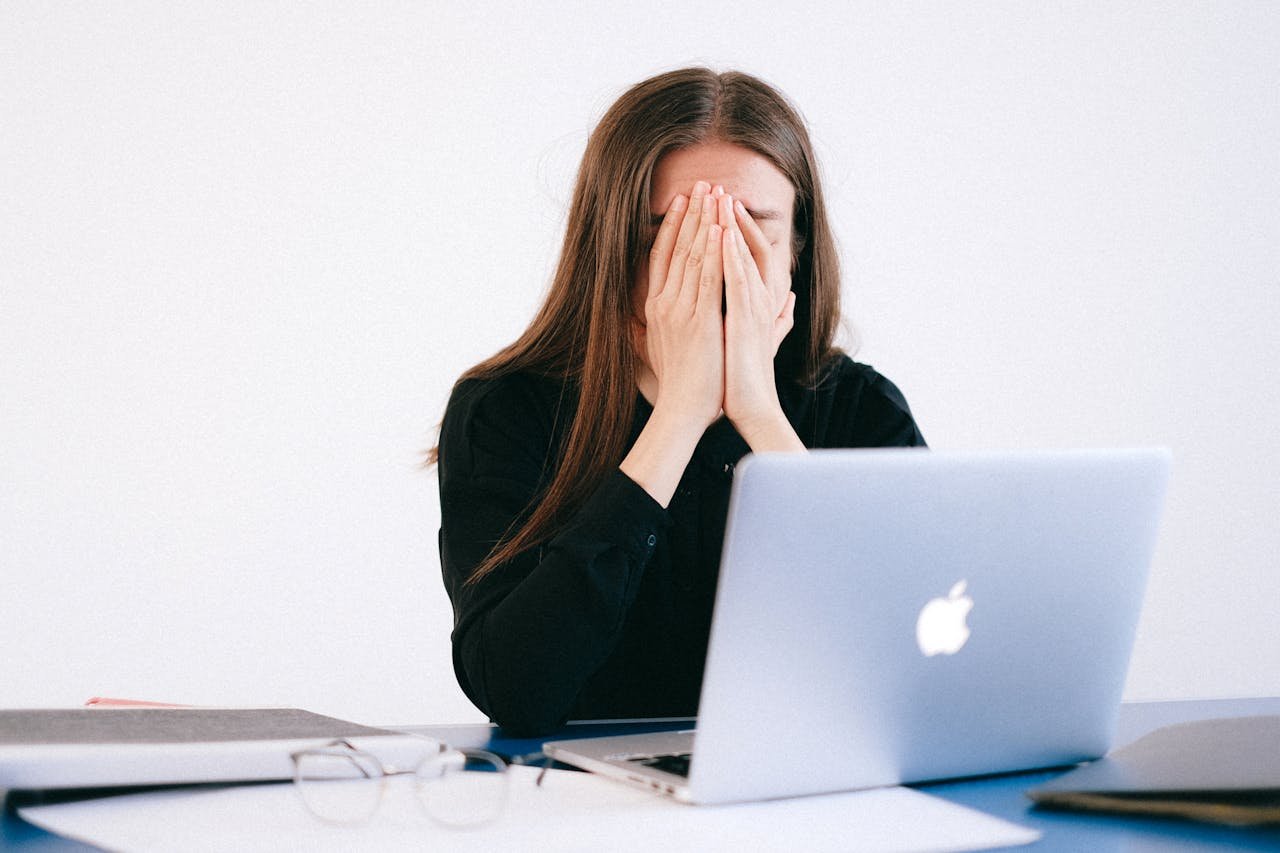

Your heart is slamming, your chest feels tight, and some part of your brain is insisting this is the end — even though nothing around you has changed. If you’re searching for how to stop a panic attack, you need tools that work in the moment, not a lecture about stress management. This guide covers what’s happening in your body, what to do in the first 60 seconds, and how to come down faster — plus how to make attacks rarer over time.
To stop a panic attack, stop fighting it. Name what’s happening — “this is a panic attack, it will pass” — then slow your breathing so your exhale is longer than your inhale, and press your feet into the floor to anchor yourself in the present. Panic attacks are frightening but not dangerous, and most peak within about ten minutes. Riding the wave calms it faster than resisting it.
Key takeaways
The 60-second version, for when you need it right now.
- Name it immediately. Saying “this is a panic attack” tells your brain the alarm is false — and that alone takes some of the terror out of the symptoms.
- Don’t fight the wave. Resisting panic adds fear on top of fear; letting it crest and pass is what actually shortens it.
- Exhale longer than you inhale. Slow, extended out-breaths switch your nervous system out of alarm mode — gulping deep breaths does the opposite.
- Ground your body. Feet pressed into the floor, hands on something textured, eyes naming what’s around you — the present moment is the exit.
- Stay where you are if it’s safe. Fleeing teaches your brain the place was dangerous, which makes the next attack more likely.
- Frequent attacks are treatable. Panic responds very well to therapy — this isn’t something you have to white-knuckle forever.
What’s actually happening when panic hits

A panic attack is your body’s emergency alarm firing at full power with no real emergency in front of you. In seconds, your brain triggers a surge of adrenaline meant to help you fight or run: your heart speeds up to move blood to your muscles, your breathing quickens, your palms sweat, your digestion pauses (hello, nausea), and your senses sharpen into that awful unreal, detached feeling. Every symptom that convinces you something is medically wrong is your survival system doing its job — just at the wrong time.
Here’s the piece that changes everything once you truly absorb it: the National Institute of Mental Health describes panic attacks as something like false alarms — distressing, yes, but not life-threatening, with physical symptoms that resolve on their own. Researchers there note that a person mid-attack may feel their pounding heart and assume heart attack, which pours fear onto fear and keeps the alarm blaring. The fear of the symptoms is the fuel. Cut the fuel and the fire burns out.
Attacks also have a shape. They build fast, peak — often within about ten minutes — and then ease as your body reabsorbs the adrenaline. Knowing there’s a curve matters, because mid-attack it feels like the intensity will climb forever. It won’t. It physically can’t. Your body cannot sustain peak alarm indefinitely, and the wave that is rising right now is already on a timer. Panic can strike at night too, jolting you awake with a racing heart — if that’s your pattern, our guide to calming an anxious mind at night covers the wind-down side of the problem.
How to stop a panic attack in the moment: the first 60 seconds
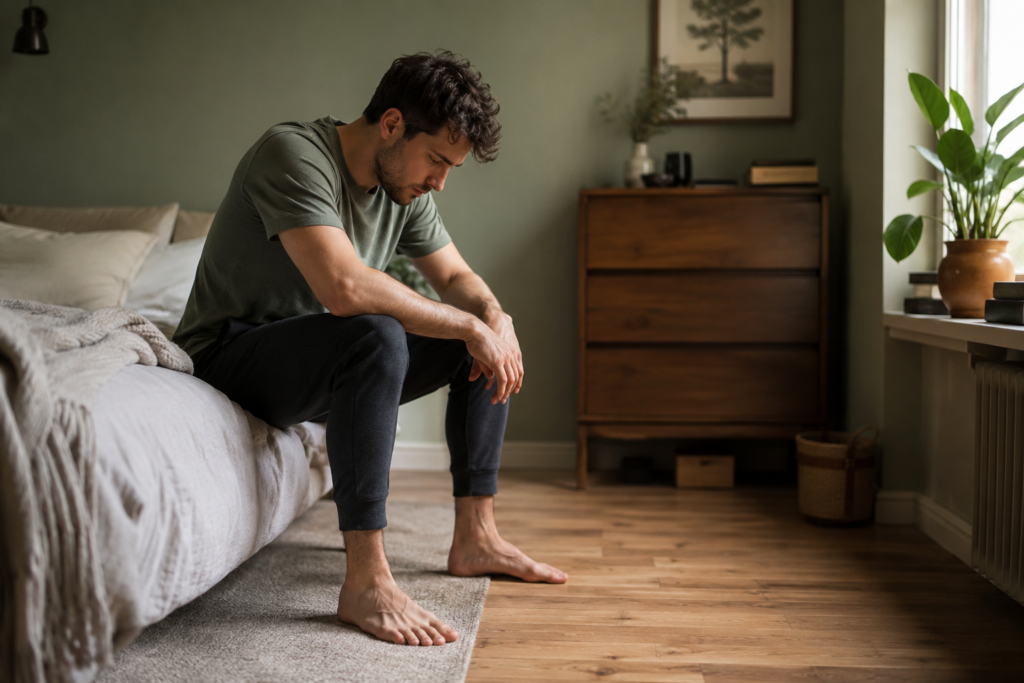
The first minute sets the trajectory of the whole attack, and the winning move is counterintuitive: stop trying to make it stop. Panic feeds on resistance. Every “no no no, not now, I can’t handle this” reads to your brain as confirmation that something terrible is happening, which triggers more adrenaline. The people who come down fastest do the opposite of fighting — they name it, allow it, and give their body simple physical jobs while the wave passes.
Here’s the sequence, in order. One: name it, out loud or in your head — “this is a panic attack. It’s horrible, it’s not dangerous, and it will pass.” You’re relabeling the alarm as false, which is the single most powerful thing you can say to a panicking brain. Two: drop the fight. Instead of bracing against the sensations, let them be there — some therapists teach clients to say “okay, do your worst,” because willingness switches off the fear-of-fear loop. Three: lengthen your exhale — one slow breath out, longer than the breath in, then another (full technique below). Four: anchor your body. Feet flat, pressed into the floor. Hand on a wall, a table, your own chest. You’re giving your nervous system evidence that you are here, supported, and not falling.
Breathe out longer than you breathe in

Breathing is the one lever of your alarm system you can grab directly — but during panic, most people pull it the wrong way. The instinct is to gulp big, fast, deep breaths, because it feels like you can’t get enough air. In reality, panic makes you over-breathe. That rapid breathing drops the carbon dioxide level in your blood, which is what causes the tingling fingers, the lightheadedness, the numb lips — symptoms that then convince you something is seriously wrong, which drives faster breathing still. It’s a loop, and “take a deep breath” often tightens it.
The way out is the exhale. Breathe in through your nose, normally, for about four counts — then out through your mouth, slow and steady, for six to eight. The out-breath is the part that signals your nervous system to stand down. If counting feels impossible mid-attack, simplify: purse your lips like you’re gently blowing out a candle in slow motion, and just make every exhale longer than the inhale. A few rounds is often enough to feel the edge come off. Once the worst has passed, box breathing — in for four, hold four, out four, hold four — is a good rhythm to settle into. The goal isn’t perfect technique. It’s simply this: slow it down, and let more air out than you take in.
Ground your body while your mind catches up

While your breath works on the alarm, grounding gives your racing mind somewhere to stand. Panic yanks your attention into catastrophic forecasting — what if I faint, what if I die, what if this never stops — and grounding drags it back to the only place the panic can’t survive: the concrete, boring, safe present.
The most reliable version is the 5-4-3-2-1 method: slowly name five things you can see, four you can feel, three you can hear, two you can smell, one you can taste. Done deliberately, it occupies the thinking brain and feeds it steady evidence that nothing around you is on fire. We’ve written a full walkthrough in our guide to grounding techniques for anxiety — it’s the companion skill to everything in this article. Faster physical options when you can’t manage steps: press both feet hard into the floor and notice that it holds you. Grip the edge of a chair, or wrap your hands around something with temperature — a cool glass, a warm mug — and pour your attention into the sensation. Splash cool water on your face. If you can, walk slowly and deliberately, matching your steps to your breathing: adrenaline is action fuel, and giving it a small, calm action helps it burn off instead of circulating as terror.
What to do after the wave passes

How you treat the hour after an attack quietly shapes how likely the next one is. When the peak subsides you’ll probably feel wrung out — shaky, exhausted, a little embarrassed, maybe teary. That’s the adrenaline draining, and it’s normal. Drink some water, let your shoulders drop, and speak to yourself the way you’d speak to a friend who just went through something scary. What you don’t want to add is shame. An attack is not a failure or a weakness; it’s a false alarm from a system built to protect you.
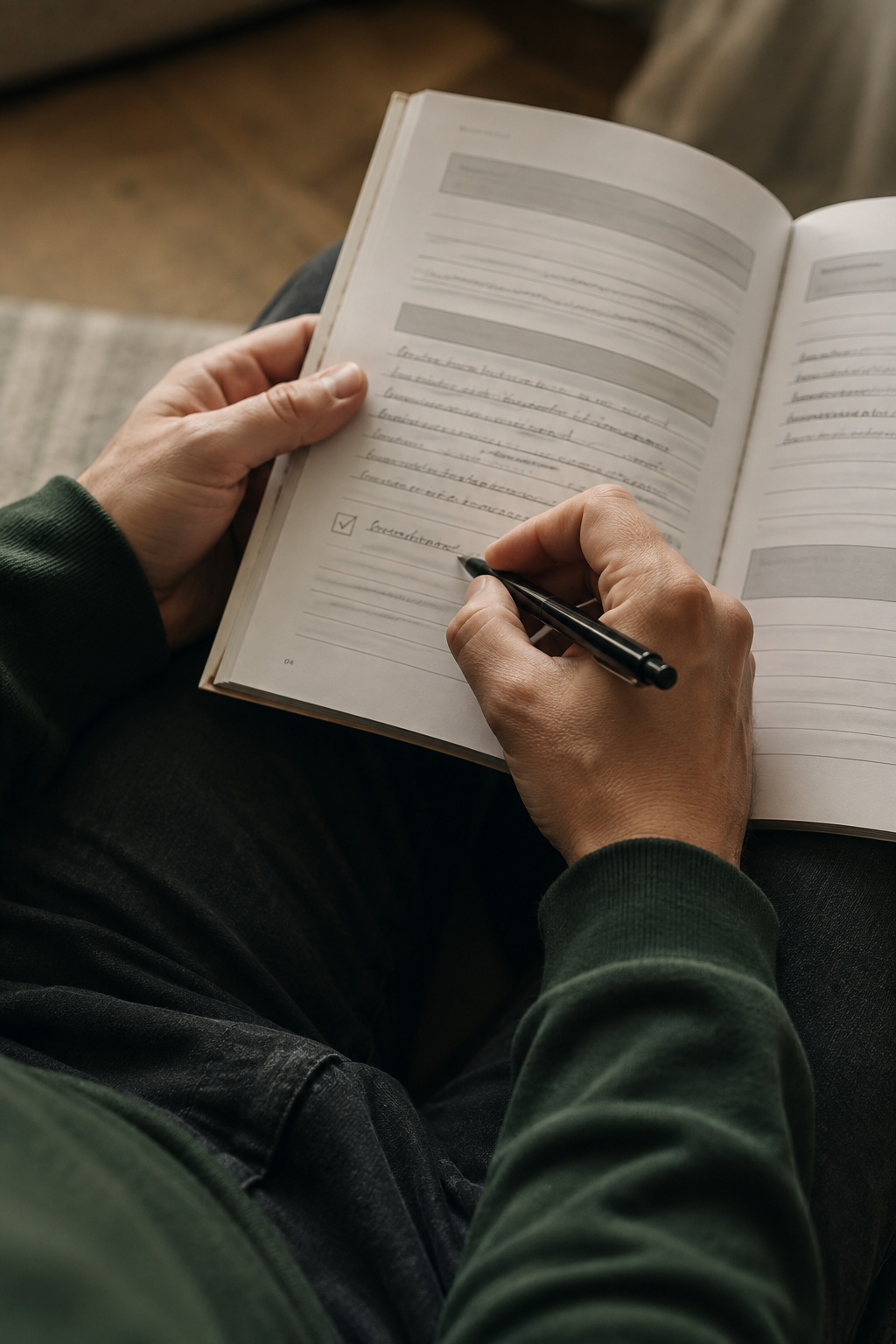
There's a version of this that asks you questions back.
An article can tell you what burnout is. A workbook makes you locate where you actually are in it, on paper, in your own handwriting. That's The Burnout Fix — ninety-odd pages of it.
Look at the workbook →Then — and this matters more than almost anything else in this article — if the situation you’re in is objectively safe, stay in it a little longer. The store, the meeting, the highway rest stop. Leaving the moment panic hits feels like relief, but it teaches your brain that the place was the danger and escape was what saved you. That lesson is how attacks multiply and territories shrink, and it’s the seed of agoraphobia — the fear of places where escape feels hard. Staying, even five extra minutes, teaches the opposite: the alarm was false, the place was fine, you handled it. Later that day, write the attack down — where you were, what you felt, what helped even slightly. Patterns emerge fast (caffeine, bad nights, certain stress loads), and our piece on journaling for anxiety has prompts that work well for exactly this.
How to make panic attacks rarer
In-the-moment tools shorten attacks; the longer game is lowering the baseline so the alarm stops tripping. A few levers move the needle more than people expect. Sleep is the big one — a short, ragged night makes your brain’s fear circuitry more reactive the next day. Caffeine and alcohol both deserve an honest audit too: caffeine can mimic the physical opening notes of panic (racing heart, jitters) in sensitive people, and alcohol’s rebound effect can trigger attacks the following day. You don’t need monk-level discipline. You need to know your own thresholds. Practice matters just as much: breathing and grounding skills rehearsed on calm days become near-automatic on bad ones — a fire drill instead of a first attempt during a real fire.
And if attacks are frequent, or you’ve started rearranging your life to avoid them, that’s the signal to bring in professional help — not as a last resort, but because treatment for panic is genuinely effective. Cognitive behavioral therapy is well-established as a first-line treatment, and one of its methods, interoceptive exposure, essentially retrains your brain not to fear the physical sensations themselves — therapists deliberately recreate a racing heart or dizziness in a safe setting until your alarm system learns those feelings aren’t threats. People who’ve had attacks for years often improve more than they believed possible. You’ll find more on related topics in our anxiety section.
Common mistakes when trying to stop a panic attack

1. Gulping deep breaths
The most common mistake, because it’s the most common advice. Big rapid lungfuls worsen the over-breathing that’s already causing your tingling and dizziness. Slow everything down and make the exhale the star.
2. Fleeing the scene
Escape feels like the cure and works like the cause. Every exit teaches your brain the place was dangerous, shrinking the world one avoided location at a time. If you’re objectively safe, stay and let the wave pass where you stand.
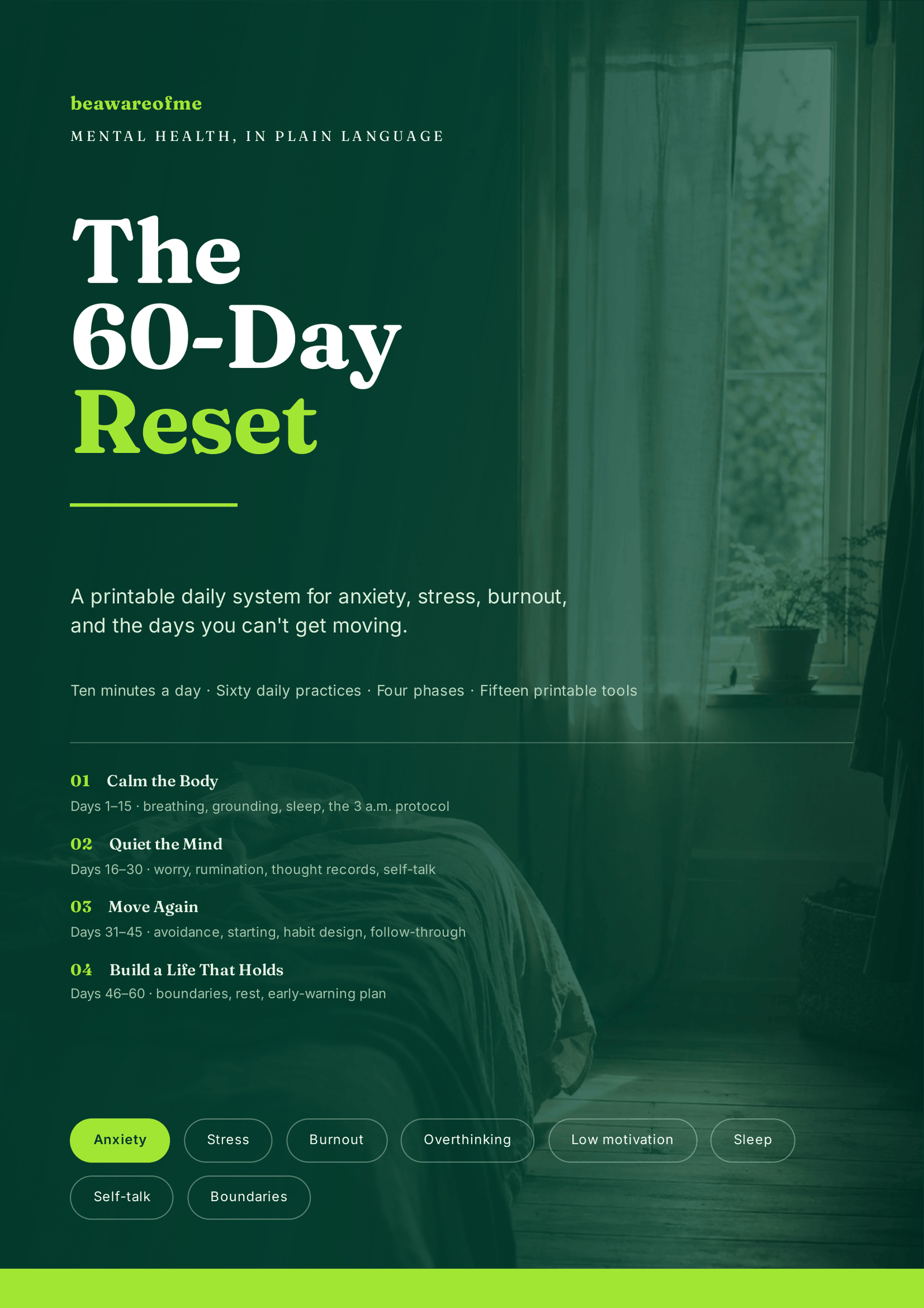
The 60-Day Reset
Everything on this page, sequenced into a printable ten-minute daily practice — 84 pages across anxiety, sleep, overthinking and low motivation, with a two-minute version of every day for the hard ones.
Instant PDF · 60 daily practices · 15 printable tools · Educational, not therapy
3. Demanding it stop right now
Checking every ten seconds — is it working? why am I still panicking? — is resistance wearing a calm costume, and it keeps the alarm fed. Give the wave permission to take the minutes it takes.
4. Googling symptoms mid-attack
Searching “heart attack symptoms” while panicking is pouring gasoline on the fire, and reassurance-seeking becomes its own compulsive loop. Get checked out properly once, then trust the diagnosis instead of re-litigating it at 2 a.m.
5. Building a life around avoiding attacks
Skipping the highway, the crowd, the flight. Each avoidance buys short-term calm and long-term territory loss. If your map of “safe places” is shrinking, that’s precisely when therapy helps most.
FAQ: how to stop a panic attack
How long does a panic attack last?
Most panic attacks peak within about ten minutes and ease significantly over the next twenty to thirty, though the shaky, drained aftermath can linger for an hour or more. It feels endless from the inside, but the surge is on a biological timer — your body can’t sustain peak alarm indefinitely.
Can you stop a panic attack once it starts?
You usually can’t slam it to a halt, but you can dramatically shorten and soften it. Naming it as a panic attack, extending your exhales, and grounding your body all cut off the fear-of-fear loop that fuels the surge. Ironically, accepting the wave instead of fighting it is what brings it down fastest.
What’s the difference between a panic attack and an anxiety attack?
“Panic attack” describes a sudden, intense surge that peaks in minutes, often out of nowhere, with strong physical symptoms. “Anxiety attack” isn’t a formal clinical term — people usually mean a slower build of intense worry tied to a stressor. The practical difference: panic is a spike, anxiety is a climb.
Why do I get panic attacks at night?
Nocturnal panic attacks jolt some people out of sleep with a pounding heart and a sense of doom, and they’re more common than most realize. Shifting sleep stages, stress carried into the night, and the vulnerability of lying in the dark all play a part. The same tools work: name it, slow the exhale, ground. If they’re frequent, mention them to a doctor.
Can a panic attack hurt you or cause a heart attack?
Panic attacks are intensely uncomfortable but not considered dangerous in themselves — the racing heart and breathlessness are an adrenaline surge, not damage. That said, the symptoms genuinely overlap with cardiac ones, so a first episode, or anything unusual for you, deserves a proper medical check.
When should I see a doctor about panic attacks?
See someone if attacks are recurring, if you’ve started avoiding places or situations because of them, if the fear of the next attack occupies your days, or if symptoms ever feel different from your usual pattern. Panic disorder responds very well to therapy — particularly CBT — and getting help early prevents the avoidance habits that make it harder later.
The bottom line on stopping a panic attack
Everything about how to stop a panic attack comes down to one reversal: the fear of the symptoms is the fuel, so naming the false alarm and letting the wave pass — long exhales, feet on the floor — beats every attempt to fight it off. Practice the breath on calm days so it’s there on the bad ones, starting with our cornerstone guide to grounding techniques for anxiety — then browse the rest of our anxiety guides. For a gentler daily baseline, the Calm Reset Bundle was built for exactly that slow rebuild.

Quiet the noise — without burning your phone in a field.
Get Beat Information Overload free, plus the occasional calm, no-hype note from me.