

Sleep and mental health are intricately linked, forming a cycle that can be difficult to break once disrupted. Poor sleep can exacerbate symptoms of mental health disorders, while issues like anxiety, depression, and stress often make it harder to get quality rest. In our modern world, where work demands and emotional stressors are ever-increasing, it’s no surprise that many individuals struggle with both sleep problems and mental health challenges. However, understanding this connection is the first step toward creating healthier sleep patterns and improving mental well-being.

Most of what you read this week will be gone by Thursday.
That isn't a discipline problem. It's what happens to information you never write down. Beat Information Overload is a free 35-page workbook that turns reading into something that stays.
Get the free workbook No cost · unsubscribe in one clickIn this article, we will explore the science behind the sleep-mental health connection and provide actionable strategies to break free from this harmful cycle. From understanding how different mental health conditions affect sleep to practical techniques that promote better sleep and mental health, this guide will help you regain control. By integrating these tips into your life, you can set the stage for long-term emotional and physical health, which will not only improve your sleep but also your overall quality of life.
The Vicious Cycle Between Sleep and Mental Health
How Sleep Affects Mental Health
Quality sleep is essential for cognitive functioning, emotional regulation, and resilience to stress. Sleep deprivation impairs the brain’s ability to process emotions and maintain balance, leading to increased irritability, mood swings, and anxiety. Lack of sleep also heightens the brain’s stress response, making even minor stressors feel overwhelming. Long-term sleep deprivation has been linked to a greater risk of developing mental health conditions, such as depression, generalized anxiety disorder (GAD), and bipolar disorder.
Research shows that when you don’t get enough sleep, your brain’s amygdala, which controls fear and anxiety, becomes hyperactive. This makes it harder to manage emotions effectively. At the same time, the prefrontal cortex, which regulates decision-making and impulse control, becomes less functional. This creates a dangerous feedback loop where poor sleep leads to emotional instability, and emotional instability disrupts sleep further.
How Mental Health Affects Sleep

There's a version of this that asks you questions back.
An article can tell you what burnout is. A workbook makes you locate where you actually are in it, on paper, in your own handwriting. That's The Burnout Fix — ninety-odd pages of it.
Look at the workbook →Mental health disorders, such as anxiety and depression, have a profound impact on sleep quality. For instance, people with anxiety often experience racing thoughts at night, which make it difficult to fall asleep. Even if they do manage to drift off, their sleep is often shallow, leading to frequent awakenings. Depression, on the other hand, can result in either insomnia or hypersomnia, where individuals struggle to sleep or sleep excessively without feeling refreshed.
Anticipatory anxiety, a common feature in people who worry about the future, can further complicate the relationship between sleep and mental health. You can explore techniques to manage anticipatory anxiety here, helping to break the sleep-anxiety cycle.
Breaking the Cycle: Practical Strategies
Develop a Consistent Sleep Routine
One of the most effective ways to improve both sleep and mental health is by developing a consistent sleep routine. Going to bed and waking up at the same time every day, even on weekends, can help regulate your body’s internal clock (circadian rhythm). This stability reduces the chances of insomnia or sleep disturbances. Creating a calming pre-sleep routine, such as reading, meditation, or deep breathing exercises, can also signal to your brain that it’s time to wind down.
Incorporating these techniques into your nightly routine helps reduce the impact of mental health stressors like anxiety. For example, adopting stress-reducing activities can help you manage future worries, which often worsen before bedtime. You can find more information on how to deal with these future-focused worries here.
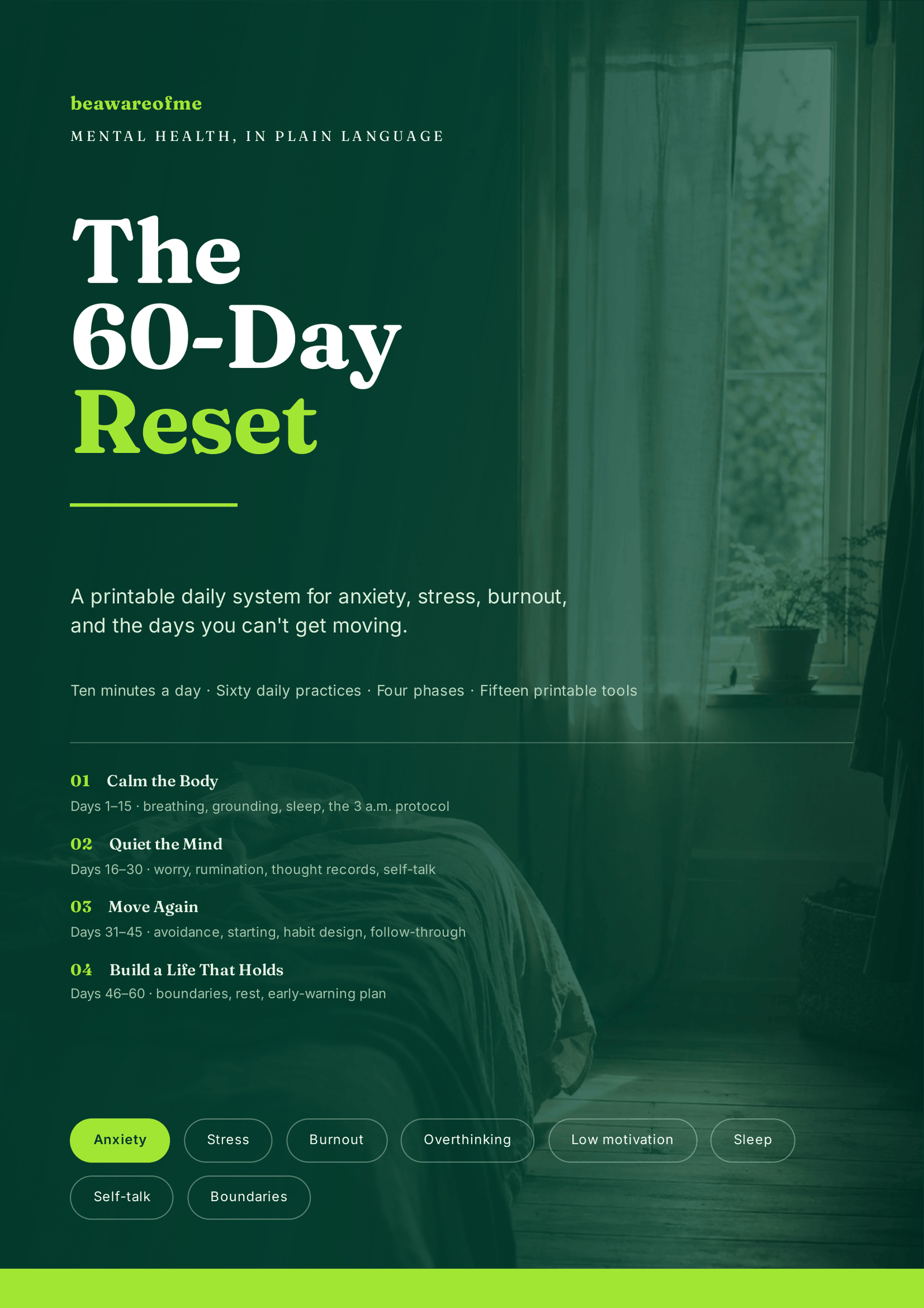
The 60-Day Reset
Everything on this page, sequenced into a printable ten-minute daily practice — 84 pages across anxiety, sleep, overthinking and low motivation, with a two-minute version of every day for the hard ones.
Instant PDF · 60 daily practices · 15 printable tools · Educational, not therapy
Cognitive Behavioral Therapy for Insomnia (CBT-I)
CBT-I is an evidence-based therapeutic approach designed to treat insomnia by changing the thought patterns and behaviors that contribute to sleep problems. This method has been shown to not only improve sleep but also alleviate symptoms of anxiety and depression, creating a positive domino effect. CBT-I works by addressing harmful beliefs around sleep (e.g., “I will never sleep well again”) and replacing them with more realistic, constructive ones. Additionally, it encourages establishing sleep hygiene practices like limiting screen time before bed and avoiding caffeine in the afternoon.
By focusing on changing these behaviors and thoughts, you can effectively manage the cycle of poor sleep and mental health issues. More on healing from past grievances that may affect your emotional state and sleep can be found here.
Limit Screen Time and Blue Light Exposure
One critical factor often overlooked in sleep hygiene is the impact of screen time. The blue light emitted by smartphones, tablets, and laptops suppresses the production of melatonin, the hormone responsible for regulating sleep. Limiting your screen use at least an hour before bed can significantly improve your sleep quality. Instead of scrolling through social media, consider using that time for activities that promote relaxation, such as reading a physical book or practicing mindfulness.
Most of what you read this week will be gone by Thursday.
That isn't a discipline problem. It's what happens to information you never write down. Beat Information Overload is a free 35-page workbook that turns reading into something that stays.
Get the free workbook No cost · unsubscribe in one clickFor remote workers, the struggle to maintain a work-life balance can be particularly challenging, leading to increased stress and poorer sleep quality. Remote work environments can blur the lines between rest and productivity, making it harder to “switch off.” You can explore the hidden struggles of remote workers here, where work-related stress often carries over into sleep problems.

The Impact of Nutrition and Exercise
How Diet Influences Sleep and Mental Health
Your diet plays a significant role in both sleep and mental health. Foods rich in tryptophan, an amino acid that promotes serotonin production (a mood stabilizer), can improve sleep quality and overall mental well-being. Additionally, reducing your intake of sugar, caffeine, and highly processed foods can prevent mood swings and stabilize your energy levels, making it easier to sleep soundly.
Exercise for Better Sleep and Reduced Anxiety
Physical activity is another powerful tool for improving sleep and mental health. Regular exercise can reduce symptoms of anxiety and depression by releasing endorphins—natural chemicals in the brain that promote feelings of well-being. Even moderate activities like walking or yoga can help reduce muscle tension and promote relaxation, making it easier to fall asleep and stay asleep throughout the night.
Stress Management Techniques
Mindfulness and Meditation
Incorporating mindfulness into your daily routine can significantly improve both sleep quality and mental health. Mindfulness practices such as meditation, progressive muscle relaxation, and deep breathing exercises help calm the nervous system, reducing stress and anxiety. These practices help quiet the mind before bed, making it easier to drift off into a restful sleep. Studies have shown that individuals who practice mindfulness report better sleep quality and fewer insomnia symptoms.
Journaling Before Bed
Journaling can be a powerful tool for managing anxious thoughts that often keep you awake at night. By writing down your worries, you can externalize them, making them feel less overwhelming. Keeping a gratitude journal, where you note positive experiences from your day, can also shift your focus from stress to calm, improving your mental state before bedtime.
There's a version of this that asks you questions back.
An article can tell you what burnout is. A workbook makes you locate where you actually are in it, on paper, in your own handwriting. That's The Burnout Fix — ninety-odd pages of it.
Look at the workbook →Conclusion
The connection between sleep problems and mental health is undeniable, but the good news is that the cycle can be broken. By understanding how these two aspects of your well-being are intertwined, you can take actionable steps to improve both your sleep and mental health. Whether it’s through CBT-I, mindfulness practices, or simply improving your sleep hygiene, the benefits are clear: better emotional balance, less stress, and ultimately, a better quality of life.
If you’re looking for more techniques on letting go of past grievances that could be affecting your sleep or emotional health, you can read more here. Likewise, if you’re facing anticipatory anxiety that disrupts your sleep, don’t hesitate to explore additional strategies here.
images credit: pexels

Quiet the noise — without burning your phone in a field.
Get Beat Information Overload free, plus the occasional calm, no-hype note from me.