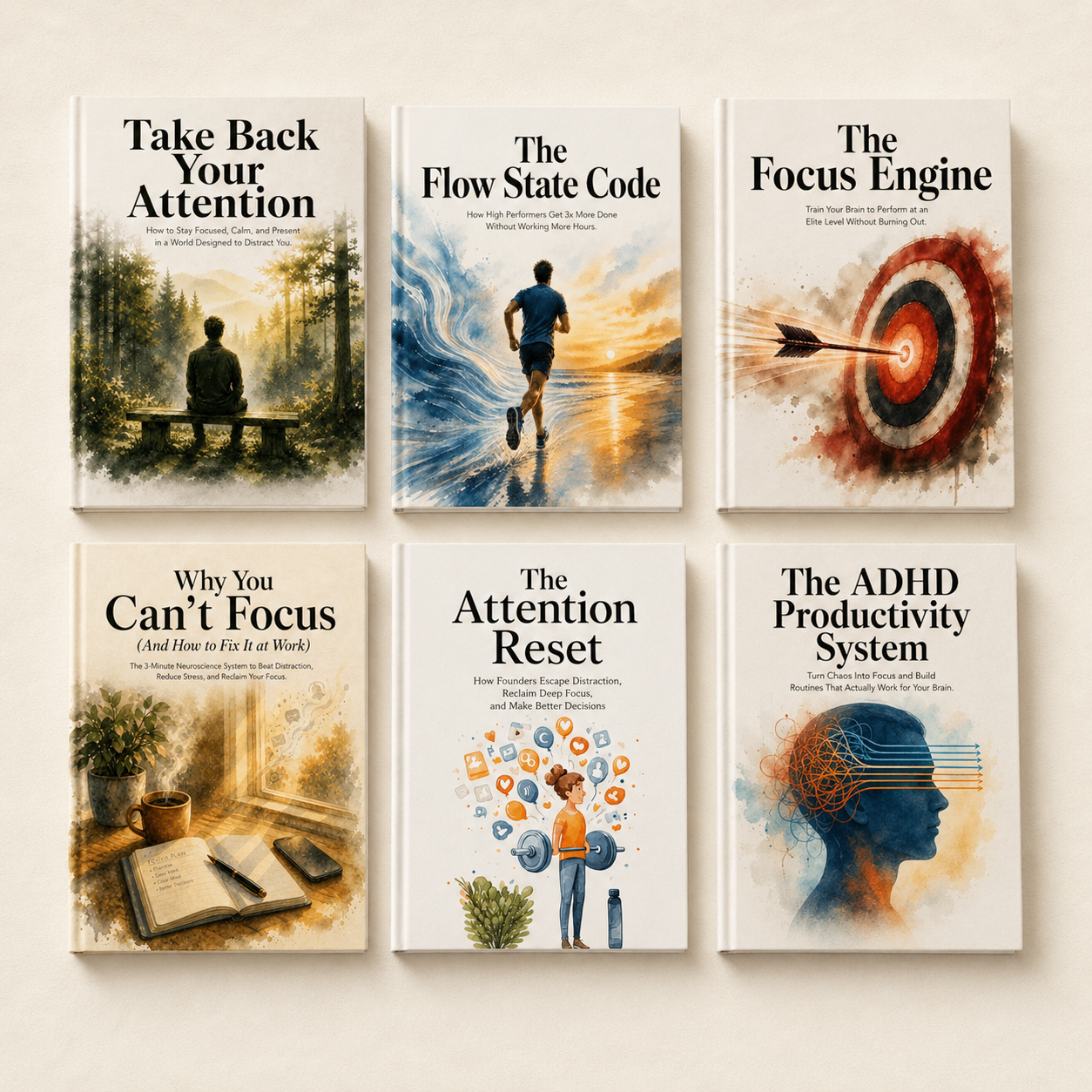

Have you ever found yourself staring at a screen without thinking about anything else, reading the same sentence over and over, or feeling mentally drained without getting anything done? You might have asked, “Why can’t I focus?” If so, this question is more common than you might think. It affects students, professionals, parents, and artists. Not being able to focus can hurt your work, learning, relationships, and self-esteem.

Understanding why it happens doesn't make it stop.
You can know exactly what your nervous system is doing at 3 a.m. and still be awake at 3 a.m. Reading is where it starts. The Calm Reset Bundle is the part where you do something about it.
See the bundle →The good news is that you can learn how to focus. It’s not something you have to have. This guide goes into great detail about why concentration fails and gives you useful, long-lasting tips for improving it. You can get your mental clarity and productivity back for good by figuring out what’s causing the problems and using the right methods.
What Focus Really Means

Focus is the brain’s ability to keep distractions out of the way while it works on a task, thought, or goal. It includes working memory, controlling your attention, controlling your emotions, and staying motivated.
To really focus, you don’t have to make your mind work harder; you just have to set up the right conditions for your attention to flow naturally. Your brain is trying to tell you that something needs to change when you ask yourself, “Why can’t I focus?”
Why Focus Fails: Important Reasons

Cognitive Overload and Mental Fatigue
There are limits to what your brain can do. When you constantly have to solve problems, make decisions, or do a lot of things at once, it can wear you out mentally. Some signs are:
- Hard time getting started on tasks
- A lot of mind-wandering
- Less creativity and accuracy
When you’re overloaded all the time, it can be hard to focus until you get some rest or make changes to your life.

Most of what you read this week will be gone by Thursday.
That isn't a discipline problem. It's what happens to information you never write down. Beat Information Overload is a free 35-page workbook that turns reading into something that stays.
Get the free workbook No cost · unsubscribe in one clickWorry and Stress

Stress puts the brain in survival mode, which means it focuses on finding threats instead of deep thinking. When you’re anxious, you think about things that worry you or could happen, which makes it harder to focus. Both make it hard to pay attention and make it normal to ask, “Why can’t I focus even when I try?”
Not Enough Sleep
Sleep is important for memory, focus, and emotional stability. Not getting enough restorative sleep makes you less alert, makes it harder to pay attention, and makes it easier to get distracted. Even small amounts of sleep loss can make it hard to concentrate.
Emotional Weight
Anger, sadness, or guilt that you can’t get rid of takes up mental space. The brain keeps going back to these feelings, which makes it harder to pay attention to what’s going on right now.
No Drive or Meaning
Things that don’t seem important or don’t fit with your values can make it hard to focus. The brain naturally gives more importance to activities that are fun or important. Without that connection, it’s hard to stay focused, no matter what you’re doing.
Distractions in the Environment and on the Internet

Distractions like noise, clutter, interruptions, and constant notifications break up attention. Even small things that get in the way make it take longer to get back on track and teach the brain to expect interruptions instead of depth.
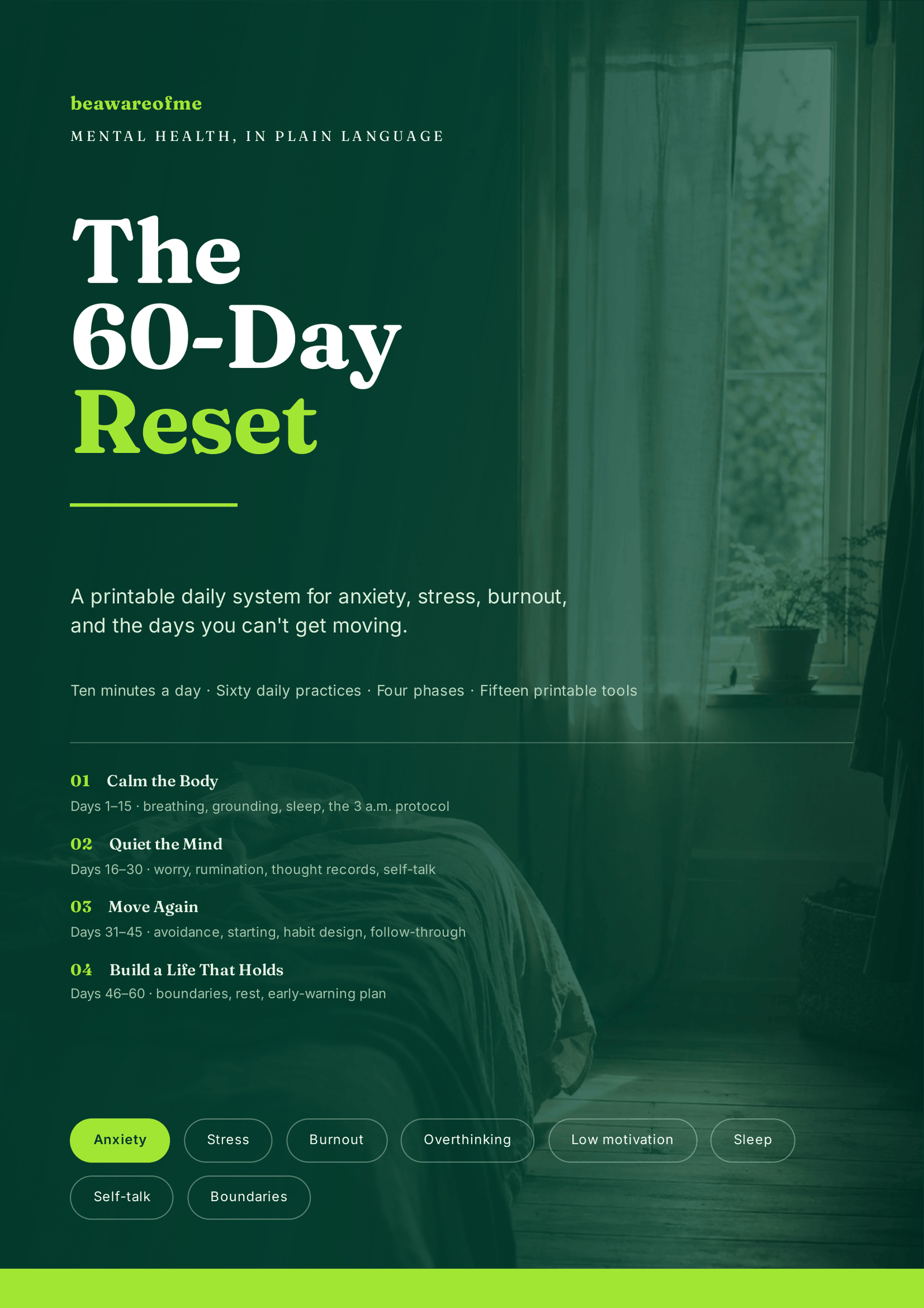
The 60-Day Reset
Everything on this page, sequenced into a printable ten-minute daily practice — 84 pages across anxiety, sleep, overthinking and low motivation, with a two-minute version of every day for the hard ones.
Instant PDF · 60 daily practices · 15 printable tools · Educational, not therapy
Too Much Information
The brain gets used to quick stimulation when it is constantly exposed to news, social media, and entertainment. This makes it less tolerant of slower, more difficult tasks. This makes you mentally tired and makes it hard to stay focused.
Health and Physical Factors
Food and Water: The brain needs a steady supply of energy and nutrients. Not eating meals or relying on sugar and caffeine makes your energy levels go up and down.
Exercise: Moving your body improves blood flow and mental alertness. Being inactive makes it harder to concentrate.
Medical or Hormonal Issues: Long-term focus problems may be linked to health issues. When you need help, talking to a professional can help.
Your Mindset Matters

Perfectionism: Being afraid of making mistakes can make it hard to focus and make you put things off.

There's a version of this that asks you questions back.
An article can tell you what burnout is. A workbook makes you locate where you actually are in it, on paper, in your own handwriting. That's The Burnout Fix — ninety-odd pages of it.
Look at the workbook →Negative Self-Talk: Thoughts like “I can’t focus” or “I’m not getting enough done” drain your energy and make you more stressed.
Changing the way you think about curiosity, patience, and self-compassion directly helps you stay focused.
Ways to Improve Focus That Work
Set a Daily Routine

Having the same wake-up, meal, and work times every day helps you pay attention naturally and makes it easier to make decisions.
Do One Thing at a Time
Do one thing at a time. To improve your ability to focus, set aside time for deep work and avoid doing more than one thing at a time.
Make the Most of Your Surroundings
Make your work area as free of distractions as possible. Get rid of clutter, turn off notifications, and set aside time for quiet to focus.
Gradually Teach Attention
Start with short bursts of focused work, and then slowly make them longer. Focus is a skill that gets better with practice, not right away.
Think About Your Feelings Carefully

Writing in a journal, thinking about things, and taking mindful breaks can help keep unresolved feelings from draining your mental energy.
Make Sure Tasks Have Meaning
Make sure that your daily tasks are in line with your values or long-term goals. Even small changes in how you think can boost your motivation and mental engagement.
Give Rest and Recovery a High Priority
Taking regular breaks, getting enough sleep, and doing things that help you relax, like walking or meditating, will help you stay focused over time.

It's rarely a motivation problem. It's five apps and no single page.
Habits in one place, money in another, notes in a third, and nowhere that shows you how the month is actually going. The Digital Life Planner is one spreadsheet that holds all of it and does the arithmetic while you get on with your life.
See how it works →Focus on Different Parts of Life

At Work: Setting clear priorities, setting boundaries, and blocking out time for deep work all help you stay focused.
While Studying: Structured sessions with active review help you remember things and stay focused.
In Daily Life: Being present in conversations, hobbies, and free time makes you happier and more focused.
Advanced Ways to Stay Focused

- Pomodoro Method: 25-minute focus blocks followed by 5-minute breaks train sustained attention.
- Mindfulness Meditation: Helps you control your attention and manage emotions.
- Task Visualization: Making a mental map of the steps you need to take before you start a task can reduce overwhelm.
When to Get Help
If you keep having trouble focusing even after making changes to your life, you might want to see a professional. Attention problems are signs, not failures.
Questions and Answers About Focus

Q: Why can’t I concentrate even though I slept well?
A: Stress, the environment, or emotions may still take up your attention.
Q: How long does it take to get better at focusing?
A: Practicing consistently for weeks or months slowly builds up your attention.
Q: Do focus exercises really work?
A: Yes. Mindfulness, doing one thing at a time, and setting aside time for specific tasks all have long-lasting benefits.

Q: How does diet affect focus?
A: Eating a balanced diet keeps your energy and mental clarity stable, which helps you stay focused.
Conclusion: Learning to Focus for Life
Asking yourself why you can’t focus is a step toward getting to know your mind. Focus is not something you are born with; it is a skill that is shaped by your biology, habits, mindset, and surroundings. You can improve your focus by working on your sleep, stress, emotions, motivation, and environment.
It is possible to get better, but it will take time. With time, self-awareness, and regular practice, focus becomes dependable, adaptable, and very rewarding. This isn’t a quick fix; it’s a skill that will help you be more productive, creative, and healthy for the rest of your life.

Quiet the noise — without burning your phone in a field.
Get Beat Information Overload free, plus the occasional calm, no-hype note from me.