
People often think of anxiety as something that can be seen, like panic attacks, avoiding certain things, or fear that is so strong that it gets in the way of daily life. But not all anxiety is the same. Some people seem very smart, organized, and even successful, but they are actually dealing with constant inner tension. This paradox is what makes high-functioning anxiety go unnoticed.

Understanding why it happens doesn't make it stop.
You can know exactly what your nervous system is doing at 3 a.m. and still be awake at 3 a.m. Reading is where it starts. The Calm Reset Bundle is the part where you do something about it.
See the bundle →High-functioning anxiety is not an official clinical diagnosis, but mental health professionals widely agree that it is a pattern of behavior in which people meet or exceed expectations while dealing with long-term worry, self-doubt, and stress. People often don’t notice these people’s anxiety because they keep doing well in their personal and professional lives. This is true for others and for the people themselves.
This article looks at the deeper reasons why high-functioning anxiety goes unnoticed, what it is, the risks of ignoring it, and proven ways to deal with it in a healthy way.
What High-Functioning Anxiety Is
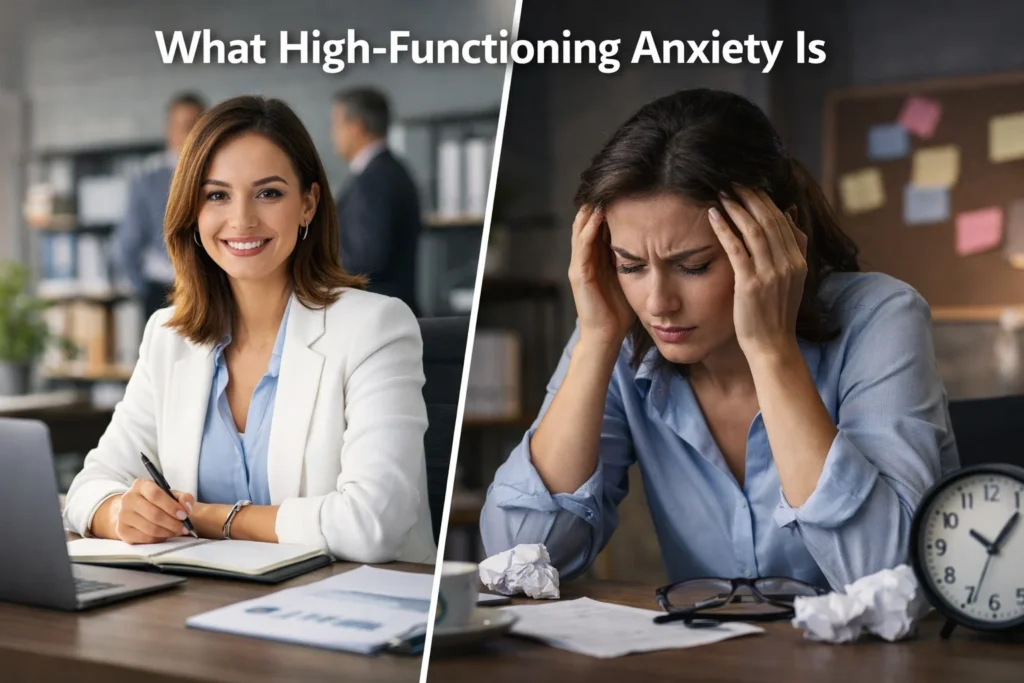
There is a range of high-functioning anxiety. It has a lot in common with generalized anxiety, but it looks different on the outside.
Main Features
People with high-functioning anxiety often:
- Look calm, collected, and in charge
- Do well at work or school
- Are very organized and pay attention to the little things
- Have high expectations for themselves
- Fight with yourself about overthinking and being afraid of failing
- Have a lot of mental stress or restlessness all the time
These people don’t often withdraw or shut down like people with more obvious forms of anxiety do. Instead, they keep going, often using their anxiety as fuel.

It's rarely a motivation problem. It's five apps and no single page.
Habits in one place, money in another, notes in a third, and nowhere that shows you how the month is actually going. The Digital Life Planner is one spreadsheet that holds all of it and does the arithmetic while you get on with your life.
See how it works →Why High-Functioning Anxiety Goes Unnoticed

To understand why high-functioning anxiety goes unnoticed, we need to look at how people act and how society sees it.
1. Success hides struggle
One of the main reasons why people with high-functioning anxiety don’t get help is that they can hide it behind their success.
People with high-functioning anxiety often:
- Always meet deadlines
- Keep good relationships
- Show that you can be trusted and are good at what you do
People don’t often question their internal problems because they seem to be productive and capable. People often think that being successful on the outside means being happy on the inside, but this isn’t always true.
2. Anxiety Is Misunderstood as Good Traits

A lot of the signs of high-functioning anxiety are rewarded by society.

For instance:
- People may see perfectionism as dedication
- Some people might see over-preparation as being responsible
- Being busy all the time might be seen as ambition
These actions can hide anxiety that is already there, making it harder for others and the person themselves to see that there is a problem.
3. Taking Symptoms Inside

Another reason people don’t notice high-functioning anxiety is that most of the symptoms are inside the person.
Some common internal experiences are:
- Constant worry
- Thoughts that race
- Being afraid of making mistakes
- Trouble unwinding
Because these things aren’t always obvious, they stay hidden behind a calm exterior.
4. Fear of being weak
A lot of people with high-functioning anxiety don’t talk about their problems because:
- Fear of looking weak
- Worry about letting other people down
- The need to keep up a certain image
This unwillingness to talk about their anxiety makes it even harder to see.
5. Expectations in society and culture
A lot of cultures put a lot of value on getting things done and being productive. This can cause:
- Making stress normal
- Praise for working too much
- Making mental health problems seem less important
Because of this, behaviors associated with high-functioning anxiety may be perceived as typical or even favorable.
6. Not being aware
Many people don’t know about high-functioning anxiety because it isn’t a real diagnosis.
Not knowing:
- People may not know what their symptoms are
- Other people might not see signs of distress.
- People may not ask for or offer help
Signs That You Might Have High-Functioning Anxiety
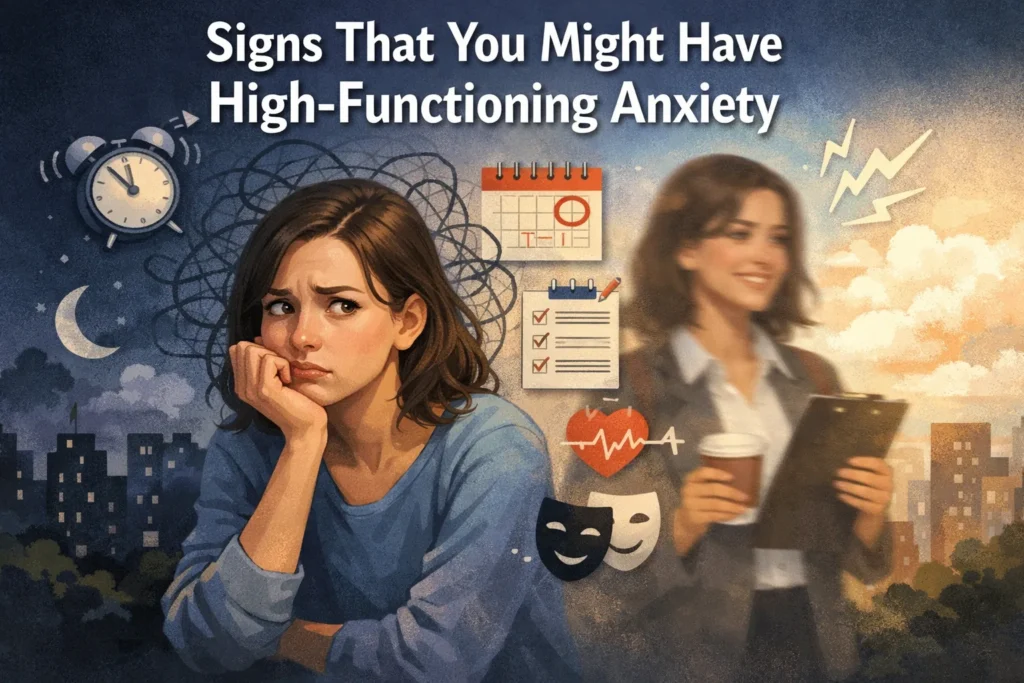
It’s important to know the signs so you can figure out why high-functioning anxiety goes unnoticed.
Signs of Emotion
- Worrying all the time, even about little things
- Being on edge or not being able to relax
- Being afraid of failing even when you succeed
- Being irritable or emotionally drained
Signs of Cognition
- Making decisions too much
- Hard to turn off thoughts
- Inner talk that is critical of oneself
- Making bad things seem worse
Signs of Behavior
- Working too much or making too many promises
- Not taking breaks or resting
- Looking for constant reassurance
- Putting things off because you’re afraid of making mistakes
Signs in the Body
- Tension in the muscles
- Pain in the head
- Problems with sleep
- Tired even after getting enough sleep
The Hidden Costs of Anxiety That Works Well
People may seem successful on the outside, but on the inside, the toll can be huge.
1. Burnout

Long-term high levels of stress can make you feel tired both mentally and physically.
It's rarely a motivation problem. It's five apps and no single page.
Habits in one place, money in another, notes in a third, and nowhere that shows you how the month is actually going. The Digital Life Planner is one spreadsheet that holds all of it and does the arithmetic while you get on with your life.
See how it works →2. Relationships that don’t work
Being a perfectionist and always worrying can:
- Make relationships tense
- Make it hard to be present
- Make it hard to understand each other
3. A lower quality of life
Even when people are doing well, they may not be having fun because:
- Constant worry
- Not being able to relax
- Not being happy
4. Higher Chance of Mental Health Problems
High-functioning anxiety can lead to:
- Sadness
- Disorders of panic
- Conditions that are caused by long-term stress
Examples from the Real World

Example 1: The Person Who Does Well
A college student always gets good grades and is involved in a lot of other activities outside of school. People admire their discipline, but they are very anxious about keeping up their performance and are afraid of letting others down.
Example 2: The Dependable Worker
A worker is known for getting things done on time and doing their job well. But they are always worried about making mistakes and have a hard time relaxing after work.
Example 3: The Person Who Plans Social Events
Someone who organizes events and keeps strong friendships may seem socially confident, but they may be worried about being judged or rejected.
These examples show why high-functioning anxiety is hard to see: it hides behind being competent and dependable.
It's rarely a motivation problem. It's five apps and no single page.
Habits in one place, money in another, notes in a third, and nowhere that shows you how the month is actually going. The Digital Life Planner is one spreadsheet that holds all of it and does the arithmetic while you get on with your life.
See how it works →Expert Advice on Anxiety That Works Well
Mental health professionals stress that anxiety isn’t just about how it affects your daily life.
Important Things to Notice
- Functionality does not equal health
- You can be successful and still feel anxious
- Early detection leads to better results
Psychological research indicates that individuals who internalize stress while sustaining performance are less inclined to seek assistance, thereby perpetuating the invisibility of their condition.
Ways to Deal with High-Functioning Anxiety

Figuring out why high-functioning anxiety goes unnoticed is only part of the answer. The next step is to learn how to deal with it well.
1. Get to know yourself better
It’s very important to know your patterns.
Try:
- Writing down your thoughts and feelings
- Finding out what sets you off
- Seeing signs of illness
2. Fight the need to be perfect
Being a perfectionist can make you anxious.
Try:
- Making goals that are possible
- Accepting that mistakes are part of learning
- Putting more emphasis on progress than on perfection
3. Set healthy limits
To avoid overcommitting:
- How to say no
- Putting tasks in order of importance
- Making time for downtime
4. Learn how to relax
Relaxing on a regular basis can help lower anxiety.
Some good ways to do this are:
- Exercises for deep breathing
- Meditating
- Relaxing your muscles in a progressive way
5. Get help from a professional
Cognitive-behavioral therapy (CBT) and other types of therapy work very well to help with anxiety.
A mental health professional can help with:
- Find patterns in your thoughts
- Come up with ways to deal with things
- Give personalized advice
6. Make talking about mental health normal
Reducing stigma is one way to help explain why people with high-functioning anxiety go unnoticed.
Encourage:
- Start conversations
- Sharing what you’ve been through
- Helping others
Long-Term Plans for Lasting Health
Focus on habits that work over time to make sure the changes last.
1. Taking care of yourself regularly
Include daily habits like:
- Enough sleep
- A balanced diet
- Getting regular exercise
2. Changes in attitude
Take on healthier points of view:
- Put effort ahead of results
- Accept that things are not always clear
- Be kind to yourself
3. Thinking about things often
Check in on your mental health from time to time and change your plans as needed.
4. Create a support network
Strong relationships give you emotional support and a different point of view.
Keeping High-Functioning Anxiety From Being Missed

To figure out why high-functioning anxiety goes unnoticed, we all need to be aware.
For People
- Pay attention to what’s going on inside you
- Recognize stress even when you’re doing well
- Get help when you need it
For Employers and Teachers
- Raise awareness about mental health
- Support a balance between work and life
- Be aware of signs other than performance
For the People
- Change what success means to include health
- Get rid of the stigma around mental health
- Promote open conversation
Conclusion
Understanding why high-functioning anxiety goes unnoticed shows an important truth: being successful on the outside doesn’t always mean you’re happy on the inside. A lot of people look like they can handle their anxiety, but they are actually having a hard time with it.
It is possible to deal with high-functioning anxiety in a meaningful and lasting way by recognizing the signs, questioning societal norms, and using effective strategies. Awareness is the first step toward change, not just for the people who are going through it but also for the communities that support them.
In the end, real success isn’t just about getting things done or achieving goals; it’s also about having balance, clarity, and peace of mind.

Quiet the noise — without burning your phone in a field.
Get Beat Information Overload free, plus the occasional calm, no-hype note from me.