
Teenagers are often glued to their phones, scrolling through social media feeds, in today’s digital world. A troubling question comes to mind for many parents: Is my teen addicted to social media? To help your teen live a healthy, balanced digital life, you need to know the signs of social media addiction and what it could mean for their mental health.

It's rarely a motivation problem. It's five apps and no single page.
Habits in one place, money in another, notes in a third, and nowhere that shows you how the month is actually going. The Digital Life Planner is one spreadsheet that holds all of it and does the arithmetic while you get on with your life.
See how it works →This guide is always relevant and gives parents, caregivers, and teachers information about teens who spend too much time on social media, how to spot the signs of addiction, and ways to help teens develop healthier habits that protect their mental health.
Teenagers’ Use of Social Media

Why Teens Like Social Media
Teenagers are going through a stage of development where they want to connect with others, feel validated, and form their own identities. Instagram, Snapchat, TikTok, and YouTube are all examples of social media sites that let you get feedback right away, talk to other people, and feel like you’re part of a community. These platforms also use the brain’s reward system, which releases dopamine and makes people want to use them again and again.
Is Using Social Media Bad for You?
No. When used in moderation, social media can be good for you. It can help teens be creative, express themselves, get support from their peers, and find useful resources. But things go wrong when use becomes too much, compulsive, or emotionally painful.
What Does It Mean to Be Addicted to Social Media?
The DSM-5 (Diagnostic and Statistical Manual of Mental Disorders) doesn’t officially list social media addiction, but it is similar to behavioral addictions like gambling. It entails compulsive behavior despite adverse consequences and challenges in regulating usage.
Teenagers who are addicted to social media often show signs that are similar to those of other types of addiction, such as psychological distress, withdrawal symptoms, and a drop in performance in other areas of life.
It's rarely a motivation problem. It's five apps and no single page.
Habits in one place, money in another, notes in a third, and nowhere that shows you how the month is actually going. The Digital Life Planner is one spreadsheet that holds all of it and does the arithmetic while you get on with your life.
See how it works →How to Tell If Your Teen Is Addicted to Social Media

Here are some important signs that your teen may be addicted to social media:
1. Being Too Focused on Social Media
- Checking notifications all the time, even in the middle of the night.
- Talking too much about social media trends or people who are popular on them.
- Feeling anxious or upset when you can’t get to social media.
2. Not Taking Care of Responsibilities
- Decline in academic performance.
- Ignoring chores or family duties.
- Not meeting deadlines or forgetting promises because you spend too much time online.
3. Trouble Sleeping
- Staying up late to post or scroll.
- Waking up a lot to check notifications.
- Being tired or grumpy during the day.
4. Changes in Mood
- Not spending time with family or friends in person.
- When asked to cut back on screen time, they get angry or irritable.
- Depression or anxiety associated with online interactions (e.g., cyberbullying, insufficient likes).
5. Not Being Interested in Things That Happen Outside of the Internet

- Giving up on sports, hobbies, or social events.
- Choosing to connect with people online instead of in person.
6. Hiding What You Do Online
- When parents are around, hiding screens.
- Using hidden accounts or clearing your browsing history.
- Getting defensive when people ask about your online habits.
7. Failed Attempts to Cut Back
- They know they use it too much, but they can’t stop.
- Repeated attempts to cut back on use that don’t work.
The Effects of Too Much Social Media on Mental Health
Teenagers who are addicted to social media don’t just waste time; it can also have a big impact on their mental and emotional growth. Studies from groups like the American Psychological Association and Common Sense Media show that there are a number of risks to mental health.
Anxiety and Depression
Too much time spent on social media has been linked to higher rates of anxiety and depression. Teenagers may go through:
- Feeling bad about yourself because you compare yourself to others.
- Fear of missing out (FOMO).
- Social anxiety from the pressure to respond quickly or keep up a digital persona.
Online Harassment and Cyberbullying

Teens are at risk of being bullied, left out, or taken advantage of when they are online. These experiences can cause:
- Emotional trauma.
- Problems with trust.
- Higher chance of hurting yourself or having suicidal thoughts.
Problems with How You Look
Teenagers, especially girls, can have a hard time seeing their own bodies when they see idealized images on social media. This could lead to:
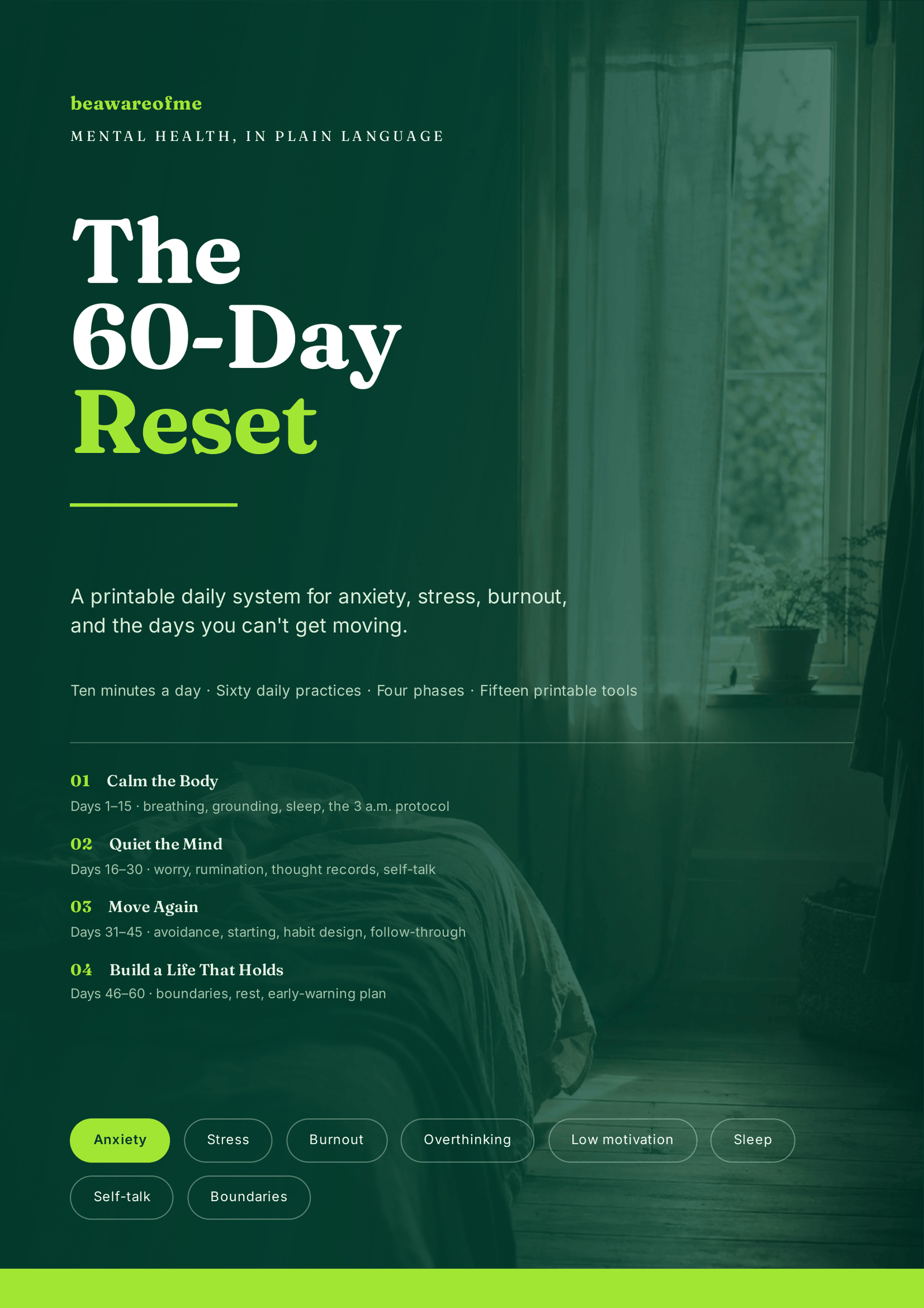
The 60-Day Reset
Everything on this page, sequenced into a printable ten-minute daily practice — 84 pages across anxiety, sleep, overthinking and low motivation, with a two-minute version of every day for the hard ones.
Instant PDF · 60 daily practices · 15 printable tools · Educational, not therapy
- Body dysmorphia.
- Disorders of eating.
- Low self-esteem.
Effects on Learning and Thinking
Too much time spent on screens can make it harder to focus, remember things, and learn. Teenagers who are always getting notifications may:
- Have a hard time paying attention in school.
- Not do well on tests or homework.
- Make attention spans shorter.
Long-Term Effects of Being Addicted to Social Media
Teenagers who are addicted to social media can have long-lasting problems if they don’t get help:
- Less Control Over Emotions: Teens may have a hard time dealing with bad feelings without something to keep them busy.
- Interpersonal Skills Deterioration: A predilection for digital communication may hinder the advancement of in-person social competencies.
- Addiction Can Happen Along With Anxiety, Depression, ADHD, or Substance Use Disorders.
What Makes Teens Addicted to Social Media?

Knowing what causes the problem can help you come up with good ways to fix it. Some common factors that contribute are:
1. Social Validation and Peer Pressure
Teenagers want to be accepted and get feedback, and likes and comments can become addictive ways to get that.
2. Boredom and Wanting to Get Away
Social media is always fun and a way to get away from stress or boredom in the real world.
The 60-Day Reset
Everything on this page, sequenced into a printable ten-minute daily practice — 84 pages across anxiety, sleep, overthinking and low motivation, with a two-minute version of every day for the hard ones.
Instant PDF · 60 daily practices · 15 printable tools · Educational, not therapy
3. Engagement Based on Algorithms
Platforms use algorithms that take advantage of people’s psychological weaknesses to keep them interested.
4. No Limits
Not having rules about screen time at home can lead to too much use.
5. Modeling by Parents
Teenagers copy what their parents do. Parents who spend too much time in front of screens can make their kids do the same.
How Parents Can Help: Strategies That Work and Last
To help teens who are addicted to social media, you need to be kind and organized. Here are some tried-and-true methods:
1. Talk to Each Other
- Talk to your teen about how social media affects their life.
- “How do you feel after being online?” is an open-ended question.
- Don’t judge to build trust.
2. Set Healthy Limits
- Make some areas off-limits for screens, like the dinner table and bedrooms.
- Work together to make schedules for screen time.
- Don’t use parental control tools too much; trust and talking are better in the long run.
3. Promote Activities That Don’t Require the Internet
- Encourage outdoor activities, sports, arts, and reading.
- Give people chances to socialize in the real world.
4. Show How to Use Things in a Balanced Way
- Show good habits when using screens.
- As a family, take breaks from technology.
- Do not use devices during quality time.
5. Keep an Eye on Your Mental Health
- Look for signs that someone is upset.
- If you need therapy or counseling, support it.
- Encourage people to write in a journal or be mindful to deal with their feelings.
6. Use Technology to Control Technology
- Put apps on your phone that keep track of how much time you spend on your screen.
- Look over the reports on how you use your time together.
- Talk about which apps help you grow and which ones drain you.
When to Get Help from a Professional
If your teen’s use of social media is having a big effect on their mental health, relationships, or daily life, it might be time to see a mental health professional. Check for:
- Severe mood swings linked to social media.
- Less ability to do well in school or make friends.
- Stepping back from real-life relationships.
Therapists who know how to work with teens can help your teen:
- Make ways to deal with things.
- Take care of any underlying mental health problems.
- Build up your digital resilience.
Helping Teens Build Digital Resilience
Instead of trying to get rid of social media, a better and more lasting goal is to build digital resilience:
- Critical Thinking: Teach your teen to question what they see online.
- Mindful Use: Encourage people to browse with a purpose instead of just scrolling.
- Emotional Awareness: Teach teens how to tell when they’re using social media to avoid their feelings.
Resources That Experts Recommend
Here are some well-known groups and tools that can help you learn and get help:
- Common Sense Media – Gives reviews and advice on how to use media that is appropriate for your age.
- Family Online Safety Institute – Advice for parents and teaching kids how to be good digital citizens.
- The American Academy of Pediatrics – Has guidelines for how much time kids should spend in front of screens.
- Center for Humane Technology – What tech does to people and how it affects them.
Last Thoughts
Social media isn’t bad in and of itself, but teens who use it too much can have problems that last. If you can spot the signs of a teen’s social media addiction early, you can take action to help them. Parents can help their teens have a healthy relationship with technology by encouraging them to talk to each other, setting limits, and supporting their mental health.
The 60-Day Reset
Everything on this page, sequenced into a printable ten-minute daily practice — 84 pages across anxiety, sleep, overthinking and low motivation, with a two-minute version of every day for the hard ones.
Instant PDF · 60 daily practices · 15 printable tools · Educational, not therapy
Don’t forget: the goal isn’t to get rid of screens; it’s to give teens the knowledge and skills they need to use them wisely. Families can keep their teens safe and healthy in the digital age by being consistent, empathetic, and using smart strategies.

Quiet the noise — without burning your phone in a field.
Get Beat Information Overload free, plus the occasional calm, no-hype note from me.