You go to bed exhausted, then lie there replaying the day. Morning arrives too soon, and by mid-afternoon every small worry feels huge. If that cycle sounds familiar, poor sleep habits may be feeding your anxiety and low mood more than you realise. This guide explains how the link works and gives you a calm, step-by-step plan to rebuild better nights, starting tonight.
Poor sleep habits can trigger anxiety and depression because tired brains react more strongly to stress and process positive emotions less well. Irregular bedtimes, late screens, caffeine, napping and lying awake in bed can all keep your nervous system on alert. Sleep and mental health affect each other in both directions, so worry spoils sleep and short sleep fuels worry. Steady wake times, a wind-down routine and early support help break the cycle.
- ✓Get up at the same time every day, even after a bad night, because a steady wake time anchors your whole sleep rhythm.
- ✓Aim for seven or more hours a night, the amount the CDC recommends for most adults aged 18 to 60.
- ✓Stop caffeine, alcohol and nicotine at least six hours before bed, as the NHS advises for better sleep.
- ✓Give worries a set time and a notebook earlier in the evening so they don’t take over your pillow.
- ✓If you can’t sleep after about 20 minutes, get up and do something calm in dim light until you feel sleepy.
- ✓Talk to a doctor if sleep problems last for months or make daily life hard to cope with.
How Poor Sleep Habits Quietly Feed Anxiety and Low Mood
Poor sleep habits feed anxiety and low mood because a short or broken night leaves your brain more reactive to stress and less able to enjoy good moments.
Think about the last time you slept badly. Small problems probably felt bigger, your patience ran thin and your mood dipped. That isn’t a character flaw. It’s what tired brains do, and poor sleep habits make those nights far more common.
According to the Sleep Foundation, sleep has demonstrated links to depression, anxiety and other mental health conditions. Lack of sleep seems to especially disrupt how your brain processes positive emotional content. So the good parts of your day land more softly, while the stressful parts land harder.
The two-way street
Here’s the part most advice gets backwards: sleep problems aren’t only a symptom of feeling anxious or low. The Sleep Foundation notes they may be “both a cause and consequence” of mental health problems. Worry keeps you awake, and short sleep makes you worry more.
That loop is frustrating. It’s also hopeful, because it means improving your sleep can ease your mood, and easing your mood can improve your sleep. You can start on either side, and for many people, changing poor sleep habits is the easiest place to begin.
What counts as a “sleep habit”
Sleep habits, sometimes called sleep hygiene, are the daily routines and surroundings that shape your rest. They include when you wake, what you drink, how you spend your evenings, how dark your room is and what you do when you can’t sleep.
7 Poor Sleep Habits That Keep Your Mind on Alert
Most poor sleep habits seem harmless on their own, but together they tell your body it’s still daytime and keep your stress system switched on.
| Habit | Why it backfires | Swap it for |
|---|---|---|
| Sleeping in after a bad night | Shifts your body clock and makes the next night harder | Same wake time, every day |
| Scrolling in bed | Bright light and stimulating content keep you alert | A paper book or audio in dim light |
| Late coffee or tea | Caffeine can linger for hours | Caffeine-free drinks after lunch |
| A nightcap to relax | Alcohol tends to break up sleep later in the night | Herbal tea or warm milk instead |
| Long daytime naps | Reduces your drive to sleep at night | Short rest without sleeping, or an earlier bedtime |
| Working or worrying in bed | Teaches your brain that bed is for thinking | Bed for sleep only; worries go on paper |
| Late, heavy dinners | A full stomach can make it harder to settle | Lighter evening meals, earlier if you can |
What the NHS recommends instead
The NHS guidance on insomnia suggests getting up at the same time every day, relaxing for about an hour before bed and keeping your bedroom dark and quiet. It also advises against tea, coffee, alcohol or smoking within six hours of bedtime, and against exercise within four hours of it.
Why Tired Nights Make Your Anxiety Louder
When you’re short on sleep, your mind becomes more alert to threats and less able to calm itself, so everyday worries feel bigger and harder to shake.
The tired-brain alarm
Without enough rest, your stress system stays on high alert. You may feel jumpy, irritable or wired yet exhausted. A delayed reply from a friend becomes a sign they’re angry. A small task at work becomes a disaster waiting to happen.
Poor sleep habits keep this alarm switched on, night after night, so anxiety gets louder over time. The good news is that the alarm quietens as your nights steady.
The bedtime worry spiral
Many people notice their worries peak when the lights go off. The day’s distractions disappear, and the mind fills the quiet with what-ifs. Then the fear of not sleeping adds another layer: “If I don’t sleep now, tomorrow will be awful.”
If nights are when anxiety hits hardest, our guide to nighttime anxiety and what helps covers it in more depth. And if you wake in the small hours with a racing mind, our steps for waking up at 3am with anxiety can help you settle.
How Short Nights Drag Down Your Mood
Ongoing short or broken sleep can lower your mood, drain your motivation and make it harder to enjoy things, which over time can feed into depression.
Low energy, low motivation, low mood
When you’re tired, everything takes more effort. You cancel plans, skip exercise and reach for quick comfort foods. Those choices make sense in the moment, yet they also remove the very things that lift mood. Poor sleep habits can start this slide without you noticing.
Signs your sleep may be affecting your mood
- You wake up feeling heavy or flat most mornings.
- Things you usually enjoy feel like hard work.
- You snap at people more easily than usual.
- You struggle to concentrate or make simple decisions.
- You sleep a lot more or a lot less than you used to.
Changes in sleep can also be an early sign of depression. Our guide to the early signs of depression explains what to look for, and our tips for easing morning low mood may help if mornings are your hardest time.
A 7-Day Reset for Poor Sleep Habits
You don’t need to fix everything at once; this simple week-long plan changes one habit a day so your body can adjust gently.
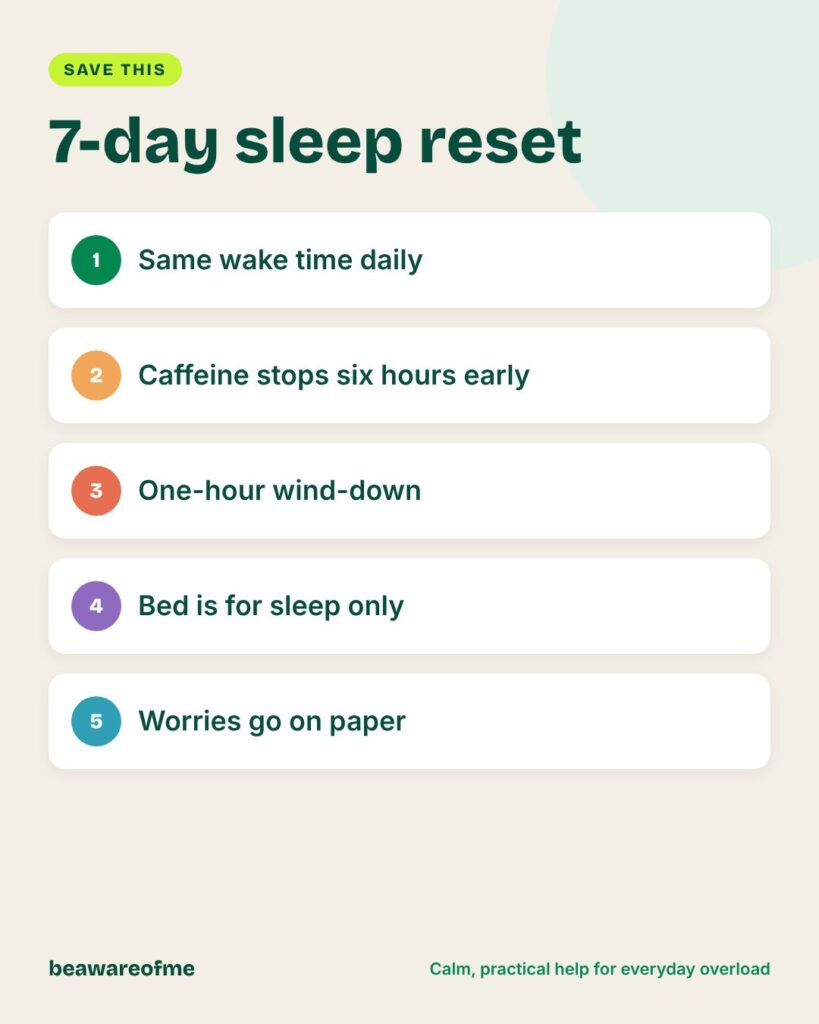
What to expect during the reset
How much sleep should you aim for? The CDC sleep guidance recommends seven or more hours a night for adults aged 18 to 60.
The first few nights may feel no better, or even a little worse, especially if you’ve stopped sleeping in. That’s normal while your body clock shifts. Most people need a couple of weeks of steady habits before nights feel easier. Keep going, because poor sleep habits took time to form and better ones take a little time too.
Not sure when to go to bed? Our free bedtime calculator works backwards from your wake-up time to suggest a realistic bedtime.
Your Calm Wind-Down Routine, Step by Step
A short, predictable wind-down tells your nervous system it’s safe to switch off, and it’s one of the best replacements for poor sleep habits in the evening.
The 60-minute countdown
| Time before bed | What to do | Why it helps |
|---|---|---|
| 60 minutes | Dim lights, finish chores, set out tomorrow’s things | Signals the day is ending |
| 45 minutes | Screens off or on night mode, out of reach | Less light and stimulation |
| 30 minutes | Warm shower, gentle stretching or a short read | Helps your body relax |
| 15 minutes | Slow breathing or a body scan in bed | Calms a busy mind |
| Lights out | Return to your breath whenever thoughts wander | Gives your attention a soft anchor |
A breathing exercise for busy minds
- Lie on your back with one hand on your belly.
- Breathe in gently through your nose for a count of four.
- Breathe out slowly through your mouth for a count of six.
- Repeat for five minutes, letting your belly rise and fall.
- When a thought appears, label it “thinking” and return to the count.
Longer out-breaths can help many people feel calmer. For more ideas, see our guide to relaxing before bed and our techniques to sleep better when anxious.
When You Can’t Sleep: What to Do at 2am
Lying awake and fighting for sleep usually makes it harder, so the best middle-of-the-night plan is to stay calm, stay off your phone and gently reset.
The 20-minute rule
If you’ve been awake for roughly 20 minutes and feel frustrated, get up. Go to another room with low light and do something calm and dull: fold laundry, read a gentle book or listen to quiet audio. Return to bed only when you feel sleepy.
This helps your brain link bed with sleep, not with tossing and turning. It’s one of the most effective swaps for poor sleep habits at night.
What not to do
- Don’t check the time. Counting hours left adds pressure. Turn the clock away.
- Don’t grab your phone. The light and content wake your brain up.
- Don’t try to solve problems. Jot them down and leave them for the morning.
- Don’t sleep in to make up for it. Keep your usual wake time to protect tomorrow night.
Daytime Habits That Protect Tonight’s Sleep
Good nights start in the morning, because what you do with light, movement, food and stress during the day shapes how easily you fall asleep.
Morning light and movement
Get outside within an hour of waking, even on cloudy days. Natural light helps set your body clock. Regular exercise during the day, as the NHS suggests, can also make it easier to fall asleep, so long as it isn’t too close to bedtime.
Manage stress before it reaches your pillow
If stress builds all day, it tends to show up at night. Short breaks, a lunchtime walk and a clear end to your workday all help. Our guide on how to stop overthinking offers practical tools for busy minds.
Watch the hidden sleep thieves
- Energy drinks, chocolate and some pain relievers can contain caffeine.
- Late-afternoon naps can steal sleep pressure from the night.
- Big evening meals and spicy food can make settling harder.
- Bright overhead lights late in the evening tell your brain it’s still day.
Weekends: don’t undo the week
Weekends are where many poor sleep habits sneak back in. Late nights out, long lie-ins and lazy afternoon naps can shift your body clock by hours. Then Sunday night arrives, you can’t fall asleep, and Monday starts with a sleep debt and a side of dread.
You don’t have to give up fun. Keep your weekend wake time within about an hour of your weekday one, and if you have a late night, take a short rest the next day instead of a long nap. Small limits like these stop poor sleep habits from undoing a week of progress.
If Sunday evenings bring a wave of worry, our free Sunday scaries check can help you spot what’s driving it.
When Poor Sleep Habits Aren’t the Whole Story
Changing poor sleep habits helps most people, but sometimes sleep trouble has another cause, and that’s when a doctor’s input really matters.
Signs it’s time to see a doctor
The NHS suggests seeing a GP if changing your sleep habits hasn’t helped, if you’ve had trouble sleeping for months, or if insomnia makes it hard to cope with daily life. It’s also worth getting checked if you snore loudly, stop breathing at night, or feel very sleepy during the day.
What support might look like
A doctor will try to find the cause of your sleep problems. They may offer cognitive behavioural therapy, a talking therapy that helps change the thoughts and behaviours that interfere with sleep. It’s available face-to-face or through online programmes in many places.
The Sleep Foundation reports that this type of therapy for insomnia has a proven track record and may also ease symptoms of several mental health conditions. Sleeping pills are rarely the first choice. If you have questions about any medication, talk to your doctor or pharmacist.
For a deeper look at the cycle, read our guide to breaking the sleep and mental health cycle or easing stress-related insomnia.
5 Sleep Mistakes That Keep the Cycle Going
Mistake 1: Going to bed early to “catch up”
Heading to bed hours early after a bad night often means more time lying awake. Instead, go to bed when you feel sleepy and keep your usual wake time.
Mistake 2: Trying harder to sleep
Effort and pressure wake your brain up. Instead, focus on resting quietly and let sleep come on its own. Calm, not effort, invites sleep.
Mistake 3: Using alcohol as a sleep aid
A drink may help you nod off, but it tends to break up sleep later in the night. Instead, build a non-alcoholic wind-down ritual, like herbal tea and a book.
Mistake 4: Changing everything in one night
Overhauling your whole routine at once is hard to keep up. Instead, follow the 7-day reset and change one habit at a time.
Mistake 5: Ignoring sleep problems that last
Many people assume poor sleep is just part of busy life. Instead, see a doctor if sleep trouble lasts for months or affects how you cope day to day.
Frequently Asked Questions About Sleep and Mental Health
Can poor sleep habits cause anxiety and depression?
How much sleep do adults need for good mental health?
Why does my anxiety get worse at night?
What should I do if I can’t fall asleep?
Does fixing sleep improve depression?
When should I see a doctor about sleep problems?
Your mind and your sleep are deeply connected, and changing poor sleep habits is one of the kindest things you can do for your mood. Start with one steady wake time and one calm hour before bed, then build from there. For more support, explore our guides on low mood and depression and our look at why you might feel tired after doing nothing.