



The person you love looks like they’re handling everything, yet you catch the 1 a.m. emails, the clenched jaw and the way they can’t sit through a film without checking their phone. You want to help, but every attempt seems to land as pressure or pity. Supporting someone with high functioning anxiety takes a different approach than cheering them on or telling them to relax. This guide gives you words to use, habits that help at home, and a kind way to suggest more support.
💙 Key takeaways
Believe their worry is real, even when their work, home and social life look polished.
Ask “What would help right now?” before offering advice, because they often already know.
Offer one calm reassurance, then help them move on, instead of answering the same worry again and again.
Take a practical task off their plate so rest feels safe rather than risky.
Suggest professional support as an ordinary step, and keep looking after your own wellbeing too.
Why High Functioning Anxiety Is So Hard to See in Someone You Love
High functioning anxiety is hard to see because the person usually channels worry into doing more, doing it perfectly, and doing it before anyone notices a problem. What you mostly see is the polish.

The phrase itself is not a medical diagnosis. It’s an everyday way to describe steady worry that hides behind good performance. Your role isn’t to label or diagnose anyone. Your role is to notice, care and make support easier to reach. Here’s the whole guide in one table.
🗺️ At a glance: what you see and how to respond
| What you see | What may be underneath | A helpful response |
|---|---|---|
| Constant busyness. | Fear of falling behind or letting people down. | “Want to do something easy together tonight?” |
| Over-planning small things. | A need to feel in control. | Help with one task, then let it be. |
| Asking “Are you sure it’s okay?” | Worry looking for certainty. | One calm answer, then change the subject. |
| Snapping when plans change. | Overload, not anger at you. | Give advance notice when you can. |
| Trouble switching off at night. | A mind replaying the day. | Protect a calm wind-down hour together. |
| Brushing off compliments. | Harsh inner standards. | Praise effort and kindness, not only results. |
Signs you might notice at home
People with high functioning anxiety often look fine at work and unravel quietly at home, the one place they feel safe enough to stop performing. You might see irritability, exhaustion or long silences.
- Checking and re-checking messages, locks, bills or plans.
- Saying yes to everyone else, then feeling resentful or wiped out.
- Physical signs, like headaches, stomach trouble, tension or broken sleep.
- Struggling to rest, even on holiday or a lazy Sunday.
For a fuller list, read our guide to the 7 signs of high functioning anxiety. It may help you put words to what you’ve been noticing.
470 million
people worldwide were living with an anxiety disorder in WHO’s latest estimate.
WHO
Stress or Something More? A Quick Guide for Supporters
Everyday stress usually rises with a clear cause and settles once it passes, while high functioning anxiety tends to stick around even when things go well. Knowing the difference helps you respond with patience instead of confusion.
Picture two weeks before a big deadline. Most people feel tense, then relax afterward. Someone with high functioning anxiety may finish the project brilliantly and then start worrying about the next one that same evening.
Patterns worth noticing over a few weeks
- Worry that moves from one topic to the next, even after problems get solved.
- Rest that never lands, like holidays spent planning or checking email.
- High effort for small tasks, such as rewriting a short text several times.
- Physical strain, including tension, headaches or sleep that stays broken.
None of this is for you to diagnose. NIMH notes that anxiety disorders involve worry that doesn’t go away and can get worse over time, which is exactly why a professional view matters. Your notes, shared kindly, can help your loved one decide whether to look into it.
📝 Note
High functioning anxiety is an informal phrase. If your loved one relates to it, a doctor or qualified professional can help them work out what’s really going on.
What to Say, and What to Quietly Skip
The right words make it safe to share, while the wrong ones push worry back underground. Small wording changes matter more than big speeches.
Openers that tend to land
Pick a calm moment, not right after a stressful event. Side-by-side settings, like a walk or a drive, often feel easier than face-to-face talks.
- “You’ve been carrying a lot lately. How are you really doing?”
- “I’m not trying to fix anything. I just want to understand.”
- “What would actually help right now, if anything?”
- “You don’t have to be okay around me.”
Phrases that usually backfire
These lines come from love, yet they tend to make people with high functioning anxiety feel misunderstood or judged.
💬 Swap this for that
| Instead of | Try |
|---|---|
| “Just relax.” | “Want to take a breather with me?” |
| “But you’re so successful!” | “You can be doing well and still struggle.” |
| “You worry too much.” | “That sounds like a lot to hold.” |
| “Everyone gets stressed.” | “Tell me what this feels like for you.” |
| “Why don’t you just say no?” | “Would it help to plan how you’d say no?” |
If they shut down or change the subject
Many people with high functioning anxiety are used to handling things alone, so a first conversation can end in “I’m fine.” That’s okay. It doesn’t mean you failed.
Let it rest, then show up in small ways over the next week. Leave a note, bring them tea, or say “No pressure, I’m here whenever.” Trust often grows through steady actions more than one big talk.
💡 Tip
Ask before you advise. A simple “Do you want ideas, or do you want me to listen?” saves a lot of frustration on both sides.
Help Without Feeding the Worry Loop
Kind support sometimes keeps anxiety going by accident, especially when it means endless reassurance or rearranging life around the worry. This section shows a gentler middle path.
The reassurance trap
Reassurance-seeking means asking the same question again and again to feel certain, like “Are you sure they weren’t annoyed?” One answer brings relief, but it fades fast, so the question returns.
Answering every time feels caring. Over weeks, though, it can teach the brain that worry only settles when someone else settles it. Mental health clinicians sometimes call this pattern accommodation, which simply means changing your own behaviour to calm someone’s anxiety in the short term.
A kinder middle path
You don’t need to refuse or go cold. Offer one warm answer, then name the pattern gently and turn toward something steadying.
🌊 A gentle script for the fourth “Are you sure?”
Validate
“I can see this is really bugging you.”
Answer once
“I already said I think it’s fine, and I still do.”
Name it kindly
“I think the worry wants more certainty than either of us can give.”
Redirect
“Want to step outside for ten minutes with me?”
Stay close
Sit with them while the urge passes, without more debate.
⚠️ Watch out
Talk about this approach together during a calm time first. Changing the pattern without warning can feel like rejection. Agree on it as a team.
Our article on how high functioning anxiety impacts relationships explores how these loops show up between partners.
Make Rest Feel Safe at Home
People with high functioning anxiety often avoid rest because it feels risky, as if stopping will let something slip. You can’t remove that fear, but you can make rest feel easier.
Take something off their plate
Offer specific help instead of “Let me know if you need anything.” Try “I’ll handle dinner tonight” or “I’ll call the plumber tomorrow.” Specific offers skip the guilt of asking.
Then resist the urge to check whether they’re resting properly. Pressure to relax is still pressure.
Build calm into shared routines
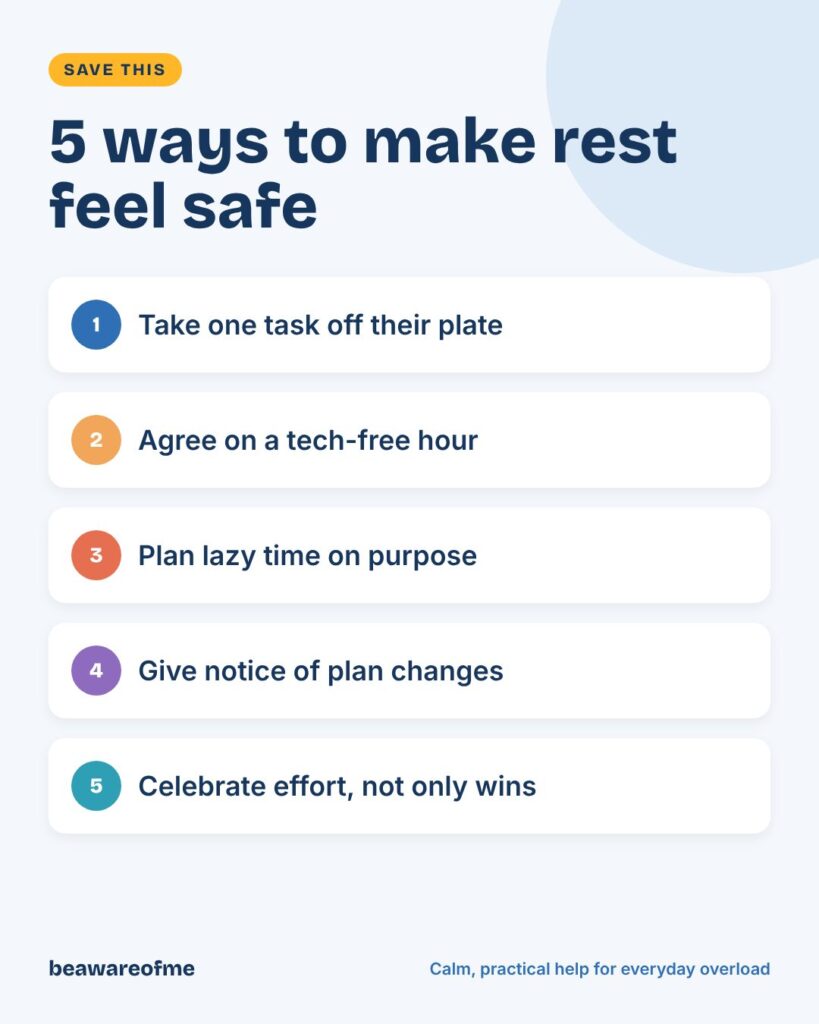
- Agree on a tech-free hour in the evening, at least a few nights a week.
- Plan lazy time on purpose, like a film night with nothing after it.
- Give advance notice of plan changes whenever you can.
- Celebrate effort, like leaving work on time, as much as big wins.
If evenings are the hardest part, our guide to living with high functioning anxiety has ideas you can share together.
Weekends, holidays and big occasions
Free time can be oddly hard for people with high functioning anxiety, because unstructured hours leave more room for worry. Holidays and family events add their own pressure to get everything right.
Help by keeping plans simple and clear. Share the schedule ahead of time, agree on a signal for “I need a break,” and build in quiet gaps between activities. A little structure can make rest feel safer than a totally blank day.
✨ Quick win
Tonight, take over one task they always handle, without being asked and without commentary. Small, quiet help often means the most.
You don’t have to fix their worry. You can simply make it easier for them to put it down for a while.
beawareofme
How to Suggest Professional Help for High Functioning Anxiety
Suggesting professional help works best when it sounds like an ordinary next step, not an emergency or a judgement. Timing and tone matter as much as the words.
Why outside support is worth raising
Many anxious people never get help. The WHO estimates only about one in four people with an anxiety disorder receive any treatment, with stigma and low awareness among the reasons. Someone who “copes” is easy to skip.
Professionals can help untangle whether stress, sleep, an anxiety condition or something physical is involved. Our guide to therapy and treatment for high functioning anxiety explains the main options in plain language.
🗓️ Five steps for a calm conversation about help
Pick your moment
Choose a relaxed time, not during a stressful week or after an argument.
Start with care
“I love you, and I’ve noticed how hard you’ve been pushing.”
Share what you see
Mention two or three specific things, like lost sleep or tension.
Offer, don’t insist
“Would you consider talking to your doctor? I could help find someone.”
Leave the door open
If they say no, say “Okay, the offer stands,” and drop it for now.
Make the first step smaller
Offer to help with logistics, like searching for therapists or sitting with them while they book. The WHO lists a lack of awareness that anxiety is treatable as a common barrier, so sharing a helpful link can matter. For a script they can use at the appointment, point them to our guide on how to talk to a doctor about high functioning anxiety.
If they’re already getting support
If your loved one already sees a therapist or doctor, your job shifts to backing the plan rather than adding a new one. Ask what they’re working on and how you can help, such as practising a breathing habit together or not answering a worry loop.
Respect their privacy, too. Therapy is their space, so let them share what they choose. A simple “How did it go? No details needed” keeps the door open without pressure.
📝 Note
If your loved one ever mentions thoughts of suicide or harming themselves, take it seriously and stay with them. In the US, call or text 988. In the UK and Ireland, call Samaritans on 116 123. In immediate danger, contact local emergency services.
When It Starts to Strain Your Relationship
High functioning anxiety can strain partnerships, friendships and families, even when everyone means well. Naming the strain kindly is part of supporting them, not a betrayal.
Use “we” language about the pattern
Talk about the anxiety as something you both face, not a flaw in them. “The worry has been making our evenings tense. How can we push back on it together?” keeps you on the same side.
Set loving boundaries
Boundaries protect the relationship, not just you. You might say, “I’m happy to talk about work for 20 minutes, then I’d love us to switch off.” If you’re unsure where your limits sit, the free are your boundaries healthy self-check can help.
When worry shows up as irritability
Anxiety doesn’t always look like fear. In many people with high functioning anxiety, it looks like snapping, criticism or impatience, especially when they feel out of control.
You don’t have to accept being treated badly. Try naming it calmly: “I think you’re overloaded right now. Let’s take ten minutes and come back to this.” Then follow through. Returning to the talk later shows the issue matters, while the pause protects you both.
For broader ideas on keeping connection strong, see our mental health and relationships guide.
🧭 Try this
Choose one weekly check-in time, like Sunday breakfast. Ask: “What felt heavy this week, and what’s one thing we can make easier?”
Look After Yourself While You Support Them
You can’t pour calm from an empty cup, so caring for yourself is part of the support. Mind’s guidance for friends and family makes the same point: give yourself time and space for your own wellbeing.
Supporting someone with ongoing worry can feel lonely, especially when they hide it from everyone else. Notice your own stress signals, and get support from friends or a counsellor if you need it. Mind’s advice for friends and family offers more gentle pointers.
🌱 Try this today: a supporter’s checklist
☐I asked “What would help right now?” instead of guessing.
☐I gave one calm answer to a repeated worry, then redirected kindly.
☐I took one specific task off their plate without commentary.
☐I praised effort or kindness, not only results.
☐I did one thing today just for my own wellbeing.
☐I know which crisis line to call if things ever feel unsafe.
Who you can talk to about it
You may feel you can’t discuss their struggles with anyone, especially if they hide them well. Respecting their privacy matters, but you still need somewhere to put your own feelings. A counsellor, a trusted friend who won’t gossip, or a support group can hold that for you.
Keep the focus on your experience, like “I’m finding it hard to watch someone I love worry so much,” rather than sharing their private details. That way you get support without breaking their trust.
Signs you need more support yourself
If you feel constantly on edge, resentful or exhausted, that’s a signal, not a failure. Talk with someone you trust, consider a counsellor, or look for a support group for families of anxious people.
Common Mistakes Loving Supporters Make
These mistakes come from care, which is exactly why they’re easy to miss. Spotting them early keeps your support helpful.
Mistake 1: Measuring their wellbeing by their success
A promotion or a spotless home doesn’t mean the worry has eased. Instead, ask about sleep, energy and how evenings feel.
Mistake 2: Becoming their full-time reassurance source
Answering every worry feels kind but can keep the cycle running. Instead, give one warm answer and gently redirect, as agreed together.
Mistake 3: Pushing them to slow down too fast
Telling someone to drop half their commitments overnight can spike anxiety. Instead, support one small change at a time, like leaving work on time twice a week.
Mistake 4: Labelling or diagnosing them
Saying “You clearly have an anxiety disorder” can feel like an accusation. Instead, describe what you’ve noticed and suggest a professional who can assess it properly.
Mistake 5: Neglecting your own needs
Burning out helps nobody. Instead, keep your own friendships, rest and routines, and ask for support when it gets heavy.
📚 Keep reading
FAQ: Supporting Someone Who Seems Fine
How do I help someone with high functioning anxiety?
Start by believing them, even if their life looks polished. Ask what helps before giving advice, offer calm company, and take a practical task off their plate so rest feels possible. Avoid endless reassurance loops by giving one warm answer and redirecting. Gently suggest professional support as a normal next step, and remember to look after your own wellbeing.
What should you not say to someone with anxiety?
Skip lines like “Just relax,” “You worry too much,” or “But you’re so successful.” They tend to feel dismissive, even when you mean well. Try validating phrases instead, such as “That sounds like a lot to hold” or “You can be doing well and still struggle.” Asking “Do you want ideas or just a listener?” also helps.
How do I know if my partner’s anxiety is getting worse?
Look for changes over a few weeks, such as poorer sleep, more irritability, pulling back from friends, more checking or reassurance-seeking, or physical complaints like headaches and stomach trouble. You can’t diagnose them, but you can share what you’ve noticed kindly and suggest they talk to a doctor. If they mention thoughts of harming themselves, seek help right away.
Should I keep reassuring someone with anxiety?
One calm reassurance is caring. Repeating it many times for the same worry can keep the anxiety cycle going, because relief fades and the question returns. A kinder approach is to validate the feeling, answer once, name the pattern gently and redirect to something steadying. Agree on this together during a calm moment so it doesn’t feel like rejection.
How can I encourage a loved one to see a therapist?
Choose a relaxed moment, lead with care, and mention two or three specific things you’ve noticed. Frame therapy as an ordinary step, like seeing a doctor for a sore knee. Offer practical help, such as searching for options together. If they say no, keep the offer open without pressure and raise it again later if things don’t improve.
How do I support someone without burning out?
Set loving boundaries, like limits on how long you discuss work worries each evening. Keep your own friendships, hobbies and rest. Notice your own stress signals, such as resentment or exhaustion, and get support from friends, a counsellor or a family support group. Caring for yourself isn’t selfish. It keeps your support steady over the long run.
Supporting someone with high functioning anxiety is less about fixing and more about making it safe to slow down. Start with one small change this week, like a better question or a task taken off their plate, and let steady kindness do its quiet work over time.
🛟 Please read
Educational content, not a substitute for professional care. If you are struggling, talk to a doctor or a qualified professional. If you are thinking about harming yourself, contact local emergency services or a crisis line now (US 988, UK and Ireland Samaritans 116 123, or findahelpline.com).