



You can love someone deeply and still feel slowly worn down inside the relationship. Maybe you swallow small annoyances, say yes when you mean no, or feel lonely sitting right next to them. This mental health relationships guide is about protecting your own wellbeing while staying close: the quiet pressures that drain you, and the small, fair habits that keep both of you okay.
🌱 Key takeaways
Say small irritations within a day or two, calmly, before they harden into resentment.
Protect at least one friendship and one interest that belong only to you.
Track compromise loosely: if one person always gives way, raise it as a fairness question, not an attack.
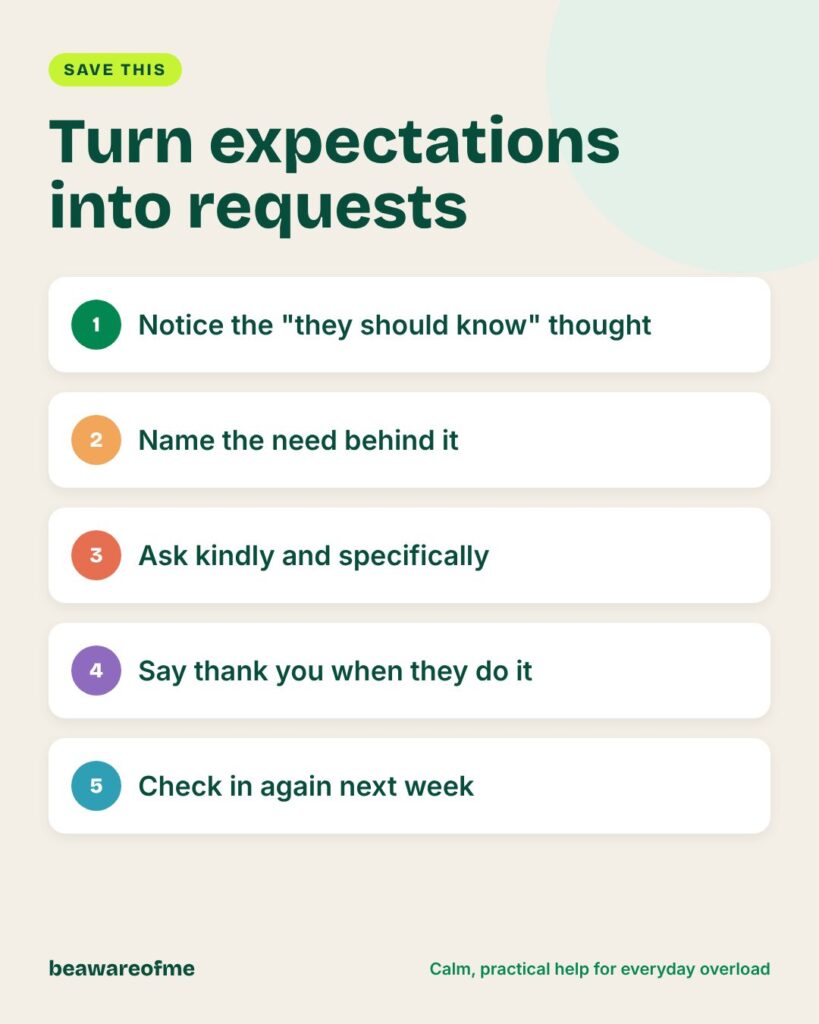
Turn hidden expectations into clear requests, because nobody can meet a need they don’t know about.
Support your partner without becoming their only support, and keep your own sources of care.
Fight by simple ground rules, and repair quickly after any argument.
The Self-and-Us Balance at the Heart of Mental Health Relationships
Most relationship strain comes from losing the balance between looking after yourself and looking after the bond. Lean too far toward “me” and the connection thins. Lean too far toward “us” and you slowly lose yourself, which drains your mood, confidence and patience.

This matters for more than romance. According to the Harvard Gazette coverage of a study that has followed people for close to 80 years, the people most satisfied in their relationships at age 50 were the healthiest at age 80. The article also notes that close relationships, more than money or fame, are what keep people happy throughout their lives.
~80 yrs
of research linking satisfying relationships with better health later in life.
Harvard Gazette
5 to 1
positive to negative interactions during conflict in stable, happy couples.
The Gottman Institute
37 min
more sleep a night for adults who kept up a “sleep divorce”, in one survey.
Sleep Foundation
What healthy mental health relationships look like day to day
Healthy doesn’t mean conflict-free or blissful all the time. It means both people feel mostly safe, heard and free to be themselves. Here are everyday signs that your mental health relationships balance is in a good place:
- You can disagree without fearing the relationship will end.
- You both keep some friends, interests and time of your own.
- Small problems get mentioned while they’re still small.
- Support flows both ways, even if not equally every week.
- After an argument, someone reaches out to repair within a day.
- You laugh together at least now and then, even in stressful weeks.
If most of these ring true, you’re doing better than you might think. If several feel distant, the sections below give you a gentle place to start. No relationship ticks every box all the time.
7 quiet pressures, and your first move for each
Use this table as a gentle mental health relationships check. Most couples recognise two or three of these at any given time.
| Quiet pressure | What it can look like | A first small move |
|---|---|---|
| Hidden grudges | Replaying small hurts you never mentioned | Name one within 48 hours, calmly |
| Losing yourself | Dropping friends, hobbies and opinions | Book one solo plan this week |
| One-way compromise | The same person always gives in | Ask, “Does this feel fair to both of us?” |
| Unspoken expectations | Silent tests and disappointment | Turn one expectation into a request |
| Partner burnout | Absorbing all their stress, every day | Add one other source of support |
| Sleep friction | Different schedules, snoring, late talks | Have one calm talk about sleep needs |
| Loneliness together | Talk shrinks to logistics | Ten minutes a day, phones away |
⚠️ Watch out
Everything here assumes a relationship that is basically safe. Control, threats, intimidation, isolation from friends or any violence are not “pressures” to balance. If you feel afraid of your partner, contact a domestic abuse helpline or emergency services. Our guide to how toxic relationships affect your mental health can help you tell ordinary strain apart from harm.
Hidden Grudges: How Small Unsaid Things Become Resentment
Resentment usually grows from small things you decided weren’t worth mentioning, repeated until they feel huge. Each one seems minor on its own. Together, they quietly change how you see the other person, which makes grudges one of the most common mental health relationships problems.
Why staying quiet backfires
Keeping the peace by saying nothing feels kind in the moment. Over weeks, though, the unspoken hurt leaks out as sarcasm, coldness or a sudden blow-up over the dishwasher. Your partner then faces a big reaction to a small trigger and feels confused or attacked.
A good mental health relationships rule: if something still bothers you after a night’s sleep, it’s worth a calm sentence. If it’s gone by morning, let it go.
The 15-minute weekly check-in
A short, regular check-in gives small things a safe place to land. Keep it calm, keep it short, and do it even when things feel fine.
Pick a calm, fixed time
Sunday afternoon or a weeknight walk works well. Avoid late nights and moments when someone is hungry or rushed.
Start with one appreciation each
Say one specific thing the other person did this week that you valued.
Share one small irritation each
Use “I” language: “I felt a bit sidelined when plans changed without a text.”
Agree on one small change
Keep it concrete and doable, like “I’ll text if I’m running late.”
Close warmly
End with a hug, a cup of tea or a plan for something you’ll enjoy together.
💡 Tip
If a weekly talk feels too formal, try a “one thing” text instead: “One small thing I’d love to chat about when you’ve got five minutes.” It signals calm, not crisis.
Losing Yourself: Keep Your Own Life Inside the “Us”
Over-accommodating a partner can feel loving at first, yet slowly dissolving into the relationship often leaves you flat, dependent and less like yourself. Healthy closeness keeps two whole people in the room, and that’s the core of good mental health relationships.
A quick self-check
Answer these honestly. Three or more “yes” answers suggest it’s time to take back a little space.
- I’ve stopped seeing at least one friend I used to see regularly.
- I’ve dropped a hobby or interest I used to love.
- I check what my partner thinks before forming my own opinion.
- I feel guilty spending time or money on just myself.
- I can’t remember the last plan I made alone.
Our free boundaries check can give you a clearer picture, and our guide on setting boundaries without feeling guilty helps with the next step.
Healthy compromise vs one-way compromise
Compromise is part of every good relationship. The difference lies in whether it flows both ways over time. This mental health relationships comparison helps you spot the pattern:
| Healthy compromise | One-way compromise |
|---|---|
| Both people give way, at different times | The same person gives way almost every time |
| Needs are discussed openly | One person’s needs are assumed to matter less |
| You feel okay afterwards, even if not thrilled | You feel resentful, invisible or tired |
| Either person can say no | Saying no feels risky or selfish |
| Big decisions are shared | Big decisions are made for you |
If the right column sounds familiar, raise it as a fairness question rather than an accusation: “I’ve noticed I usually go along with plans. Can we look at how we decide things?” Better self-awareness helps here too, as our article on self-awareness and stronger relationships explains.
Loving someone well doesn’t require you to become smaller. The best relationships make room for both people to grow.
— beawareofme
Unspoken Expectations: Say the Need Before It Becomes a Test
Unspoken expectations are needs you assume your partner should simply know, and they’re one of the quietest drains on mental health relationships. When the need goes unmet, you feel hurt, and they’re left guessing why.
Turn expectations into requests
Notice the “they should know” thought, then translate it into a clear, kind request. It may feel less romantic at first. In reality, it gives the other person a real chance to show up for you, and clear requests are a cornerstone of calm mental health relationships.
💬 Words you can borrow
From silent test to clear request
Instead of hoping they’ll notice you’re stressed: “I’ve had a rough day. Could we have a quiet evening?”
Instead of waiting for them to plan your birthday: “I’d love it if you organised something small this year.”
Instead of resenting the chores: “Could you take over the bins and the washing-up on weekdays?”
Instead of feeling ignored at parties: “Can you check in with me once or twice tonight?”
When your backgrounds expect different things
Families and cultures carry different ideas about closeness, independence, money and roles. One partner may expect daily calls with parents, while the other values privacy. Neither is wrong. Talk about where each expectation comes from, then decide together what works for your home.
Money: the expectation nobody wants to name
Money carries strong unspoken rules about fairness, independence and power. If one of you earns much more, or you handle money very differently, a calm talk early prevents years of quiet tension. Our guide to financial inequality in relationships walks through fair setups.
Partner Burnout: Support Without Becoming the Only Support
Caring for a stressed or struggling partner is part of love, but being their only source of support can wear down your own mental health. In mental health relationships, sustainable support has more than one pillar.
Build a wider circle
Encourage your partner to have other people and tools to lean on: friends, family, a doctor or counsellor, and their own coping habits. Do the same for yourself. This isn’t pulling away; it’s making sure nobody carries everything alone.
📝 Note
If your partner is living with anxiety, our guide to supporting a loved one with high-functioning anxiety offers practical ways to help without burning out. For couples where one person’s struggles strain the bond, see mental health and relationships.
Sleep: the overlooked relationship stressor
Different schedules, snoring or late-night talks can quietly wreck both of your sleep, and tired people argue more. A Sleep Foundation survey found that adults who kept up a “sleep divorce” averaged 37 minutes more sleep per night, and 52.9% of those who started one said it improved their sleep quality.
Sleeping apart isn’t right for everyone, and the same survey found some couples moved back together because they missed each other. The point is to talk openly about sleep needs without treating it as rejection. Earplugs, separate blankets or one shared night a week might solve it.
A mental health relationships plan for stressful seasons
Some stretches hit harder than others: a new baby, a job loss, caring for a parent, an illness or a move. During those seasons, ordinary mental health relationships habits need a little extra structure, because stress shrinks everyone’s patience.
- Lower the bar together. Agree out loud on what can slide for now, such as a tidy house or elaborate meals.
- Split the load clearly. Write down who handles what this month so nobody keeps silent score.
- Protect one small ritual. A ten-minute tea together or a short evening walk keeps you connected.
- Name outside help early. Friends, family, a doctor or a counsellor can take some weight off both of you.
Stressful seasons end, but the way you treat each other during them tends to be remembered. Small kindnesses now build trust that lasts long after the pressure eases.
Long distance: managing the waiting
Distance adds its own strain: constant waiting, missed moments and time-zone fatigue. Agree on a realistic contact rhythm, such as a call three times a week, instead of an exhausting always-on chat. Keep full lives where you each are, and plan the next visit so there’s always something ahead.
Fight Fair: Ground Rules That Protect Mental Health in Relationships
Conflict isn’t a sign of a failing relationship; how you argue matters far more than whether you argue. Fair fights can even deepen understanding, while unfair ones leave lasting hurt. Learning to argue well is one of the strongest mental health relationships skills you can build.
Research from The Gottman Institute describes a “magic ratio”: during conflict, stable and happy couples have at least five positive interactions for every negative one. Those positives can be small, like a touch, a joke, a nod or “I see your point.”
6 ground rules worth agreeing on
- One issue at a time. No dragging in old arguments.
- No name-calling or contempt. Eye-rolling and mockery count too.
- “I feel” beats “you always”. Describe the moment, not their character.
- Either person can call a pause. Agree to return within an hour or by tomorrow.
- No big fights after 10pm. Tired brains escalate fast.
- Repair is everyone’s job. Whoever calms first reaches out first.
Repair phrases for after a fight
In mental health relationships, repair matters more than winning. A few warm words soon after an argument reduce the sting and rebuild trust. Try: “I’m sorry I raised my voice,” “I hear that you felt dismissed,” or “Can we start that conversation again?”
If your mind goes blank or you shut down in arguments, you’re not alone. Our guide to why you freeze during conflict explains what’s happening and how to stay present.
Lonely Together? Small Rituals That Bring You Back
Feeling lonely beside someone you love is surprisingly common, and it usually comes from drift, not lost love. Small, regular rituals rebuild connection far better than one big grand gesture, and they’re a quiet win for mental health relationships.
Rituals that take ten minutes or less
- The first ten minutes: greet each other properly when you get home, phones away.
- One real question: ask something beyond logistics, like “What was the best bit of your day?”
- A weekly walk: side-by-side talking often feels easier than face-to-face.
- A gratitude swap: once a week, each name one thing the other did that you appreciated.
That last ritual borrows from gratitude research. If you’d like ideas, our list of verified gratitude quotes includes lines about the people who shape us, and our guide on how to start a gratitude diary shows how to notice the good in each other more often.
Reconnecting after a busy or distant stretch
After weeks of work stress, illness or simply life, couples can feel like flatmates. Don’t wait for the perfect weekend away. Start with one low-pressure plan, like cooking together or revisiting a place you both like, and keep expectations gentle.
It can help to say the drift out loud without blame: “I miss us a bit lately. Could we plan something small this week?” Naming it kindly is often the moment the distance starts to shrink.
✅ Try this today
A mental health relationships reset for this week
☐Name one small irritation calmly, within a day or two.
☐Book one plan that’s just for you: a friend, a class or a walk alone.
☐Turn one silent expectation into a clear, kind request.
☐Agree on one fair-fight rule together.
☐Share one specific appreciation before Sunday.
5 Common Mistakes That Quietly Drain Both Partners
These are the mental health relationships mistakes that look harmless, even kind, which is exactly why they last so long. Each has a simple fix.
1. Keeping the peace at any cost
Avoiding every disagreement feels calm, but it stores up resentment. Instead, raise small issues early and gently, while they’re still small.
2. Treating closeness as doing everything together
Shared time matters, yet total togetherness can erode your identity and make you more anxious when apart. Keep separate friends and interests, then bring those experiences back into the relationship.
3. Expecting your partner to read your mind
“If they loved me, they’d know” sets both of you up to fail. Say what you need in plain words, then notice how often they do show up.
4. Becoming your partner’s therapist
Listening is love; acting as someone’s only emotional support isn’t sustainable. Encourage professional help when struggles last, and keep support for yourself too.
5. Skipping repair after arguments
Moving on without a word can leave hurt hanging for days. A quick, sincere repair, even “I didn’t handle that well,” rebuilds safety faster than waiting it out.
📚 Keep reading
Feeling secure in a relationshipAttachment styles and satisfactionHealthy relationships while managing mental healthMore on everyday mental health6 Questions People Ask About Mental Health Relationships
How do relationships affect mental health?
Relationships can be a major source of comfort or a steady drain. Feeling heard and supported tends to buffer stress, while constant conflict, loneliness or resentment can wear down mood and confidence. Long-term research covered by the Harvard Gazette found people most satisfied in their relationships at 50 were the healthiest at 80, which shows how much connection matters.
How do I keep my identity in a relationship?
Keep at least one friendship, one interest and some time that belongs only to you. Form your own opinions before asking your partner’s, and notice if you’ve stopped doing things you used to love. A healthy partner will welcome your separate life, because it makes you more yourself, and that usually makes the relationship stronger too.
How do you stop resentment from building?
Say small irritations within a day or two, calmly and specifically, using “I felt” rather than “you always”. A short weekly check-in gives these moments a safe place to land. Also check whether compromise flows both ways, since one-sided giving is a common source of quiet resentment. If it’s deep-rooted, a couples counsellor can help.
Is it normal to need time alone in a relationship?
Yes, completely. Wanting time alone isn’t a sign of fading love. Many people recharge best on their own, and some solo time protects mood and patience for the relationship. Explain it warmly so your partner doesn’t read it as rejection, for example: “I need an hour to reset, then I’d love to hear about your day.”
What is a healthy way to argue with a partner?
Stick to one issue at a time, describe your feelings rather than attacking character, and avoid contempt such as mocking or eye-rolling. Either person should be able to call a pause and return later. Research from The Gottman Institute suggests stable couples keep at least five positive interactions for every negative one during conflict.
When should a couple get professional help?
Consider counselling when the same arguments keep repeating, when you feel distant for weeks, or when a big change like a new baby, illness or job loss hits hard. You don’t need to wait for a crisis. If you ever feel unsafe or afraid of your partner, contact a domestic abuse helpline or emergency services straight away.
Strong mental health relationships aren’t built on grand gestures; they’re built on small, fair habits that leave room for both of you. Pick one step from this guide, such as a weekly check-in or one clear request, and try it this week. Keep returning to that self-and-us balance, and your mental health relationships can keep growing steadier over time.
🤍 A gentle note
Educational content, not a substitute for professional care. If you are struggling, talk to a doctor or a qualified professional. If you are thinking about harming yourself, contact local emergency services or a crisis line now (US 988, UK and Ireland Samaritans 116 123, or findahelpline.com).