An after work routine for shift workers has one job: to move you from “still on the clock” to “safe to rest” in the hours your body thinks are the wrong ones. You get home at 7:40 in the morning, or 11:30 at night, or 3 in the afternoon, and the usual advice about evenings just doesn’t fit. This guide gives you a simple four-part shape you can repeat after any shift, with exact timings for night, late and early shifts, scripts for the people you live with, and a plan for days off. Pick the version that matches your rota and try it for one week before you change anything.
Last verified: November 2026 · the BeAwareOfMe editorial team · Sources cited below
The short answer
A good after work routine for shift workers follows the same four steps whatever time you finish: land (a 10-minute transition on the way home), unload (park the shift on paper), dim (low light, a light snack, no screens in bed) and sleep (a dark, cool, quiet room and a fixed wake time). Only the timing changes. Night workers block morning light; late workers build a buffer; early workers protect an early bedtime.
Key takeaways
Your routine is a bridge between work and rest, so keep it short, boring and the same every time. After a night shift, the most useful thing you can do is keep morning light out of your eyes and your bedroom. After a late shift, you need a deliberate buffer because there’s no natural evening to wind down in. After an early shift, the risk is a long afternoon nap that wrecks the next early start. On days off, move your sleep by small steps instead of flipping back to a “normal” schedule in one go.
1. Land
10 minutes between work and home
2. Unload
Park the shift on paper
3. Dim
Low light, light food, quiet
4. Sleep
Dark, cool, fixed wake time
Why an after work routine for shift workers looks different
Most advice about switching off assumes you finish at 5 or 6 in the evening, eat dinner, and have three or four slow hours before bed. If you work shifts, that window either doesn’t exist or lands at a strange time. You might finish a night shift just as the sun comes up and the rest of the house starts its day. You might finish a late shift at 11 pm with your head still buzzing and nobody awake to talk to. You might finish an early shift at 2 pm and feel wiped out, even though it’s the middle of the afternoon.
In each case, your body is getting mixed signals. Daylight, noise, food and other people all tell it “daytime”, while your tiredness says “night”. A routine helps because it gives your brain one clear, repeated signal that overrides the mixed ones: this sequence means the shift is over and rest is next. Twenty to forty-five minutes is plenty, as long as the order stays the same.
If you work regular days and want the general version, our guide on how to decompress after work covers the basics. This page is built for rotas, odd hours and the particular tiredness that comes with them.
Tip: Write your routine down as four short lines and stick it on the inside of a kitchen cupboard. When you’re exhausted, you won’t have to remember or decide anything. You just follow the list.
The four-part shape: land, unload, dim, sleep
This is the backbone of every after work routine for shift workers on this page. The content of each step stays almost the same; the clock times move depending on your shift. Here’s what each part looks like in practice.
Land (10 minutes, on the way home)
Choose one marker that says “shift over”: changing out of your uniform at work, the same playlist on the drive or bus, or a two-minute sit in the car before you go inside. Same marker, every shift. If you drive, keep your eyes on the road and save any breathing exercise for when the engine is off.
Unload (5 minutes, at home)
Write three lines on a notepad by the door: what happened, what’s unfinished, and what you’ll do about it next shift. Then close the notepad. Your brain stops rehearsing things it knows are written down.
Dim (15 to 30 minutes)
Lamps instead of ceiling lights, a warm shower, a small snack rather than a big meal, and your phone on charge outside the bedroom. Keep this part quiet and predictable. It’s the bit your body learns to recognise as “rest is coming”.
Sleep (a protected window)
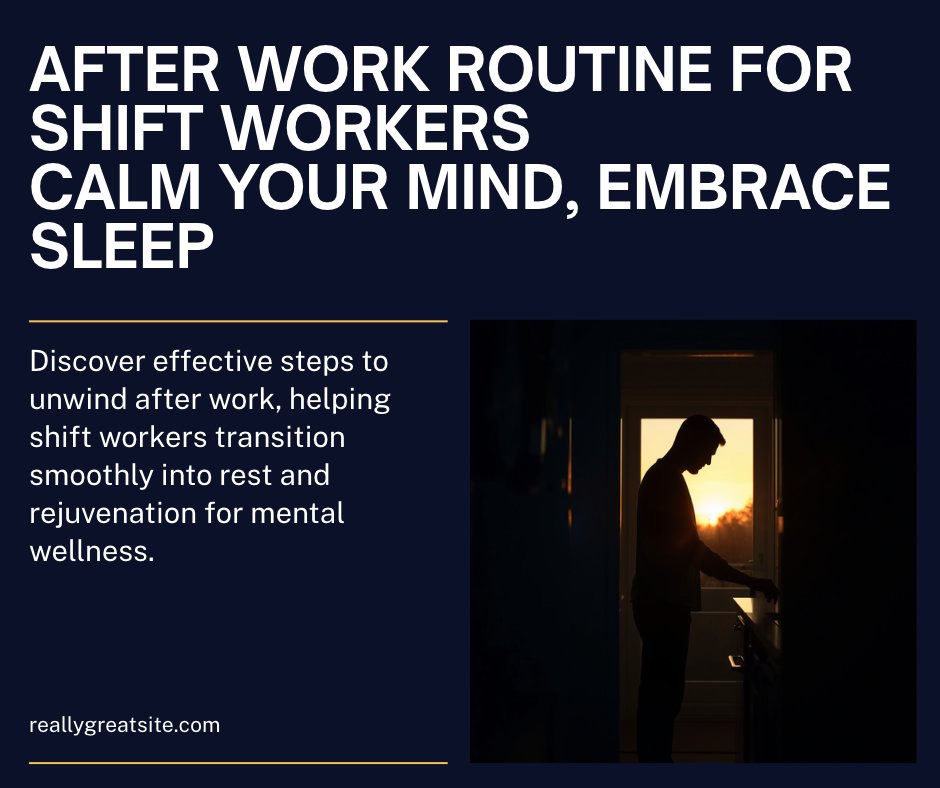
A dark, cool, quiet room, the same lights-out and wake time after the same type of shift, and a “do not disturb” signal for everyone else. Your next shift depends on this window.
There’s no hour-long ritual and no special equipment. If a routine takes too long, you’ll skip it on the hard days, and the hard days are exactly when you need it. Start with the four steps at their shortest, and only add things once the short version feels automatic.
Night, late and early shifts: what changes
The four steps don’t change, but the main challenge does. Use this table to find your shift type and the one thing that matters most after it.
| Shift type | Main challenge | Focus of your routine | Avoid |
|---|---|---|---|
| Night shift | Sunlight and a waking household tell your body it’s morning | Keep light low from the end of the shift to bedtime; blackout the bedroom | Errands in bright sun on the way home; caffeine late in the shift |
| Late or evening shift | No natural buffer between work and bed | A deliberate 30 to 45 minute wind-down before lights-out | Going straight from car to bed; scrolling to “come down” |
| Early shift | Afternoon crash and a too-late bedtime | A short nap if needed, then an early, fixed lights-out | Long afternoon naps; staying up to see family late |
| Rotating shifts | Your sleep time keeps moving | Keep the order of the four steps identical, even when the clock time changes | Flipping your whole schedule in one day |
After a night shift: the first 90 minutes home
This is the hardest version, so it gets the most detail. Your goal is simple: get from the end of your shift to sleep with as little bright light, noise and stimulation as possible. Every bit of morning light you take in tells your body the day has started, which is the opposite of what you need.
Cleveland Clinic suggests that you minimise bright light during the second half of your shift where you can, and keep your bedroom dark, cool and quiet. Their advice on sunglasses is worth remembering: they can help on the way home only if someone else is driving, because blocking light while you’re tired behind the wheel isn’t safe.
7–9 hrs
of sleep in every 24 hours is the target Cleveland Clinic gives for night workers.
Source: Cleveland Clinic
3–4 hrs
before you plan to sleep is when the Sleep Foundation suggests stopping caffeine.
Source: Sleep Foundation
20–30 min
is the short pre-shift nap length Cleveland Clinic describes for a boost in alertness.
Source: Cleveland Clinic
Here’s a night-shift version of the routine, assuming you finish at 7 am and get home around 7:40. Shift the times to match your own finish.
- From about 3 am: no more coffee, energy drinks or strong tea. If you need a lift, have water and walk for two minutes.
- 7:00, end of shift: change out of work clothes if you can. That’s your “land” marker.
- Commute: go straight home. If you’re a passenger, wear sunglasses. If you’re driving and you feel drowsy, pull over somewhere safe and rest rather than pushing on.
- 7:40, home: keep the hall and kitchen lights low. Write your three lines on the notepad by the door.
- 7:45: a small, plain snack, such as toast, yoghurt or a banana, rather than a full fry-up that sits heavily.
- 8:00: a warm shower, then straight into a bedroom that’s already dark. Blackout curtains, an eye mask and earplugs or a fan for steady background sound all help.
- 8:15, lights out: phone on charge outside the room, or face down on do-not-disturb if you have to be reachable.
Some people sleep better in one long block straight after the shift. Others prefer to stay up for a couple of hours and then sleep closer to the next shift, or split it into a morning sleep and a shorter sleep before work. The Sleep Foundation’s shift work schedule tips describe both approaches. Choose one, keep it for a full run of nights, and then judge it on how alert you feel at 4 am, not on how you feel the moment you wake.
Important: Drowsy driving after a night shift is a real safety issue. If your eyes are closing, you’re drifting in your lane or you can’t remember the last few minutes of the drive, stop somewhere safe and rest. Talk to your employer about safer travel options if this happens often.
When you wake, do the opposite of the morning: get into bright light. The same idea appears in NIOSH training for health workers on later shifts: after at least seven hours of sleep, going into a brightly lit area helps set your sleep timing so it’s easier to fall asleep after the next shift. Open the curtains wide, step outside or sit by a bright window for a while. If you want help working out your wake time, the bedtime calculator can count backwards from when you need to be up.
From the beawareofme library
The Shift Worker’s Reset
Write-in routine cards for night, late and early shifts, ready to stick on the fridge.
A rota-to-sleep planner and household scripts so your rest window stays protected.
See what’s insideAfter a late shift: building a buffer that isn’t there
If you finish at 10 or 11 pm, the problem isn’t light; it’s speed. You go from a busy floor, a loud kitchen or a stream of customers to a silent house in under an hour, and your mind is still running at work pace. The NIOSH material on evening shifts makes the same point: there’s no buffer period before bedtime, so you have to create one.
Here’s a late-shift version for a 10:30 pm finish:
- 10:30 to 11:00: land on the way home. Same playlist or podcast, and no work chat on the drive.
- 11:00: unload on the notepad. If something from the shift is still bothering you, write the next action next to it, even if it’s just “ask the manager on Thursday”.
- 11:05 to 11:35: dim. Warm shower, a light snack if you’re hungry, lamps only. This is a good slot for ten minutes of stretching or a few pages of a paper book.
- 11:45: into bed, phone outside the room.
The trap after a late shift is reaching for your phone to “switch off”. It feels restful, but bright screens and endless feeds keep your brain busy for much longer than you planned. If late-night scrolling is your weak spot, our guide on how to stop doomscrolling has practical ways to break the loop.
Quick win: Lay out tomorrow’s clothes, keys and bag before your shift starts, not after. One less job after a late finish means you get into bed ten minutes sooner.
If you lie down and your thoughts start racing, don’t fight it in bed for an hour. Get up, sit in low light and do something quiet for fifteen minutes, then try again. Our guide to calming a busy mind at night has more simple ideas you can try in the dark.
After an early shift: protecting the afternoon and an early bedtime

Early shifts look easy from the outside. You’re home by mid-afternoon with the whole evening free. In reality, a 4 am alarm means your “evening” needs to finish around 9 pm, and the afternoon is when the tiredness hits hardest. The early-shift routine has a slightly different shape: a mini version of the four steps when you get home, and a second, full version before bed.
For a 6 am to 2 pm shift:
- 2:30 pm, home: land and unload as usual. Change clothes, write your three lines.
- 2:45 pm: if you need a nap, keep it short, about 20 to 30 minutes, and set an alarm. Long afternoon sleeps make it much harder to fall asleep early tonight.
- 3:30 to 6:30 pm: get outside in daylight if you can. A walk, errands, time with family. This is your real “free time”.
- 7:00 pm: an early, simple dinner.
- 8:15 pm: dim. Lamps on, screens off, warm shower, quiet activity.
- 9:00 pm: lights out.
The hardest part is social. Everyone else is just getting going at 9 pm. If you keep pushing bedtime later to join in, you’ll build up a sleep debt across a run of earlies. Set a family rule, such as “I say goodnight at 8:45 on early weeks”, and stick to it. If you find that you’re reaching every Friday completely empty, have a look at our guide on how to recognise burnout, because constant exhaustion is a signal worth taking seriously.
“A routine that takes ten minutes and happens every shift beats a perfect one that only happens on good days.”
Scripts for the people you live with
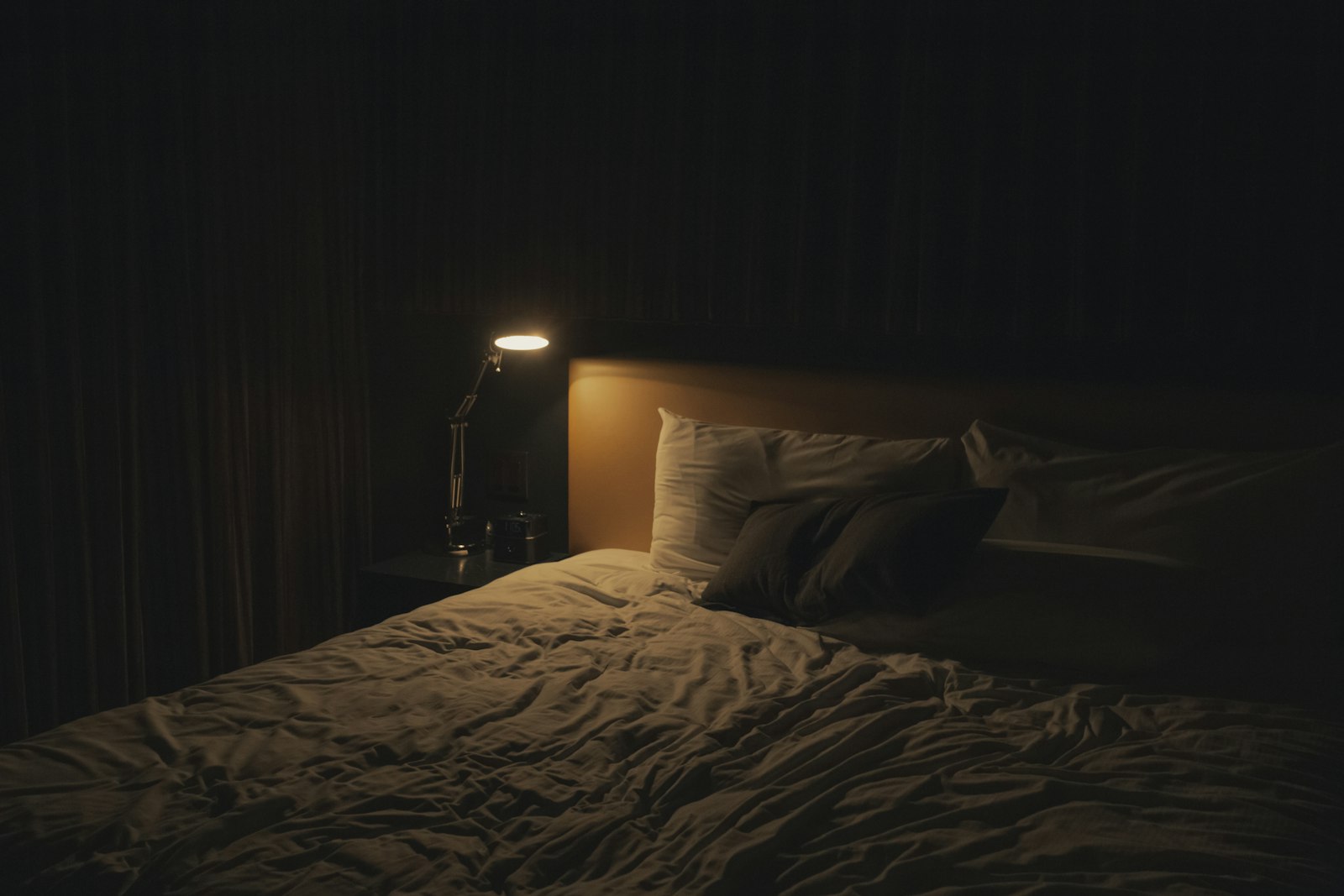
Your routine only works if the household lets it. The fix is to say clearly, once, what you need, and then use a visible signal so nobody has to remember. Copy the scripts below and change the words to sound like you.
Copy and use
To a partner: “On night weeks, I’m asleep from about 8:15 till 3:30. When the bedroom door’s closed, that’s my night. If something’s urgent, text me twice in a row and I’ll wake up. Anything else can wait till I’m up.”
To children: “When the sign’s on my door, I’m sleeping like you do at night. You can draw me a picture and slide it under, and I’ll look at it as soon as I wake up.”
To housemates: “I work nights this week, so I’ll be sleeping in the day. Could we keep the hallway quiet between 8 am and 3 pm? Happy to do the same for you when you need it.”
To friends: “I’m on earlies, so I’m out by 9. Can we do an afternoon coffee instead? I’d love to see you.”
A simple door sign, a shared calendar with your rota on it, and a family whiteboard by the fridge do more than any amount of reminding. If saying no to plans feels hard, short, kind words like “I’d love to, but not this week” are enough.
Days off and rotating weeks: keeping the routine steady
Days off are where most shift routines fall apart. You either stay on your work sleep pattern and miss the daylight hours with family, or you flip straight back to a daytime schedule and then struggle when the next run of shifts starts. The Sleep Foundation notes that keeping your sleep pattern as consistent as you can matters for night workers, so the aim is to move gently, not snap back.
Use these “if this, then that” rules:
- If you’ve just finished a run of nights, then have a shorter sleep the first morning (about 4 hours), get up, spend time in daylight, and go to bed a bit earlier than usual that night.
- If you have only one or two days off between nights, then think about keeping something close to your night pattern rather than fully switching.
- If you’re moving from earlies to lates, then push bedtime later by about an hour each night over your days off.
- If you’re moving from lates to earlies, then bring bedtime forward in small steps and get bright light as early as you can in the morning.
- Whatever the pattern, then keep the order of land, unload, dim and sleep the same. Your body learns the sequence, even when the clock changes.
Your days off also need some actual rest, not just sleep catch-up. Plan one thing that’s purely for you on each block of days off, even if it’s a 20-minute walk alone. If your breaks at work are rushed or skipped, a short lunch break reset can help you arrive home with a little more left in the tank.
Bedroom checklist for daytime sleep
☐ Blackout curtains or blinds, with gaps at the edges taped or covered
☐ An eye mask on the bedside table for backup
☐ Earplugs or a fan for steady background sound
☐ A cool room, with a window opened before you start the dim step
☐ Phone charger outside the bedroom
☐ A door sign that the whole household knows
☐ Doorbell muted or a “please knock quietly” note on the front door
When this isn’t enough
A routine can make shift work easier, but it can’t fix everything. If you’ve given your routine a fair try for a few weeks and you still can’t sleep, you feel exhausted most of the time, you nod off at work or behind the wheel, or your mood has dropped and stayed low, it’s time to talk to a GP, doctor or occupational health team. They can look at what’s going on and talk through options that go beyond what a routine can do. Asking for help with this is a sensible step, not a failure.
Common mistakes
1. Making the routine too long
An hour-long wind-down sounds lovely, but after a twelve-hour shift you’ll skip it. Keep the core routine to 20 to 45 minutes so it survives the hardest days.
2. Running errands in bright morning light
Stopping at the supermarket on the way home from nights feels efficient. It also floods your eyes with daylight right before you need to sleep. Shop on your wake-up side of the day instead.
3. Using the phone as the wind-down
Scrolling feels like switching off, but it keeps your brain switched on. Put the phone on charge outside the bedroom and pick a quieter, screen-free activity for the dim step.
4. Late caffeine to “get through” the end of the shift
That 5 am coffee might help you finish, but it can still be in your system when you try to sleep. Set a caffeine cut-off time for each shift type and write it on your routine card.
5. Flipping your whole schedule on day one off
Going from sleeping at 8 am to sleeping at 11 pm in a single day is hard on anyone. Move your sleep in steps and use bright light at the right times to help it shift.
Make it easy to repeat
The Shift Worker’s Reset
Fill-in routines for every shift type, so you stop deciding and just follow the card.
Days-off planners and door signs that help the whole household protect your rest.
Get The Shift Worker’s ResetFAQ: after work routine for shift workers
How do shift workers unwind after work?
Most shift workers unwind best with a short, repeatable sequence rather than a long ritual. Use a marker on the way home, such as changing clothes or a set playlist, write down anything unfinished, then spend 15 to 30 minutes in low light with a warm shower and a light snack. Keep the order the same after every shift so your body learns it.
Should I go straight to bed after a night shift?
Many people sleep best by going to bed soon after they get home, while they’re tired and before the day gets busy. Others prefer to stay up for a few hours and sleep closer to their next shift, or split their sleep into two parts. Try one approach for a whole run of nights, then judge it by how alert you feel at work.
How can I sleep during the day after a night shift?
Make the bedroom as dark, cool and quiet as you can, using blackout curtains, an eye mask, and earplugs or a fan. Keep light low on the way home and inside the house, stop caffeine several hours before bed, and leave your phone outside the room. Tell the household your sleep times and use a door sign so you aren’t disturbed.
How many hours of sleep do night shift workers need?
Night workers generally need the same amount of sleep as anyone else. Cleveland Clinic suggests aiming for seven to nine hours in every 24-hour period. That total can come in one block or in a main sleep plus a short nap, but regularly getting six hours or fewer tends to leave people short on sleep across a run of shifts.
What should I eat after a night shift before bed?
A small, plain snack usually sits better than a large meal before daytime sleep. Toast, yoghurt, a banana, oats or a small bowl of soup are easy options. Heavy, greasy or spicy food can feel uncomfortable when you lie down. Save your main meal for after you wake up, when it fits the start of your “day”.
How do I switch my sleep back on days off?
Move gradually instead of all at once. After your last night, have a shorter morning sleep of around four hours, get up and spend time in daylight, then go to bed a bit earlier that night. With only one or two days off, staying closer to your work pattern can be easier than switching fully and switching back again.
Bottom line
The best after work routine for shift workers is short, repeatable and built around light: land, unload, dim and sleep, in the same order after every shift. Adjust the clock times to your rota, protect your sleep window with clear words to the people around you, and give it a full week before you change anything.
This article is educational content and isn’t a substitute for professional care. If things feel heavy or unsafe, please reach out to a mental-health professional or your local emergency services.
Sources: Cleveland Clinic, How to sleep better if you work the night shift · Sleep Foundation, Tips to help manage your shift work schedule · CDC NIOSH, Training for nurses on shift work and long work hours