
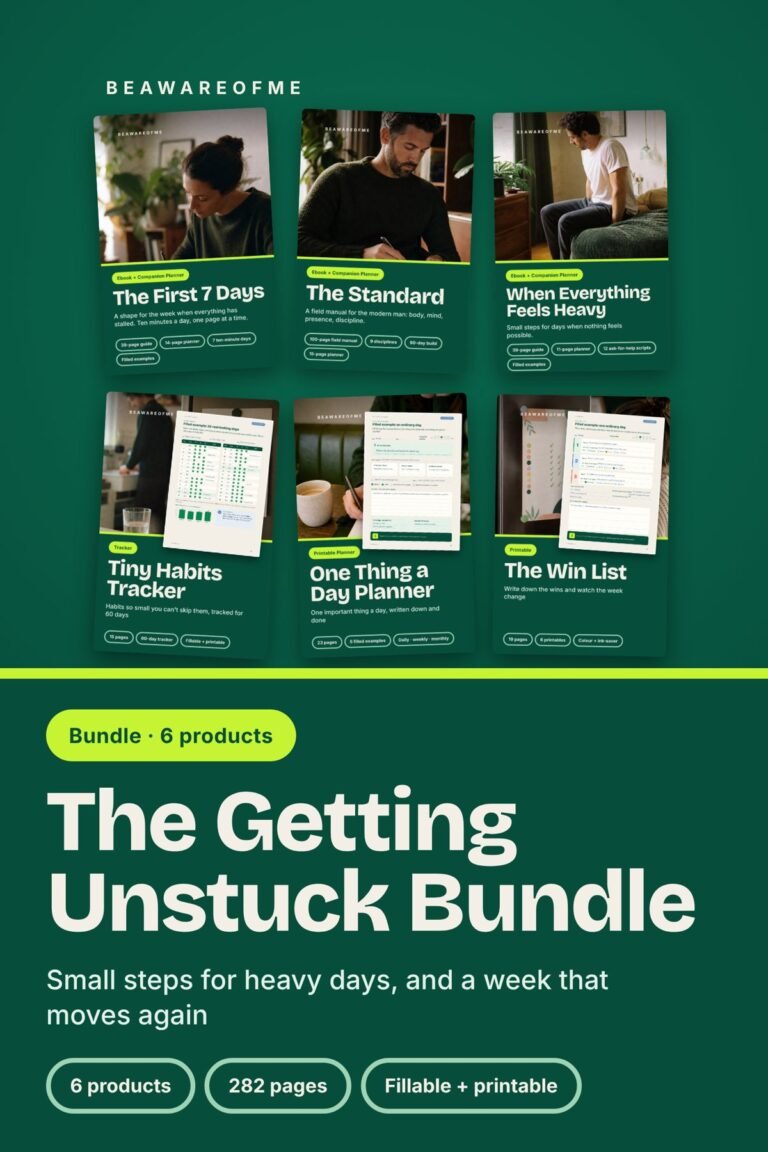


Burnout Early Signs Check
A calm, honest check on six early warning signs: energy, pulling away, workload, recovery, your body and home life. You get a traffic-light picture of where you stand and three small steps that fit this week.
Anonymous. Different questions each time. A general structure for everyday life, not medical or psychological advice.
You are still getting through the week, but it costs more than it used to. This page helps you spot the early signs of burnout across six areas of your life, and gives you small, realistic steps to take before the tank runs dry.
Each answer adds points to Exhaustion, Pulling away, Workload, Recovery, Body signals and Home life. Your result reads the strongest areas and turns them into a named pattern, a chart, three small steps and the guides that fit. Questions change every time you play.
Burnout Early Signs Check: what is really going on
Burnout is a word people use for the deep tiredness that builds when demands keep outrunning recovery for a long time. It is usually linked to work, though caring roles, studying and running a home can all play a part. It rarely arrives overnight. It creeps in through long weeks, too many roles, unclear expectations and too little real rest, until even small tasks feel heavy and the things you used to care about feel flat.
The early signs are easy to miss because they look like ordinary busy life. You feel tired before the day starts. You get more irritable with colleagues or family. Weekends go on catching up instead of resting. You start caring a little less, almost as a way to protect yourself. Your body joins in with headaches, tight shoulders, a stomach that is often unsettled or catching every cold going.
People who are close to burnout are often the ones who keep showing up. They are reliable, they say yes and they push through. That is part of why it builds: the effort is invisible until something gives. Noticing the pattern early, while you still have some energy, makes it much easier to change course than waiting until you are completely empty.
This check looks at six areas: exhaustion, pulling away, workload, recovery, body signals and home life. Seeing them side by side helps you understand where the pressure is coming from and where you might get some energy back. The goal is not to fix your whole job this week. It is to find one or two changes that give you a little more room, and to know when it is time to ask for help.
What each area means
Exhaustion
This is the deep tiredness that rest does not seem to fix. It often shows up as heavy mornings, a short fuse and small jobs that suddenly feel big.
- You feel tired before the workday has started.
- Midweek already feels like the end of the week.
- A full night's sleep only helps a little.
- Simple tasks take a big push to begin.
- Do the most important task first, before email.
- Protect your sleep window, even on busy nights.
- Eat a proper breakfast and drink water before mid-morning.
- Cross two non-urgent tasks off the list this week.
Pulling away
When demands stay high, many people start to care a bit less as a way to cope. Work that used to feel meaningful can start to feel flat, and people can feel like hard work.
- Things that used to matter at work feel pointless.
- You feel more cynical or short with colleagues.
- You avoid messages, meetings or people more than before.
- You feel like you are going through the motions.
- Write down one part of your work that still feels worthwhile.
- Have one honest conversation with a colleague you trust.
- Notice small wins at the end of each day.
- Take a real lunch break away from your desk a few times this week.
Workload
This area covers how much is on your plate and how much control you have over it. Too much work, unclear priorities and constant interruptions are some of the most common drivers of burnout.
- Your to-do list grows faster than you can clear it.
- You regularly work late or check email at home.
- You are not sure what matters most.
- You say yes before checking if you have space.
- Ask your manager which three things matter most this week.
- Block one hour of focus time in your calendar each day.
- Use a script like 'I can do this by Friday, or that today, which matters more?'
- Write a finish time on your calendar and leave close to it.
Recovery
Recovery is how well you refill between busy stretches. Evenings, weekends and holidays should give energy back, but when they are full of catch-up and screens, the tank stays low.
- Evenings disappear into chores, scrolling or more work.
- Weekends go by without feeling rested.
- You find it hard to switch off from work thoughts.
- Holidays help for a day or two, then the tiredness is back.
- Create a short end-of-work ritual, like a walk or changing clothes.
- Plan one restful thing each weekend that is not a chore.
- Keep work apps off your phone in the evenings if you can.
- Spend some time outdoors or moving gently most days.
Body signals
Long-term stress often shows up in the body before we name it in the mind. Headaches, tension, poor sleep and frequent colds can all be signs that you need more rest.
- Your shoulders, neck or jaw are often tight.
- You get more headaches or stomach upsets than usual.
- Your sleep is broken or you wake up already thinking about work.
- You catch every bug that goes around.
- Stretch your neck and shoulders for a few minutes each day.
- Keep regular meal times, even on busy days.
- Notice your caffeine and alcohol and cut back where you can.
- Book a check-up if symptoms keep going or worry you.
Home life
Work stress rarely stays at work. This area looks at how tiredness and pressure spill into home, relationships and the time you have for yourself.
- You snap at the people you live with more than you would like.
- You have little energy for friends or hobbies.
- Home tasks pile up and add to the pressure.
- You feel guilty at work about home, and at home about work.
- Tell the people at home what kind of week you are having.
- Share or drop one home task this week.
- Plan one easy, low-effort dinner for your busiest night.
- Keep one small thing just for you, even 15 minutes.
What your score means
Your answers suggest you are mostly keeping a healthy balance right now. Keep protecting the habits that refill you, like clear finish times and real breaks, and check in again when work gets busier.
Some early warning signs are showing up, especially in your highest areas. This is a good moment to act: choose one change for the coming week, like a firm finish time or a clearer list of priorities.
Your answers point to strain in several areas at once, and you deserve support, not more pushing through. Start with one small step, like telling someone you trust how you are doing, and if this has lasted weeks or is affecting your health, please talk to a doctor or a qualified professional.
5 small steps that help
Name what is draining you
Look at your top two areas and write one sentence about each. Being clear on the source makes it easier to know where to start.
Set a firm finish time
Choose a time you will stop work on at least three days this week, and put it in your calendar. Close the laptop and do something that marks the end of the day.
Clarify your priorities
Ask your manager or yourself which three things matter most this week. Let the rest wait, move or be done more simply.
Protect one recovery block
Plan one stretch of time this weekend that is only for rest or something you enjoy. Treat it like an appointment you would not cancel.
Tell one person
Share how you are really doing with a partner, friend or trusted colleague. Saying it out loud often makes the next step clearer.
The guides that turn this into a plan
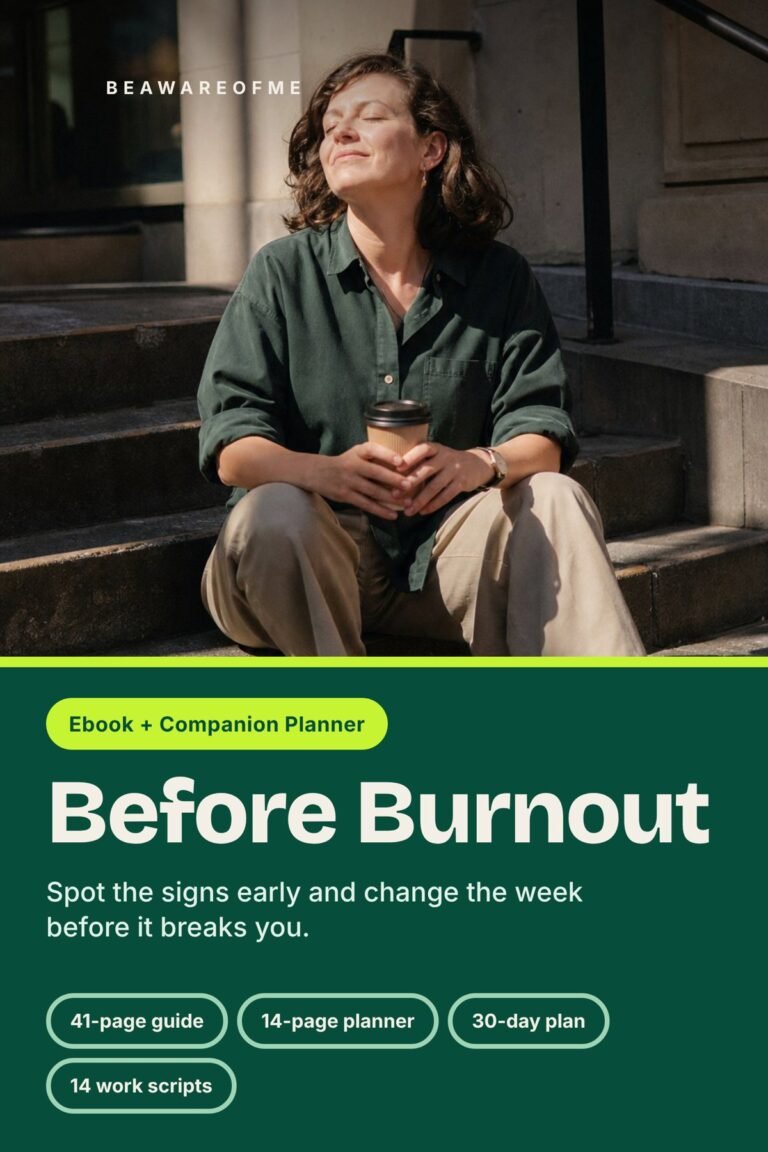 Ebook + Planner
Before Burnout
Spot the early signs and change the week before it breaks.
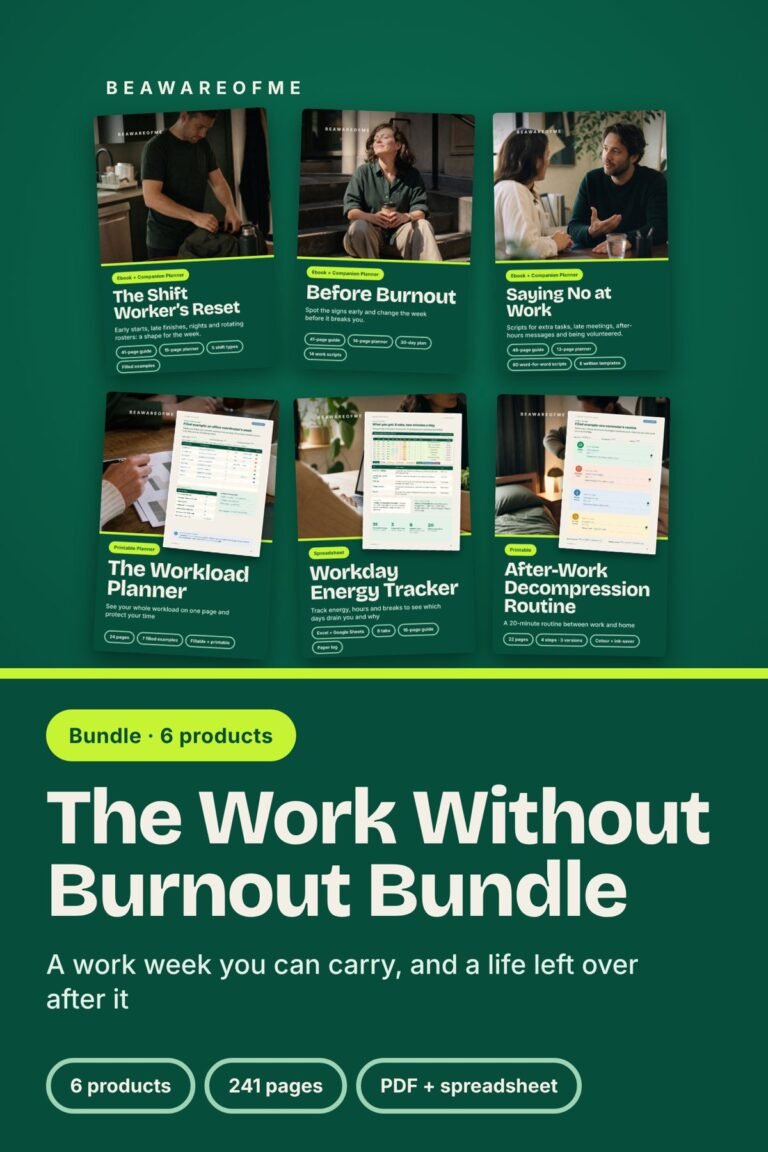 Bundle · 6 products
The Work Without Burnout Bundle
A practical plan for the work week, from workload to home.
Six products sold separately for $88, here together for $37.
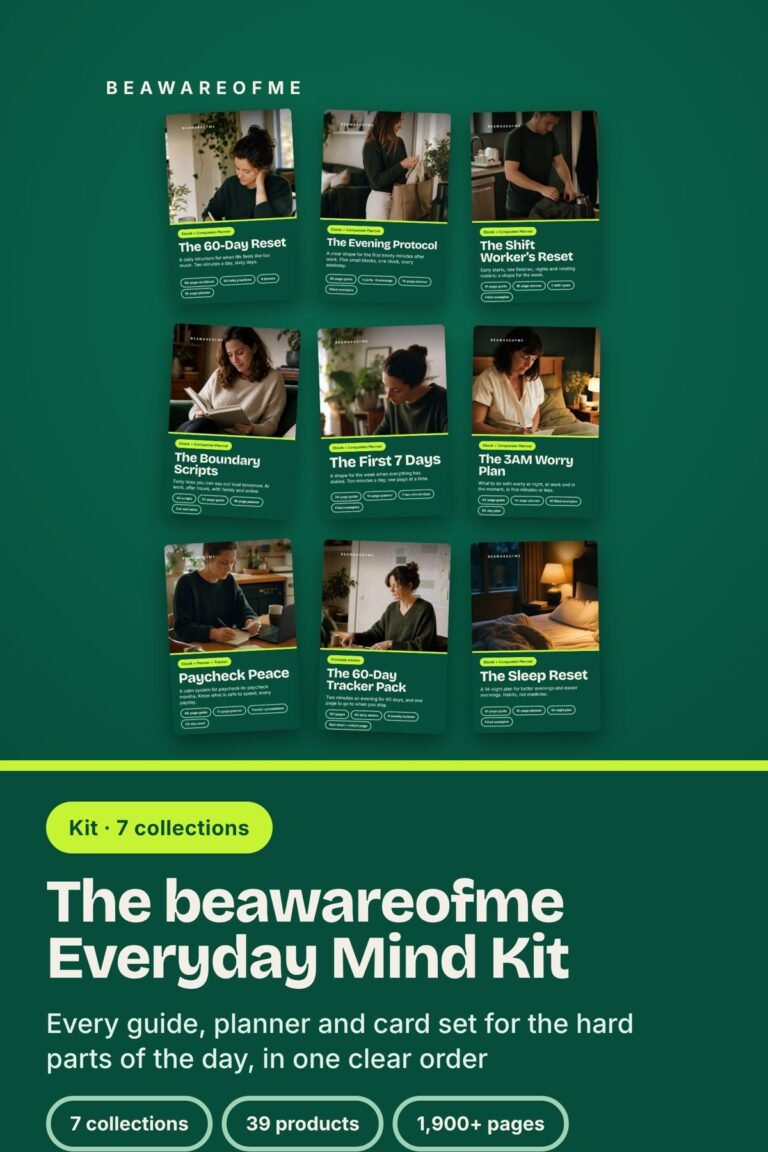 Kit · all collections
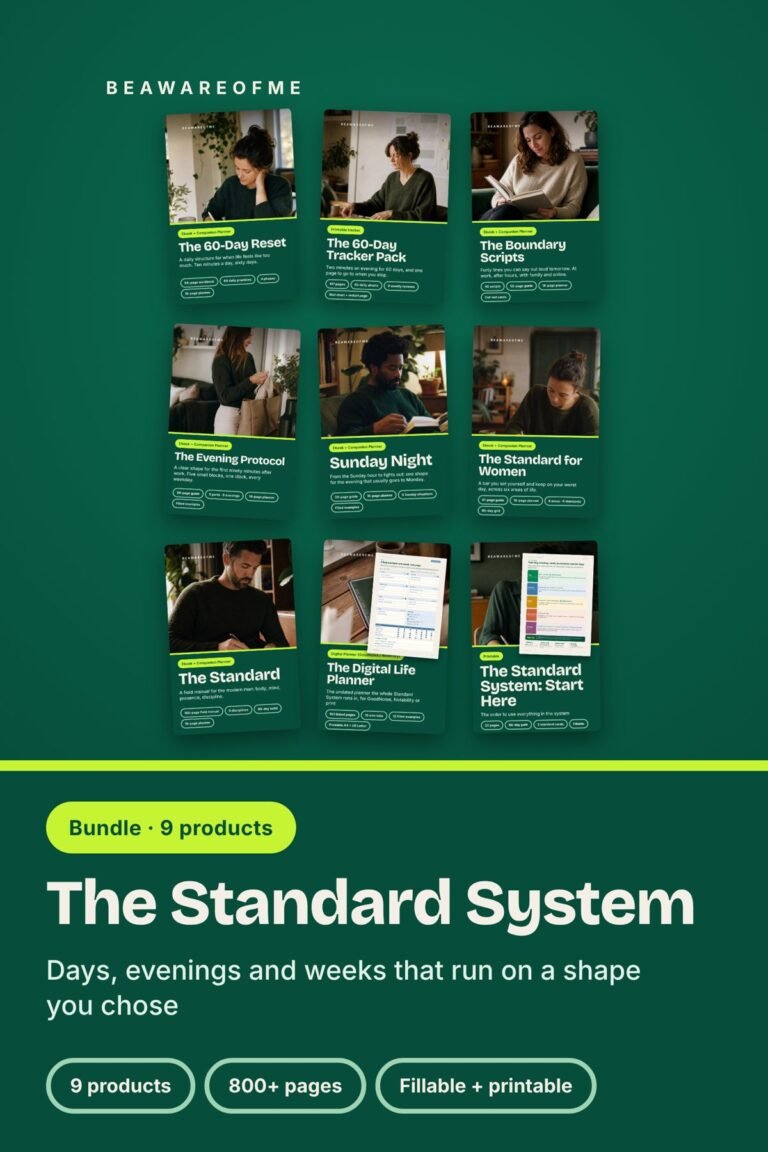
The beawareofme Everyday Mind Kit
Every beawareofme collection in one download, in a clear order.
The Standard System and all six bundles cost $289 bought separately; the kit is $127.
Instant download · Digital download · All sales final
Myths and calmer facts
✗ Burnout only happens to people who cannot cope.
✓ It often affects capable, committed people who keep saying yes. It is usually about long-term demands and too little recovery, not personal weakness.
✗ A holiday will fix it.
✓ Time off can help, but if the same pressures are waiting when you return, the tiredness tends to come back. Small daily changes to workload and recovery usually matter more.
✗ If I just push through this busy patch, it will pass.
✓ Some busy patches do end. When the patch keeps becoming the normal, it is worth changing something now rather than waiting.
When to get help
Talk to a doctor or a qualified professional if exhaustion has lasted for weeks, if you are struggling to function at work or home, or if you have physical symptoms like chest pain, frequent headaches or big changes in sleep or appetite. Reach out too if you feel hopeless, numb or unable to enjoy anything, or if you are relying on alcohol or other substances to get through. Many workplaces also offer confidential support schemes. If you are thinking about harming yourself, please reach out now: call or text 988 in the US, call Samaritans on 116 123 in the UK and Ireland, or find a local line at findahelpline.com.
Frequently asked questions
What are the first signs of burnout?
Common early signs include feeling tired before the day starts, getting more irritable, caring less about work you used to enjoy and finding it hard to switch off. Body signs like headaches, tension and poor sleep often appear too.
How is burnout different from stress?
Stress often feels like too much, with a sense of urgency. Burnout tends to feel more like too little: too little energy, motivation or care left. Long stretches of stress without recovery can lead towards burnout.
Can I recover from burnout without quitting my job?
Many people do, by changing workload, boundaries and recovery habits, and by getting support. Sometimes bigger changes are needed, and a doctor or professional can help you think them through.
How long does it take to recover?
It varies a lot from person to person and depends on how long the strain has lasted and what changes are possible. Small, steady changes and proper rest usually help more than one big break.
Should I tell my manager I am close to burnout?
If you feel safe to, an honest conversation about workload and priorities can make a real difference. Focus on what would help, such as clearer priorities or fewer projects at once.
Is this check a medical test?
No. It is a simple way to notice patterns and choose a first step. If you are worried about your health or how you are feeling, talk to a doctor.
Is this check a diagnosis?
No. Your answers point to a pattern, not a diagnosis. It is a general structure for everyday life, not medical or psychological advice.