

There always seems to be one person at work that everyone goes to for help, advice, and a place to talk. People often call this person the “office therapist” because they help coworkers deal with the stress of work and personal life. Few people realize how much mental stress it puts on people who do it, even though it’s a good thing to do. This article looks at the office therapist, the emotional work that goes on behind the scenes, and ways to deal with and share this hidden burden to make workplaces healthier.
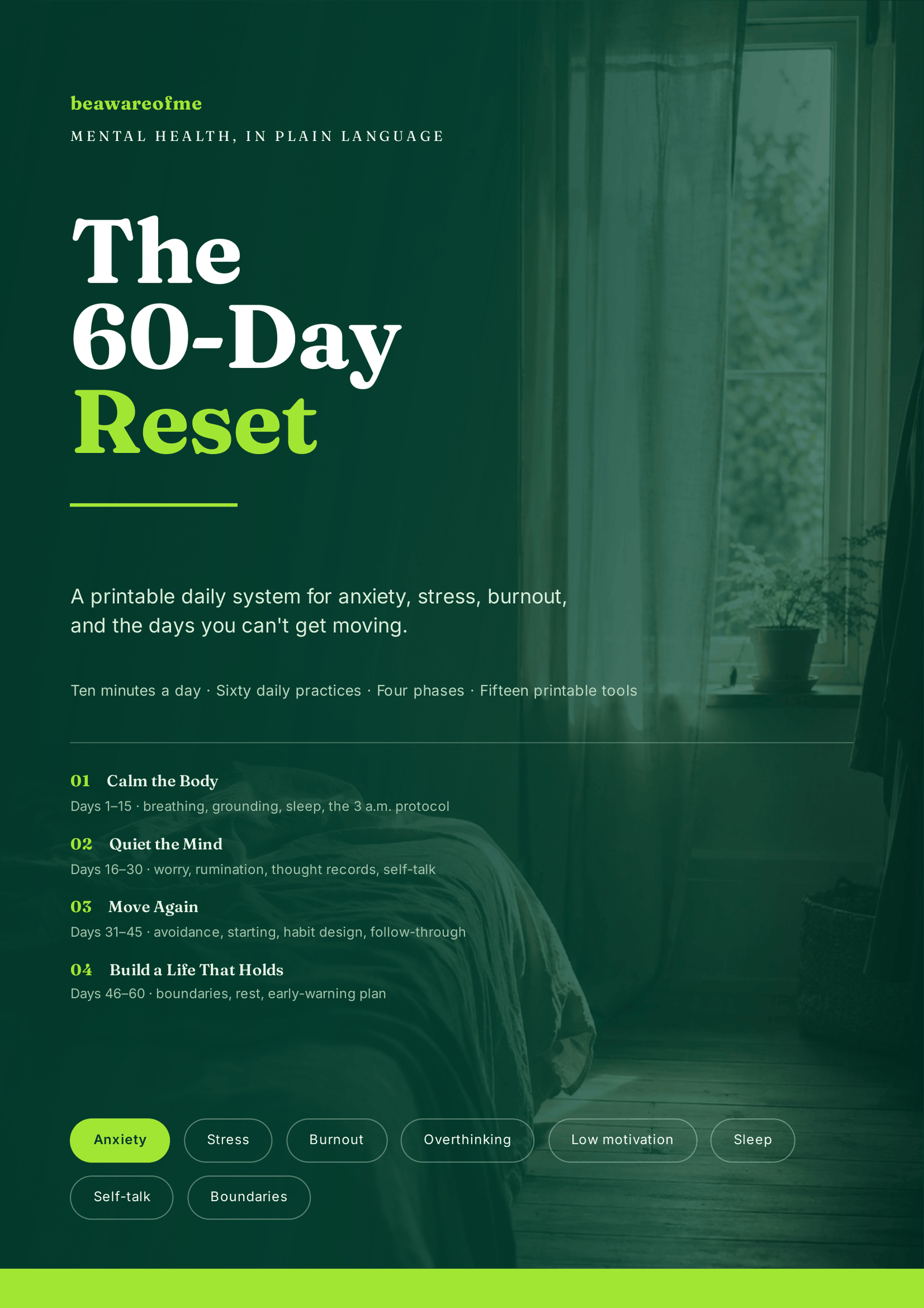
The 60-Day Reset
Everything on this page, sequenced into a printable ten-minute daily practice — 84 pages across anxiety, sleep, overthinking and low motivation, with a two-minute version of every day for the hard ones.
Instant PDF · 60 daily practices · 15 printable tools · Educational, not therapy
What is Emotional Labor at Work?
Emotional labor is the act of controlling your feelings and how you show them in order to meet the emotional needs of your job. Arlie Hochschild, a sociologist, first used this term to talk about customer service jobs, but it is becoming more and more important in how people work together in the office.
The “office therapist” often does emotional work on the side, helping coworkers through personal problems, work stress, conflicts with other people, and more. This emotional support is rarely recognized or paid for, unlike formal duties, but it can take up a lot of time and mental energy.
Who Works as the Office Therapist?

Not everyone is equally likely to take on this informal role. Research and workplace evaluations indicate that specific individuals are more inclined to assume the role of the office therapist:
- Empathetic personalities: People with empathetic personalities often draw in others who need emotional support because they naturally show care and concern.
- Women and minorities: Studies show that women, especially women of color, are more likely to be expected to give emotional support at work.
- Experienced employees: Senior or long-tenured workers are often seen as wise and knowledgeable about the company, so they are often the ones people turn to for advice.
People don’t usually volunteer for this job; instead, the workplace culture assumes or slowly assigns it to them.
Read Also: How Thoughts on the Past & Future Fuel Depression: Breaking the Cycle
The Hidden Mental Costs
Being the office therapist may seem like a sign of trust and respect, but it can have serious effects on your mental health:
1. Tired of Caring
When you listen to and take in other people’s emotional problems, you can get compassion fatigue, which is when you run out of emotional energy and your ability to empathize with others decreases over time.
2. Getting Burned Out
Taking on emotional burdens without help or recognition can lead to burnout, especially when the person is also working a full-time job.
3. Confusion About Roles
It can be hard to tell the difference between a peer and a therapist, which can make things uncomfortable and confusing. Employees may feel stuck between wanting to help and knowing when to stop.
4. Work That Isn’t Recognized
Even though emotional support affects the culture of the workplace and how well teams work together, it is not included in formal job descriptions, performance reviews, or pay.

It's rarely a motivation problem. It's five apps and no single page.
Habits in one place, money in another, notes in a third, and nowhere that shows you how the month is actually going. The Digital Life Planner is one spreadsheet that holds all of it and does the arithmetic while you get on with your life.
See how it works →5. Not Taking Care of Your Own Needs
Therapists in the office often put the needs of others before their own, which means they don’t deal with their own stress, unhappiness, or mental health problems.
The Effects on the Organization
The cost of emotional labor doesn’t just affect the people doing it; it affects the whole company.
- Less Productivity: Emotional fatigue can make important workers less efficient and less able to think clearly.
- Higher Turnover: Office therapists who are burned out may eventually quit, taking with them important institutional knowledge and team morale.
- Toxic Dependency: Relying too much on one person for emotional support can stop other people from learning how to deal with problems in a healthy way or getting professional help.
How to Tell When You’re Emotionally Overloaded

Managers and HR professionals need to know how to spot the signs that someone might be doing too much informal emotional work:
- A lot of tiredness or missing work
- Less quality or engagement at work
- Emotional withdrawal or being irritable
- Comments that show stress from helping other people
Having open conversations and checking in on a regular basis can help find and deal with these problems.
Sharing the Emotional Work
Organizations need to actively redistribute emotional labor to avoid burnout and make things fair. Here are some long-term strategies that can help:
1. Make Professional Help Normal
Put money into mental health resources like Employee Assistance Programs (EAPs), on-site counselors, or working with mental health providers. Make it normal, not embarrassing, to ask for help from a professional.
2. Make Sure Your Limits Are Healthy
Encourage everyone on the team to set and respect their emotional limits. Teach people how to say no politely, and support those who want to protect their mental space.
3. Encourage Networks of Peer Support
Instead of relying on one person, set up structured peer support groups or mentorship programs to share the emotional burden among the whole team.
4. Recognize Emotional Work
Give official credit to those who help keep team morale high. Think about adding emotional labor to performance reviews and giving employees extra time off or wellness stipends.
5. Build a Culture of Support
Make it so that being open, caring, and mentally healthy are important at work. This means that leaders should show healthy behaviors, like taking days off for mental health and talking about their problems without being ashamed.

6. Teach People How to Be Emotionally Intelligent
Train all of your employees on emotional intelligence, active listening, and being aware of mental health issues. This gives everyone the tools they need to better handle relationships and help each other without putting too much on a few people.
7. Set Up Clear Ways to Talk to Each Other
Set up rules that let employees voice their concerns or ask for help without having to rely only on their coworkers. Anonymized feedback systems or direct access to HR can help people not rely on their coworkers as much emotionally.
A Corporate Wake-Up Call in the Real World
A senior account manager at a mid-sized marketing firm became the person everyone on the team turned to for advice. At first, she liked the role and was proud to be a source of comfort. But after two years, she started to feel anxious and tired, missed deadlines, and thought about quitting.
When her boss finally noticed the change, they did an anonymous survey that showed she was emotionally supporting more than 70% of the team. The company hired a counselor to work on-site, gave employees mental health days, and started monthly wellness check-ins.
The 60-Day Reset
Everything on this page, sequenced into a printable ten-minute daily practice — 84 pages across anxiety, sleep, overthinking and low motivation, with a two-minute version of every day for the hard ones.
Instant PDF · 60 daily practices · 15 printable tools · Educational, not therapy
In six months, employee satisfaction and productivity went up, and the account manager was able to get back on her feet—she was no longer alone in carrying the emotional weight of the office.
Final Thoughts
Being the office therapist is a hidden emotional burden that can have long-lasting effects on both people and businesses. It is not only fair to recognize and deal with this dynamic, but it is also important for the long-term health of the workplace.
Companies can make their teams healthier and stronger by recognizing this role, redistributing emotional responsibilities, and giving employees access to professional mental health resources. One person should never have to bear the whole burden of emotional support. A truly supportive workplace cares about its employees, values their health, and gives everyone the tools they need to succeed, not just survive.
Workplaces that know and act on the unspoken mental toll of being the “office therapist” will not only stop people from getting burned out, but they will also create an atmosphere of shared responsibility, empathy, and long-lasting productivity.
Sources
- Hochschild, A.R. (1983). The Managed Heart: Making Money Off of Human Feelings.
- Maslach, C., & Leiter, M. P. (1997). The Truth About Being Burned Out
- “Women Are Overburdened with Emotional Labor at Work,” Harvard Business Review (2021)
- Emotional Labor Resources from the American Psychological Association
- Reports on Women in the Workplace by McKinsey & Company

Quiet the noise — without burning your phone in a field.
Get Beat Information Overload free, plus the occasional calm, no-hype note from me.