


Bulimia often lives behind a smile, a full calendar and a person who seems to be coping. If you are worried about yourself or someone you love, you may feel confused, scared or unsure where to start. This guide explains what bulimia nervosa is, the general warning signs, why it develops, and how treatment and recovery work. Most of all, it shows you how to reach out, because help is available and people do recover.
🤝 Need to talk to someone now?
You do not have to work this out alone. In the US, the National Alliance for Eating Disorders offers a free helpline with specialist therapists: call (866) 662-1235 on weekdays. In the UK, Beat runs free helplines and webchat (England 0808 801 0677). Anywhere else, findahelpline.com lists free, confidential lines in your country.
🌱 Key takeaways
What Is Bulimia Nervosa? The Plain-Language Version
Bulimia nervosa is an eating disorder marked by a repeating cycle of losing control around eating and then trying to undo it, fuelled by strong worries about weight and shape. The NHS describes it as a serious mental health condition that “can affect anyone”. It also says, clearly, that you can recover from it.

The word “nervosa” points to the emotional side of the condition. Bulimia is not really about food. It is often a way of coping with painful feelings, stress, low self-esteem or a need for control. Food becomes the place where those feelings play out.
| Part of the picture | What it can involve | A kind first step |
|---|---|---|
| The cycle | Loss of control around food, then guilt and urges to compensate | Name it without blame |
| Thoughts | Intense focus on weight, shape and self-worth | Talk to someone you trust |
| Feelings | Shame, anxiety, low mood, irritability | Share how you feel, not just what you eat |
| Secrecy | Hiding eating, avoiding social meals | Pick a private, calm moment to talk |
| Health | Tiredness, poor sleep, dizziness, feeling unwell | Book a GP or doctor check |
| Hope | Therapy and support help people recover | Call a free helpline today |
Why it is so often missed
Many people with bulimia nervosa keep their weight in a typical range and carry on with work, study and family life. From the outside, everything can look fine. Inside, the cycle may feel exhausting and lonely. That gap between how things look and how they feel is one reason early, gentle conversations matter.
📝 Note: Only a qualified professional can diagnose an eating disorder. This guide is here to help you understand bulimia and find support, not to label yourself or anyone else.
Warning Signs of Bulimia Nervosa: What You Might Notice
The warning signs of bulimia nervosa tend to show up in mood, routines and physical health, rather than in body size. You do not need to see every sign to be concerned. The NHS stresses that it is important to get help even if only some signs fit.
Emotional and social signs
- Strong preoccupation with weight, shape or appearance, and harsh self-judgement.
- Mood changes such as anxiety, irritability, tension or low mood.
- Secrecy around food, or avoiding meals and events with others.
- Withdrawing from friends, hobbies or things that used to bring joy.
- Seeming very distressed or ashamed after eating.
Physical signs
- Feeling tired a lot, or sleeping poorly.
- Feeling dizzy, faint or generally unwell.
- Bloating, stomach discomfort or other digestive issues.
- Changes to periods in people who menstruate.
⚠️ Watch out: Body size is not a reliable signal. Someone can be seriously struggling with bulimia nervosa while looking healthy to everyone around them. Trust the emotional signs and the changes in daily life.
If any of this sounds familiar, the next step is not more research. It is a conversation, either with a GP or with a helpline that understands eating disorders.
Why Bulimia Develops: Causes and Risk Factors Explained
There is no single cause of bulimia nervosa, and nobody chooses to develop it. Experts describe a mix of genetic, biological, psychological and social factors. The NHS lists several things that can raise the risk.
Factors that can play a part
- A family history of eating disorders, depression or addiction.
- Past criticism of eating, body shape or weight, including teasing or bullying.
- Strong pressure to look a certain way, at school, online or in some sports and careers.
- Anxiety, low self-esteem, perfectionism or a strong need for control.
- Difficult or traumatic experiences, which can make painful feelings harder to manage.
Perfectionism deserves a special mention, because it so often sits underneath eating difficulties. Our guide on how perfectionism fuels anxiety explains how that inner pressure builds. Social media can also intensify comparison, which we explore in how social media shapes body image.
💡 Good to know: Risk factors are not destiny. Many people with these experiences never develop an eating disorder, and many people with bulimia have none of them. They simply help explain why some people are more vulnerable.
Bulimia is not about willpower. It is pain looking for somewhere to go, and pain responds to care.
— beawareofme
How Bulimia Nervosa Differs From Other Eating Disorders
Bulimia nervosa shares some features with other eating disorders, but it has its own pattern, and the right support depends on an accurate assessment. Here is a gentle comparison to help the picture make sense.
Bulimia and anorexia
Both involve intense worry about weight and shape. With anorexia, restriction is usually at the centre and health risks often relate to very low weight. With bulimia, the cycle of losing control and trying to compensate is central. Some people move between patterns over time. Our calm guide to understanding anorexia nervosa explains that condition more fully.
Bulimia and ARFID
ARFID, or avoidant/restrictive food intake disorder, is not driven by body image at all. It links to sensory sensitivity, fear around eating or low interest in food. You can read more in our guide to ARFID.
Bulimia and orthorexia
Orthorexia describes an unhealthy fixation on eating “pure” or “clean” food. It is not a formal diagnosis, yet it can cause real distress. We explain it in orthorexia and the healthy eating obsession.
How Treatment Works: What Real Recovery Looks Like
Treatment for bulimia nervosa is tailored to each person, and the NHS is clear that it takes time, but you can recover. Most care centres on talking therapies, with medical support alongside. Here is what that usually involves.
The main parts of treatment
- Talking therapies: often a guided self-help programme or cognitive behavioural therapy with a trained therapist. For under-18s, family members may be involved.
- Medical care: a doctor keeps an eye on physical health and treats any problems that arise.
- Dietitian support: a specialist can help rebuild a calmer, steadier relationship with food.
- Support for linked conditions: if anxiety or depression is present, a doctor may discuss extra treatment, including medicines.
If therapy feels unfamiliar, our guide to different types of therapy explains the common approaches in plain words. Your doctor or specialist team can tell you which ones fit bulimia and your situation.
Recovery is rarely a straight line
Progress often comes in small, uneven steps. A hard week does not erase months of work. Setbacks are a normal part of recovery, and they are a reason to lean on support, not a sign of failure.
✨ Small step: Before your first appointment, write down when things started to feel hard, what worries you most, and one question you want answered. A short note keeps you steady when nerves kick in.
Why Early Care Matters for Your Body and Mind
Getting help early for bulimia nervosa protects both physical and emotional health, and it usually makes recovery smoother. The condition can strain the body over time, even when someone looks well. It also wears down mood, sleep, confidence and relationships.
The physical side, gently explained
The NHS notes that bulimia can bring tiredness, poor sleep, dizziness and digestive discomfort. Over time, it can affect the body in more serious ways, which is why a doctor will usually offer health checks. In some cases, a short hospital stay may be needed to keep someone safe. None of this is meant to scare you. It is simply a reason to let a professional look after your health.
The emotional side
Living with bulimia nervosa can feel like carrying a secret everywhere you go. Many people describe constant self-criticism, anxiety and a sense of being alone. Low mood and depression often travel alongside it. Treating the emotional side is a core part of care, not an extra.
⚠️ Watch out: If you ever have thoughts of harming yourself, please treat that as urgent. In the US, call or text 988. In the UK and Ireland, call Samaritans on 116 123. Elsewhere, findahelpline.com lists free lines near you.
Life in Recovery: Building a Kinder Relationship With Yourself
Recovery from bulimia nervosa is about much more than eating, and many people describe it as learning to treat themselves with care again. With a therapist, people often explore feelings, triggers and new ways to cope with stress. Over time, the cycle loosens its grip.
What often helps along the way
- Staying connected to a therapist or care team, especially during stressful seasons.
- Building a small circle of people who know what is going on and can listen.
- Noticing harsh self-talk and practising a softer, fairer inner voice.
- Making time for rest, friendships and activities that have nothing to do with appearance.
- Agreeing with your care team on early warning signs and what to do if they appear.
Self-compassion is not a soft extra here. It is a skill that steadies recovery when shame tries to creep back in. Kindness toward yourself is one of the most practical tools you have.
How to Support Someone With Bulimia Nervosa (Without Pushing Them Away)
The best support for someone with bulimia nervosa is calm, private and focused on feelings rather than food. Shame and secrecy are part of the condition, so a gentle approach makes it easier for them to open up.
Before you talk
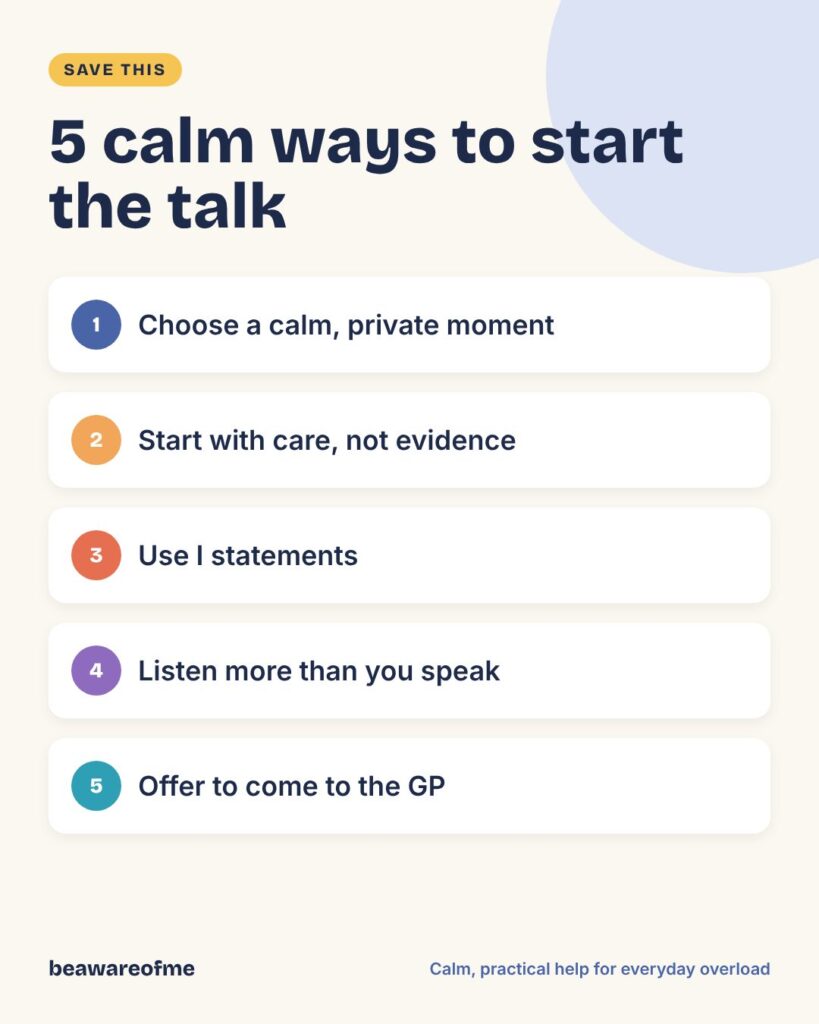
Avoid mealtimes, busy places or times when either of you is stressed.
Share that you have noticed they seem unhappy, and that you care.
Say “I feel worried about you” rather than “you are doing something wrong”.
Let silences happen. You do not need answers in one conversation.
Suggest a GP visit together, or offer to sit with them while they call a helpline.
Words that can help
- “I love you, and I’ve noticed you seem to be going through a hard time.”
- “You don’t have to explain everything. I just want you to know I’m here.”
- “Would you let me help you find someone to talk to?”
Things to quietly avoid
Steer clear of comments about weight, appearance or what someone eats, even positive ones. Avoid ultimatums, monitoring or angry confrontations. Remember that denial is common at first. Stay warm, keep the door open and try again later.
🧭 Try this: Look after yourself too. Supporting someone you love can feel heavy. Beat and the National Alliance both offer support for families and friends, and our guide to self-compassion on tough days can help you stay steady.
If You Think You Might Have Bulimia Nervosa: Your First Gentle Steps
If you recognise yourself in this guide, please know that you deserve support, exactly as you are, right now. You do not have to be “sick enough” to ask for help. Reaching out is a brave and hopeful act.
Anyone
Bulimia can affect anyone, and treatment may take time, but you can recover.
Source: NHS
Free
The National Alliance helpline is free and staffed by licensed eating disorder therapists.
Source: National Alliance for Eating Disorders
Confidential
Beat helpline calls are free from UK phones and do not appear on itemised bills.
Source: Beat
☀️ Try this today: one small act of courage
☐ Choose one person you trust, or a helpline.
☐ Use the words below, or your own.
☐ Book a GP or doctor appointment this week, and take someone with you if that helps.
“I’ve been struggling with eating and how I feel about myself for a while. It’s hard to say this, but I think I need some help. Can you help me take the first step?”
If you feel low more generally, our guide to signs you might be struggling with mental health can help you notice when it is time for extra care. Local services can also be a lifeline, as we explain in our guide to community mental health services.
4 Myths That Keep People Silent About Bulimia
Myths about bulimia nervosa make people feel they do not “count”, so clearing them up can make reaching out feel possible. Here are four that come up again and again.
Myth: Only young women get it
Bulimia can affect people of any gender, age, background or body size. Men and older adults often face extra stigma, which can delay help. Everyone deserves support.
Myth: It is about vanity
Bulimia is a mental health condition rooted in pain, anxiety and low self-worth. It is not shallow, and it is not a choice.
Myth: You would be able to tell
Most people with bulimia look well to others. Appearance says very little about how much someone is struggling inside.
Myth: You have to hit rock bottom first
You never need to wait for things to get worse. Early help is often easier, and any point is a good point to ask.
5 Common Mistakes That Make Bulimia Harder to Talk About
Most of these mistakes come from fear or love, and almost everyone makes one or two. Knowing them helps you avoid extra hurt.
Mistake 1: Waiting until it looks serious
Because bulimia often stays hidden, waiting for visible change can mean waiting far too long. Instead, act on emotional signs and daily struggles, and book a doctor visit early.
Mistake 2: Focusing only on food
Talking only about meals can make someone feel watched and defensive. Instead, ask about stress, mood and how life feels. Food is the symptom, not the whole story.
Mistake 3: Praising weight changes
Even kind comments about appearance can reinforce harmful beliefs. Instead, praise qualities that have nothing to do with bodies, like kindness, humour or effort.
Mistake 4: Trying to manage it alone
Self-help searches online can lead to confusing or unsafe advice. Instead, rely on qualified professionals and trusted charities that explain options safely.
Mistake 5: Treating a setback as failure
Recovery has ups and downs for almost everyone. Instead, see a hard day as a signal to reach for support, and remember how far you have already come.
📚 Keep reading
What is ARFID?Understanding anorexia nervosaOrthorexia explainedSelf-compassion and healingBulimia Questions People Ask Most
What is bulimia in simple terms?
Bulimia is an eating disorder where a person feels caught in a cycle of losing control around food, then feeling intense guilt and urges to make up for it. It is driven by deep worries about weight, shape and self-worth. It is a serious mental health condition, not a choice, and specialist support helps people recover.
Can you have bulimia and look healthy?
Yes. Many people with bulimia keep a weight in the typical range and seem to cope well with work, study and family life. That is one reason the condition often goes unnoticed. Emotional signs, secrecy and changes in daily routines are usually more telling than appearance. A doctor can assess what is really going on.
What causes bulimia?
There is no single cause. Bulimia usually develops from a mix of genetic, biological, psychological and social factors. Risks include a family history of eating disorders or depression, criticism about weight or shape, pressure to look a certain way, perfectionism, low self-esteem and difficult life experiences. Nobody chooses to develop it, and nobody is to blame.
How is bulimia treated?
Treatment is tailored to each person. It usually centres on talking therapies, such as guided self-help or cognitive behavioural therapy, sometimes with family involvement for young people. A doctor monitors physical health, and a dietitian may help too. If anxiety or depression is present, extra treatment may be offered. A GP is the usual first step.
How do I help a friend with bulimia?
Choose a calm, private moment and lead with care, not evidence. Use “I” statements, listen without judgement and avoid comments about weight or food. Encourage them to see a GP and offer to go along. If they deny it at first, stay warm and keep the door open. Helplines can also guide friends and family.
Can you fully recover from bulimia?
Yes. Many people recover from bulimia with the right support, even after years of struggle. Recovery often takes time and rarely follows a straight line, so setbacks are normal. Early help improves the outlook, but it is never too late to start. Talking to a doctor or a specialist helpline is a hopeful first step.
🤝 Where to reach out, wherever you are
US: the National Alliance for Eating Disorders helpline, (866) 662-1235, staffed by licensed therapists, or text ALLIANCE to 741-741. UK: Beat, England 0808 801 0677, Scotland 0808 801 0432, Wales 0808 801 0433, Northern Ireland 0808 801 0434, plus one-to-one webchat. Other countries: findahelpline.com. If anyone is in immediate danger, call your local emergency number.
Bulimia nervosa thrives in silence and shame, and it softens with understanding, connection and specialist care. Whether you are worried about yourself or someone you love, one honest conversation with a doctor or a helpline can be the start of real recovery from bulimia nervosa. You can find more calm support in our mental health section.
📝 Please read: Educational content, not a substitute for professional care. If you are struggling, talk to a doctor or a qualified professional. If you are thinking about harming yourself, contact local emergency services or a crisis line now (US 988, UK and Ireland Samaritans 116 123, or findahelpline.com).