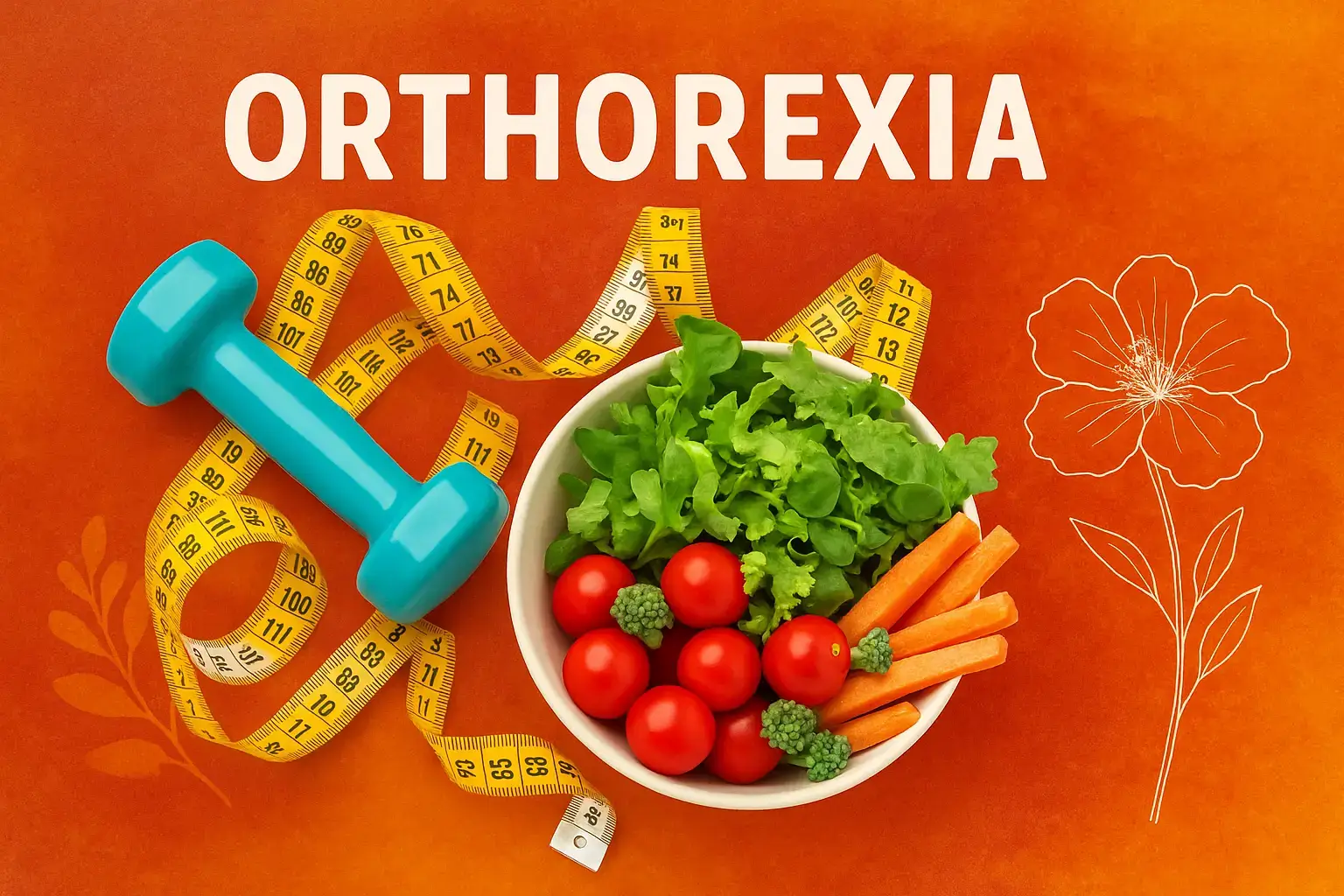
Healthy eating is widely celebrated in today’s culture—plant-based diets, clean eating trends, and fitness influencers dominate our social media feeds. But what happens when this focus on health becomes an unhealthy obsession? That’s when Orthorexia, a less well-known but very serious condition, comes into play.
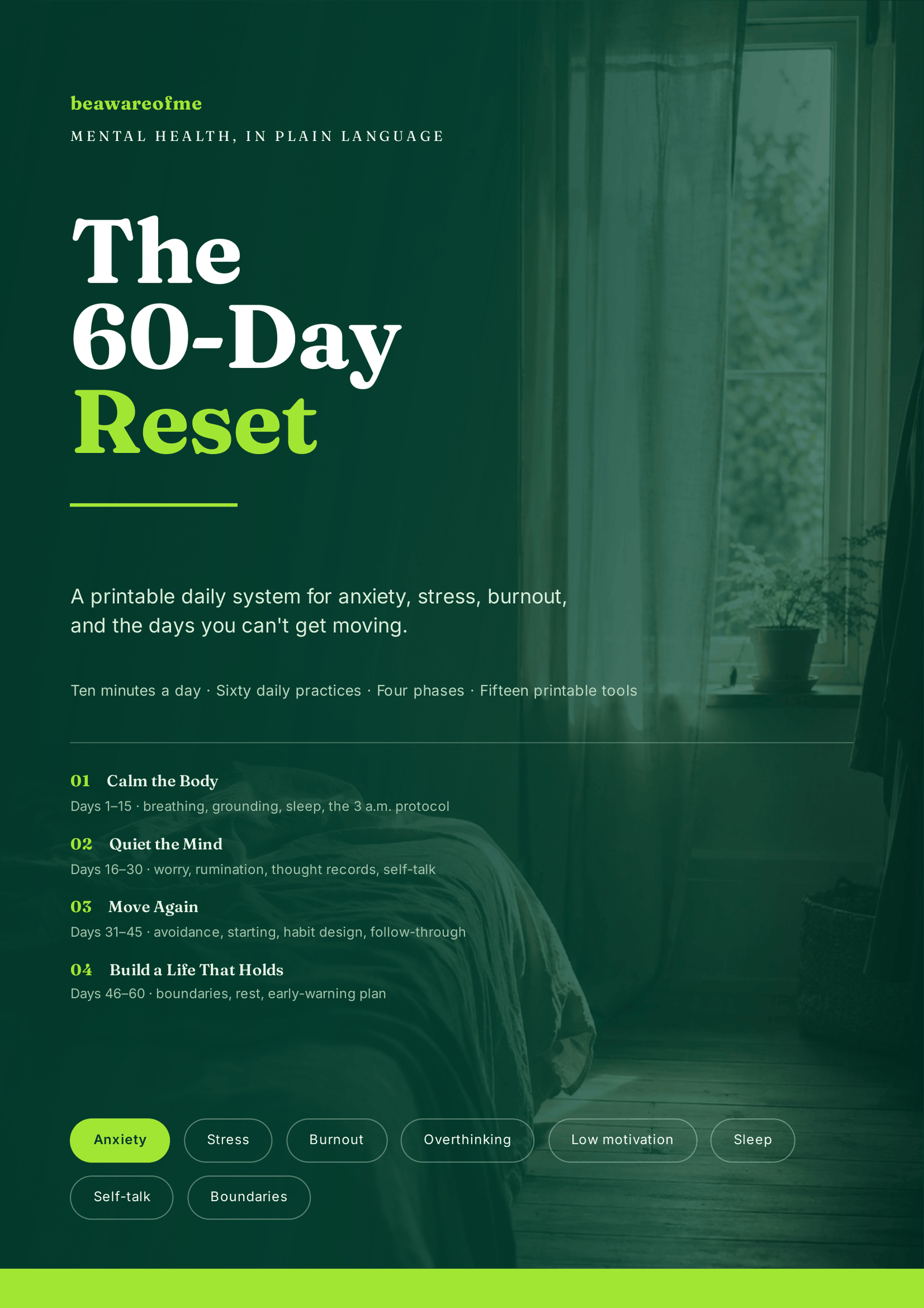
The 60-Day Reset
Everything on this page, sequenced into a printable ten-minute daily practice — 84 pages across anxiety, sleep, overthinking and low motivation, with a two-minute version of every day for the hard ones.
Instant PDF · 60 daily practices · 15 printable tools · Educational, not therapy
This article will talk about Orthorexia, how it is different from other eating disorders, real-life experiences, warning signs, the effects on mental health, and how to get help. If you’re worried about yourself or someone else, the first step to getting better is to learn about Orthorexia: when healthy eating becomes an obsession.
What Is Orthorexia?
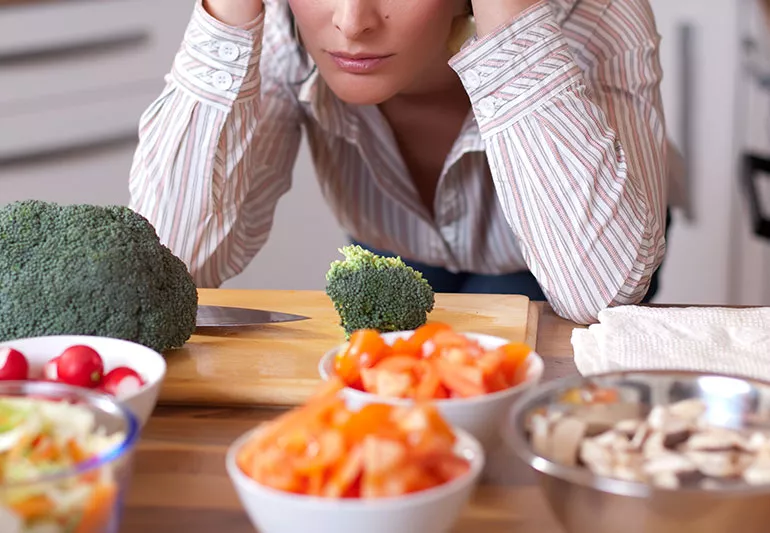
Orthorexia nervosa, or simply Orthorexia, is a type of eating disorder that involves an unhealthy focus on eating healthy foods. Dr. Steven Bratman came up with the term in 1997. It comes from the Greek words “orthos,” which means “correct,” and “orexis,” which means “appetite.”
Orthorexia is different from anorexia and bulimia because it has to do with health and purity, not weight and body image. People with Orthorexia don’t always want to be thin; they want to be “clean,” “pure,” or “uncontaminated.”
Real Story: Sarah’s Experience With Orthorexia
Sarah, a 28-year-old yoga teacher from Denver, thought she was just being healthy. She stopped eating sugar, gluten, dairy, and processed foods. Then it was anything that wasn’t organic. Then there were cooked foods. In the end, her diet was so strict that she was tired, lacked nutrients, and was scared to eat in public.
She said, “It started out with good intentions.” “But soon, food took over my life. If I couldn’t control what was being served, I wouldn’t go to social events.

It's rarely a motivation problem. It's five apps and no single page.
Habits in one place, money in another, notes in a third, and nowhere that shows you how the month is actually going. The Digital Life Planner is one spreadsheet that holds all of it and does the arithmetic while you get on with your life.
See how it works →At the time, Sarah didn’t know it, but she was suffering from orthorexia, which is when eating healthy becomes an obsession. Her story is not at all unique.
Is Orthorexia a Recognized Eating Disorder?
The Diagnostic and Statistical Manual of Mental Disorders (DSM-5) does not officially recognize orthorexia, but more and more mental health professionals are starting to. The behaviors and ways of thinking often overlap with:
- Obsessive-Compulsive Disorder (OCD)
- Anorexia Nervosa
- Generalized Anxiety Disorder
Still, Orthorexia is distinct in its focus. It’s not about being thin; it’s about being healthy. What a coincidence? It often makes people unhealthy because it is too strict.
Signs and Symptoms of Orthorexia
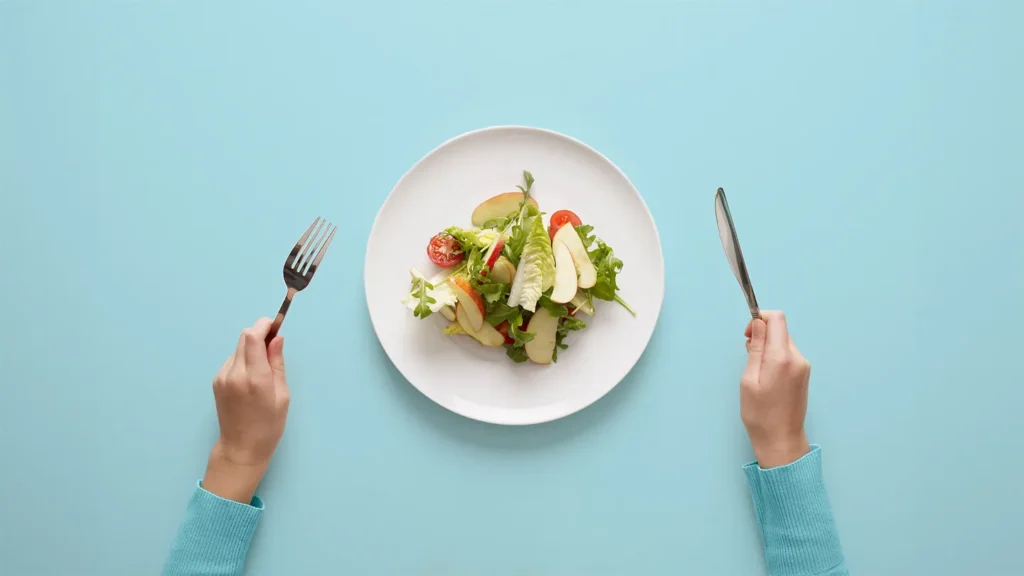
Recognizing Orthorexia is crucial. Here are common signs:
✅ Emotional and Psychological Signs:
- Obsessive thoughts about food quality and ingredients
- Feelings of guilt or shame after eating something “unhealthy”
- Anxiety when “safe” foods aren’t available
- Moral judgment of others based on their diets
- Compulsive checking of food labels
✅ Behavioral Signs:
- Increasingly restrictive diets
- Avoiding social events involving food
- Rituals around food preparation
- Spending excessive time researching food
- Refusing to eat anything not made by oneself
✅ Physical Consequences:
- Nutritional deficiencies
- Unintended weight loss
- Gastrointestinal issues
- Hormonal imbalance
- Fatigue or low energy
Why Orthorexia Is Dangerous
At first glance, it might not seem like Orthorexia is bad. Eating well is good, right? But if you take it too far, orthorexia can hurt both your body and your mind.

Most of what you read this week will be gone by Thursday.
That isn't a discipline problem. It's what happens to information you never write down. Beat Information Overload is a free 35-page workbook that turns reading into something that stays.
Get the free workbook No cost · unsubscribe in one click🧠 Psychological Damage:
- Food becomes a source of fear
- Joy in eating disappears
- Social isolation increases
- Depression and anxiety intensify
💔 Social Damage:
- Friendships suffer due to rigid eating rules
- Eating out becomes impossible
- Constant judgment of others causes rifts
🍽️ Nutritional Damage:
- Cutting out food groups can lead to deficiencies in:
- Vitamin B12
- Iron
- Calcium
- Essential fats
- These deficiencies can cause long-term health issues including bone loss, anemia, and hormonal dysfunction.
What Causes Orthorexia?
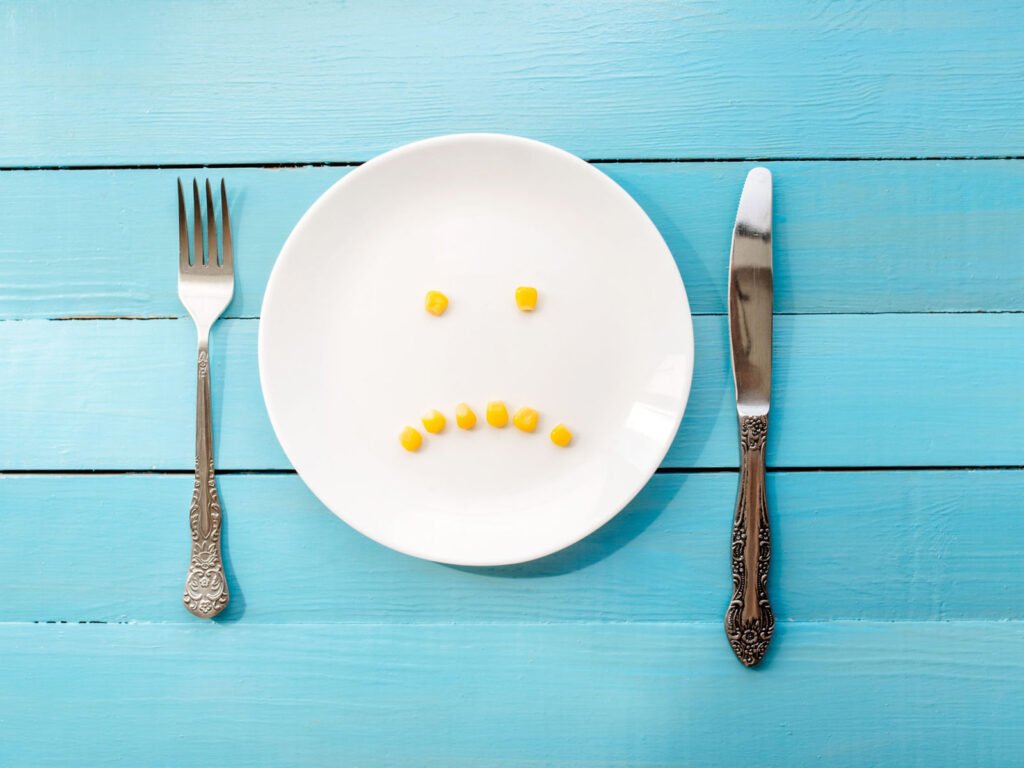
⚠️ Cultural Pressure
We live in a world that makes health seem cool. People market “clean eating,” detoxes, and elimination diets as the best ways to live. This message is even louder on social media, where people show off curated plates and “perfect” bodies.
🧬 Personality Traits
Orthorexia often affects individuals who:
- Are perfectionists
- Have high anxiety
- Seek control
- Value discipline
💡 Personal Trauma or History
For some, Orthorexia emerges after:
- A health scare
- A traumatic experience with food or illness
- Influence from a family member obsessed with food
Orthorexia vs. Healthy Eating: What’s the Difference?
| Healthy Eating | Orthorexia |
|---|---|
| Flexible and balanced | Rigid and restrictive |
| Includes occasional treats | Sees certain foods as “poison” |
| Social and joyful | Isolating and stressful |
| Enhances health | May impair health |
| Based on choice | Based on fear |
When eating healthy becomes an obsession, it turns into a moral code and a way to control yourself.
How to Diagnose Orthorexia
The Bratman Orthorexia Test (BOT) is often used as a screening questionnaire, but there isn’t an official diagnostic tool. Think about this:

- Do you spend more than 3 hours a day thinking about healthy food?
- Do you feel superior to others who don’t eat healthily?
- Has your diet caused you to isolate from friends or family?
- Do you feel guilty if you stray from your diet?
- Do you feel in control when you stick to your dietary rules?
Answering “yes” to multiple questions may indicate Orthorexia.
Treatment for Orthorexia
Overcoming Orthorexia requires a multi-faceted approach.
👩⚕️ 1. Professional Help
Seek help from:
- Registered Dietitians (especially those trained in eating disorders)
- Therapists (CBT or DBT is especially effective)
- Medical doctors (to assess nutritional deficiencies)
🧘♂️ 2. Rebuilding a Healthy Relationship With Food
- Work on neutralizing food language (“good” vs. “bad”)
- Reintroduce feared foods slowly
- Explore Intuitive Eating as a gentle framework
❤️ 3. Emotional Healing
- Address underlying anxiety or perfectionism
- Learn to manage emotions without using food
- Build a support system
Orthorexia in the Age of Social Media
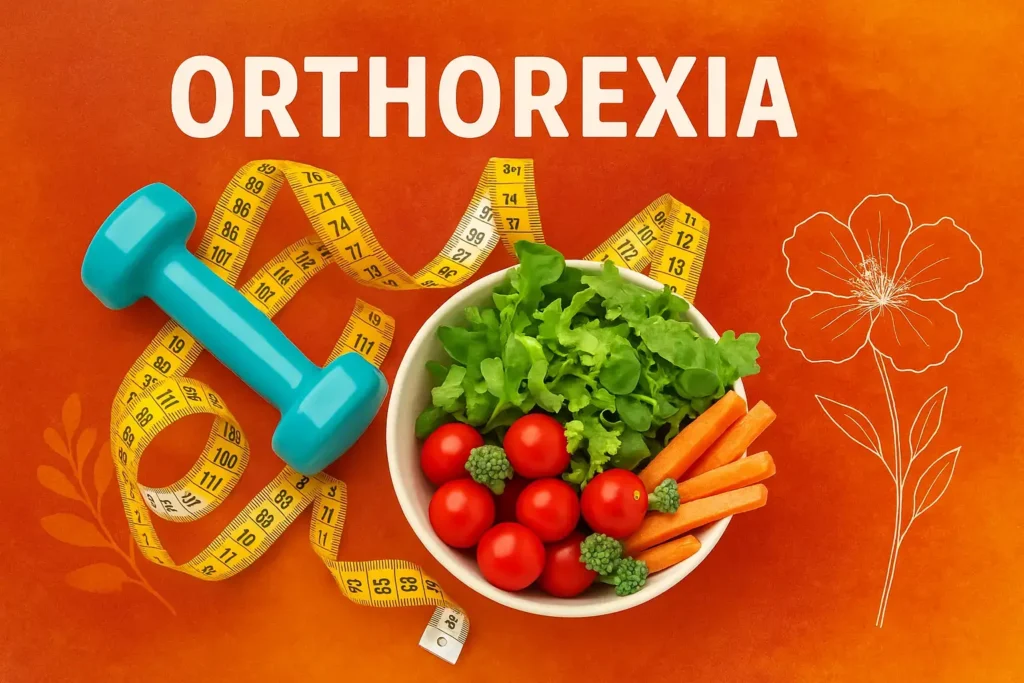
Influencers and wellness experts, who often don’t have any formal training, preach food rules that can lead people who are already vulnerable to Orthorexia.
“I didn’t know I was getting health advice from someone who wasn’t even qualified,” says Jason, a personal trainer who is 32 years old. “I did a “raw vegan detox” because a health coach told me to. I thought I was making my gut better. I had to go to the ER because I was so dehydrated.
🔎 Red Flags in Online Advice:
- Demonizing entire food groups
- Promoting unscientific detoxes or cleanses
- Labeling foods as “toxic” or “unclean”
- Encouraging fear around conventional medicine
Can You Prevent Orthorexia?
Yes, with awareness and balance. Here’s how:
✅ Tips for Healthy, Not Obsessive Eating:
- Follow 80/20 rule: 80% whole foods, 20% flexibility
- Avoid food shaming language
- Get information from qualified professionals
- Focus on how food makes you feel, not just its label
- Remember that mental health is part of overall health
Why We Need to Talk About Orthorexia
Because the diet and wellness culture can make Orthorexia seem normal, or even good. But it isn’t. It can get worse and worse if you don’t take care of your mental health.
The first step in helping people who are silently suffering from Orthorexia is to raise awareness about it.
A Final Thought: It’s Okay to Eat Imperfectly
Being healthy isn’t about being pure. It’s all about balance.
Eating pizza doesn’t make you “bad.” Eating kale doesn’t make you “clean.” Food is not a moral compass; it is fuel, pleasure, and culture.
The 60-Day Reset
Everything on this page, sequenced into a printable ten-minute daily practice — 84 pages across anxiety, sleep, overthinking and low motivation, with a two-minute version of every day for the hard ones.
Instant PDF · 60 daily practices · 15 printable tools · Educational, not therapy
Let’s make a world where people respect both choosing a salad and eating ice cream with their kids.
Helpful Resources
- National Eating Disorders Association (NEDA): nationaleatingdisorders.org
- The Center for Discovery: Eating disorder treatment with Orthorexia-specific care
- Books:
- “Sick Enough” by Dr. Jennifer Gaudiani
- “Health at Every Size” by Dr. Linda Bacon
- “The Orthorexia Recovery Workbook” by Jennifer Gaudiani and Steven Bratman
Key Takeaway
Orthorexia is a real, serious, and growing problem that happens when people become obsessed with eating healthy. It’s time to get help if you or someone you know feels like food rules are controlling them. Health means being able to be flexible, happy, and at peace with your mind. And yes, that sometimes means eating the cookie.

Quiet the noise — without burning your phone in a field.
Get Beat Information Overload free, plus the occasional calm, no-hype note from me.