



If you’re looking for how to calm anxiety before a meeting, you probably know the feeling: a tight chest as the calendar reminder pops up, a racing mind rehearsing everything that could go wrong, and a voice that suddenly feels shaky. It’s one of the most common work worries there is, and it tends to peak in the last ten minutes. This guide gives you a 10-minute countdown you can follow step by step, a 60-second body reset you can do at your desk, a version for video calls, and exact sentences for the moment your mind goes blank.
- Pre-meeting anxiety usually peaks just before you start and eases once you are speaking, so the last ten minutes matter most.
- Calm the body first: slow breathing and relaxed shoulders change how your voice sounds before you say a word.
- Prepare three points, one question and your first sentence, not a full script.
- Have ready-made sentences for the moment your mind goes blank; knowing they exist lowers the fear itself.
- After the meeting, close it in two minutes so the replay doesn’t follow you all afternoon.
Want a guided version of the breathing step? The free Box Breathing Coach paces each breath on screen, which is useful when your own counting speeds up.
Why meetings set off anxiety (and why it peaks just before)
This section explains what is happening in your body and mind before a meeting, because understanding it makes it far less frightening. Meetings combine several things that many people find stressful: being watched, being judged on what you say, not controlling what others will ask, and often a power gap (your manager, a client, a room of senior people). Your body reads that as a challenge and gets ready: faster heart, quicker breathing, tense muscles, a busy mind.
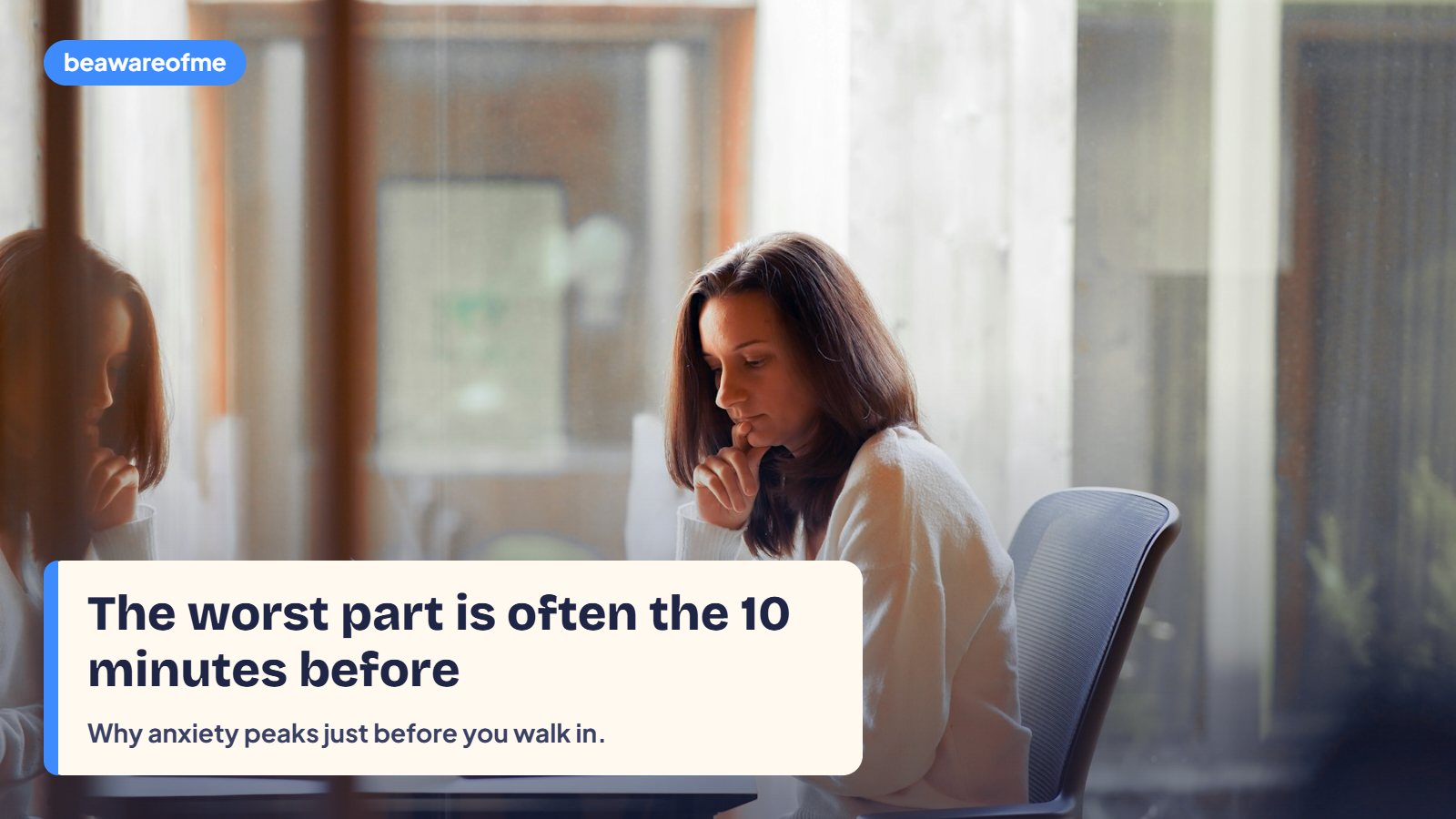
That readiness is not a fault. It is the same response that helps you focus when something matters. The trouble is the timing. While you wait, there is nothing to do with all that energy, so it turns into worry and rehearsing. Once the meeting starts and you have something to say or do, the energy has a job, and for most people the anxiety drops within the first few minutes. That’s why the countdown below focuses on the window just before.
Ordinary nerves or something heavier?
Most pre-meeting anxiety is the ordinary kind: uncomfortable, a bit embarrassing, and gone within a few minutes of starting. A few questions help you see where you are. Does the feeling fade once the meeting is underway? Can you still take part, even if you’d rather not? Is it linked to certain meetings rather than all of them? If the answers are mostly yes, the countdown in this guide is a good fit. If the dread starts days ahead, you regularly avoid or cancel meetings, or the feeling comes with panic that is hard to ride out, that is a sign to look for more support as well, starting with a doctor or a mental-health professional. Using these steps alongside that support is completely fine.
If this kind of worry starts days before, not minutes, our guide to managing anticipatory anxiety covers the longer build-up. And if perfectionism is behind it (the fear of saying something slightly wrong), the article on how perfectionism fuels anxiety is worth a read.
How to calm anxiety before a meeting: the 10-minute countdown
This is the core of the guide: a simple countdown for the last ten minutes. It works best if you follow it the same way every time, so your body starts to recognise it as a signal to settle.
The breathing step comes from the NHS breathing exercise for stress: in through the nose for a count of five, out through the mouth for five, letting the breath go down into your belly. Harvard Health also describes how breath control can help settle the stress response. It won’t switch the nerves off completely, and that’s fine. The goal is a steady voice, not zero feelings.
The night before and the morning of: lower the peak
This section is about preparation that makes the last ten minutes easier. The aim is to walk in prepared, not perfect. Over-preparing is one of the most common ways anxiety grows, because there is always one more thing to check.

| When | Do this | Skip this |
|---|---|---|
| The day before | Write 3 main points, 1 question you can ask, and your first sentence | Writing a word-for-word script |
| The evening before | Lay out what you need (notes, charger, clothes); then stop | Rehearsing late into the night |
| The morning of | Eat something, drink water, take a 10-minute walk if you can | Extra coffee right before the meeting |
| The hour before | Do one easy task to keep your mind busy | Reading the whole agenda again and again |
A word on caffeine: many people notice that an extra coffee right before a meeting makes the racing heart and shaky hands worse. If you’re sensitive to it, have your coffee earlier in the morning and water just before. A small snack also helps; low blood sugar can feel a lot like nerves.
For mornings that start with a knot in your stomach before the meeting is even close, our guide to morning anxiety has a calm first-hour plan.
On a video call? How to calm anxiety before a meeting online
This section adapts the countdown for video meetings, which bring their own worries: seeing your own face, the awkward start, tech going wrong. The good news is that you have more control at home than in a meeting room.
Cameras can make small silences feel huge. Remember that a two-second pause looks completely normal to everyone else. If you need a moment, it’s fine to say “Let me just pull that up” and take a breath while you look at your notes.
What to say when your mind goes blank in a meeting
This section gives you the words for the moment many people dread most: you’re asked something, or it’s your turn, and your mind empties. Having these sentences ready lowers the fear of it happening, which often means it happens less.

Saying one of these out loud does two things. It gives you a few seconds to breathe, and it shows that you’re thoughtful, not lost. Most people in the room have had the same blank moment and are quietly relieved when someone handles it calmly.
If the anxiety rises during the meeting
After the meeting: stop the replay in two minutes
This section matters because for many people the anxiety doesn’t end with the meeting. It turns into replaying every sentence for the rest of the day. A short close stops that.
If the meeting was a hard one, our guide on how to reset after a high-stress meeting has a longer reset. And if the thoughts keep looping later in the day, the exercise in how to stop overthinking can help. Over time, writing these after-meeting notes in a journal also shows you something useful: most meetings go better than the anxiety predicted. Our guide to journaling for anxiety explains how to keep that kind of record.
Different meetings, different plans: match the countdown to the room
This section helps you adjust the plan to the kind of meeting in front of you, because a quick team stand-up and a presentation to senior leaders don’t call for the same preparation. Find the row closest to your meeting and use the extra step.
| Meeting type | What tends to trigger anxiety | Extra step to add |
|---|---|---|
| One-to-one with your manager | Feeling assessed, fear of criticism | Write the one thing you want to get out of the meeting at the top of your card |
| Team stand-up or weekly check-in | Speaking on the spot in front of peers | Prepare a two-sentence update: what you did, what’s next |
| Presentation | Being the centre of attention for longer | Practise only the first minute out loud twice; the rest follows |
| Client or external call | Representing the team, unknown questions | Prepare the “I’ll check and come back to you” line and use it freely |
| Difficult conversation | Conflict, emotion, a bad outcome | Write the one sentence you must say, and say it early |
The speak-early rule
One of the most useful habits for meeting anxiety is to say something, anything, in the first three to five minutes. A short question, agreeing with a point, or giving your update first if you can. The longer you stay silent, the bigger the moment of speaking becomes in your head, and the more the anxiety builds while you wait. An early contribution releases that pressure and often makes the rest of the meeting feel easier. If your team runs round-robin updates, ask to go early.
Over weeks, these small repeats add up. Each meeting you get through with the countdown is evidence your mind can use next time: you felt nervous, you spoke anyway, and it went fine. That record is far more convincing than any reassurance from someone else. If you’d like more quick techniques to rotate in, our list of quick relaxation techniques for anxiety has several that work in under two minutes at a desk.
Common mistakes when calming nerves before a meeting
These are the mistakes that catch people who already know the basics and still feel shaky walking in.
1. Trying to get rid of the anxiety completely
Waiting to feel calm before you start sets you up to fail, because some nerves are normal and even useful. Aim for steady, not calm. A steady breath and a known first sentence are enough to begin.
2. Rehearsing right up to the last second
Running through your points again and again in the final minutes keeps your mind in alarm mode. Read your card once at the three-minute mark, then let it go and focus on your breathing and body.
3. Arriving at the last moment
Rushing in late, out of breath and flustered, makes everything harder. Arriving a minute or two early gives you time to sit, settle and hear the first few words before you have to speak.
4. Writing a full script
A word-for-word script feels safe but makes a blank moment worse, because losing one line means losing your place. Three points and a first sentence are flexible and much easier to come back to.
5. Avoiding meetings to avoid the feeling
Skipping meetings brings short relief and makes the next one feel bigger. Small, regular exposure helps the anxiety shrink over time. If avoidance is growing, that’s a good moment to ask for professional support.
How to calm anxiety before a meeting: FAQ
Why do I get so anxious before meetings?
Meetings combine things many people find stressful: being watched, being judged on what you say, and not knowing what others will ask. Your body responds by getting ready, with a faster heart and busier mind. While you wait there is nowhere for that energy to go, so it turns into worry. It usually eases once the meeting starts.
How can I calm my nerves 5 minutes before a meeting?
Step away from email, breathe slowly for one to two minutes (in for five, out for five), drop your shoulders and press your feet into the floor. Then read your first sentence and three main points once. Arrive a minute early, sit down and take one more slow breath before you speak.
How do I stop my voice shaking in a meeting?
A shaky voice is usually linked to shallow, fast breathing. Before speaking, breathe out slowly and fully, then start with a short, prepared first sentence. Keep water nearby, speak a little slower than feels natural, and pause at the end of sentences. Most listeners notice a shaky voice far less than you do.
Is it normal to feel anxious before every meeting?
Feeling some nerves before meetings is very common, especially with senior people, clients or presentations. It becomes a concern if the anxiety is intense, leads you to avoid meetings, or affects your sleep and work most days. In that case, talking to a doctor or mental-health professional is a sensible next step.
What should I do if my mind goes blank in a meeting?
Use a sentence that buys you time, such as “Good question. Let me think about that for a second” or “Let me check and come back to you today.” Breathe out slowly while you look at your notes. Pauses feel long to you but look normal to others, and most people have had the same experience.
How can I feel more confident in work meetings?
Confidence grows from preparation and repetition, not from feeling fearless. Prepare three points, one question and your first sentence, and speak once early in each meeting, even briefly. After each meeting, write down what went fine. Over a few weeks, that record shows you the meetings usually go better than your anxiety predicted.
Bottom line
The heart of how to calm anxiety before a meeting is using the last ten minutes on purpose: calm the body, read your first sentence, arrive early and breathe once before you speak. Try the countdown before your next meeting and keep the blank-mind sentences on your card. For more practical help, browse our anxiety articles and our core guide on managing anxiety in daily life.