
The 5-Minute Self Check-In
A quick, simple check on your body, mood, energy, mind, people and basic needs. See which part needs care today and get three small things to do.
Anonymous. Different questions each time. A general structure for everyday life, not medical or psychological advice.
Some days you don't know what's wrong, only that something is off. This free five-minute check looks at your body, mood, energy, mind, people and basic needs, shows which part needs care today, and gives you three small things to do.
Each answer adds points to Body, Mood, Energy, Mind, People and Needs. Your result reads the strongest areas and turns them into a named pattern, a chart, three small steps and the guides that fit. Questions change every time you play.
The 5-Minute Self Check-In: what is really going on
A self check-in is a short pause to ask yourself how you really are. Not the quick "fine, thanks" you give at work, but an honest look at a few simple parts of your day. How does your body feel? What's your mood like? How much energy do you have? Is your mind calm or busy? Do you feel close to people? Have you eaten, had water, rested? Five minutes is enough.
Most of us only notice how we feel when something goes wrong. We push through tiredness, skip lunch, ignore a tight neck and keep going until we snap or crash. That's normal in a busy life. But small needs that go unnoticed tend to grow. A missed meal becomes a short temper. A tense body becomes a headache. A quiet week becomes a lonely one. Checking in catches these early.
When something is off, it often shows up in small ways first. You feel irritable and don't know why. You can't focus. You feel flat, or restless, or far away from people. Often the cause is simple: you're hungry, thirsty, tired, tense or haven't talked to anyone properly in days. The trouble is that when you're stretched, it's hard to see the simple cause. A short list makes it easier.
This check gives you a simple structure. Six areas, a few quick questions, and a clear picture of which one needs you most today. That matters because the fix depends on the cause. Tiredness needs rest. Tension needs movement or breathing. Hunger needs food. Loneliness needs a person. Instead of guessing, you get one clear place to start. Doing it often also helps you learn your own patterns over time.
What each area means
Body
This is how your body feels right now: tight or loose, sore or comfortable. Your body often notices stress before your mind does.
- Your shoulders or jaw feel tight
- You have a headache or a sore back
- You've been sitting still for hours
- Your breathing feels quick or shallow
- Roll your shoulders and unclench your jaw
- Stand up and stretch for one minute
- Take five slow breaths, out longer than in
- Go for a short walk
Mood
This is your general feeling today: bright, flat, low or up and down. Mood changes during the day, so this is just a snapshot.
- You feel flat or a bit low
- Small things upset you more than usual
- You don't feel like doing much
- You feel up and down
- Get some daylight for ten minutes
- Listen to a song you like
- Do one small thing you enjoy
- Write down one thing that went okay today
Energy
This is how much fuel you have left today. Low energy makes everything harder, including mood and patience.
- You feel tired or heavy
- You keep reaching for coffee or sugar
- Simple jobs feel like hard work
- You want to lie down
- Drink a glass of water
- Eat a snack with some protein
- Rest for 15 minutes if you can
- Go to bed a little earlier tonight
Mind
This is how busy or calm your head feels. A full mind can make it hard to focus, rest or enjoy things.
- Your thoughts are racing
- You can't focus on one thing
- You keep thinking about the same worry
- Your to-do list feels too long
- Write everything in your head on paper
- Pick just one task for the next hour
- Put your phone in another room for a while
- Look at five things around you and name them
People
This is how connected you feel to others today. Feeling close to people helps us feel steady; feeling alone can make everything heavier.
- You haven't talked to anyone properly today
- You feel lonely, even with people around
- You're avoiding messages
- You feel like nobody gets it
- Send a short message to someone you like
- Call a friend or family member for five minutes
- Say hello to a neighbor or coworker
- Tell one person how your day is really going
Basic needs
These are the basics: food, water, sleep, rest and fresh air. When one is missing, everything else feels harder.
- You skipped a meal today
- You haven't had much water
- You slept badly last night
- You haven't been outside today
- Eat a proper meal or a good snack now
- Fill a water bottle and keep it near you
- Step outside for a few minutes
- Plan a calm, early night
What your score means
A low score means you're doing okay today. Your body, mind and needs are mostly looked after. Notice what's working and keep doing it.
A middle score means a few things need you today. Nothing big, but some parts are asking for care. Look at your highest area and do one small thing for it now.
A high score means today is a hard day, and that's okay to admit. Go gently: eat, drink water, rest and reach out to someone. If you feel this way most days for a couple of weeks, please talk to your doctor.
5 small steps that help
Pick a check-in time
Choose one time each day for your check-in, like after lunch or before bed. Tie it to something you already do, like making a cup of tea.
Start with the basics
Before anything else, ask: have I eaten, had water and been outside today? Fixing these often helps more than you'd expect.
Choose one area
Look at your result and pick the area that needs you most. Do one small thing for it in the next hour.
Write one line
Keep a small notebook or phone note. Write one line each day: how you are and what helped. It only takes a minute.
Look back on Sunday
At the end of the week, read your notes. Look for patterns, like low energy on busy days, and plan one small change for next week.
The guides that turn this into a plan
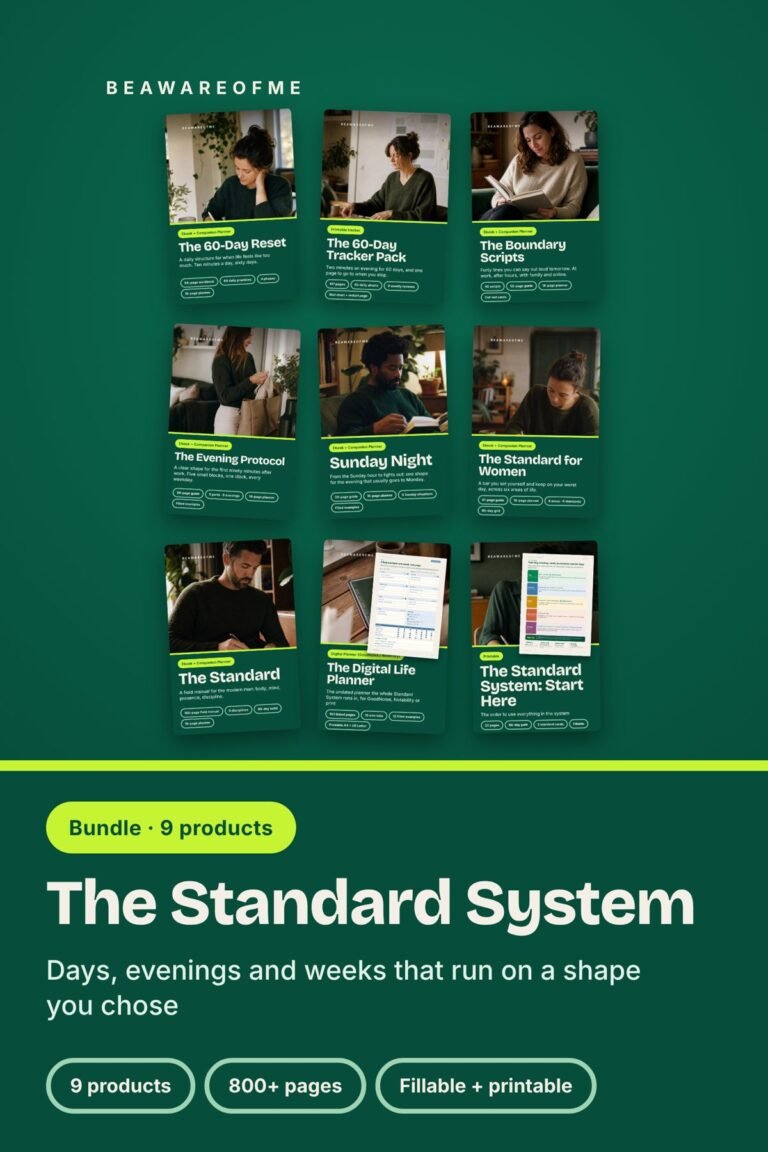
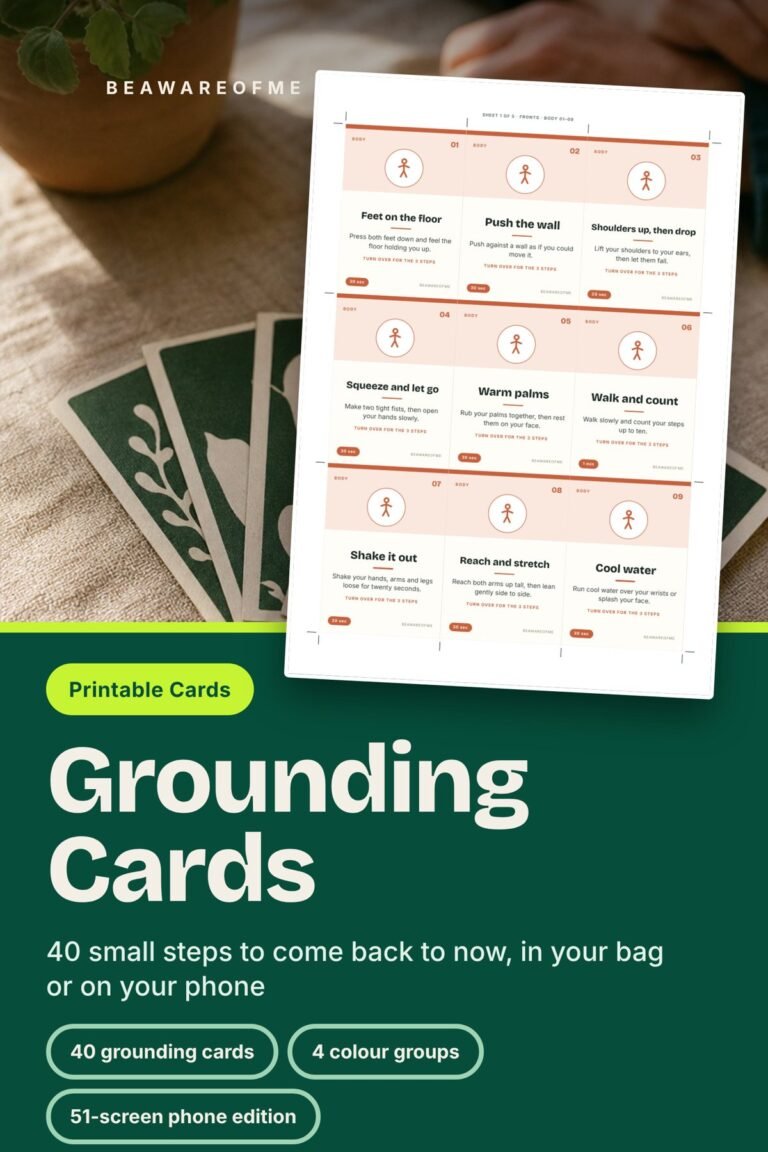 Printable Cards
Grounding Cards
One small, clear step in your hand when stress spikes.
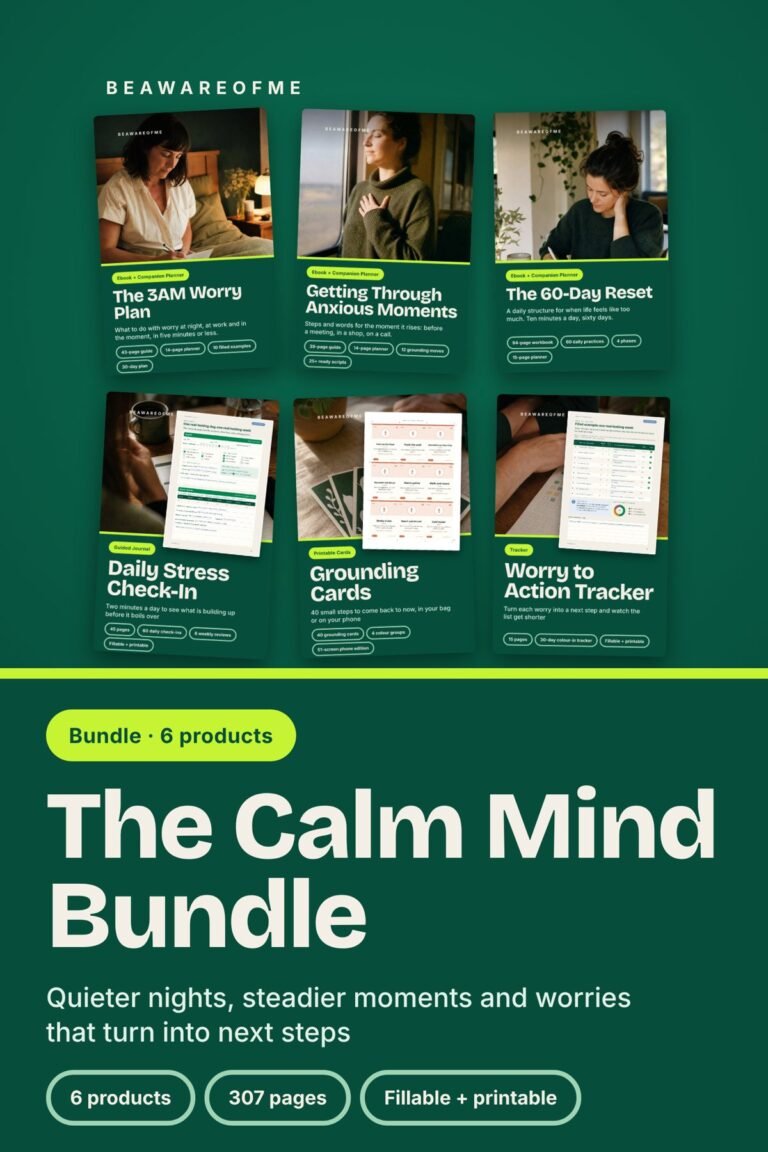
Get it →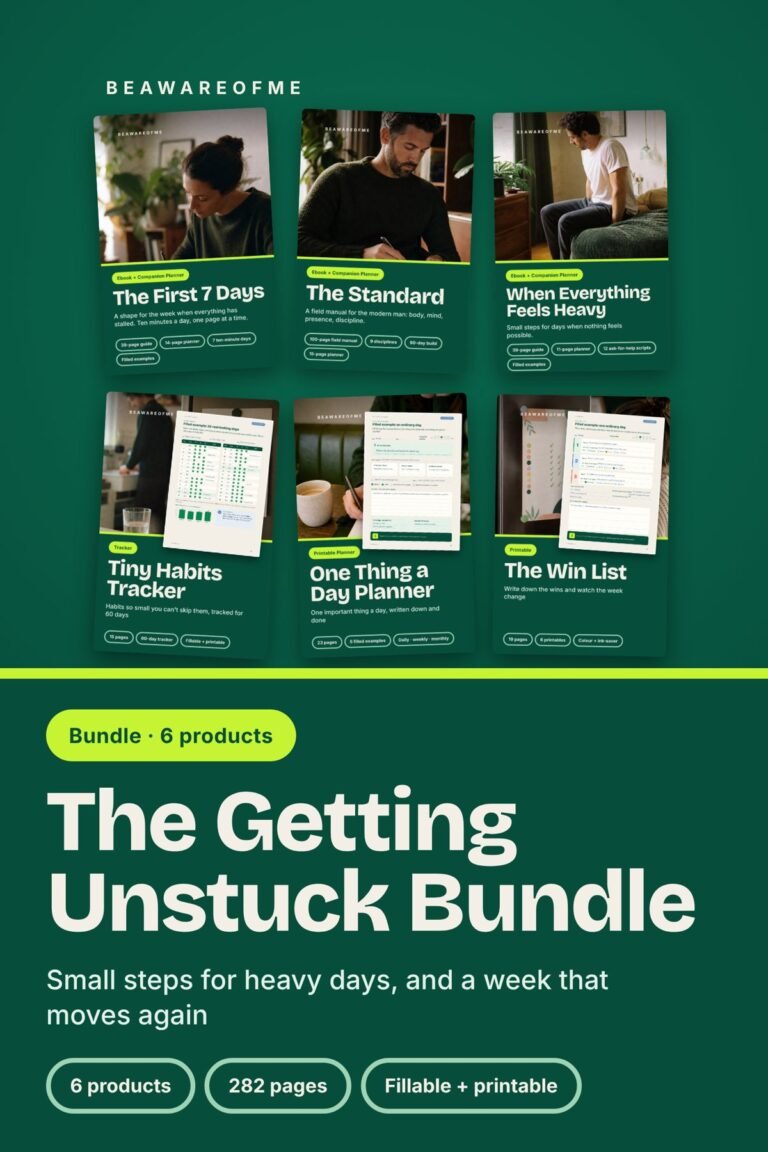 Bundle · 6 products
The Getting Unstuck Bundle
Small, visible steps for heavy, stuck weeks.
Six products sold separately for $88, here together for $37.
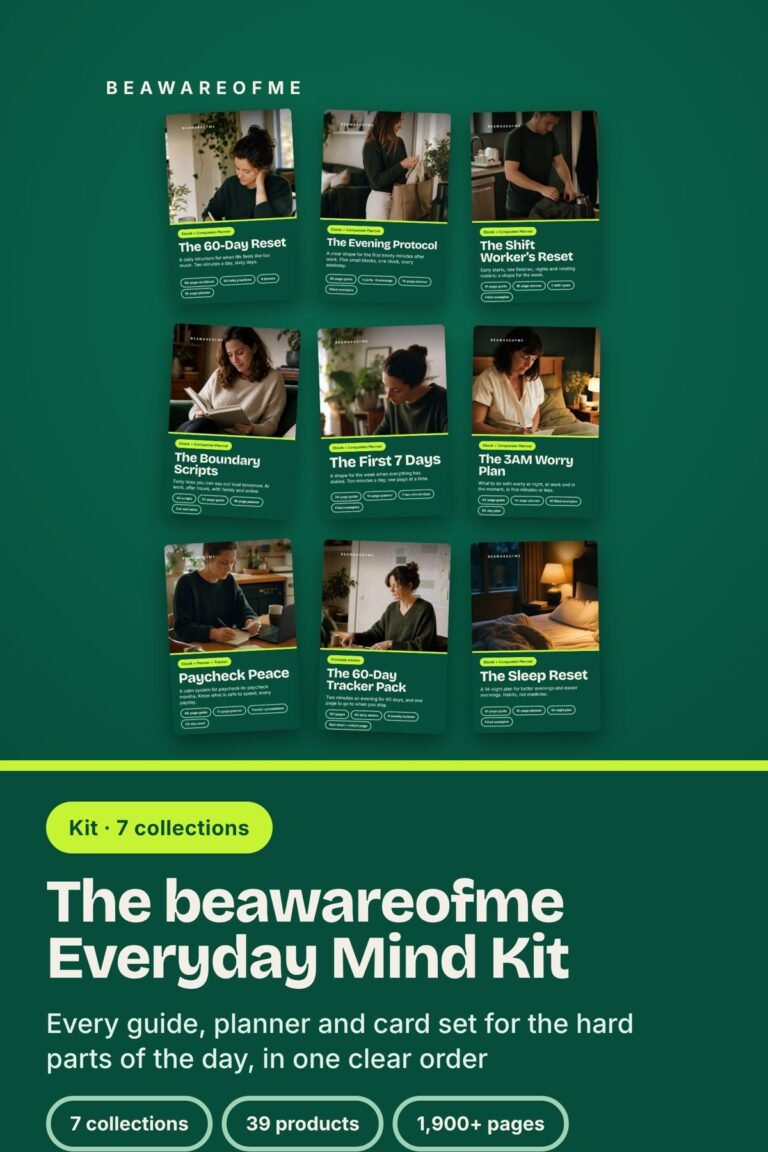 Kit · all collections
The beawareofme Everyday Mind Kit
Every beawareofme collection in one download, in a clear order.
The Standard System and all six bundles cost $289 bought separately; the kit is $127.
Instant download · Digital download · All sales final
Myths and calmer facts
✗ Checking in on myself is selfish.
✓ Looking after yourself helps you show up better for others. A few minutes a day is care, not selfishness.
✗ I'm fine as long as I keep going.
✓ Pushing through works for a while, but small needs add up. Noticing them early is easier than fixing a crash later.
✗ I need a lot of time to look after myself.
✓ Small things count. A glass of water, a stretch or a short message can change how the rest of your day feels.
When to get help
Please talk to your doctor or a qualified professional if you feel low, tired, tense or alone most days for two weeks or more, or if it's hard to do everyday things like work, eat or sleep. You don't need to wait until it feels very bad. If you ever have thoughts of harming yourself, contact a crisis line now: in the US call or text 988, in the UK and Ireland call Samaritans on 116 123, or find a local line at findahelpline.com.
Frequently asked questions
What is a self check-in?
A self check-in is a short, honest look at how you are right now. You ask yourself a few simple questions about your body, mood, energy, mind, people and basic needs, then choose one small thing to help.
How often should I do a self check-in?
Once a day is a good habit. Some people also check in when they feel off or before a busy event. It only takes a few minutes.
What questions should I ask myself?
Simple ones work best. How does my body feel? What's my mood? How much energy do I have? Is my mind busy? Have I talked to anyone? Have I eaten, had water and rested?
Why do I feel off but can't say why?
Often it's a basic need, like hunger, thirst, tiredness or too little time outside. It can also be stress building up. Going through each area one by one makes the cause easier to spot.
Can a check-in help with stress?
Yes. It helps you notice stress earlier and choose a small action before it builds. Over time, it also shows you what tends to stress you out and what helps.
What should I do after my check-in?
Pick one small thing for the area that needs you most and do it soon, ideally within the hour. Then carry on with your day and check in again tomorrow.
Is this check a diagnosis?
No. Your answers point to a pattern, not a diagnosis. It is a general structure for everyday life, not medical or psychological advice.