






Depression doesn’t look the same in everyone. For one person it’s a heavy fog that settles in for weeks, and for another it’s a low hum that never quite lifts, or a dip that arrives every winter. Learning the main types of depression can help you put words to what you or someone you love is going through, so the next conversation with a doctor feels easier.
The main types of depression are major depression, persistent depressive disorder (long-lasting, lower-grade depression), perinatal depression around pregnancy and birth, seasonal affective disorder, premenstrual dysphoric disorder, depression within bipolar disorder, and depression with psychosis. They differ in timing, length, triggers and severity, which shapes the care that helps most. Only a qualified professional can say which, if any, fits you.
If you’re having thoughts of suicide or feel unsafe, please reach out now. In the US call or text 988. In the UK and Ireland call Samaritans on 116 123. Elsewhere, find a free line at findahelpline.com, or contact local emergency services. You don’t have to carry this alone.
- ✓Use the types of depression as a shared language with your doctor, not as a label to diagnose yourself.
- ✓Notice timing: how long low mood lasts, when it started and whether it follows seasons, cycles or a birth.
- ✓Write down two weeks of mood, sleep and energy notes before an appointment, because patterns matter more than single days.
- ✓Mention any past periods of unusually high energy, since that can change which treatment fits best.
- ✓Expect that talking therapy, medication, lifestyle support or a mix can all help, depending on the type and severity.
- ✓Reach out for support early; you don’t need to fit a category neatly to deserve help.
Why Knowing the Types of Depression Actually Helps
Knowing the types of depression helps because each one follows a different pattern, and patterns point toward the right kind of support. Seasonal low mood, for example, often responds to different strategies than depression after a birth. The label isn’t the point; the clearer picture is.

Depression is common. The World Health Organization depression fact sheet estimates that about 5.2% of adults live with it, and that it’s around 1.5 times more common in women than in men. It also notes that, even in high-income countries, only about one in three people with depression receive mental health treatment.
Depression versus a rough patch
Everyone has low days. Depression is different because it sticks around and gets in the way of daily life. According to the National Institute of Mental Health, symptoms of a depressive episode last most of the day, nearly every day, for at least two weeks.
At least one of those symptoms needs to be a low mood or a loss of interest or pleasure in most activities. If that sounds familiar, our list of early signs of depression is a gentle next read.
How professionals tell one pattern from another
Doctors don’t pick a type from one symptom. They ask when the low mood began, how long it has lasted, what else changed and whether anything similar happened before. They may also check physical causes, since thyroid problems, some medicines and other conditions can affect mood.
Put simply, the types of depression differ more in pattern than in feeling. Two people can describe the same heaviness, yet one feels it every winter and the other has felt it for years. That timing guides the conversation about what might help.
Reading about the types of depression can bring up worry. That’s normal. Treat this guide as a map for a conversation, not a test you have to pass or fail.
The 7 Types of Depression Compared at a Glance
This table compares the seven types of depression people search for most, using plain language. Use it to notice what feels familiar, then take those notes to a professional. Remember that real life is messier than any chart, and the types of depression often overlap. Timing and triggers are often the biggest clues.
| Type | What it often looks like | Key clue |
|---|---|---|
| Major depression | Low mood or loss of interest most of the day, with changes in sleep, energy and focus | Lasts at least 2 weeks and affects daily life |
| Persistent depressive disorder | Lower-grade low mood that feels like “just how I am” | Usually lasts 2 years or more |
| Perinatal depression | Deep low mood, anxiety or exhaustion during pregnancy or after birth | Stronger and longer than the “baby blues” |
| Seasonal affective disorder | Low mood, oversleeping and low energy in darker months | Comes and goes with the seasons |
| Premenstrual dysphoric disorder | Intense mood changes, irritability or hopelessness before a period | Follows the menstrual cycle and eases after the period starts |
| Bipolar depression | Depressive episodes that alternate with highs | Past periods of unusually high energy or mood |
| Depression with psychosis | Severe depression plus delusions or hallucinations | Needs urgent professional care |
Before an appointment, copy the “Key clue” column into your phone and tick anything that fits. It turns a vague feeling into specific details your doctor can work with.
Major Depression: When Low Mood Takes Over Daily Life
Major depression, also called clinical depression or major depressive disorder, is the type most people picture. Among all types of depression, it’s the one diagnosed most often. It brings a heavy low mood or loss of interest that lasts at least two weeks and affects work, relationships and self-care. It can happen once or return several times.
Common signs to notice
NIMH lists a wide range of symptoms. You don’t need all of them, and they can look different from person to person.
- A persistent sad, anxious or “empty” mood.
- Losing interest in hobbies, friends or food you used to enjoy.
- Sleep changes, such as waking very early or sleeping far more than usual.
- Tiredness, feeling slowed down, or restlessness.
- Trouble concentrating, remembering or making decisions.
- Feelings of guilt, worthlessness or hopelessness.
- Unexplained aches, pains or stomach problems.
What a hard week can look like
Picture someone who used to love Saturday football. For three weeks they’ve skipped it, they wake at 4 a.m. and can’t get back to sleep, and simple emails feel like climbing a hill. Nothing dramatic happened. That steady, spreading heaviness is a common picture of major depression.
Single episode or recurring
The WHO describes depression as either a single episode or recurrent, meaning at least two episodes over time. Episodes also range from mild to moderate to severe, depending on how many symptoms show up and how much they affect daily life.
If mornings feel especially heavy for you, our guide to morning depression explains why and what may help.
Persistent Depressive Disorder: The Low Hum That Lingers
Persistent depressive disorder, once called dysthymia, is a longer-lasting form with symptoms that often feel less intense than major depression. NIMH notes that it usually lasts at least two years. Because it’s so steady, many people mistake it for their personality.
Why it’s easy to miss
You might still go to work, cook dinner and answer messages. Yet everything takes more effort, joy feels muted, and you can’t remember the last time you felt properly rested. Friends may describe you as “a bit flat” or “always tired”.
Here’s a useful rule: if you can’t remember the last stretch of two months when you felt genuinely like yourself, mention it to a doctor. Of all the types of depression, this one is the easiest to wave away as “just stress” or “just me”.
Some people with this pattern also have stretches of major depression on top. That’s one reason a long, low stretch deserves the same attention as a sudden crash.
High-functioning depression and this type
“High-functioning depression” isn’t an official diagnosis, but people often use it to describe coping on the outside while struggling inside. It overlaps with persistent depressive disorder for many. Read more in our guides to understanding high-functioning depression and the quiet signs of high-functioning depression.
Getting through the day isn’t the same as being okay. You’re allowed to want more than coping.
Depression Around Pregnancy and Birth
Of all the types of depression, perinatal depression has the clearest starting point: it begins during pregnancy or after childbirth, often called postpartum or postnatal depression when it follows a birth. According to the WHO, more than 10% of pregnant women and women who have recently given birth experience depression. Partners can struggle too.
Baby blues or something more
Many new parents feel teary, irritable or overwhelmed in the first days after birth. These “baby blues” usually ease on their own. Perinatal depression is stronger and lasts longer, and NIMH describes it as more serious than the baby blues.
| Baby blues | Perinatal depression | |
|---|---|---|
| Feels like | Teary, moody, overwhelmed | Deep sadness, numbness, anxiety or hopelessness |
| Timing | First days after birth | During pregnancy or any time in the first year |
| Daily life | Still able to cope with support | Hard to eat, sleep, bond or function |
| What helps | Rest, practical help, reassurance | Professional support, plus rest and help at home |
If a new parent mentions thoughts of harming themselves or the baby, or seems confused or out of touch with reality, get urgent help straight away through emergency services or a crisis line. This is a medical emergency, and fast support works.
A simple script for asking for help
Many parents stay silent because they fear being judged. Try something short and honest with your midwife, health visitor or doctor: “I’m not feeling like myself, and it’s been going on for more than two weeks. Can we talk about it?”
When Seasons or Cycles Set the Pattern
Two types of depression follow a clear calendar: seasonal affective disorder tracks the time of year, and premenstrual dysphoric disorder tracks the menstrual cycle. Spotting the timing makes these patterns easier to plan around and to explain to a doctor.
Seasonal affective disorder (SAD)
NIMH describes SAD as depression that comes and goes with the seasons, usually starting in late autumn or early winter and lifting in spring or summer. Common signs include oversleeping, low energy, craving carbohydrates and pulling away from people.
A smaller group notices the pattern in summer instead. Our guide on summer seasonal depression explains that version, and these natural ways to manage seasonal affective disorder work well alongside professional advice.
Daylight matters with this pattern. A morning walk, sitting near a bright window and keeping a regular wake time can all help. Some people use light therapy too, but check with a doctor first, especially if you have eye conditions or bipolar disorder.
Premenstrual dysphoric disorder (PMDD)
PMDD goes far beyond typical premenstrual moodiness. In the week or two before a period, some people feel intense hopelessness, irritability, anxiety or tension that disrupts work and relationships. The symptoms then ease within a few days after the period starts.
Track your mood on a calendar for two or three cycles or months. A simple colour code, such as green, yellow or red, can show a seasonal or monthly pattern that’s hard to see day to day.
Bipolar and Psychotic Depression: Why These Need Specialist Care
Bipolar depression and depression with psychosis are less common types of depression, but they’re especially important to recognise, because they often need different treatment from other forms. If either sounds familiar, speak with a doctor soon rather than waiting.
Depression in bipolar disorder
In bipolar disorder, depressive episodes alternate with manic or hypomanic episodes. NIMH describes these highs as unusually elevated mood, greater irritability or increased activity. Some people only seek help during a low, so the highs never come up.
That matters, because treatment for bipolar depression can differ from treatment for other depression. Tell your doctor about any past stretch of very little sleep, racing ideas or unusual risk-taking. Our guides to understanding bipolar disorder and how mood stabilizers work explain more.
Depression with psychosis
NIMH describes psychotic depression as a severe form of depression combined with psychosis, such as delusions (fixed false beliefs) or hallucinations (seeing or hearing things others don’t). It’s treatable, and it needs prompt professional care. If someone seems out of touch with reality, contact a doctor or emergency services the same day.
Labels You’ll Hear That Aren’t Separate Diagnoses
Some words describe features or situations rather than separate types of depression. Knowing them helps you follow conversations with professionals and read health information with less confusion.
- Atypical features: mood can lift briefly with good news, often alongside oversleeping, increased appetite and sensitivity to rejection.
- Treatment-resistant depression: depression that hasn’t improved enough after trying standard treatments. NIMH notes newer options exist for this.
- Situational depression: an everyday phrase for low mood after a major life event, such as a loss, move or job change.
- Anxious distress: depression that comes with strong worry, tension or restlessness.
If you recognise yourself in more than one description, you’re not alone. Overlap is common, and a professional can help you sort out what fits.
What Helps Across Different Types of Depression
Support works best when it matches the type and severity, but several approaches help across many types of depression. Most people do best with a mix of professional care and steady daily habits.
Professional options
NIMH lists talking therapy, medication and brain stimulation therapies among the main treatments. Talking therapies such as cognitive behavioural therapy (CBT) and interpersonal therapy have strong evidence, and they’re often tried first for milder depression. Antidepressants usually take four to eight weeks to work, according to NIMH.
Our overview of different types of therapy can help you understand what you might be offered. Always talk to your doctor or pharmacist about medication questions.
Simple rules that match support to the pattern
- If low mood follows the seasons, plan daylight, routine and a doctor’s visit before the darker months arrive.
- If it started during pregnancy or after a birth, tell your midwife, health visitor or doctor this week.
- If it tracks your cycle, bring two or three months of notes to your appointment.
- If you’ve ever had unusual highs, say so first, because it changes which treatment fits.
- If you’re unsure which pattern fits, that’s fine; simply describe what you notice.
None of these rules replace a proper assessment. They simply help you show up with the details that matter most for all types of depression: timing, length and triggers.
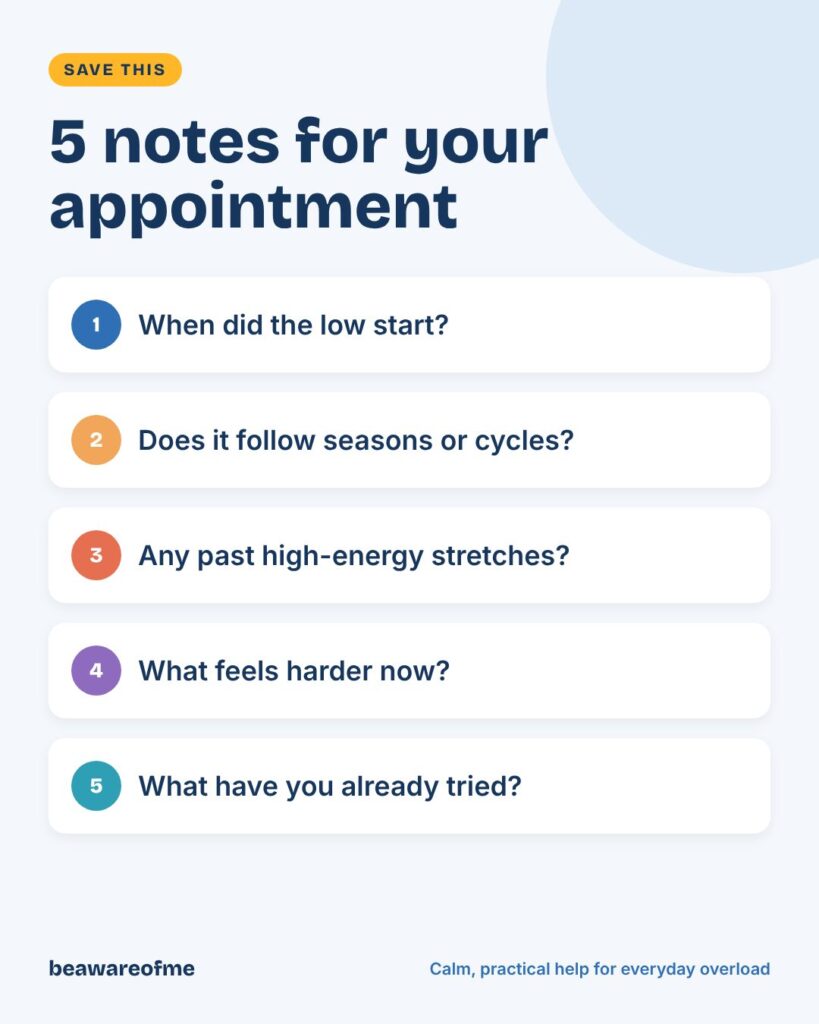
Your first steps this week
- When did the low mood start, and how long has it lasted?
- Does it change with seasons, your cycle, or after a birth?
- Have you ever had stretches of very high energy or little need for sleep?
- What’s harder now: work, sleep, eating, relationships?
- What have you already tried, and did anything help?
For gentle daily ideas, see our self-care tips for low mood. Small steps count, even on the hardest days.
5 Common Mistakes When Reading About Depression
Reading about the types of depression can help or hurt, depending on how you use it. These mistakes come from good intentions, and each has an easy fix.
1. Diagnosing yourself from a list
Lists of types of depression help you notice patterns, but they can’t weigh your history or rule out physical causes like thyroid problems. Use what you read to start a conversation, not to end one.
2. Waiting until it feels “bad enough”
Many people wait for a crisis before asking for help. Earlier support often works faster and feels lighter. Two weeks of struggling is reason enough to reach out.
3. Leaving out the highs
People rarely mention times they felt unusually energetic or confident. Yet that detail can point toward bipolar disorder and change the treatment plan. Share it, even if it felt good at the time.
4. Dismissing long, low-grade sadness
A low mood that’s lasted years can feel like personality, which makes it the most overlooked of the types of depression. Persistent depression is treatable, so mention long stretches of flatness, not only sudden drops.
5. Comparing your depression to someone else’s
Depression looks different in everyone. If you’re still working or smiling, your struggle still counts. Focus on how it affects your life, not how it compares.
6 Questions People Ask About Depression
How many types of depression are there?
There isn’t one fixed number, because different guides group them differently. The main types of depression usually listed are major depression, persistent depressive disorder, perinatal depression, seasonal affective disorder, premenstrual dysphoric disorder, bipolar depression and depression with psychosis. Professionals also use extra descriptions, such as atypical features or anxious distress, to describe how depression shows up in a particular person.
What is the most common form of depression?
Major depression, also called clinical depression, is the form most often diagnosed. It involves low mood or loss of interest most of the day, nearly every day, for at least two weeks, along with other symptoms such as sleep changes, low energy or trouble concentrating. It can happen once or return over time, and it ranges from mild to severe.
Can you have two types of depression at once?
Yes, overlap happens. For example, someone with long-lasting persistent depressive disorder can also have a period of major depression on top of it. Seasonal patterns can also show up within recurring depression or bipolar disorder. That’s why it helps to share your full history, including timing and any highs, with a qualified professional who can see the whole picture.
What is the difference between depression and sadness?
Sadness is a normal response to loss or disappointment, and it usually eases with time and support. Depression lasts longer, generally most of the day for at least two weeks, and affects sleep, energy, appetite, focus and interest in life. If low mood stops you functioning or doesn’t lift, it’s worth talking to a doctor or professional.
Is depression caused by a chemical imbalance?
Depression rarely has one single cause. Research points to a mix of genetic, biological, environmental and psychological factors, such as family history, stress, illness, life events and long-term health problems. That’s why support often combines several approaches, such as therapy, lifestyle changes and sometimes medication. A professional can help you understand what may play a role for you.
When should I see a doctor about depression?
See a doctor if low mood, loss of interest, sleep changes or exhaustion last for two weeks or more, or if they make work, relationships or self-care hard. You don’t need to be sure it’s depression first. If you’re having thoughts of suicide, contact a crisis line or emergency services right away rather than waiting for an appointment.
Learning the types of depression is really about learning your own patterns: when the low starts, how long it stays and what makes it heavier or lighter. Bring what you’ve noticed to someone who can help, and remember that every one of these types of depression is treatable. You can find more calm, practical reading in our depression guides.