



You open your eyes and the dread is already there, before your feet even touch the floor. Most advice tells you to “build a calm morning,” then leaves you to guess what that means at 6:47 on a Tuesday. This guide gives you a morning routine for anxiety as an actual clock: what to do in minute one, minute ten and minute forty. You also get a 10-minute, 30-minute and 60-minute version, so it fits the morning you really have.
🌱 Key takeaways
Why Mornings Hit Harder When You Live With Anxiety
Mornings feel harder because your body is already revving up while your mind is still foggy and unguarded. That mix makes worry feel louder than it will at 11am. Understanding this one fact takes some of the fear out of it.
Here is the whole guide at a glance. Find the row that matches your morning and start there.
| Time after waking | What you do | Why it helps |
|---|---|---|
| Minute 0-3 | Slow breathing in bed, feet on the floor | Slows a racing heart before thoughts take over |
| Minute 3-10 | Water, bathroom, open the curtains | Simple tasks give your hands a job |
| Minute 10-20 | Daylight and 5-10 minutes of movement | Burns off restless energy |
| Minute 20-30 | Breakfast with protein, then coffee | Steadier energy, fewer jitters |
| Minute 30-40 | Two-minute worry dump and one priority | Turns vague dread into a plan |
| Minute 40+ | Phone, messages, the commute | You meet the day already steady |
The 50 Percent Spike You Wake Up With
Your body releases a burst of cortisol, a stress-related hormone, soon after you wake. Researchers call it the cortisol awakening response. One review of normal values for the cortisol awakening response found a mean cortisol increase of about 50 percent within the first 30 minutes after awakening.
That rise is normal and useful. It helps you get moving. But if you already carry worry, the same surge can feel like alarm. Your heart beats faster, your stomach knots, and your mind looks for a reason. A morning routine for anxiety works with this surge instead of fighting it.
Last Night Often Shapes This Morning
Cleveland Clinic’s guide to morning anxiety points out that morning anxiety is usually linked to the night before: late screens, broken sleep or worries carried into dreams. So your routine starts, quietly, the evening before. You will see a short evening prep list later in this guide.
💡 Good to know: Waking up anxious does not mean the day will go badly. It means your body woke up before your calm did. The routine below is how you help them catch up.
The 60-Minute Morning Routine for Anxiety, Minute by Minute
This is the full template, the gold standard to aim for on days when you have an hour. Every step has a time box, so you never have to decide what comes next. Decisions are tiring when you are anxious, and this morning routine for anxiety removes most of them.
Minute 0 to 3: Breathe Before You Think
Stay lying down or sit on the edge of the bed with both feet flat. Breathe in through your nose for four counts and out through your mouth for six. Longer out-breaths tend to slow a racing heart. Do this ten times, roughly three minutes, before you touch anything.
If you like a guide, the free box breathing coach gives you a gentle on-screen rhythm to follow. Just open it after your feet hit the floor, not while you are still scrolling in bed.
Minute 3 to 10: Small Jobs for Busy Hands
Get up, drink a full glass of water, use the bathroom, and open the curtains. Make the bed if you like. These tasks are boring on purpose. Your hands get a job, and an anxious mind settles faster when the body has something simple to do.
Minute 10 to 20: Light and Movement
Step outside, stand on a balcony, or sit by the brightest window for five to ten minutes. Then move gently: a short walk, some stretches, or slow squats while the kettle boils. You are not exercising for fitness here. You are giving restless energy somewhere to go.
Neck rolls, shoulder shrugs, a slow forward fold.
Around the block, the garden or even the hallway.
Loose arms and legs, like after a swim.
Notice your feet on the ground before you head in.
Minute 20 to 30: Breakfast Before Coffee
Eat something with protein first: eggs, yogurt, nut butter on toast, or leftovers. Then have your coffee or tea with it or after it. Caffeine on an empty stomach hits faster, and for many anxious people that hit feels like nerves.
Minute 30 to 40: The Two-Minute Worry Dump
Grab a notebook and set a two-minute timer. Write every worry in your head, in a few words each, without solving anything. Then circle the one thing that would make today feel okay if you did it. That is your priority.
Prefer a fuller method? These ideas on journaling for anxiety show you structured pages for worry, including a short morning version.
Minute 40 to 60: Open the Door to the Day
Now check your phone, messages and calendar. You are steadier, fed, and you already know your one priority. Other people’s urgency lands on a calmer person. Get dressed, pack your bag, and leave five minutes earlier than you need to.
✨ Small step: Write your 60-minute morning routine for anxiety on a sticky note and put it on the bathroom mirror. Reading the next step is far easier than remembering it.
No Hour? Your 10-Minute and 30-Minute Versions
A shorter morning routine for anxiety still works, as long as you keep the order: body first, then plan, then phone. Most people do not have an hour, especially with children, shifts or long commutes. The two templates below keep the same backbone in less time.
The 10-Minute Version for Rushed Mornings
- Minute 0-2: five slow breaths in bed, feet on the floor.
- Minute 2-4: glass of water and open the curtains.
- Minute 4-7: stretch by the window or walk to the bin and back.
- Minute 7-9: write your one priority for the day.
- Minute 9-10: one hand on your chest, one slow breath, then start the day.
Even the shortest morning routine for anxiety needs fuel. If breakfast must happen on the move, pack it the night before. A banana and a handful of nuts in your bag beats a coffee on an empty stomach.
The 30-Minute Middle Ground
This version suits most workdays. Spend three minutes breathing, seven minutes on water, bathroom and light, ten minutes on movement and breakfast, and five minutes on the worry dump and priority. Use the last five minutes to get dressed before you touch email.
🧭 Try this: Pick your version tonight, not tomorrow morning. Write “10”, “30” or “60” on a note by your bed. A choice made the night before saves willpower when you wake up anxious.
If You Work Shifts or Wake at Odd Hours
The clock times do not matter; the order does. Start your morning routine for anxiety whenever you wake for the main part of your day, even if that is 2pm. Keep the first ten minutes of your morning routine for anxiety the same every time, because familiarity is what tells your nervous system it is safe.
Your Phone, Coffee and Breakfast: Three Quiet Anxiety Triggers
Three ordinary habits can undo a good morning routine for anxiety before it starts: the phone in bed, coffee on an empty stomach, and skipped breakfast. None of them is bad in itself. Timing is the problem.
~50%
Mean rise in cortisol within the first 30 minutes after waking.
Pruessner and colleagues, PubMed
400 mg
Daily caffeine the FDA cites as not generally linked to negative effects for most adults.
U.S. Food and Drug Administration
1 hour
Screen-free time before bed suggested to help mornings feel calmer.
Cleveland Clinic
The Phone: Delay It by 20 to 30 Minutes
Your first scroll fills your head with news, emails and other people’s lives before you have checked in with your own. If your phone is your alarm, put it across the room. Charge it in the kitchen if you can, and buy a cheap alarm clock for the bedroom.
If evening scrolling is the bigger issue, setting a digital curfew for your phone can make the following morning noticeably easier.
Coffee: Same Cup, Better Timing
You do not have to give up coffee. The FDA notes in its consumer guide to caffeine that too much caffeine can cause anxiety and jitters, and that people vary widely in how sensitive they are. So run a simple test: for one week, drink your usual cup only after breakfast, and notice any change.
If the jitters ease, keep the new timing. If they do not, try a half-caff or switch your second cup to tea. And if you take any medication, ask your doctor or pharmacist how caffeine fits with it.
Breakfast: Protein Is the Point
A quick breakfast with protein helps you avoid the shaky, hollow feeling that so easily passes for anxiety. Think eggs, Greek yogurt, cottage cheese, a smoothie with milk or soy, or last night’s leftovers.
⚠️ Watch out: Shakiness, a racing heart and a hollow stomach can come from hunger or caffeine, not just worry. Before you decide the day is going badly, ask: have I eaten yet?
What to Do When Anxiety Spikes Mid-Routine
Even the best morning routine for anxiety will not stop every spike, so you need a short reset you can use on the spot. Plan for the wobble rather than hoping it will not come. Then a spike becomes a step in your morning routine for anxiety, not a failure.
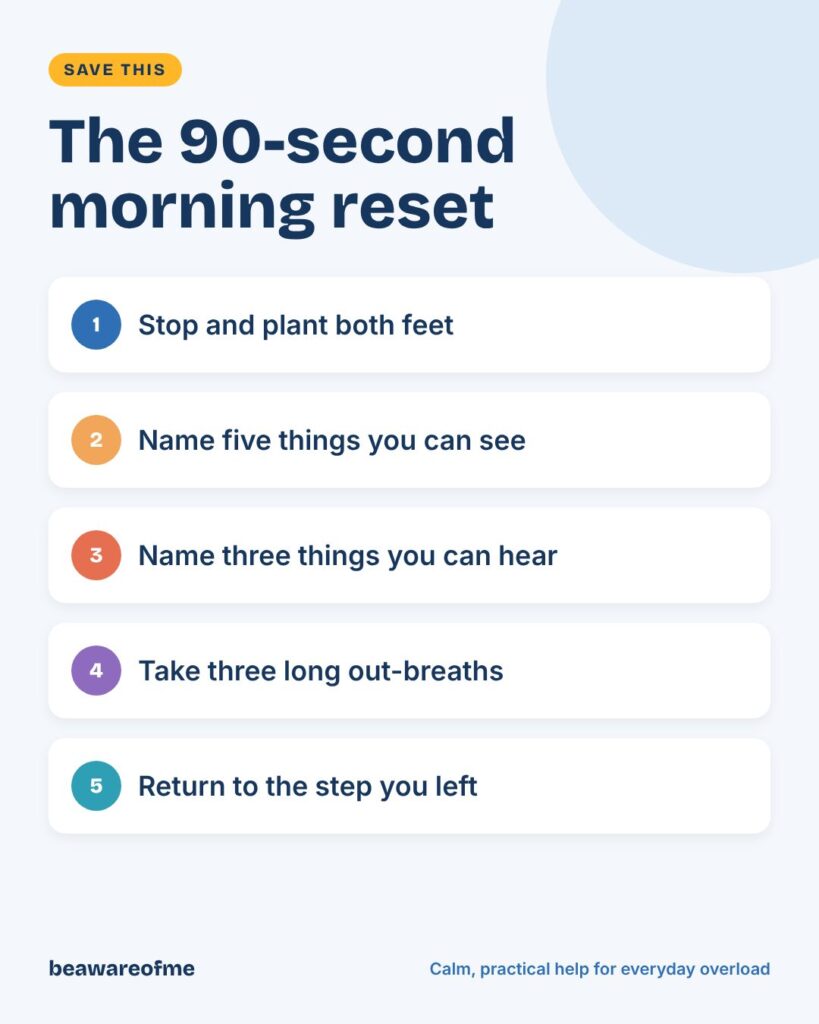
The 90-Second Reset
Stop what you are doing and put both feet on the floor. Name five things you can see and three things you can hear. Then take three slow breaths with a long out-breath. Go back to the exact step you left, not to the beginning.
For more tools that work in under five minutes, see these ways to calm anxiety quickly, or try one of the grounding techniques for anxiety if your thoughts feel far away from your body.
A Script for the “Today Will Be Awful” Thought
Anxious mornings love a big prediction. Try talking back with a short, honest script. You are not forcing positive thinking. You are just widening the view a little.
☀️ Try this today: your mid-morning script
☐ Notice it: “I’m having the thought that today will be awful.”
☐ Name the body part: “My chest feels tight. That’s the morning surge.”
☐ Shrink the time frame: “I only need to get through the next step.”
☐ Pick the next step on your sticky note and do only that.
☐ Check in again in 30 minutes, not every minute.
If You Woke Up at 3am and Never Really Slept
After a broken night, cut your routine to the 10-minute version and be kind about everything else. Our guide on waking up at 3am with anxiety explains why early waking happens and how to settle back down next time.
Set Up Tomorrow Morning Tonight in 10 Minutes
Ten minutes of evening prep can make your morning routine for anxiety twice as easy to follow. Every decision you make tonight is one less decision for your anxious morning brain. This is the part most people skip.
The Evening Prep Checklist
- Lay out tomorrow’s clothes, down to socks.
- Put a glass by the sink and your notebook on the table.
- Prep breakfast or pack a protein snack.
- Write tomorrow’s first meeting or task on a note.
- Move your phone to charge outside the bedroom.
- Set your alarm for the time your chosen template needs.
Pair this with a wind-down that actually relaxes you. These ideas to relax before bed and this guide to anxiety and sleep both help the night set up a calmer start.
Why the Same Order Every Day Matters
Routine works partly because it is predictable. When each step follows the last without debate, your brain spends less effort on choices and more on settling. That is why a morning routine for anxiety should feel almost boring after a week. Boring is the goal.
Calm the body first, plan the day second, and open your phone last. The order is the routine.
— beawareofme
How to Make a Morning Routine for Anxiety Stick for Two Weeks
A morning routine for anxiety only helps if you keep doing it long enough to feel the difference. Plan for two weeks before you judge it. The first few days often feel awkward, and that is normal.
Start With Three Steps, Not Ten
If the full template feels like too much, begin with three anchors: breathe in bed, drink water, delay your phone. Add one new step each week. Small wins build trust, and trust builds the habit.
Track It in Ten Seconds
Each evening, rate your morning anxiety from 0 to 10 and tick which steps you did. After two weeks of your morning routine for anxiety, look for patterns. Many people find one step matters most, like daylight or eating before coffee. Keep that step even on your worst days.
| If you notice this | Then try this |
|---|---|
| You skip the routine when you oversleep | Switch to the 10-minute version, never zero |
| Mornings are fine, but the commute spikes you | Add two minutes of breathing before you leave |
| Weekends feel worse than weekdays | Keep the first ten minutes the same on weekends |
| You feel flat or heavy, not tense | Read about morning low mood and talk to your doctor |
If mornings feel heavy and hopeless rather than tense, that can point to something different. Our guide to morning depression explains the difference, and a doctor can help you sort out what is going on.
📝 Note: For a broader look at why anxiety peaks at waking, read how to start your day calmly with morning anxiety. This page focuses on the timed routine itself.
5 Common Mistakes That Make Anxious Mornings Worse
These mistakes are easy to make because they look like good habits. Each one quietly adds pressure to a morning that already feels tight. Here is what to do instead.
1. Building a Perfect Routine You Cannot Keep
Cold showers, journaling, yoga, reading and a green smoothie, all before 7am. It looks great online and collapses by Thursday. Instead, start with the 10-minute morning routine for anxiety and earn your way up.
2. Checking Email “Just to Get Ahead”
It feels responsible. In practice, one stressful email can hijack the next two hours. Wait until minute 40 of your morning routine for anxiety, after your body has settled and you have chosen your own priority.
3. Treating a Bad Morning as a Failed Routine
Some mornings will feel anxious no matter what you do. The routine does not promise zero anxiety. It promises a steadier floor. Judge it on two weeks of data, not on one rough Monday.
4. Using Coffee as Breakfast
Two coffees and no food can make your heart race and your hands shake, which then feels like proof that something is wrong. Eat first, then enjoy your coffee.
5. Changing the Routine Every Few Days
Novelty can be exciting, but your nervous system calms through repetition. Keep the same order for at least two weeks, then change one step at a time.
📚 Keep reading
Mornings without chaosMorning routines for stress reliefStop overthinkingMore on anxietyMorning Routine for Anxiety: Your Questions Answered
What is the best morning routine for anxiety?
The best morning routine for anxiety is one you can repeat every day in the same order. A strong template starts with slow breathing in bed, then water, daylight and gentle movement, then a breakfast with protein before coffee. Delay your phone for 20 to 30 minutes and finish by writing one priority. Choose a 10, 30 or 60-minute version that fits your real schedule.
Why is my anxiety worse in the morning?
Your body releases a burst of cortisol soon after waking, which helps you get going but can feel like alarm if you already carry worry. Poor sleep, late screens, hunger and caffeine on an empty stomach can add to it. Morning anxiety often eases as the day goes on. If it stays strong or affects your daily life, talk to a doctor or a qualified professional.
How long should a morning routine for anxiety take?
Ten minutes is enough to make a real difference, as long as you keep the order: calm your body, then plan, then check your phone. Thirty minutes suits most workdays. A full hour is lovely on slower days. The length matters far less than doing the same steps every morning for at least two weeks before you decide whether it helps.
Should I stop drinking coffee if I have morning anxiety?
Not necessarily. Many people simply move their coffee to after breakfast and notice fewer jitters. The FDA notes that too much caffeine can cause anxiety and that sensitivity varies a lot between people. Try a one-week test with food first, then consider half-caff or tea if you still feel shaky. Ask your doctor or pharmacist if you take medication.
Is it bad to check my phone first thing in the morning?
It is not harmful in itself, but it often sets your mood with other people’s news and demands before you have settled. Many anxious people feel calmer when they wait 20 to 30 minutes. Charging the phone outside the bedroom and using a separate alarm clock makes this much easier, because you are not fighting temptation the moment you wake.
What should I do if I wake up with a panic attack?
Sit up, put your feet on the floor and slow your breathing, making each out-breath longer than the in-breath. Remind yourself that panic peaks and passes. Once it eases, use the short 10-minute routine and keep the rest of the morning gentle. If panic attacks happen often, or you are unsure what is happening, speak to a doctor for a proper check.
Anxious mornings are common, and they are not a verdict on the day ahead. A morning routine for anxiety simply gives your first hour a shape: breathe, move, eat, plan, and only then open the door to everyone else. Pick your version tonight, follow it for two weeks, and let tomorrow start a little steadier.
📝 Please read: Educational content, not a substitute for professional care. If you are struggling, talk to a doctor or a qualified professional. If you are thinking about harming yourself, contact local emergency services or a crisis line now (US 988, UK and Ireland Samaritans 116 123, or findahelpline.com).