
You walk into a room and forget why. You read the same paragraph three times. Your to-do list keeps growing while your attention keeps leaking. This guide shows you how to boost focus and memory with nine habits that research actually supports, plus a clear, no-hype look at memory supplements.
🌱 Key takeaways
How to Boost Focus and Memory: The 9 Habits at a Glance
To boost focus and memory, you need a few steady habits more than a clever hack. Attention, sleep, movement, food and stress all feed into how well you take in, store and recall information. Fix the biggest gap first, and the rest gets easier.

Here is the whole plan on one screen. Pick the row that feels most broken in your life right now and start there today.
| Habit | Why it helps | Start today |
|---|---|---|
| 1. Sleep 7+ hours | Sleep supports learning and recall. | Set a fixed wake-up time. |
| 2. Single-task sprints | Switching tasks drains attention. | One 25-minute block, one task. |
| 3. Phone out of reach | Alerts break concentration. | Put it in another room. |
| 4. Daily movement | Activity supports brain health and mood. | Take a 10-minute brisk walk. |
| 5. Steady meals and water | Energy dips blur thinking. | Eat breakfast, keep water nearby. |
| 6. Self-testing | Recall strengthens memory more than rereading. | Close the notes and write what you remember. |
| 7. Spaced review | Gaps between sessions help memories last. | Review tomorrow, then in 3 days. |
| 8. External memory | Lists free up working memory. | Keep one running list. |
| 9. Lower stress | Worry crowds out attention. | Try 3 slow breaths before work. |
Sleep: The Overnight Habit Your Brain Can’t Skip
Sleep is the single easiest place to boost focus, because almost every other habit works better on a rested brain. Short nights make attention patchy and recall slow. You feel it as rereading emails and losing your train of thought.
How Much Sleep Your Brain Actually Needs
The Centers for Disease Control and Prevention recommends seven or more hours a day for adults aged 18 to 60, and seven to nine hours for those aged 61 to 64. The CDC also notes that sleep quality matters as much as quantity.
A 20-Minute Wind-Down That Protects Tomorrow’s Focus
Dim the lights, put your phone on charge outside the bedroom and write tomorrow’s top three tasks on paper. That last step matters. Your brain stops rehearsing the list once it lives somewhere safe. For more ideas, see our guide to sleep and self-care for better rest.
Single-Task Sprints: The Fastest Way to Boost Focus at Work
Single-tasking means doing one thing at a time on purpose, and it is the quickest daily win for attention. Every switch between email, chat and a report costs a little focus. Those small costs add up to an afternoon that feels busy yet produces little.
How to Run a Focus Sprint
Choose one task, set a timer for 25 to 45 minutes, and close every tab you do not need. When the timer ends, stand up for five minutes. Repeat up to four times, then take a longer break.
What to Do When Your Mind Wanders Mid-Sprint
Your mind will wander, and that is normal. The skill is noticing and coming back, not never drifting. Each return is a small rep for your attention.
Keep a scrap of paper next to you. When a stray thought pops up, such as “call the dentist”, write it down and go back to the task. The note tells your brain the thought is safe, so it stops tapping you on the shoulder.
If you drift more than five times in one sprint, the task may be too big or too vague. Shrink it. “Write the report” becomes “write three bullet points for the introduction”. Smaller targets boost focus because your brain can see the finish line.
Put Your Phone Out of Sight, Not Just on Silent
A silent phone on your desk still pulls at your attention. Out of sight works better than out of sound. If you need help, try one of these apps to cut screen time and improve focus. In a loud workplace, these mindfulness practices for a noisy office also help.
Move, Eat, Drink: 3 Body Habits for a Sharper Brain
Your brain runs on the same fuel as the rest of you, so body habits quietly boost focus and memory every day. Movement, regular meals and water all help keep your energy steady. Skipping them shows up as foggy afternoons.
Movement: A Brisk Walk Counts
Regular physical activity supports mood, sleep and overall brain health. You do not need a gym. A 10-minute brisk walk after lunch is a fine start. Read more in our article on how exercise boosts mental health.
Food: Regular, Balanced, Colourful
There is no single brain food, but steady meals help. A Mediterranean-style pattern, rich in vegetables, beans, whole grains, fish and olive oil, shows up often in brain health research. Our guides on Mediterranean foods for memory and omega-3s, fish and cognitive decline explain the details.
Water: The Two-Second Habit
Mild dehydration can make you feel tired and unfocused. Keep a glass or bottle within reach while you work. When your sprint timer rings, take a few sips before you start the next block.
5 Memory Tricks That Actually Stick
The best memory techniques make your brain work to pull information out, rather than just looking at it again. Rereading feels productive because the page looks familiar. Recall is harder, and that effort is exactly what helps the memory last.
Test Yourself Instead of Rereading
Retrieval practice means trying to remember information without looking. Close your notes and write down everything you recall. Then check what you missed. It feels harder than rereading, which is the point.
Space It Out Over Days
Spaced repetition means reviewing the same material over several days instead of cramming. A simple pattern works: review tomorrow, then three days later, then a week later. Each round takes less time than the last.
Teach It, Picture It, Write It Down
- Teach it: explain the idea out loud to a friend, or to an empty room, in plain words.
- Picture it: link a name or fact to a vivid image, such as a colleague named Rose holding a rose.
- Chunk it: group long numbers or lists into sets of three or four.
- Write it down: keep one running list so your working memory can focus on the task in front of you.
What About Memory Supplements? A Neutral Look at the Evidence
Most memory supplements promise more than the evidence shows, and some carry real risks with common medicines. If you hope a capsule will boost focus, it helps to know what independent public health sources say first. This section gives general information only, not advice to take or avoid any product.
Ginkgo: Big Study, No Dementia Benefit
According to the NIH National Center for Complementary and Integrative Health, the Ginkgo Evaluation of Memory study followed more than 3,000 people aged 75 or older for a median of six years. Rates of dementia did not differ between the ginkgo and placebo groups. Research on brain health in healthy people is generally low quality. Ginkgo may also raise bleeding risk with blood thinners such as warfarin.
Omega-3s: Food Looks Better Than Pills
The NIH Office of Dietary Supplements notes that some research links higher omega-3 intake from foods like fish to lower risk of dementia and cognitive problems, but not all studies agree. It adds that more research is needed. High doses of omega-3 supplements may increase bleeding risk with anticoagulant medicines.
Before You Buy Any Memory Supplement
Supplement labels can make big promises. Ask three questions first: does independent evidence support this ingredient, could it interact with anything I take, and is there a cheaper habit that does the same job?
Stress, Mood and Brain Fog: The Hidden Focus Drains
Sometimes the problem is not your memory at all; it is a mind too busy or too tired to pay attention. Stress, anxiety, low mood and exhaustion all compete for the same mental space. Easing them can boost focus more than any study technique.
When Worry Takes Up the Room
Anxious thoughts act like background apps draining a battery. You read a page while part of your mind rehearses tomorrow’s meeting. A short worry slot, where you write concerns down for 10 minutes, can clear some space. Our guide to stop overthinking and relax your mind has more ideas.
When Everything Feels Foggy
If thinking feels slow and hazy, you may be dealing with brain fog, a common name for trouble with focus, memory and clear thinking. Read what brain fog feels like to compare. Feeling drained even after a quiet day? See our piece on feeling tired after doing nothing.
When Low Mood Dulls Everything
Low mood can make concentration feel like wading through mud. Tasks you used to enjoy take more effort, and details slip away. If that has lasted two weeks or more, it deserves attention in its own right. Gentle movement, daylight and talking to someone you trust can help, and so can a chat with your doctor. Trying to boost focus with willpower alone rarely works while mood stays low.
Your memory is not broken. Most days, it is simply tired, busy or worried.
— beawareofme
A Simple Daily Plan for Sharper Days Without Burning Out
A good daily plan puts your hardest thinking where your energy is highest and protects recovery time. This one takes no special tools. Use it for a week, then adjust the timings to fit your life.
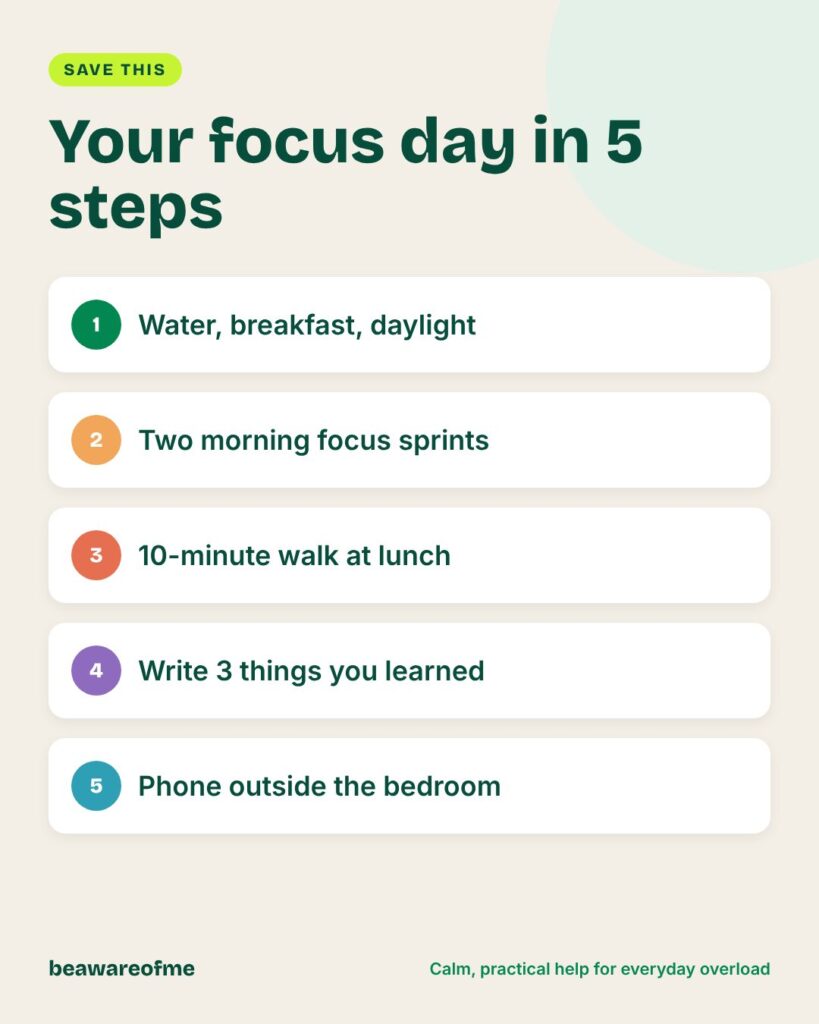
☐ Your focus day checklist
Expect a few rough days. The aim is a steady routine, not a perfect one. If you only manage two items, choose the sleep and the morning sprints. Those two alone can boost focus noticeably within a week or two.
If You Are Studying
Swap long cramming nights for short daily reviews. Quiz yourself with flashcards, explain topics aloud and space your sessions across the week. Those three habits boost focus and recall better than an all-nighter, and they leave you rested on exam day.
If You Work Long Hours
Guard your first 90 minutes for deep work, before meetings and messages take over. Batch email into two or three slots. A short walk between long calls resets your attention more than another coffee.
If You Are Over 60
Some slowing of recall is common with age, and it is not the same as memory loss. Staying socially active, moving every day and learning new skills, like a language or an instrument, keep your mind engaged. Still, mention any change that worries you to your doctor.
When Forgetfulness Needs a Doctor’s Visit
Everyday forgetting, like misplacing keys when you are rushed, is common. But some changes deserve a professional look, because memory and focus problems can have medical causes such as sleep disorders, thyroid issues, medicine side effects or low mood.
- Memory problems that are new, sudden or getting worse over weeks.
- Getting lost in familiar places or struggling with routine tasks.
- Friends or family noticing changes and mentioning them to you.
- Forgetfulness that started after a new medicine or supplement.
- Ongoing low mood, worry or exhaustion alongside poor focus.
If any of these apply, book an appointment with your doctor. Bring a short list of examples, the medicines and supplements you take, and how long the changes have lasted.
5 Common Mistakes When You Try to Boost Focus
Many people try hard to boost focus and still feel scattered, usually because of a few common traps. Here is what to watch for.
Mistake 1: Cutting Sleep to Get More Done
Staying up late to finish work feels productive, but it borrows focus from tomorrow. The next day you work slower and forget more. Instead, protect your sleep window and move lower-value tasks to another day.
Mistake 2: Buying a Pill Before Fixing the Basics
A supplement feels easier than changing habits, yet evidence for most is weak. Some also interact with medicines. Instead, fix sleep, movement and phone habits first, and ask your doctor or pharmacist before trying any product.
Mistake 3: Multitasking and Calling It Efficiency
Answering messages while writing a report feels fast. In practice, each switch costs attention and invites mistakes. Instead, batch messages into two or three set times a day and protect focus sprints in between.
Mistake 4: Rereading Notes and Hoping They Stick
Rereading makes material feel familiar, which tricks you into thinking you know it. Instead, close the notes, write what you remember and check the gaps. Then review again a few days later.
Mistake 5: Ignoring Stress and Mood
No technique works well when your mind is full of worry or low mood. Treating focus as a pure productivity problem misses the root. Instead, give stress the same attention you give your calendar, and seek support if mood stays low.
📚 Keep reading
Mediterranean diet for focusWhat brain fog feels likeExercise and your mindAll mental health guidesQuick Questions About Focus, Memory and Supplements
What is the fastest way to boost focus?
Does Memory Lift work as a supplement?
Which foods help memory and focus?
How much sleep do I need for good memory?
Can stress make my memory worse?
When should I worry about forgetfulness?
You do not need a miracle pill to boost focus and memory. Steady sleep, short single-task sprints, daily movement and a little self-testing do most of the work. Start with one habit this week, and let small wins build into a clearer, calmer mind.