
Stress is no longer just something that happens once in a while in the fast-paced world of work. It’s something that happens every day. Deadlines, back-to-back meetings, high expectations, and always being connected can all make things very stressful, which can hurt both your mental health and your productivity. That’s why managing stress at work isn’t just a corporate buzzword; it’s a skill that every professional needs to have if they want to do well in the long run.
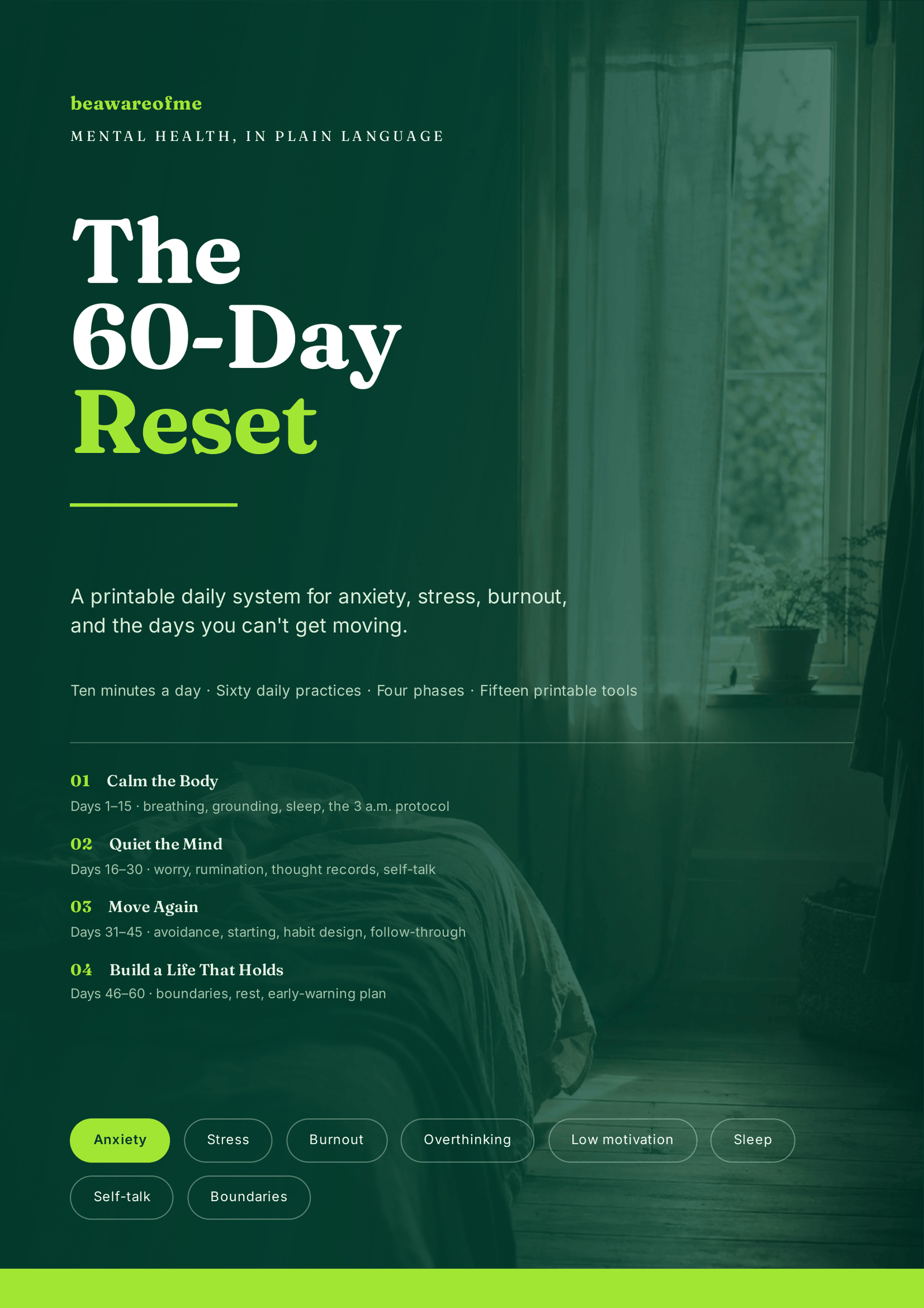
The 60-Day Reset
Everything on this page, sequenced into a printable ten-minute daily practice — 84 pages across anxiety, sleep, overthinking and low motivation, with a two-minute version of every day for the hard ones.
Instant PDF · 60 daily practices · 15 printable tools · Educational, not therapy
This complete guide looks at tried-and-true ways to deal with stress at work, avoid burnout, and keep your life in balance. These methods have been shown to work in all industries and roles, and experts recommend them. These tips will help you take charge of your health and build resilience in your career, whether you are an executive, entrepreneur, manager, or employee.
Why It’s Important to Manage Stress at Work

People often don’t realize how stressful work can be. Stress can help us do better sometimes, but too much stress all the time has the opposite effect: it makes it harder to concentrate, makes it harder to solve problems, and hurts our health in general.
The American Psychological Association (APA) says that stress at work is one of the main reasons why employees get burned out, miss work, and don’t get as much done. According to a study by the National Institute for Occupational Safety and Health (NIOSH), more than 40% of workers say their jobs are “very or extremely stressful.”
Stress doesn’t just hurt your work performance; it also hurts your relationships, sleep, and long-term health if you don’t deal with it. That’s why it’s important to learn how to deal with stress at work, not just for your career but for your whole life.
The Hidden Cost of Not Dealing with Stress at Work
Before looking for solutions, it’s important to know how much it really costs to ignore stress management:

Understanding why it happens doesn't make it stop.
You can know exactly what your nervous system is doing at 3 a.m. and still be awake at 3 a.m. Reading is where it starts. The Calm Reset Bundle is the part where you do something about it.
See the bundle →- Less productive: Stress makes it harder to focus, makes decisions more slowly, and makes more mistakes.
- Health risks: Long-term stress can cause headaches, high blood pressure, heart disease, and a weaker immune system.
- Concerns about mental health: Stress that isn’t managed can cause anxiety, depression, and burnout at work.
- Higher turnover: When employees are burned out, they are more likely to quit, which costs companies time and money.
- Personal life impact: Stress can ruin your relationships, social life, and personal health.
Knowing about these effects shows why investing in stress management at work is not an option—it’s necessary for long-term career growth.
Basic Ideas for Managing Stress at Work
There isn’t a “one-size-fits-all” way to deal with stress at work, but there are some timeless rules that work well:
- Awareness: The first step in dealing with stress and burnout is to notice the signs early on.
- Balance: Work shouldn’t take over your life. Setting limits will help you stay strong in the long run.
- Control: Knowing what you can control makes you feel less helpless.
- Support: Having strong personal and professional support systems gives you stability.
- Consistency: You need to manage your stress every day, not just when you need to.
Now that we have these basics down, let’s look at some long-lasting, useful ways to lower stress and improve health.
How to Spot Stress at Work

Stress often sneaks up on you. People who are used to “pushing through” may not notice the early signs until they are burned out. Keep an eye out for these warning signs:
- Always tired, even after resting
- Being irritable or impatient with coworkers
- Having trouble focusing or making choices
- Headaches or body tension that happen a lot
- Lessening of motivation and engagement
- Not doing work duties
- Sleep problems or bad ways of dealing with stress, like drinking too much caffeine or eating too much
If you know these signs, you can step in before stress turns into full-blown burnout.

Most of what you read this week will be gone by Thursday.
That isn't a discipline problem. It's what happens to information you never write down. Beat Information Overload is a free 35-page workbook that turns reading into something that stays.
Get the free workbook No cost · unsubscribe in one click1. Make a List of Tasks and Put Them in Order of Importance
Learning how to manage your time and tasks is one of the best ways to deal with stress at work. It can be hard to handle a long to-do list, but breaking tasks down into smaller groups makes them easier to handle.
- Use the Eisenhower Matrix or other prioritization frameworks to help you decide what to do first.
- Make big projects easier to handle by breaking them down into smaller steps.
- Set reasonable due dates so you don’t panic at the last minute.
- Use productivity tools like digital planners or apps that help you manage your tasks.
The Harvard Business Review says that professionals who plan their time well are less stressed and more satisfied with their jobs.
2. Make Sure You Have Healthy Limits
It’s easy for work to get in the way of personal life when you work from home and use digital communication. To deal with job burnout, it’s important to set clear limits.
- Set hours for work and stick to them.
- Don’t check your email late at night.
- When your workload is too much, learn to say “no.”
- Talk to your coworkers and bosses about what you expect.
Boundaries help you keep your energy up, avoid feeling overwhelmed, and keep a healthy work-life balance.
3. Make Your Mind and Body Stronger

Taking care of one will help the other. Your body and mind are very connected. Make these habits part of your daily life:
The 60-Day Reset
Everything on this page, sequenced into a printable ten-minute daily practice — 84 pages across anxiety, sleep, overthinking and low motivation, with a two-minute version of every day for the hard ones.
Instant PDF · 60 daily practices · 15 printable tools · Educational, not therapy
- Exercise every day. Even a 20-minute walk can lower stress hormones.
- Mindfulness or meditation can help you feel less anxious and more focused, according to research.
- Get enough sleep: Sleep restores cognitive function and emotional balance.
- Eat a healthy mix of foods: Eating whole foods, drinking enough water, and limiting caffeine can help keep your energy levels stable.
Long-term, simple, regular routines make you more resilient to stress.
4. Get Better at Talking to People
In the workplace, bad communication is a common cause of stress. Tension can come from misunderstandings, unclear expectations, or conflicts that haven’t been resolved.
- Talk to your boss about your goals and what they expect from you.
- Work on active listening with your coworkers.
- Talk about problems directly but with respect.
- To avoid being out of sync, ask for feedback often.
Good communication makes relationships stronger and lowers stress at work that isn’t needed.
5. Make the Workplace a Place Where People Can Help Each Other
No professional does well when they are alone. Having a support system at work can help you deal with problems more easily.
- Get in touch with coworkers who have the same values and goals.
- Ask experienced professionals to be your mentor.
- Become a member of a professional group or an employee resource group.
- Do things as a team that build trust and help people work together.
When stress comes up, a sense of community can help you feel better and see things from a different angle.
6. Use Stress-Relief Methods at Work
Taking short breaks throughout the day keeps stress from building up.
- In between meetings, try doing some deep breathing exercises.
- Stretching at your desk can help you relax.
- Walk around for a few minutes to clear your head.
- During times when you need to focus, listen to music that calms you down.
These habits help keep stress levels under control, even on days when things are really busy.
7. Get Professional Help When You Need It

If stress gets too much, getting help from a professional can be very helpful.
- Therapists and counselors can help you find ways to deal with your problems that are right for you.
- Many times, Employee Assistance Programs (EAPs) offer private help.
- Coaching can help you make better plans for your work and personal life.
Asking for help is not a sign of weakness; it’s a proactive way to take care of your mental health and avoid burnout.
Most of what you read this week will be gone by Thursday.
That isn't a discipline problem. It's what happens to information you never write down. Beat Information Overload is a free 35-page workbook that turns reading into something that stays.
Get the free workbook No cost · unsubscribe in one clickHow to Deal with Job Burnout in the Long Term
Burnout isn’t just being tired; it’s also feeling emotionally drained, cynical, and like you’ve done less than you should have. It’s very important to recognize and deal with it early.
Some long-term plans are:
- Reevaluating your career goals: To get your motivation back, make sure your work is in line with your personal values.
- Giving out tasks: Don’t take on more than you can handle.
- Using all of your vacation time: Rest is important for getting back to normal.
- If your workload is too much, talk to your boss about changing your role.
Burnout doesn’t go away on its own; you have to work on getting better and changing things.
The Connection Between Mental Health and Productivity
Many professionals think that productivity and mental health are two things that are at odds with each other, but they are actually very closely related. Employees who are healthy are more productive, creative, and involved.
Research indicates that workplaces implementing mental health initiatives report:
- Less time off
- More engaged employees
- Higher rates of retention
- Better performance overall
In other words, managing stress at work is good for both people and businesses. It’s not about working harder to be more productive; it’s about staying healthy.
Real-Life Examples of Good Stress Management

Stress Management Example 1: Change in Culture at a Tech Startup
A tech company that was growing saw that more and more employees were quitting because they were burned out. Stress levels went down and retention went up when flexible hours, wellness programs, and “no-meeting Fridays” were added.
Understanding why it happens doesn't make it stop.
You can know exactly what your nervous system is doing at 3 a.m. and still be awake at 3 a.m. Reading is where it starts. The Calm Reset Bundle is the part where you do something about it.
See the bundle →Example 2: People Who Work in Health Care
Stress is unavoidable in hospitals. Institutions that implemented peer-support groups, mindfulness training, and mental health counseling observed a decrease in staff burnout.
Example 3: Teams in Corporate Finance
High-pressure finance teams started using structured task management systems and required time off. As a result, productivity went up and sick leave due to stress went down.
These examples show that stress management techniques can be used in many different fields.
Making a Plan to Handle Your Own Stress
Everyone has different things that stress them out at work, so your approach should be unique to you. This is how to make a plan:
- Find out what makes you stressed (deadlines, problems with communication, too much work).
- Choose some ways to deal with stress, like mindfulness, exercise, or setting limits.
- Set aside time each week to check in with yourself and see how stressed you are.
- Change your plan as needed; it should change as your career and life do.
A personalized plan makes sure that stress management becomes a long-term habit instead of a quick fix.
How Leaders Can Help Teams Deal with Stress

It is very important for managers and leaders to help lower stress at work. Leadership that is supportive helps people be more resilient and involved.
- Encourage people to talk to each other without worrying about being judged.
- Recognize accomplishments to boost morale.
- Give people time off and breaks.
- Show your kids how to work well by not sending emails late at night.
- Give people access to things like training, counseling, or wellness programs.
When leaders put stress management first, everyone on the team benefits.
How to Avoid Common Mistakes When Dealing with Stress
Even when they mean well, many professionals get into bad habits:
- Relying on quick fixes like snacks that aren’t good for you or caffeine.
- Not paying attention to early signs of burnout.
- Doing too many things at once, which makes your brain work harder.
- Taking on too many projects or meetings.
- Not talking to your boss about your workload.
Knowing about these problems can help you avoid problems when trying to manage stress.
What Will Happen to Stress Management at Work in the Future?

Even though technologies and job structures may change, the basic ways to deal with stress will always be the same: balance, resilience, communication, and support. Working from home, using AI tools, and working with people all over the world make things more complicated, but people still need stability, rest, and connection.
Companies that follow these rules will not only keep their best employees, but they will also create places where professionals can do well for years to come.
Important Points
- Managing stress at work is important for both your health and the success of your business.
- Setting priorities, setting boundaries, practicing resilience, communicating, and getting help are all good ways to deal with stress at work.
- To deal with job burnout, you need to make long-term plans like reevaluating your goals, taking breaks, and asking for help.
- Mental health and productivity are closely linked. To be successful in the long term, you need to protect both.
- Leaders, workers, and companies all have a part to play in making workplaces that are healthy and balanced.
Conclusion
Stress at work is unavoidable, but you don’t have to suffer from it. Professionals can protect their mental health, stay strong, avoid burnout, and get more done by using timeless strategies for managing stress at work.
It’s not about working harder; it’s about working smarter, with care and intention for both your health and your performance. These strategies are a good starting point for busy professionals who want to be successful in their careers and in life.

Quiet the noise — without burning your phone in a field.
Get Beat Information Overload free, plus the occasional calm, no-hype note from me.