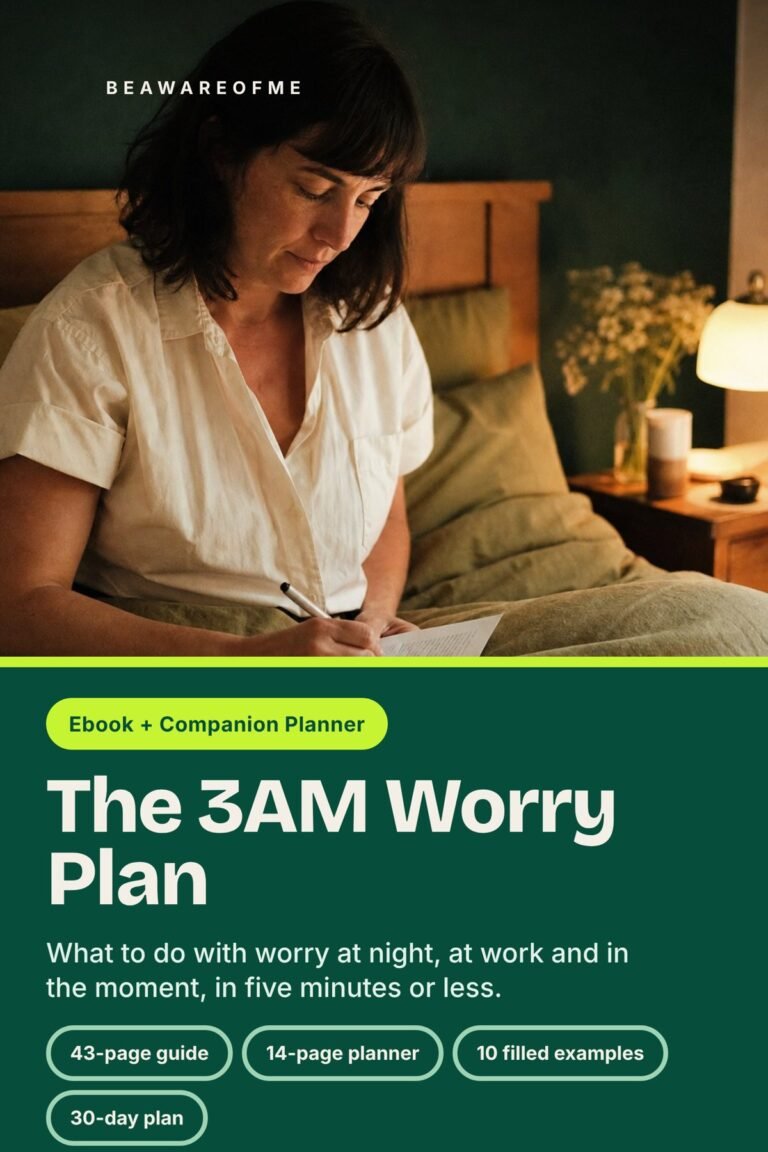

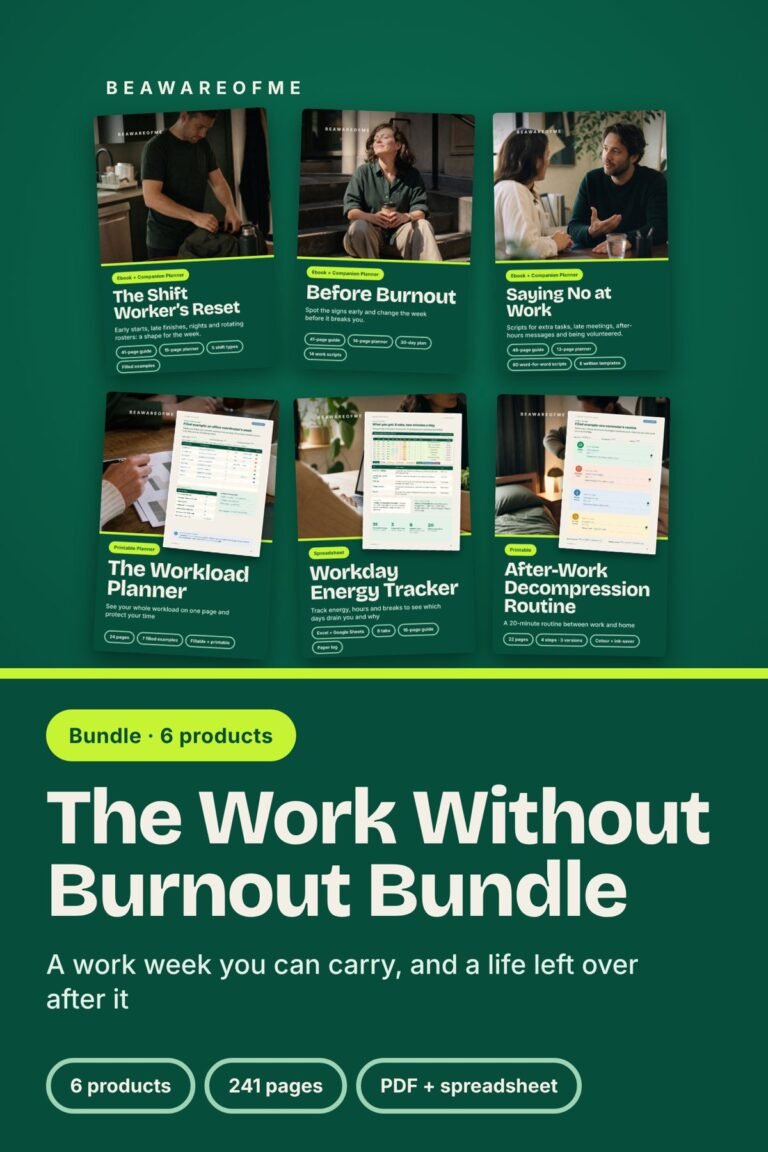
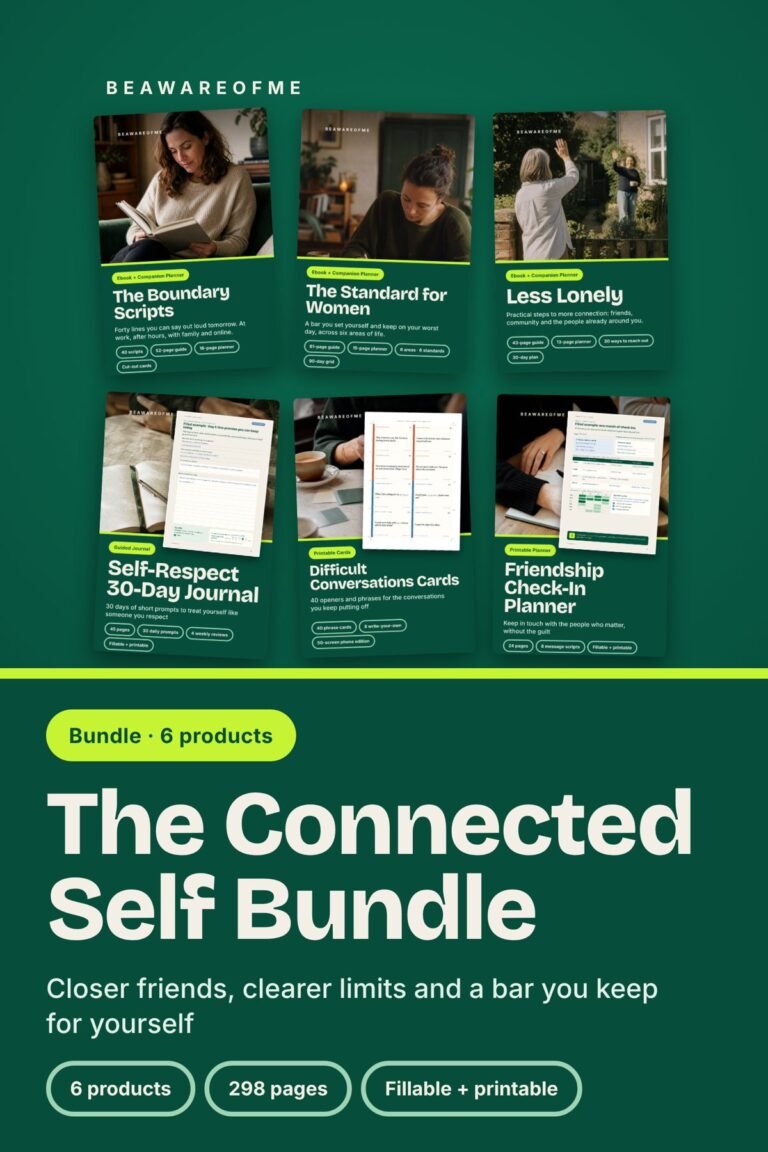



Overthinking Decoder
Answer quick questions about everyday moments and find out which kind of overthinking you lean towards, what it looks like for you and three small ways to quiet it.
Anonymous. Different questions each time. A general structure for everyday life, not medical or psychological advice.
You replay conversations, run every what-if, and lie awake rewriting the day. This free decoder shows which kind of overthinking you lean towards, what it looks like for you, and simple ways to quiet it this week.
Each answer adds points to Replaying, What-ifs, Decisions, Reassurance, Night thinking and Self-judgement. Your result reads the strongest areas and turns them into a named pattern, a chart, three small steps and the guides that fit. Questions change every time you play.
Overthinking Decoder: what is really going on
Overthinking is when your mind keeps chewing on something long after it stops being useful. Thinking a problem through is healthy; it leads somewhere. Overthinking goes in circles. You replay a moment, imagine what might go wrong, weigh a choice for the tenth time, or pick apart something you said. It feels like work, as if you're solving something, but you end up tired and no closer to an answer.
Most overthinking comes from a good place. Your mind is trying to keep you safe, avoid mistakes or protect relationships. It gets louder when life is uncertain, when you're tired or stressed, or when you care a lot about getting things right. Busy days with no quiet time also feed it, because the thinking you didn't have room for during the day shows up the moment your head hits the pillow.
Overthinking takes different shapes. Some people replay the past, running awkward moments again and again. Some spin what-ifs about the future. Some freeze on decisions, even small ones like what to order. Some look for reassurance, checking, googling or asking others whether things are okay. Some get busiest at night. And some turn the thinking inward as harsh self-judgement. Most people lean towards one or two of these.
Knowing your type helps because each one responds to a different tool. Replaying settles with a clear ending ritual. What-ifs shrink when you write the next real step. Decision freeze eases with time limits. Reassurance-seeking calms when you practice sitting with a little uncertainty. Night thinking quiets with a wind-down and a notebook. Self-judgement softens when you talk to yourself the way you'd talk to a friend. The decoder points you to the right one.
What each area means
Replaying the past
Replaying is running past moments over and over: a comment, a meeting, a text you sent. Your mind is looking for what you should have done differently.
- You rerun conversations in the shower or on the drive home
- You cringe at things from days or years ago
- You write perfect comebacks long after the moment
- You reread messages you've already sent
- Ask once: is there anything to fix? If yes, do it; if not, let it go
- Write the moment down in three lines, then close the notebook
- Say "that's done" out loud when the replay starts
- Ask yourself if anyone else is still thinking about it
What-if spirals
What-ifs are your mind running ahead to everything that might go wrong. One small worry branches into a whole web of possible problems.
- One small thing quickly turns into a worst-case story
- You plan for problems that haven't happened
- You feel tense before events, even good ones
- You find it hard to enjoy the present moment
- Write the worry, then write the one next step you can actually take
- Ask: what is most likely to happen, not just worst?
- Give what-ifs a short daily slot instead of all day
- Remind yourself of times you've coped before
Decision freeze
Decision freeze is getting stuck between options, even small ones, because you're afraid of choosing wrong. The longer you weigh it, the harder it feels.
- You spend ages choosing from a menu or online shop
- You ask several people before making a choice
- You put off decisions until someone else makes them
- You second-guess choices right after you make them
- Set a time limit: two minutes for small choices, a day for bigger ones
- Decide what "good enough" looks like before you start
- Limit yourself to two or three options
- Remember most choices can be changed later
Reassurance seeking
Reassurance seeking is checking, asking or searching to make a worry go away. It brings brief relief, but the worry often comes back stronger.
- You ask people "are you sure it's okay?" more than once
- You search symptoms or situations online for a long time
- You recheck locks, emails or plans several times
- Relief from checking only lasts a short while
- Notice the urge to check and wait ten minutes before acting
- Cut checking down one step at a time, not all at once
- Ask for reassurance once, then thank the person and stop
- Remind yourself: "I can live with not knowing for now"
Night thinking
Night thinking is when your mind gets busiest just as you try to sleep. Quiet and darkness leave room for everything you pushed aside during the day.
- Your mind races as soon as the lights go off
- You lie awake planning tomorrow
- Worries feel bigger at night than in the morning
- You wake in the night and start thinking straight away
- Write a to-do list and worry list an hour before bed
- Keep a notebook by the bed for any late thought
- Build a 30-minute wind-down: low light, no work, no news
- If you're awake for a long while, get up and do something calm until sleepy
Self-judgement
Self-judgement is overthinking turned inward: picking apart what you said, did or are. The inner voice becomes a harsh referee.
- You call yourself names in your head
- You focus on one mistake and ignore what went well
- You compare yourself to others a lot
- You find it hard to accept compliments
- Ask what you'd say to a friend in the same spot, then say it to yourself
- Write down three things you did okay today
- Swap "I always mess up" for "I got that one wrong"
- Notice the voice without arguing: "there's the referee again"
What your score means
A low score means overthinking is a visitor, not a roommate. Thoughts come and mostly leave. Keep the habits that help you let go, like a wind-down and time outside.
A middle score means your mind loops more than you'd like on some days. It's often tied to stress or tiredness. Pick your top type on the chart and try its matching tool every day this week.
A high score means your mind is working overtime, and that is exhausting. Start small: one notebook, one worry slot, one wind-down. If the thinking is taking over your days or sleep for weeks, talking to a counselor or your doctor can really help.
5 small steps that help
Spot your loop
Notice when you're thinking in circles. Ask: "Am I solving this, or just going round?" Naming the loop is the first step to stepping out of it.
Get it on paper
Write the thought down in a few lines. Thoughts look smaller and clearer on paper than they feel in your head.
Write one next step
Under the thought, write one small action you could take. If there isn't one, write "nothing to do right now" and close the page.
Set a worry window
Choose a 15-minute slot in the early evening for thinking things through. When a loop starts outside that time, jot it down and save it for later.
Move your body
A short walk, stretch or a few minutes of tidying pulls attention out of your head. It's one of the quickest ways to break a spiral.
The guides that turn this into a plan
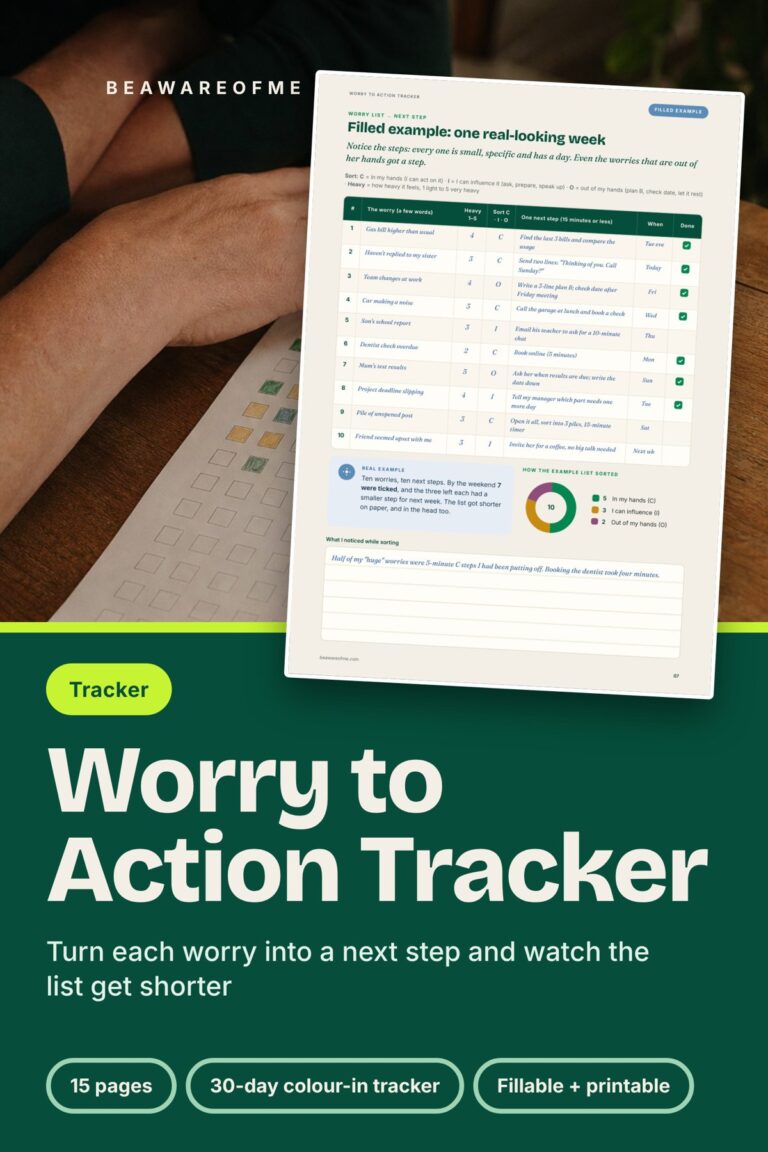 Tracker
Worry to Action Tracker
Give each worry one small next step and tick it off.
Get it →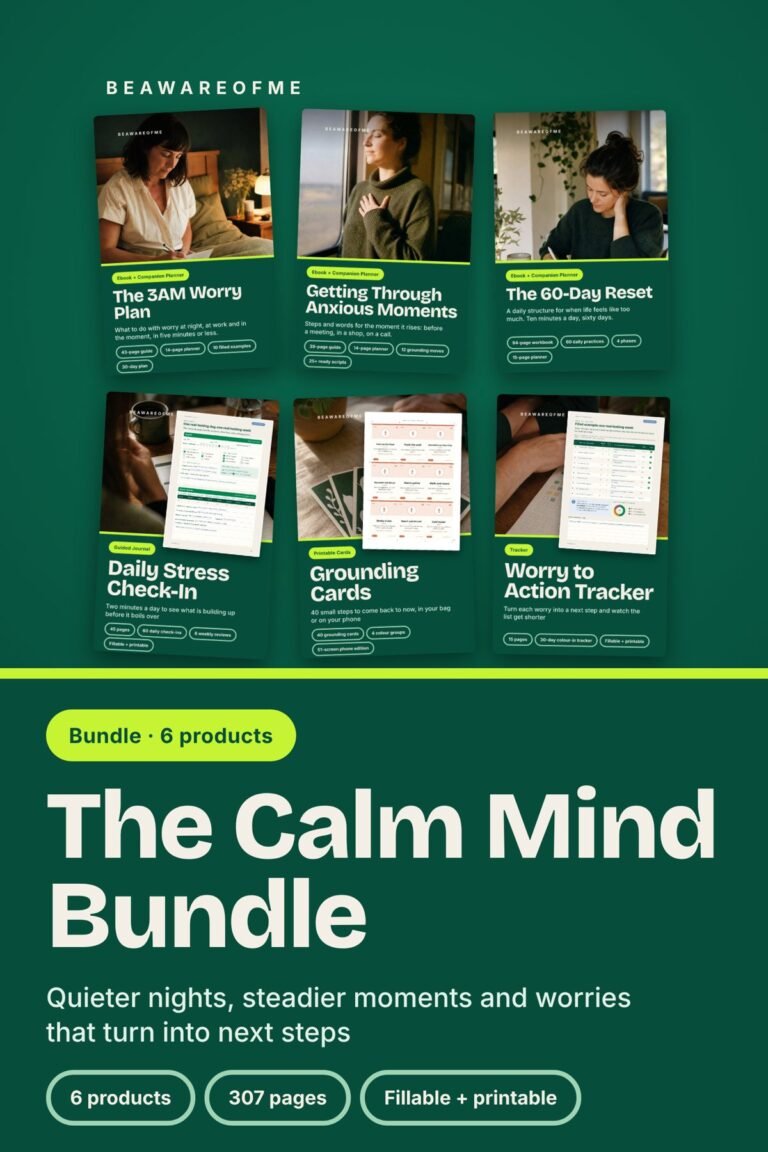 Bundle · 6 products
The Calm Mind Bundle
Simple plans for everyday worry, stress and hard moments.
Six products sold separately for $91, here together for $37.
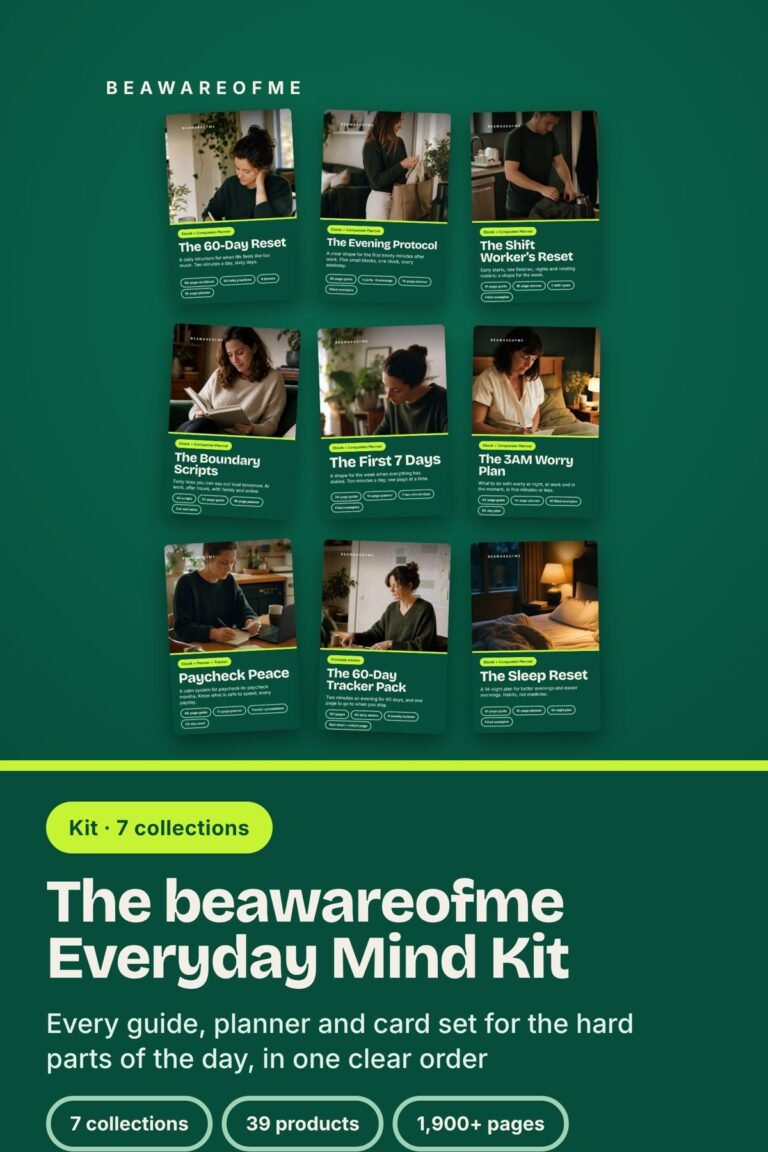 Kit · all collections
The beawareofme Everyday Mind Kit
Every beawareofme collection in one download, in a clear order.
The Standard System and all six bundles cost $289 bought separately; the kit is $127.
Instant download · Digital download · All sales final
Myths and calmer facts
✗ If I think about it enough, I'll find the answer.
✓ Useful thinking moves forward. Going round the same loop usually adds stress, not clarity. A step or a break often helps more.
✗ Overthinking means I'm careful and responsible.
✓ Caring about getting things right is a strength. But past a point, extra thinking slows you down and wears you out without making things safer.
✗ I just need to stop thinking about it.
✓ Trying to force a thought away often makes it stick. Gently redirecting your attention, or giving the thought a set time, works better.
When to get help
Talk to a doctor or a qualified counselor if overthinking takes up hours of your day, keeps you awake most nights, or makes it hard to work, decide or enjoy things for several weeks. Reach out sooner if checking or reassurance-seeking feels out of your control, or if your thoughts turn very dark. If you have thoughts of harming yourself, please contact a crisis line now: in the US call or text 988, in the UK and Ireland call Samaritans on 116 123, or find a local line at findahelpline.com.
Frequently asked questions
How do I stop overthinking everything?
You don't need to stop thinking; you need a way out of the loop. Write the thought down, note one next step, then shift your attention with movement or a task. A daily worry window also helps keep thinking in its place.
Why do I overthink at night?
At night there are fewer distractions, so thoughts you pushed aside during the day come back. Tiredness also makes worries feel bigger. A list before bed and a calm wind-down can help.
Is overthinking a sign of anxiety?
Overthinking can be a sign of stress or anxiety, but lots of people overthink without a bigger problem. If it's taking over your days or sleep, it's worth talking to a professional.
What is the difference between thinking and overthinking?
Thinking leads to a decision or action. Overthinking goes round in circles, repeats the same points and leaves you more tired, without getting closer to an answer.
How can I make decisions without overthinking?
Give yourself a time limit, narrow down to two or three options, and decide what good enough looks like first. Remind yourself that most choices can be adjusted later.
Can overthinking affect my sleep?
Yes. A busy mind keeps your body alert, which makes it harder to fall asleep and easier to wake in the night. Writing things down before bed and keeping a regular wind-down helps many people.
Is this check a diagnosis?
No. Your answers point to a pattern, not a diagnosis. It is a general structure for everyday life, not medical or psychological advice.