
Are Your Boundaries Healthy?
Check how well your boundaries hold at work, with family, friends, your partner, your time and your guilt. See which area is green, amber or red and get small steps and words to try.
Anonymous. Different questions each time. A general structure for everyday life, not medical or psychological advice.
You say yes when you mean no, answer work messages at night, and feel guilty the moment you protect your time. This free check shows which areas of life are green, amber or red, and gives you small steps and real words to try.
Each answer adds points to Work, Family, Friends, Partner, Time and Guilt. Your result reads the strongest areas and turns them into a named pattern, a chart, three small steps and the guides that fit. Questions change every time you play.
Are Your Boundaries Healthy: what is really going on
A boundary is simply where you end and other people begin. It's the line between what you're okay with and what you're not: how much time you give, how available you are, what you'll take on, how you want to be spoken to. Healthy boundaries aren't walls. They let you be generous and close to people without running yourself into the ground or quietly resenting the people you care about.
Boundaries slip for understandable reasons. Many of us grew up being praised for being helpful, easygoing or low-maintenance. Work culture can reward being always on. Family roles stick: the fixer, the peacekeeper, the reliable one. Saying no can feel rude or risky, especially if you worry about letting people down or causing conflict. So you say yes, again and again, until your week has no room left for you.
Weak boundaries show up in everyday ways. Your evenings fill with other people's plans. You reply to work chats at 10pm. You do more than your share at home and feel invisible. You agree to favors, then dread them. You apologize when you haven't done anything wrong. You feel tired, irritated or resentful, then guilty for feeling that way. Often the first sign is a quiet sense of being used up.
Looking at boundaries one area at a time helps because they're rarely weak everywhere. You might be firm at work but a pushover with family, or relaxed with friends but tense with your partner. Splitting it into work, family, friends, partner, time and guilt shows you where the line is thinnest. Then you can start small in one place, with one sentence, instead of trying to change how you deal with everyone at once.
What each area means
Work boundaries
Work boundaries cover your hours, your availability and how much you take on. Without them, work can quietly spread into evenings, weekends and your headspace.
- You answer messages outside working hours
- You take on extra tasks because no one else will
- You skip breaks to keep up
- You feel you can't say "I don't have capacity"
- Set a finish time and turn off notifications after it
- Try: "I can do that, but it means X will move. Which comes first?"
- Block your lunch in your calendar
- Reply to non-urgent late messages the next morning
Family boundaries
Family boundaries are about how much you give, fix and carry for relatives. Old roles can make these the hardest lines to draw.
- You're the one who sorts out every family problem
- Visits or calls leave you drained
- You feel you can't say no to parents or siblings
- Old comments still get under your skin
- Decide in advance how long you'll stay at visits
- Try: "I love you, and I can't help with this one"
- Share a task with another family member instead of doing it all
- Change the subject calmly when a topic always turns tense
Friend boundaries
Friend boundaries help you keep friendships that feel balanced. They cover how available you are, how much you listen and what you'll lend or do.
- You're the go-to friend for every crisis
- Plans always happen on their terms
- You feel drained after certain friends
- You lend money or time you can't really spare
- Try: "I want to hear about it. Can we talk tomorrow? I'm wiped tonight."
- Suggest plans that suit you too
- Notice which friendships leave you lighter and invest there
- Say no to lending what you can't afford to lose
Partner boundaries
Partner boundaries are about speaking up for your needs in a close relationship. They include space, chores, money, time with others and how you talk to each other.
- You go along with things to avoid an argument
- You do more than your share at home
- You rarely get time on your own
- You hold back what you really think
- Use "I" sentences: "I feel stretched. Can we split the evenings?"
- Agree one evening a week that's just yours
- Raise small things early, before they build up
- Pick a calm moment to talk, not the middle of a tense one
Time boundaries
Time boundaries protect your hours and energy. They decide what gets into your calendar and what stays out.
- Your week is booked solid with no gaps
- You say yes before checking your calendar
- You rarely do things just for you
- Rest only happens when you get sick
- Use a holding answer: "Let me check and come back to you"
- Keep one evening a week fully unplanned
- Before saying yes, ask what you'll say no to instead
- Put rest in your calendar like any other appointment
Guilt and saying no
Guilt is the feeling that often stops boundaries before they start. Feeling guilty when you say no is common and doesn't mean you did anything wrong.
- You feel bad for hours after saying no
- You over-explain or make excuses
- You apologize when you haven't done anything wrong
- You worry people will be upset with you
- Keep your no short: "Thanks for thinking of me, I can't this time"
- Remind yourself that guilt often fades once you follow through
- Notice that a kind no is not a rude no
- Swap "sorry" for "thanks for understanding"
What your score means
A low score means green light: your boundaries mostly hold. You can say yes and no and mean both. Keep an eye on any amber area and keep protecting the time that's yours.
A middle score means amber: your boundaries hold in some areas and slip in others. That's very common. Pick the reddest area on your chart and try one small no or one script there this week.
A high score means red: you're giving a lot more than you're keeping, and that's tiring. Start with one short sentence in one area, not a big change everywhere. If someone close to you reacts with threats, control or fear, please talk to a counselor or a support service.
5 small steps that help
Choose one area
Look at your chart and pick the area that feels heaviest. You'll practice there first. Leave the rest for now.
Know your limit
Write one sentence about what you need in that area, like "I don't answer work messages after 7pm". Being clear with yourself comes first.
Use a holding answer
When someone asks for something, say "Let me check and get back to you". It gives you time to decide instead of saying yes on autopilot.
Say one kind no
Pick one small request this week and say no kindly and briefly. Don't over-explain. Notice that it usually goes better than you feared.
Expect some guilt
Guilt often shows up when you change a pattern. Let it be there without giving in. It usually gets quieter each time you hold a line.
The guides that turn this into a plan
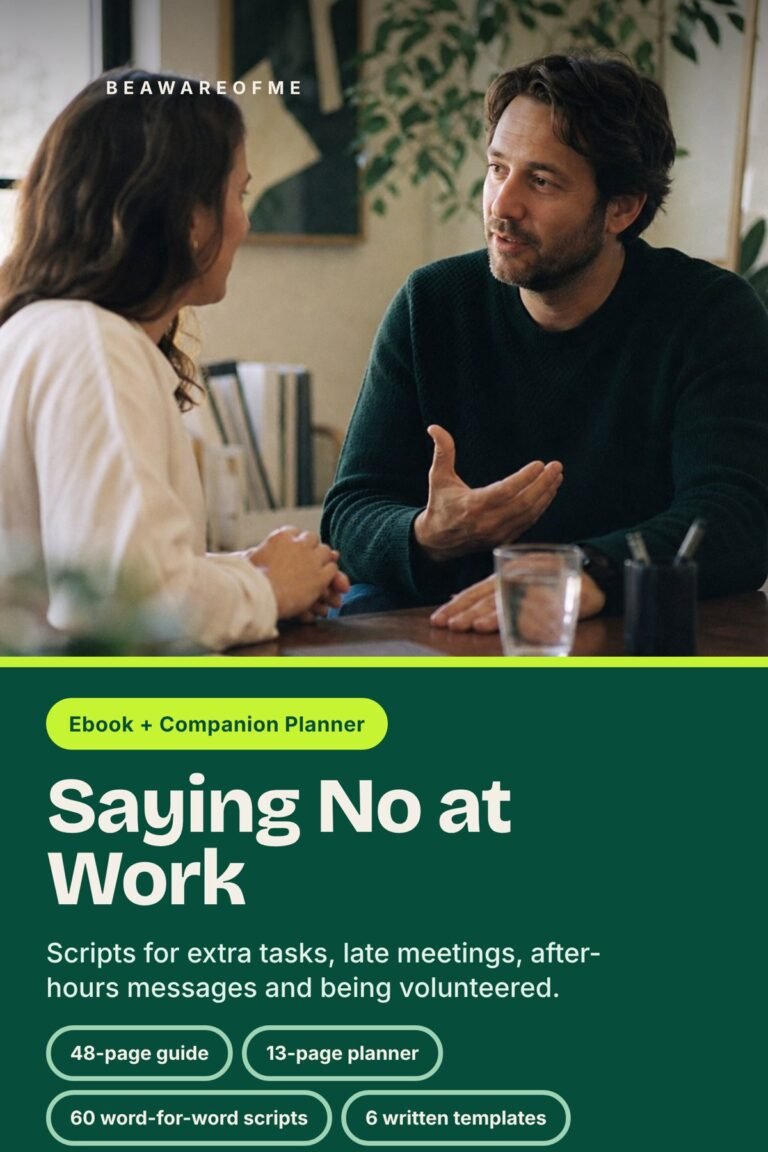 Ebook + Planner
Saying No at Work
The exact words to decline at work, calmly and politely.
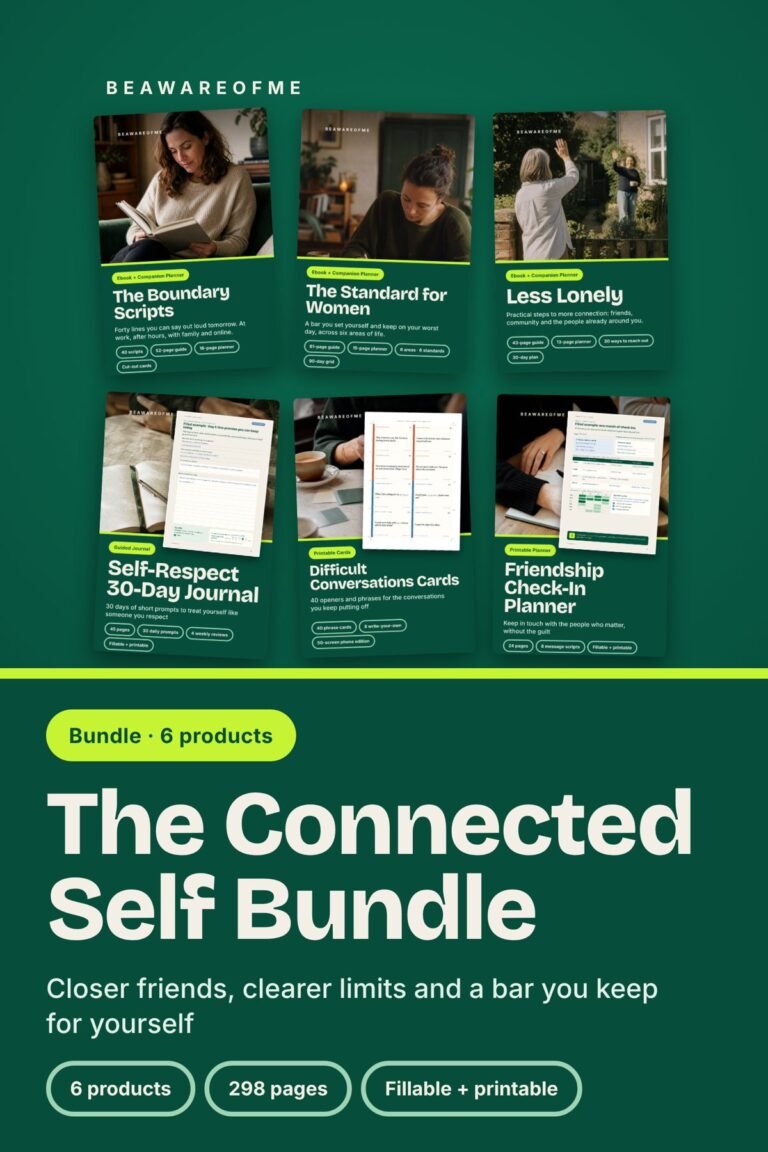 Bundle · 6 products
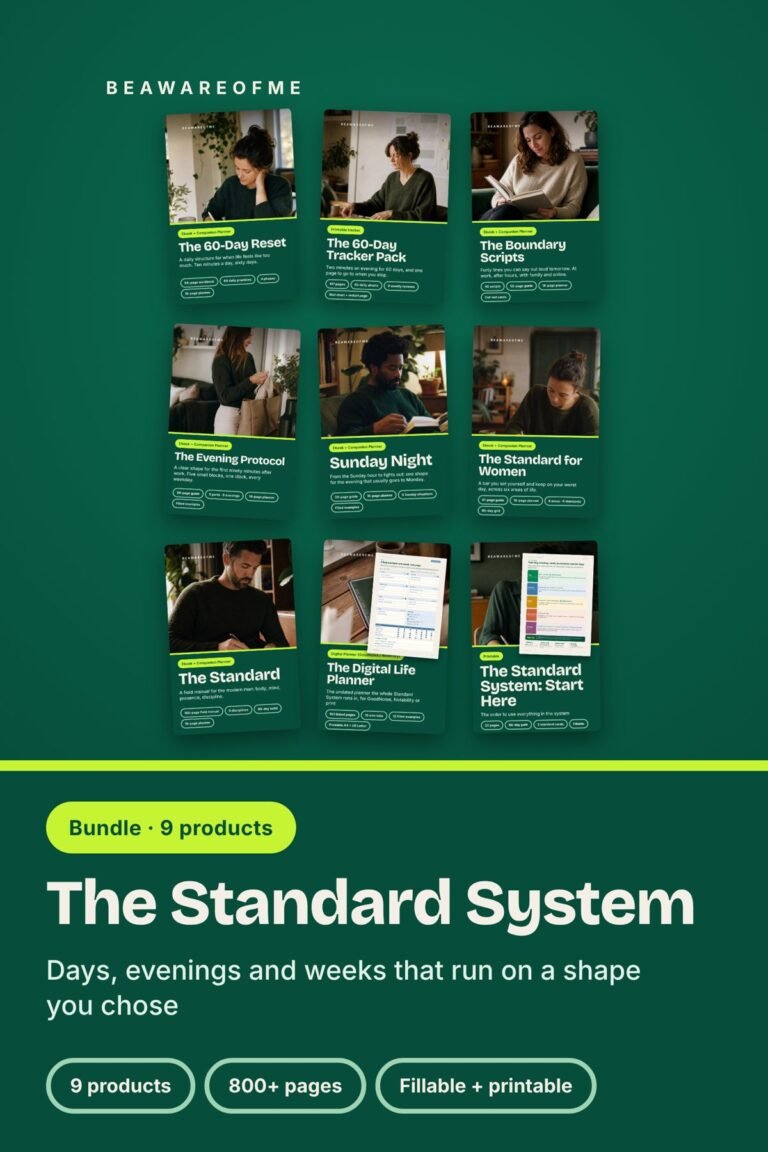
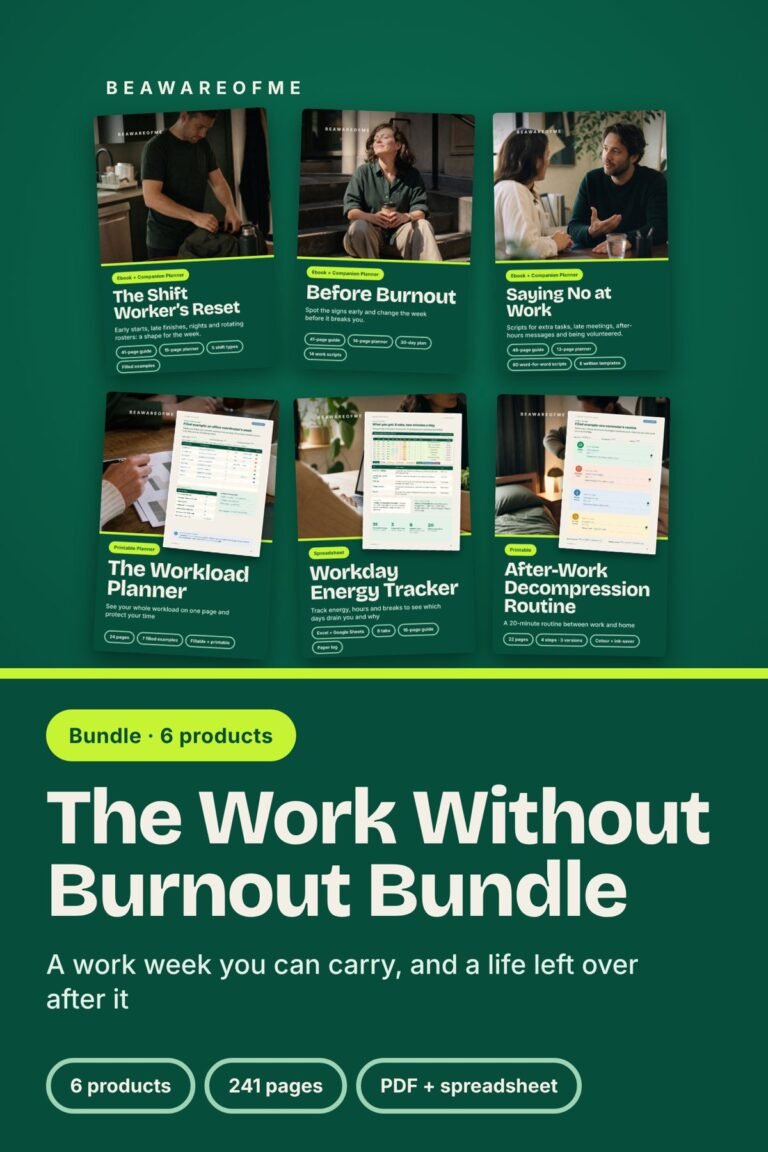
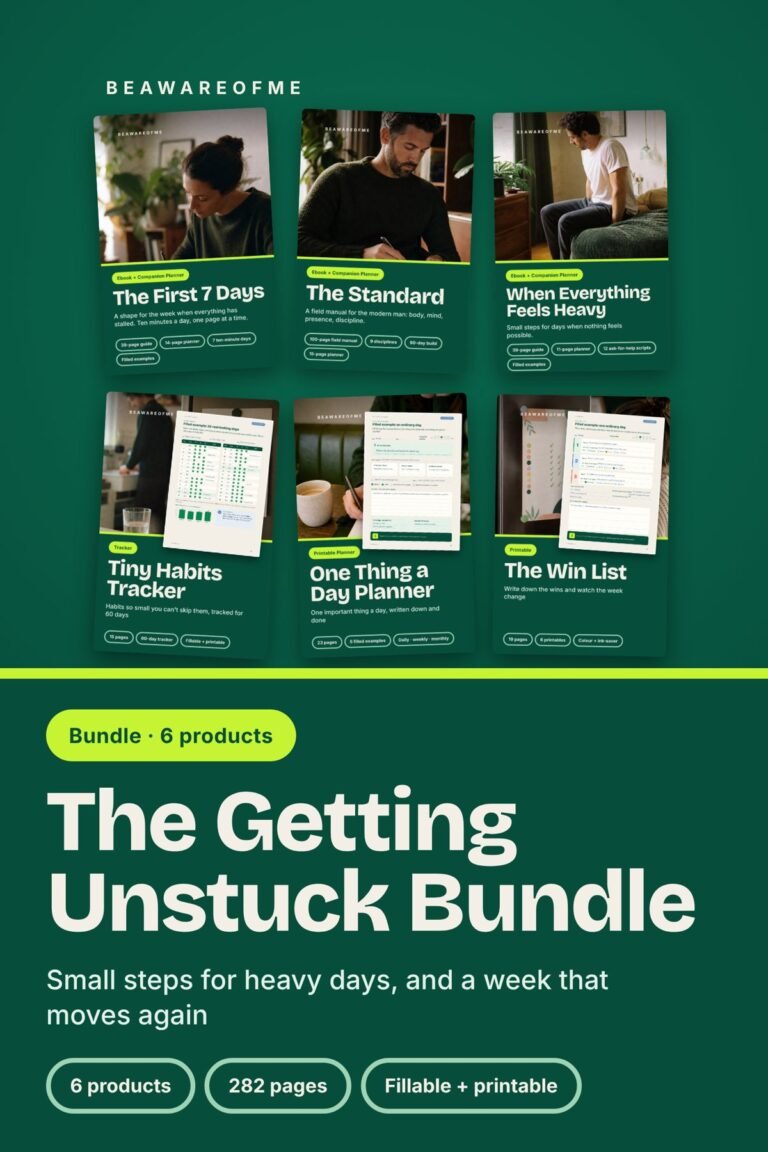
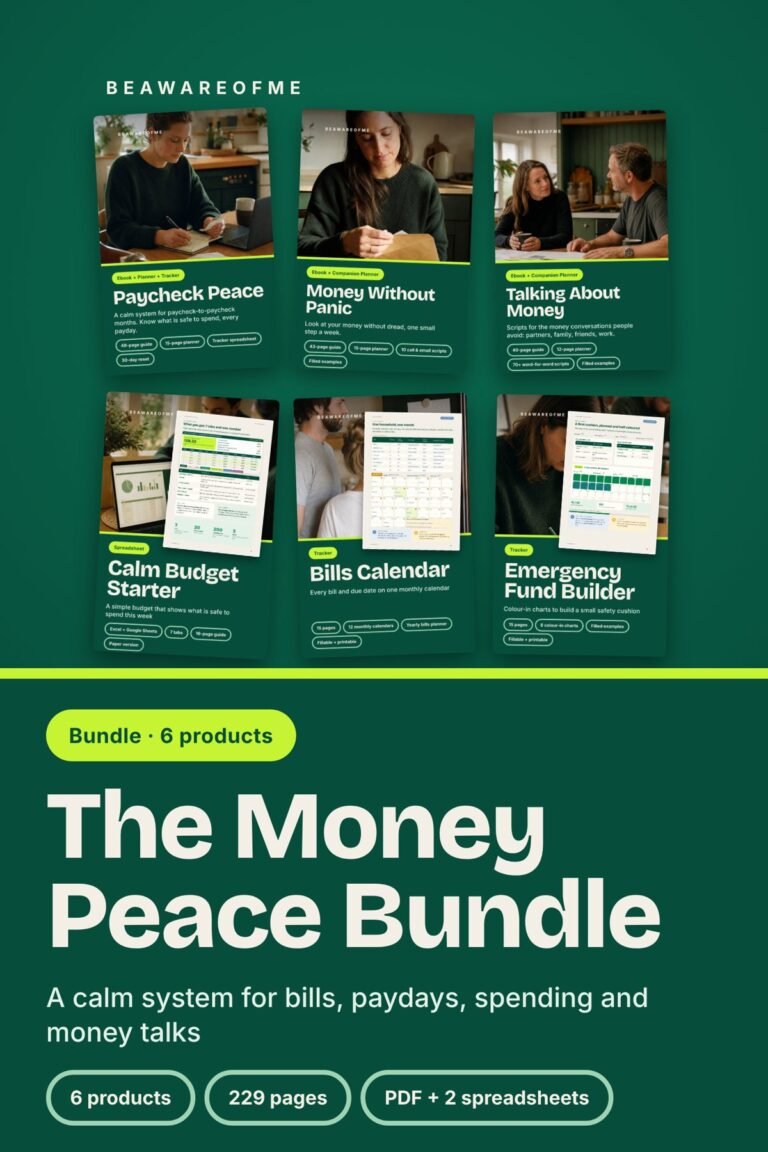
The Connected Self Bundle
Clear limits, kept promises and people you stay close to.
Six products sold separately for $93, here together for $37.
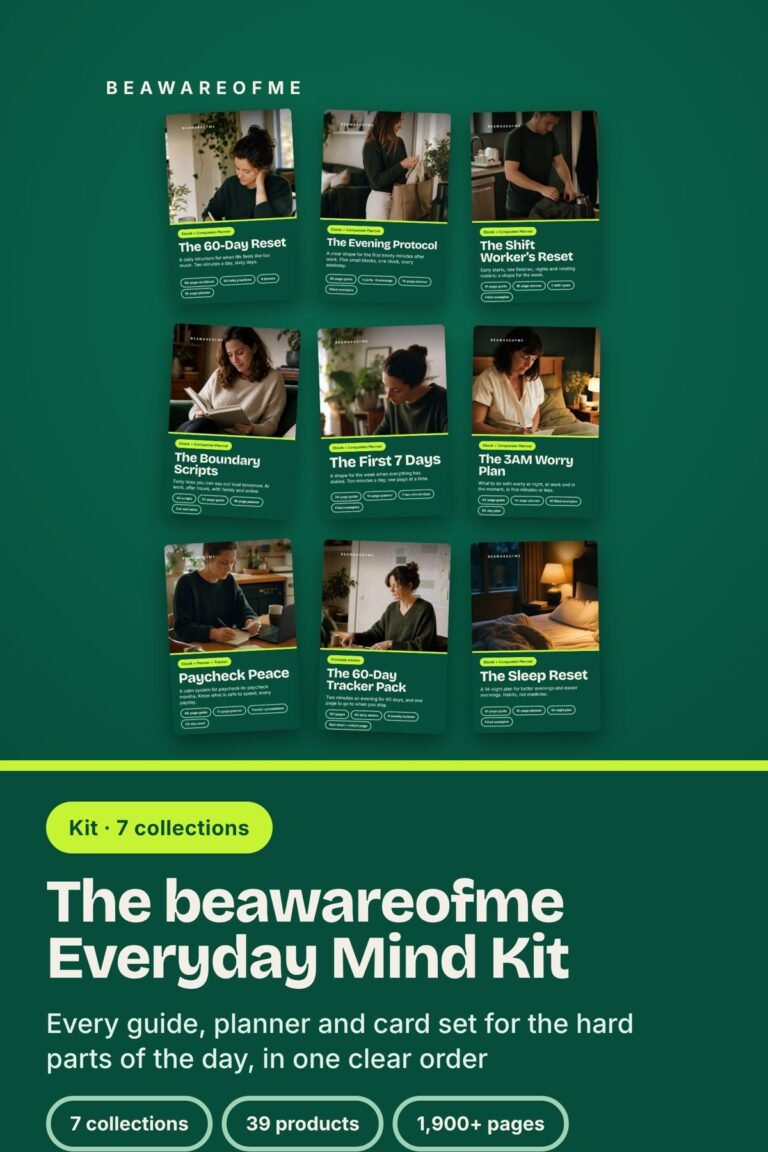 Kit · all collections
The beawareofme Everyday Mind Kit
Every beawareofme collection in one download, in a clear order.
The Standard System and all six bundles cost $289 bought separately; the kit is $127.
Instant download · Digital download · All sales final
Myths and calmer facts
✗ Setting boundaries is selfish.
✓ Boundaries help you keep giving without burning out or building resentment. They often make relationships healthier and more honest.
✗ If people really cared, they would just know my limits.
✓ Most people can't read minds. Saying your limit clearly and kindly gives them a fair chance to respect it.
✗ A boundary has to be a big, dramatic conversation.
✓ Most boundaries are small, everyday sentences, like "I can't tonight" or "I'll reply in the morning". Small and steady works best.
When to get help
Talk to a counselor or your doctor if saying no feels impossible, if guilt or fear of upsetting people is taking over your life, or if you feel worn out and resentful most of the time. If someone close to you threatens, controls, frightens or hurts you when you set a limit, that is not a boundary problem; please reach out to a domestic abuse service or a trusted professional. If you're having thoughts of harming yourself, contact a crisis line now: in the US call or text 988, in the UK and Ireland call Samaritans on 116 123, or find a local line at findahelpline.com.
Frequently asked questions
What are examples of healthy boundaries?
Not answering work messages after a set time, saying no to plans when you need rest, asking a partner to share chores, or ending a call when it turns unkind. Healthy boundaries are clear, calm and about what you will do.
How do I set boundaries without feeling guilty?
You may still feel some guilt at first, and that's normal. Keep your words short and kind, don't over-explain, and remind yourself that a no to one thing is a yes to something you need. Guilt often fades with practice.
How do I say no politely?
Try: "Thanks for asking, I can't this time." Or: "That doesn't work for me, but I hope it goes well." You don't need a long reason. Warm and brief works best.
Why is it so hard to set boundaries with family?
Family roles are often set long ago, and people may expect you to act the way you always have. Start small, stay calm and repeat yourself kindly. Change takes time.
What do I do if someone ignores my boundary?
Repeat it calmly and, if needed, follow through with what you said you'd do, like ending the call or leaving. If someone keeps pushing or reacts with anger or threats, it's worth getting support.
How do I set boundaries at work?
Be clear about your hours, turn off notifications after work, and when given extra tasks, ask which ones should move. Framing it around priorities keeps it professional and fair.
Is this check a diagnosis?
No. Your answers point to a pattern, not a diagnosis. It is a general structure for everyday life, not medical or psychological advice.