




Inner Critic Volume Check
A quick check on how loud the voice in your head gets about mistakes, comparing, your body, work, rest and praise. You get a volume reading and three small ways to turn it down.
Anonymous. Different questions each time. A general structure for everyday life, not medical or psychological advice.
You fix a small mistake in a minute, then hear about it in your head for the rest of the day. This page helps you see where your inner critic gets loudest and gives you simple, kind ways to turn the volume down.
Each answer adds points to Mistakes, Comparison, Body talk, Work, Rest guilt and Taking praise. Your result reads the strongest areas and turns them into a named pattern, a chart, three small steps and the guides that fit. Questions change every time you play.
Inner Critic Volume Check: what is really going on
The inner critic is the voice in your head that judges what you do, how you look and how you measure up. Everyone has one. At a low volume it can be useful, a nudge to check your work or keep a promise. At a high volume it stops helping. It replays mistakes, compares you to everyone else and makes rest feel like something you have to earn. The goal is not to silence it completely, but to turn it down.
For many people the critic grows from everyday pressure. Busy jobs, social media, family expectations and the habit of always being 'on' give it plenty of material. Some people learned early that being hard on themselves kept them safe or kept others happy. Over time the harsh voice becomes automatic. It feels like the truth instead of one opinion, and it often speaks louder when you are tired, stressed or lonely.
The critic shows up in small, familiar moments. You brush off a compliment. You feel guilty sitting on the sofa. You replay an awkward comment at bedtime. You look in the mirror and list flaws. You compare your ordinary week to someone else's highlights online. You might work late to prove you are good enough, or avoid trying new things in case you fail. These patterns are common and they can be softened.
A structure helps because the critic is loud in some areas and quiet in others. Seeing where it is strongest, mistakes, comparison, body, work, rest or praise, tells you where to practice a kinder response. Small, repeated habits work best: catching the thought, naming it, and swapping it for something fairer. Over time the kind voice gets more practice and the harsh one gets less airtime.
What each area means
Mistakes
This area looks at how you treat yourself after a slip. A loud critic here turns small errors into long replays and harsh labels.
- Small errors replay long after they are fixed.
- Old awkward moments return at bedtime.
- You call yourself names after a slip.
- You hold yourself to a standard you would not set for others.
- Say 'fixable' and write the fix in one line.
- Swap 'I always' for 'this time'.
- Ask: would I say this to a friend?
- Keep a list of slips you handled well.
Comparison
Comparison is measuring yourself against other people's lives, looks, money or success. It often leaves you feeling behind, even when you are doing fine.
- Other people's wins make you feel smaller.
- Scrolling changes your mood.
- You feel 'behind' after visits or posts.
- You are happy for others, with a sting attached.
- Mute or unfollow accounts that leave you feeling worse.
- Compare yourself to where you were a year ago, not to others.
- Write down three things going right in your own life.
- Limit scrolling to set times.
Body talk
Body talk is how you speak to yourself about your looks, weight, age or shape. A loud critic here can make mirrors, photos and clothes shopping stressful.
- You list flaws when you see yourself.
- You avoid photos.
- Clothes shopping leaves you low.
- You put off things until you look 'better'.
- Name one thing your body did for you today.
- Wear clothes that feel comfortable now, not 'one day'.
- Notice harsh body talk and simply label it: 'critic'.
- Spend less time checking mirrors.
Work
At work the critic can push you to over-prepare, over-deliver and never feel done. It often confuses being busy with being good enough.
- You redo work that was already fine.
- Feedback stings for days.
- You feel like you could be found out.
- You work late to prove yourself.
- Set a 'good enough' standard before you start a task.
- Write down one thing you did well at the end of each workday.
- Ask for feedback early instead of polishing alone.
- Set a stop time and keep it.
Rest guilt
Rest guilt is the feeling that you have not earned a break. A loud critic here makes downtime feel lazy, so you rest badly or not at all.
- You feel guilty sitting down.
- Your days off fill up with chores.
- You only rest when you are exhausted or ill.
- You think 'I should be doing something'.
- Schedule rest like an appointment.
- Remind yourself that rest is maintenance, not a reward.
- Start with a guilt-free 15-minute break.
- Leave one evening a week with no tasks.
Taking praise
This area looks at how you handle kind words. A loud critic can make praise feel awkward, untrue or something to wave away.
- You brush off compliments.
- You explain why it was 'nothing'.
- You remember criticism more than praise.
- Praise makes you uneasy.
- Practice saying just 'thank you'.
- Save kind messages in a folder and reread them.
- Write down one compliment each week.
- Let a compliment land before answering.
What your score means
A low score means your inner critic is mostly at a manageable volume. You can learn from mistakes without beating yourself up. Keep it that way by noticing and praising your own efforts.
A middle score means your critic gets loud in some areas. That is common when life is busy or stressful. Pick the loudest area and practice one kinder response this week.
A high score means your inner critic is very loud right now, and that can be exhausting. Start by catching one harsh thought a day and rewriting it the way you would speak to a friend. If the harsh voice makes you feel worthless or hopeless for weeks, please talk to a doctor or a counselor.
5 small steps that help
Catch one harsh thought
Once a day, notice one moment your inner critic speaks up. Write the exact words down. Seeing them on paper often shows how harsh they really are.
Give the critic a name
Call the voice something light, like 'the commentator'. When it speaks, say 'there it goes again'. This small gap reminds you it is a voice, not the truth.
Rewrite it as a friend
For each harsh thought, write what you would say to a friend in the same spot. Keep it honest, not fake-positive. Read the kinder version out loud once.
Collect evidence for you
Keep a short list of things you did well, kind words people said and problems you handled. Add one item a day this week. When the critic gets loud, read the list.
Practice one small kindness
Pick your loudest area and choose one kind action, like a guilt-free break or a simple 'thank you' to praise. Do it three times this week. Kindness gets easier with practice.
The guides that turn this into a plan
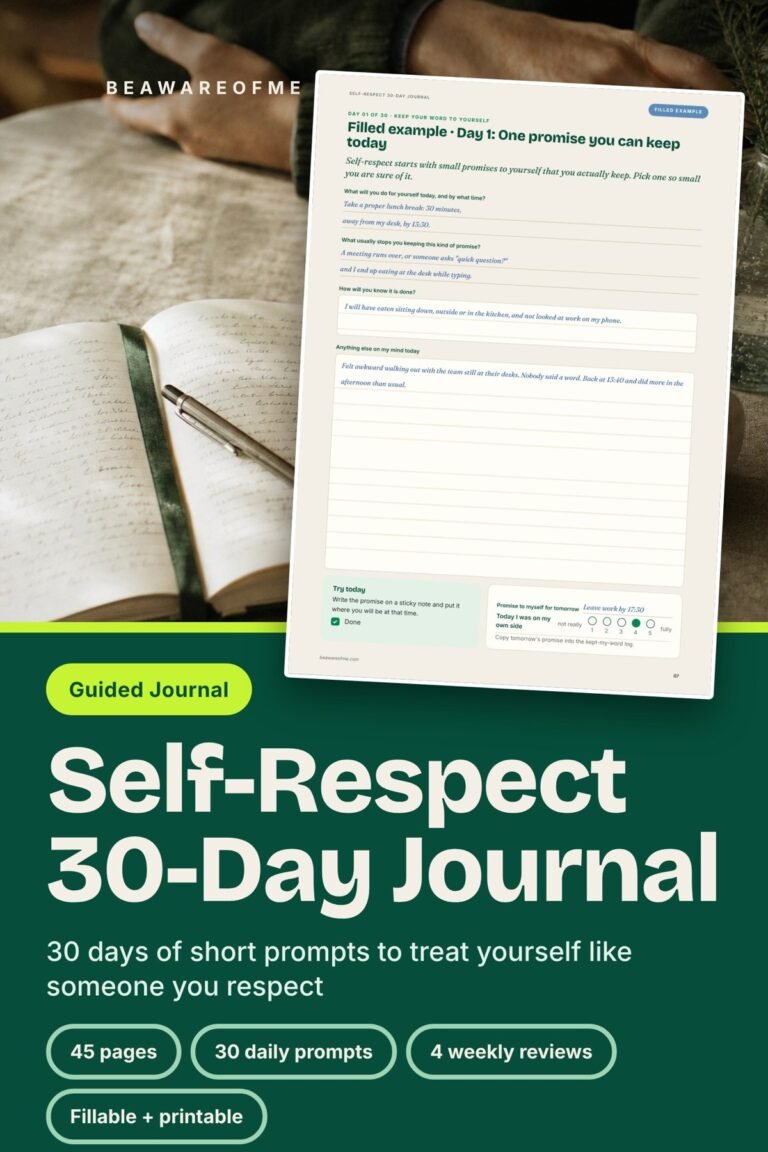 Journal
Self-Respect 30-Day Journal
Thirty days of keeping small promises to yourself.
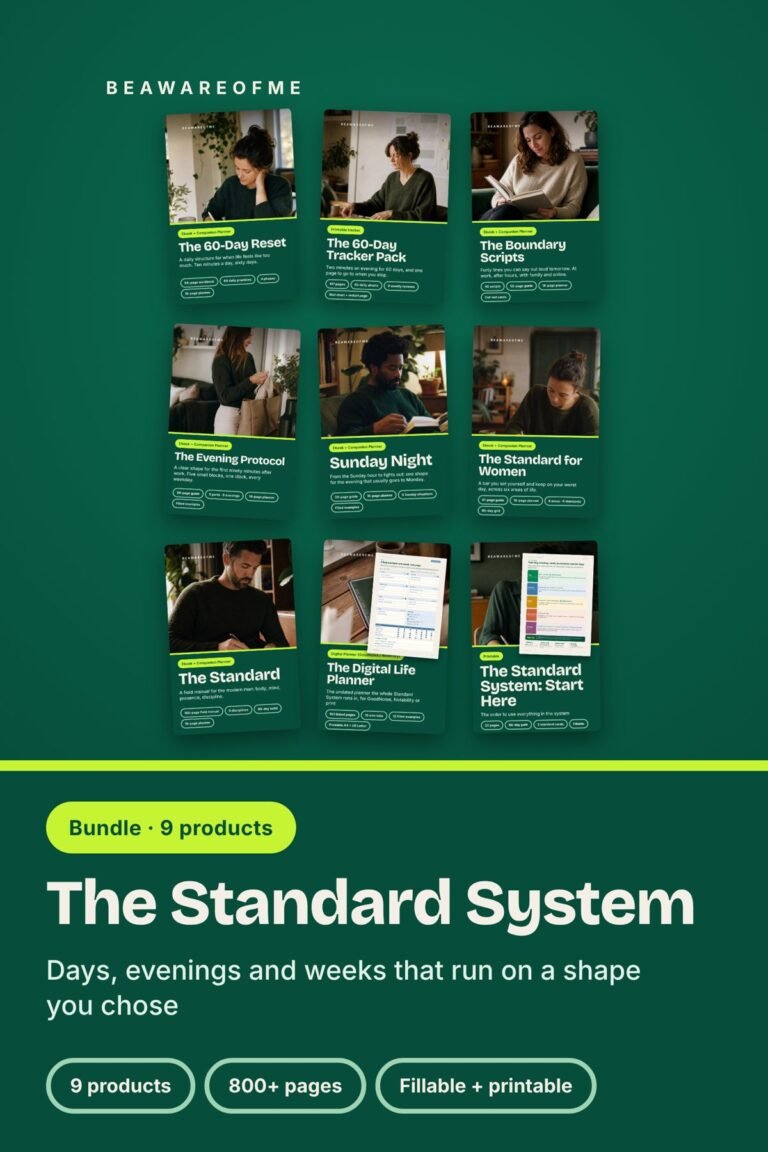
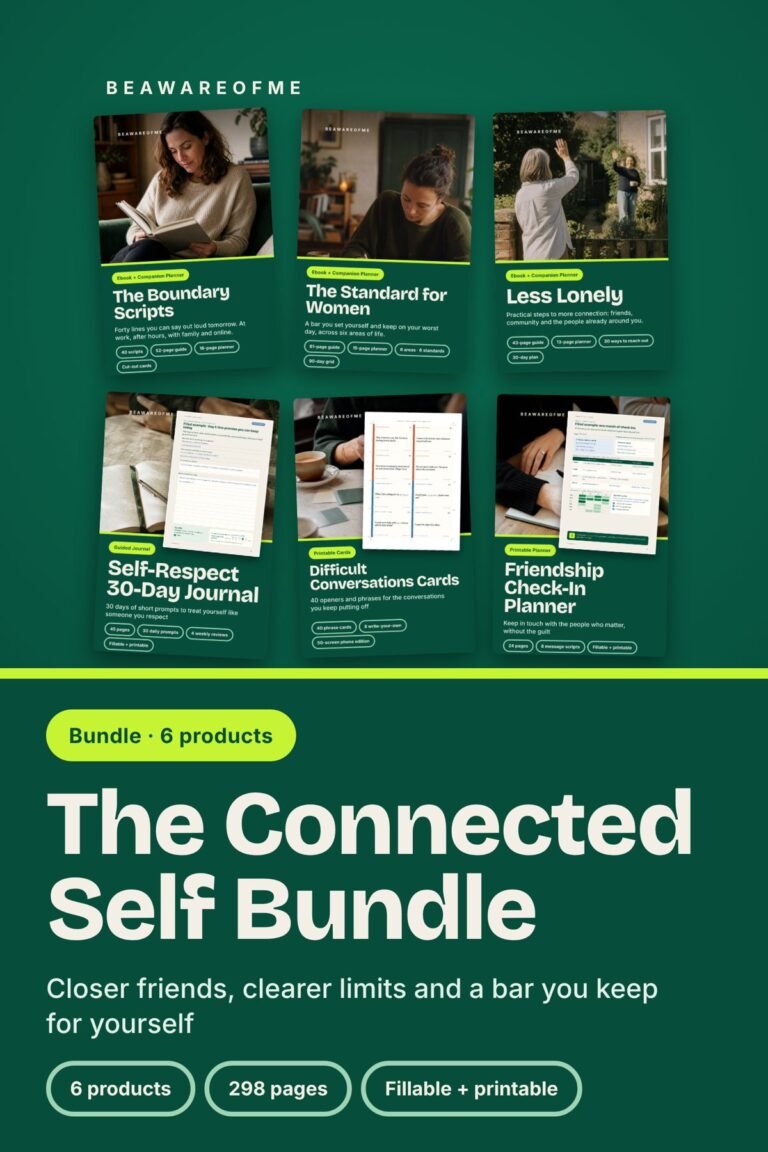 Bundle · 6 products
The Connected Self Bundle
Clear limits, kept promises and people you stay close to.
Six products sold separately for $93, here together for $37.
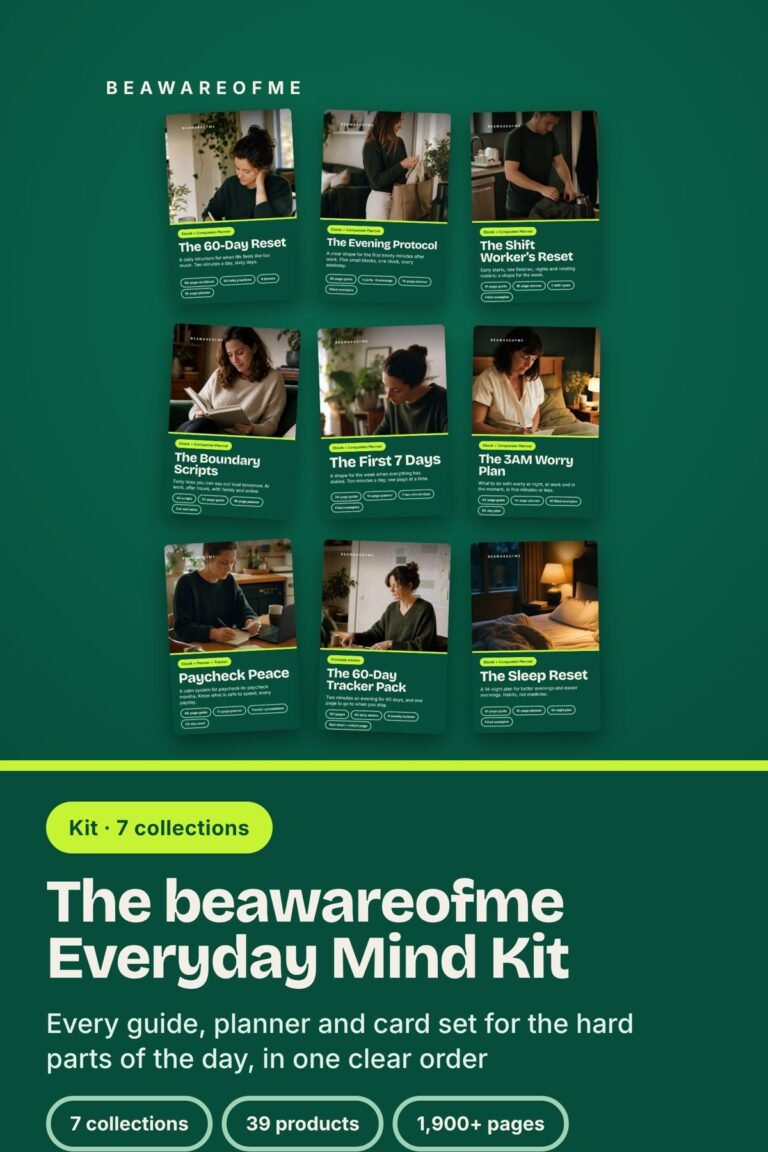 Kit · all collections
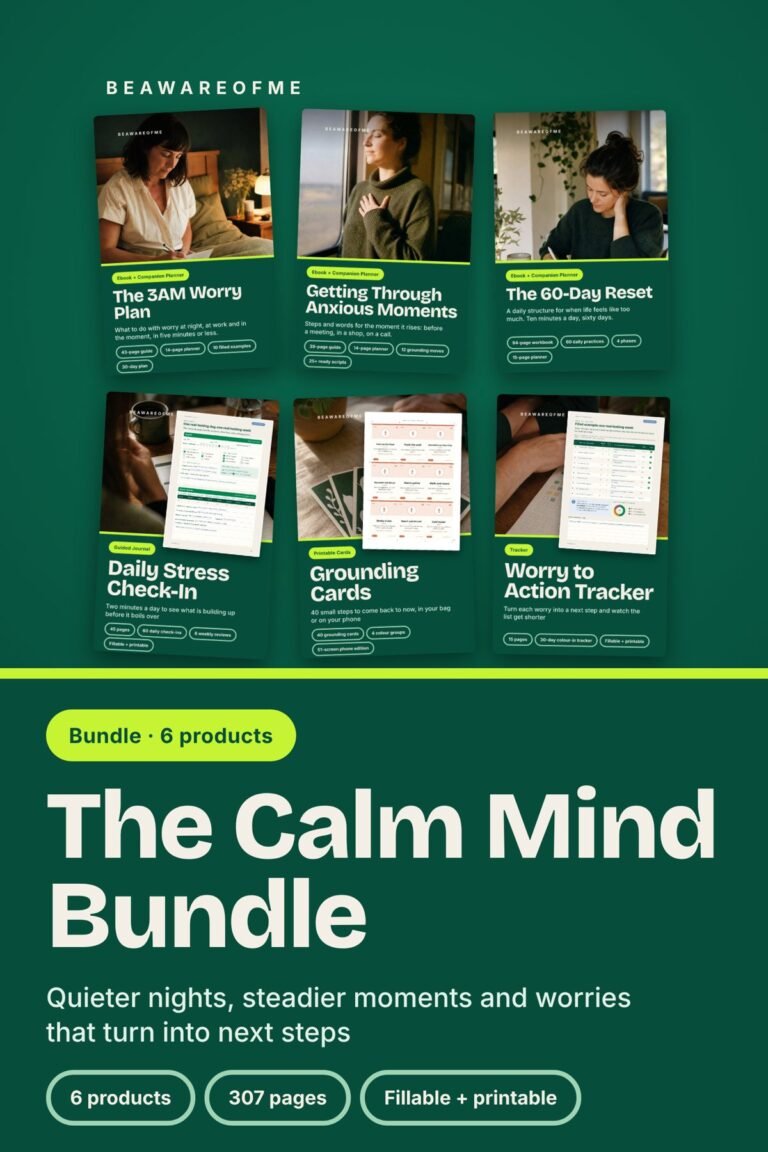
The beawareofme Everyday Mind Kit
Every beawareofme collection in one download, in a clear order.
The Standard System and all six bundles cost $289 bought separately; the kit is $127.
Instant download · Digital download · All sales final
Myths and calmer facts
✗ Being hard on myself keeps me motivated.
✓ A harsh voice often makes people avoid tasks for fear of failing. Fair, kind self-talk tends to help people keep trying after setbacks.
✗ Self-kindness means letting myself off the hook.
✓ Kindness still holds you responsible. It just helps you learn from mistakes without shame, which makes change easier.
✗ The critic is telling me the truth.
✓ The inner critic is one voice, often shaped by old habits and stress. Its views are opinions, not facts, and they can be questioned.
When to get help
Talk to a doctor, counselor or other qualified professional if self-criticism leaves you feeling worthless most days, if it stops you from working, eating or sleeping normally, or if it comes with low mood that lasts for weeks. It is also worth getting support if harsh self-talk is linked to how you eat or treat your body. If you are thinking about harming yourself, please contact a crisis line now: in the US call or text 988, in the UK and Ireland call Samaritans on 116 123, or find a line near you at findahelpline.com.
Frequently asked questions
What is an inner critic?
It is the voice in your head that judges you, your choices and your looks. Everyone has one. It becomes a problem when it is loud, harsh and constant.
How do I quiet my inner critic?
Notice it, name it, and then rewrite the thought the way you would speak to a friend. Doing this often, in small moments, slowly turns the volume down.
Why is my inner critic louder at night?
At night there are fewer distractions, and you are often tired, which makes thoughts feel heavier. Writing worries down before bed and having a calming wind-down routine can help.
Why can I not accept compliments?
If your critic is loud, praise can clash with what you believe about yourself, so it feels untrue. Practicing a simple 'thank you' and saving kind messages can help it land.
Is negative self-talk normal?
Yes, most people have some. It is worth working on if it is harsh, constant, or stops you from resting, trying new things or enjoying your life.
Is this check a psychological test?
No. It is a general self-reflection tool, not therapy or medical advice. It shows where your critic seems loudest and gives small ideas to try.
Is this check a diagnosis?
No. Your answers point to a pattern, not a diagnosis. It is a general structure for everyday life, not medical or psychological advice.