


What Is Your Emotional Weather Today?
Answer a few quick questions about how today is going and get your inner weather report: what is in the sky, what is pushing the clouds and three small things that help today.
Anonymous. Different questions each time. A general structure for everyday life, not medical or psychological advice.
Some days feel bright, some feel grey, and some feel stormy for no clear reason. This free check gives you a simple weather report for your feelings today, shows what is pushing the clouds, and offers small things that help right now.
Each answer adds points to Low mood, Tension, Tiredness, Short fuse, Disconnection and Worry. Your result reads the strongest areas and turns them into a named pattern, a chart, three small steps and the guides that fit. Questions change every time you play.
What Is Your Emotional Weather Today: what is really going on
Moods move a lot like weather. They roll in, they shift, and most of the time they pass. Thinking of feelings as weather can make them easier to name and easier to sit with. Instead of "something is wrong with me", you can say "it's foggy today" or "there's a storm building". That small shift gives you a little distance. You are the sky, and the weather is moving through. It doesn't define you, and it won't stay exactly like this forever.
Everyday mood is shaped by ordinary things. A short night, a skipped meal, a tense conversation, a long commute, a quiet week with little contact, a worry that won't settle. Hormones, seasons, light and caffeine play their part too. Often there isn't one single cause. Several small pressures stack up until the day feels heavier than it should. Knowing that can take some of the blame out of a hard day.
Inner weather shows up in the body and in behavior as much as in thoughts. A low day might feel like a weight on your chest. Tension can sit in your jaw and shoulders. Tiredness can make everything look grey. A short fuse shows up as snapping at small things. Feeling far from people can look like ignoring messages. Worry often arrives as a busy, buzzing head that won't quiet down.
Checking in on your weather gives you a simple structure for a fuzzy feeling. When you rate low mood, tension, tiredness, short fuse, disconnection and worry separately, you can see which one is loudest today. That helps you choose the right small response: rest for tiredness, movement for tension, contact for loneliness, paper for worry. Checking on a few days also shows patterns, so you learn what tends to bring the clouds in.
What each area means
Low mood
Low mood is the grey, heavy feeling that makes the day seem flatter than usual. It can come with a dip in motivation and less pleasure in small things.
- You wake up feeling heavy before the day begins
- Things you usually enjoy feel like effort
- You want to stay in bed or under a blanket
- Small setbacks feel bigger than they are
- Get outside into daylight for ten minutes, even if it's cloudy
- Do one small, easy task and let yourself notice it's done
- Message one person, even just to say hi
- Keep meals and bedtime regular so your body has an anchor
Tension
Tension is the tight, on-edge feeling, like your body is braced for something. It often lives in the shoulders, jaw, stomach or chest.
- Your jaw or shoulders are clenched without you noticing
- Your breathing feels shallow or high in your chest
- You jump at small noises or interruptions
- It's hard to sit still or relax
- Breathe out slowly, longer than you breathe in, for a minute
- Drop your shoulders and unclench your jaw a few times a day
- Take a brisk ten-minute walk to burn off some of the charge
- Cut back on coffee for the rest of the day
Tiredness
Tiredness is the foggy, low-battery feeling that makes everything slower. It colors mood a lot: the same day can look much worse when you're running on empty.
- Your head feels foggy and slow
- You reread the same line several times
- You reach for sugar or caffeine to keep going
- Everything feels like it takes twice the effort
- Drink a glass of water and eat something with protein
- Take a 15-minute rest, lying down if you can
- Lower the bar for today: pick one must-do and let the rest wait
- Aim for an earlier, screen-free bedtime tonight
Short fuse
A short fuse is when your patience is thin and small things set you off. It often appears when you're tired, hungry, stretched or carrying more than you've said out loud.
- You snap at people over small things
- Noise, mess or slow replies get under your skin
- You feel guilty after reacting
- You sigh, slam or mutter more than usual
- Step away for two minutes before you answer
- Eat something if it's been a while since your last meal
- Name it out loud: "I'm a bit short today, it's not you"
- Lower the load: say no to one extra thing today
Disconnection
Disconnection is feeling far away from people, even when they're around. It can feel like being behind glass, or like nobody really gets how today is going.
- You leave messages unread or unanswered
- You feel lonely in a room full of people
- You don't feel like reaching out, even though part of you wants to
- You assume others are busy or wouldn't want to hear from you
- Send one short message to someone you trust
- Sit somewhere with gentle company, like a café or park
- Call instead of texting, even for five minutes
- Tell one person a true sentence about your day
Worry
Worry is the busy, what-if feeling in your head. It pulls your attention to the future and can make today feel crowded, even if nothing is actually wrong yet.
- Your mind keeps jumping to what could go wrong
- You check your phone or email more than usual
- You struggle to focus on one thing
- Your stomach feels unsettled or tight
- Write the worry down, then write one small next step
- Ask: is this a problem for today, or for later?
- Set a short worry slot later and park the thought until then
- Bring your attention back to your senses: five things you can see
What your score means
A low score means clear skies today. Most of your inner weather is light and manageable. Notice what helped you get here, like sleep, people or movement, and keep it in your week.
A middle score means partly cloudy. One or two feelings are heavier than usual, but there is still some light coming through. Pick the loudest one on your chart and try one small thing for it today.
A high score means stormy weather today, and that is hard to carry. Be gentle with yourself: keep the day small, eat, rest and reach out to one person. If heavy days like this keep coming back for two weeks or more, please talk to your doctor or a counselor.
5 small steps that help
Name today's weather
Say it in one line: "Foggy with some worry" or "Storm building". Naming a feeling plainly often takes a little of its weight away.
Match the help to the cloud
Look at your top area and pick the matching help: rest for tiredness, movement for tension, contact for loneliness, paper for worry. One small action is enough.
Feed the basics
Water, a proper meal and some daylight change mood more than most people expect. Check all three before you judge the day.
Tell one person
Send a short, honest message to someone you trust. You don't need to explain everything; "rough day today" is plenty.
Track a few days
Take the check on three or four days this week and jot the result. Patterns, like Monday storms or late-night worry, show you where to put your energy.
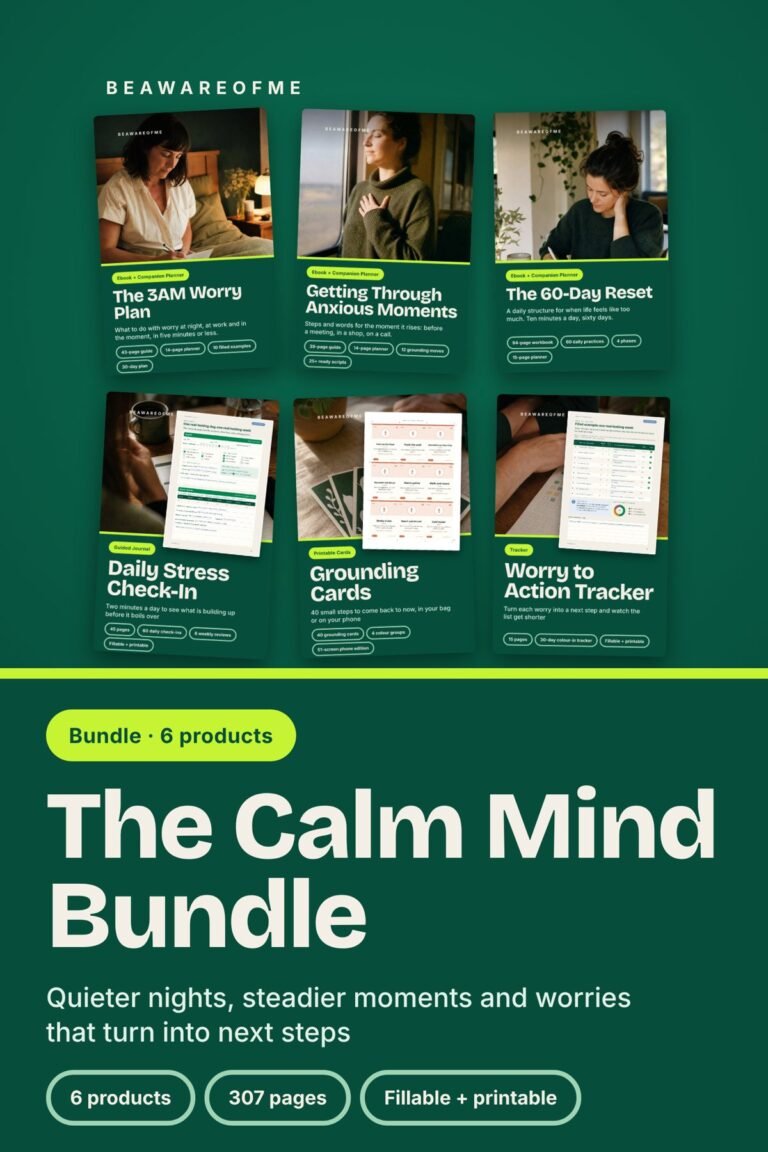
The guides that turn this into a plan
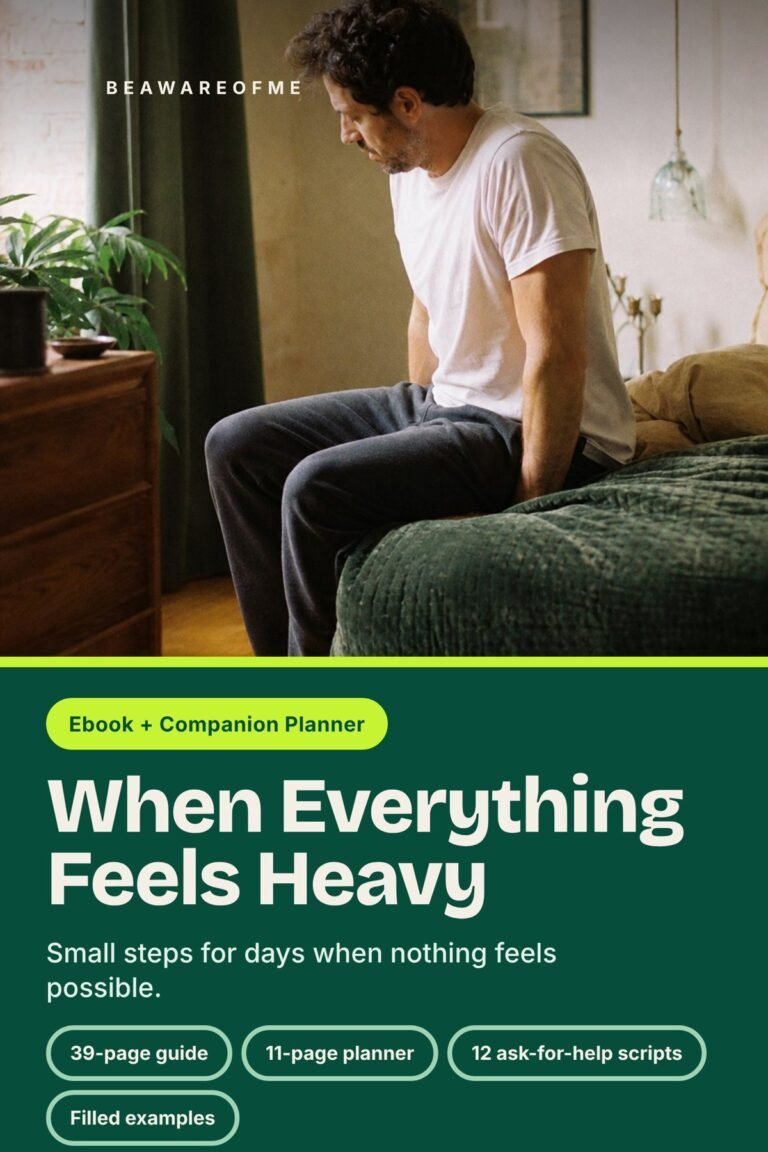 Ebook + Planner
When Everything Feels Heavy
Small steps that get one thing moving on heavy days.
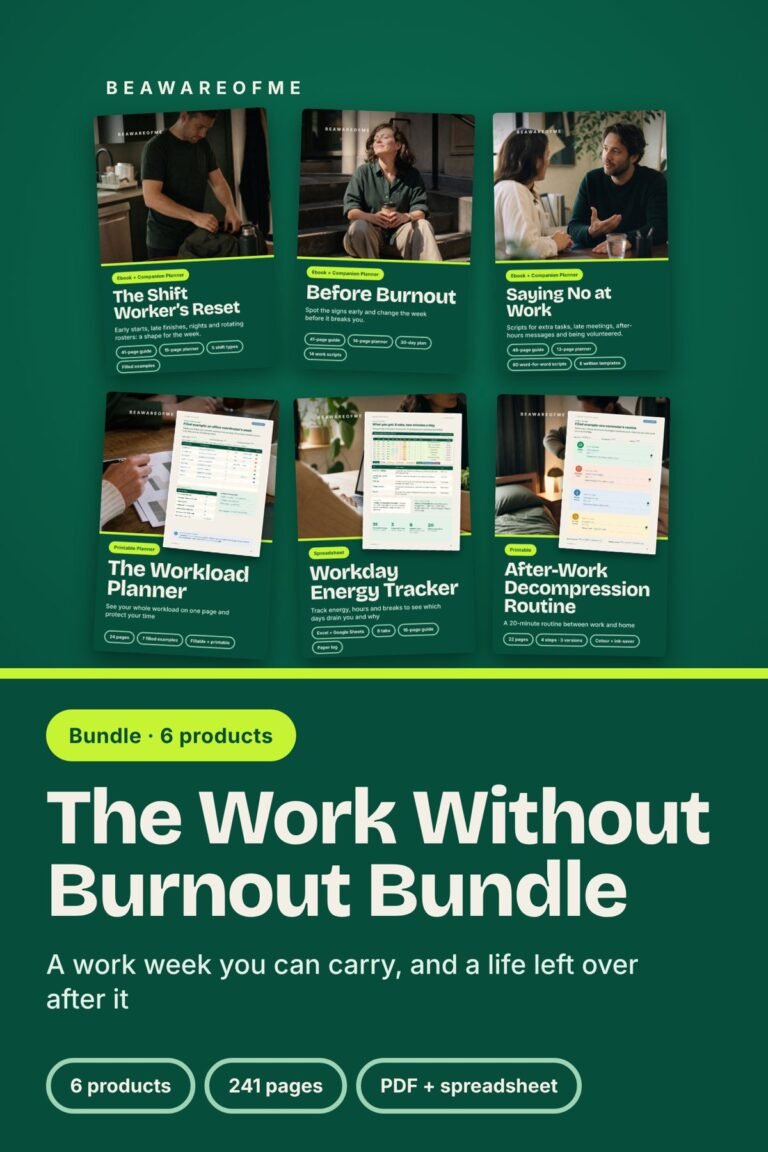
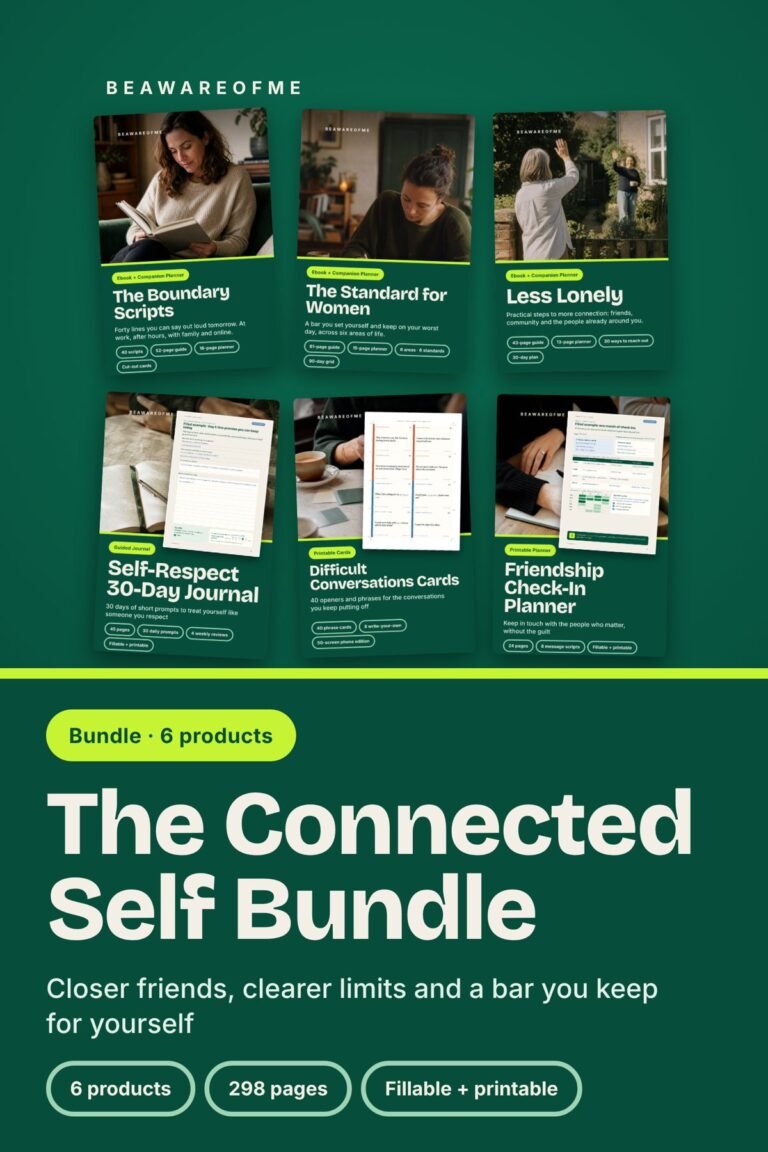
 Bundle · 6 products
The Getting Unstuck Bundle
Small, visible steps for heavy, stuck weeks.
Six products sold separately for $88, here together for $37.
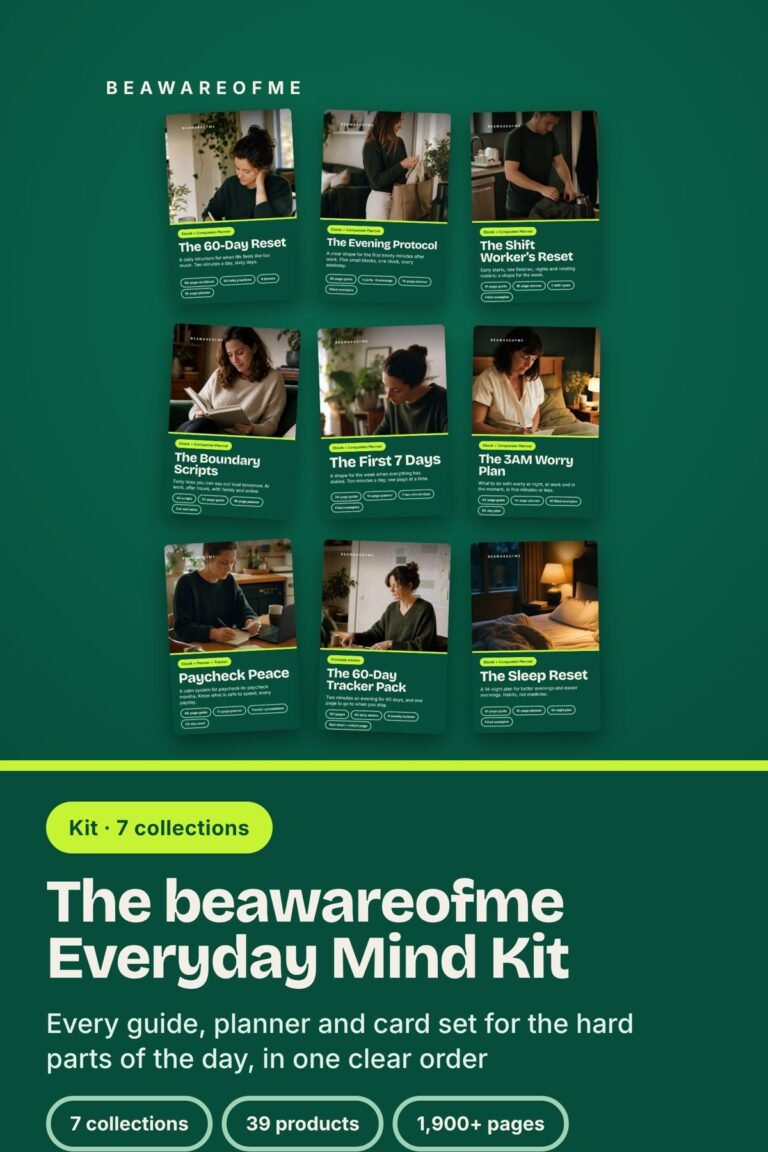 Kit · all collections
The beawareofme Everyday Mind Kit
Every beawareofme collection in one download, in a clear order.
The Standard System and all six bundles cost $289 bought separately; the kit is $127.
Instant download · Digital download · All sales final
Myths and calmer facts
✗ A bad mood means something is wrong with me.
✓ Moods shift for everyday reasons like sleep, food, stress and light. A grey day is part of being human, not a sign that you're broken.
✗ I should be able to just think my way out of it.
✓ Mood lives in the body too. Moving, eating, resting and talking often help faster than arguing with your thoughts.
✗ If I ignore it, it will go away faster.
✓ Pushing feelings down often makes them louder later. Naming them and doing one kind thing usually helps them pass more easily.
When to get help
Please talk to a doctor or a qualified counselor if low or heavy days last most of the day, nearly every day, for two weeks or more, or if they are getting in the way of work, sleep, eating or relationships. Reach out sooner if you feel hopeless, numb or unable to cope. If you are having thoughts of harming yourself, contact a crisis line now: in the US call or text 988, in the UK and Ireland call Samaritans on 116 123, or find a local line at findahelpline.com.
Frequently asked questions
Why do I feel sad for no reason?
Often there is a reason, it's just quiet. Short sleep, hunger, hormones, a lack of daylight or stress from earlier in the week can all lower mood without a clear trigger. Checking the basics is a good first step.
How can I describe how I'm feeling?
Using weather words can help: sunny, cloudy, foggy, stormy, windy. You can also rate a few feelings on their own, like tension, tiredness and worry, which is what this check does for you.
What can I do to feel better quickly?
For many people, ten minutes outside, a glass of water, a snack and one short chat with someone help within the hour. Slow breathing, with a longer out-breath, can also ease tension.
Is it normal for my mood to change during the day?
Yes. Mood often dips when you're tired, hungry or after a stressful moment, and lifts after rest, food or contact. Many people notice a regular low point, like late afternoon.
How often should I check in on my mood?
Once a day is plenty, or a few times a week. Checking at the same time each day makes it easier to spot patterns.
When is a low mood more than a bad day?
When it lasts most of the day, most days, for two weeks or more, or when it gets in the way of daily life, it's worth talking to a doctor or counselor. You don't have to wait until things feel unbearable.
Is this check a diagnosis?
No. Your answers point to a pattern, not a diagnosis. It is a general structure for everyday life, not medical or psychological advice.