

There is a quiet revolution going on in families all over the world. Parents are thinking about how they were raised, seeing patterns of trauma, and working hard to give their kids a different emotional reality. Conscious parenting is a growing movement that is not just a modern trend. It is a powerful way for parents to fix problems that have been passed down through generations by using self-awareness, therapy-informed methods, and intentional communication to break cycles of mental and emotional dysfunction.

Most of what you read this week will be gone by Thursday.
That isn't a discipline problem. It's what happens to information you never write down. Beat Information Overload is a free 35-page workbook that turns reading into something that stays.
Get the free workbook No cost · unsubscribe in one clickThis article looks at how conscious parenting is changing families and mental health in real time. Parents can build a stronger bond with their kids by learning about its basic ideas, strategies, and the science behind it. This will help their kids become more resilient, emotionally intelligent, and mentally healthy for life.
What Does “Generational Repair” Mean?

Generational repair is the intentional effort to stop, heal, and eventually change unhealthy family patterns that have been passed down from one generation to the next. These may encompass unresolved trauma, emotional neglect, inflexible parenting approaches, or mental health challenges that have traditionally been underestimated or misconstrued.
A lot of parents today know how their childhood experiences shaped how they see the world and how they deal with their emotions because they have access to therapy, research, and mental health advocacy. They are choosing to raise their kids with empathy, emotional attunement, and psychological safety in order to heal. These are all signs of conscious parenting.
Conscious Parenting: The Basis for Repairing Generations
Being present, aware, and connected are the most important parts of conscious parenting. This method is different from traditional ones that stress obedience and control. Instead, it encourages parents to see behavior as communication and their kids as unique people instead of extensions of themselves.
Dr. Shefali Tsabary, a well-known clinical psychologist and leader in the conscious parenting movement, stresses how important it is for parents to control themselves. She writes, “Our children are our greatest spiritual teachers.” “Not because they do what we say, but because they show us our unresolved emotional wounds.”
By addressing these wounds instead of projecting them unconsciously, parents exemplify emotional accountability and genuineness.
The Science Behind Intergenerational Trauma
Psychological research spanning decades substantiates the notion that trauma can be transmitted across generations. Adverse childhood experiences (ACEs), including abuse, neglect, and familial dysfunction, are associated with enduring mental and physical health repercussions. These experiences can have lasting effects on future generations if nothing is done about them.
Epigenetics provides additional evidence that trauma can create biological imprints on gene expression, influencing stress responses and emotional regulation in subsequent generations. But healing can be passed down just like trauma can be passed down. A nurturing and secure environment can lessen these effects, showing how powerful conscious parenting can be in fixing problems that have been passed down through generations.
Stories from the Real World of Generational Repair
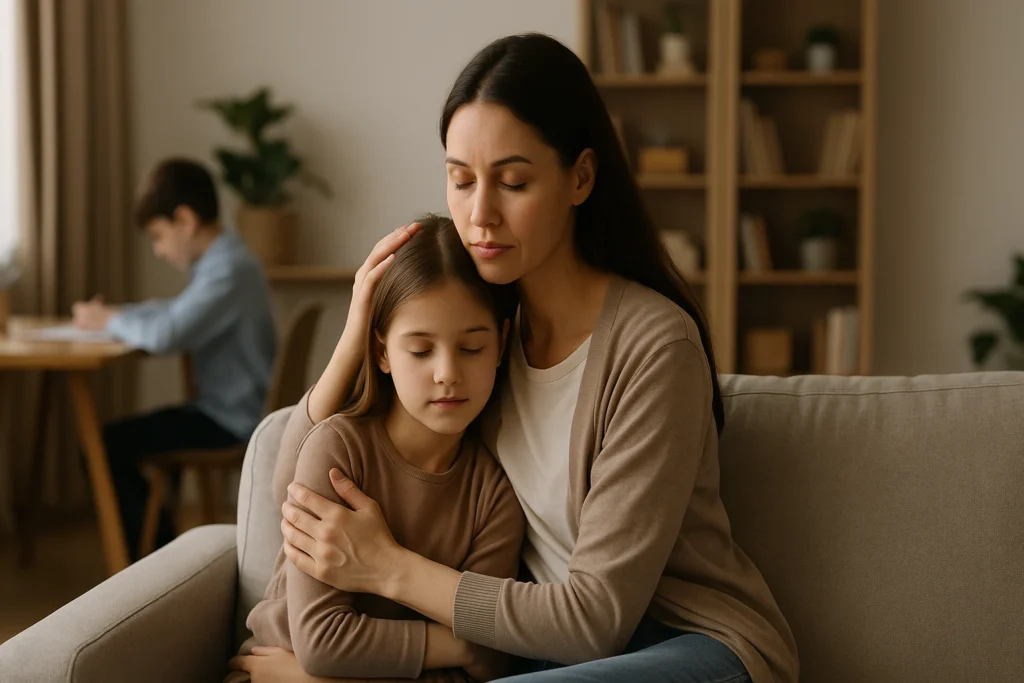
Maria’s Story: From Not Talking to Being Able to Talk About Her Feelings
Maria, a 35-year-old mother of two, grew up in a house where people didn’t talk about their feelings very often. Her father thought that “children should be seen, not heard,” and her mother, while loving, often told her that her fears were too much. Maria now makes a point of creating a space where feelings can be named and accepted as a parent. Maria only learned how to identify and express her feelings as an adult. Her kids are learning how to do this now.
James’ Story: Changing the Way We Discipline
James’s father was strict and violent, so he connected discipline with fear and shame. He went to therapy to deal with his own childhood wounds when he became a father. He now uses gentle discipline that focuses on natural consequences, understanding others, and working together to solve problems. His son, on the other hand, is growing up with a strong sense of self-worth and trust.
Important Ideas for Conscious Parenting
- Self-Awareness: Knowing what makes you angry, how you feel, and what you needed as a child but didn’t get is the first step. Parents need to heal themselves so they don’t unknowingly pass on their pain to their kids.
- Emotional Attunement: Being aware of how a child is feeling makes them feel safe. This means recognizing, validating, and understanding how they feel.
- Connection Over Correction: Parents who are aware of their children’s needs put relationships ahead of strict discipline. They don’t punish bad behavior; instead, they use it as a chance to learn.
- Respect for Individuality: Kids are seen as their own people with their own thoughts and feelings, not as extensions of what their parents want them to be.
- Mindful Communication: Words are important. Parents who are aware of their actions use calm, polite conversation to guide behavior, settle disagreements, and build trust.
Read Also: How Thoughts on the Past & Future Fuel Depression: Breaking the Cycle
Timeless and Useful Tips for Mindful Parenting
- Go to therapy or counseling
Professional help can help parents deal with their own pasts and learn how to be better parents, whether it’s through individual, couples, or family therapy. - Learn how to read and write emotions
Helping kids learn to name their feelings helps them become more emotionally intelligent. Use tools like emotion charts, journaling, or daily check-ins to build this skill. - Set boundaries that are fair and consistent
Boundaries are important for safety and order. Conscious parenting strikes a balance between being understanding and being strict, and it explains why there are rules. - Show how to control yourself
Kids learn how to control their emotions by watching adults. Breathing deeply, waiting before reacting, and talking about feelings in an open way are all great examples. - Encourage open conversation
Make your home a place where it’s okay to ask questions, make mistakes, and be open about your feelings. - Read and learn together
Books and other resources about mental health and emotions can make conversations more normal. Think about books like “The Whole-Brain Child” by Dr. Dan Siegel or “Raising Good Humans” by Hunter Clarke-Fields. - Make connection rituals a priority
Simple things like talking before bed, going out once a week, and eating together as a family build trust and stability.
Dealing with Common Problems

- Guilt Over Past Parenting Mistakes: Change starts with being aware of your past parenting mistakes. Parents who feel bad about things they’ve done in the past can make things right by having honest talks and changing their behavior. Kids are very forgiving when they see that someone is being real and trying hard.
- Breaking Cultural or Familial Norms: Conscious parenting may not agree with what older generations think. Be polite when setting limits, and explain that your method is based on what we know about how children grow and learn.
- Disagreements about Co-parenting: Talking openly, reading together, and maybe even going to therapy together can help you agree on parenting goals and lower conflict.
Why Being a Conscious Parent Is More Important Than Ever
Today’s kids deal with a lot of stress, like too much digital information, climate change, and not knowing what’s going to happen next. There has never been a greater need for people who are emotionally smart and strong. Conscious parenting doesn’t mean that kids will never have to deal with problems, but it does give them the tools they need to handle life’s challenges with more confidence and health.
Conscious parenting also helps make society more caring and mentally healthy by breaking up cycles of dysfunction. The effects go well beyond the home.
The Importance of Community and Support
Repairing generations is not something that can be done alone. Support networks like online communities, parenting groups, trusted friends, or mentors can help you feel better about your problems and give you hope. Healing together is strong. The movement gets stronger when parents connect, share their stories, and help each other.
Conclusion: A Legacy of Healing
Repairing the generations is a brave and loving thing to do. Conscious parenting means that today’s moms, dads, and caregivers are choosing to deal with their own pain instead of passing it on. They are making homes that are based on empathy, self-awareness, and emotional safety, which are great places for the next generation to grow up.

There's a version of this that asks you questions back.
An article can tell you what burnout is. A workbook makes you locate where you actually are in it, on paper, in your own handwriting. That's The Burnout Fix — ninety-odd pages of it.
Look at the workbook →It’s not just about being a better parent. It’s about making whole families better. It’s about making a new story for the people who will come after us. And it’s happening right now.
Parents are not only changing their own lives by using therapy-informed, conscious methods, but they are also leaving behind a legacy of mental health and emotional strength. This is what generational repair is all about.
Things to Read and Get Help With
- “The Conscious Parent” by Dr. Shefali Tsabary
- “The Body Keeps the Score” by Bessel van der Kolk
- “Parenting from the Inside Out” by Dr. Dan Siegel and Mary Hartzell
- The National Child Traumatic Stress Network
- Zero to Three
Final Note
Being a conscious parent doesn’t mean being perfect. It’s about being there, making progress, and being open to change. Every moment of intention is part of a powerful healing movement that affects one child, one family, and one generation at a time.

Quiet the noise — without burning your phone in a field.
Get Beat Information Overload free, plus the occasional calm, no-hype note from me.