
Stress is almost unavoidable in today’s fast-paced work world, especially for busy professionals who have to deal with deadlines, meetings, and personal responsibilities.

There's a version of this that asks you questions back.
An article can tell you what burnout is. A workbook makes you locate where you actually are in it, on paper, in your own handwriting. That's The Burnout Fix — ninety-odd pages of it.
Look at the workbook →Some stress can help us get things done, but long-term stress can hurt our mental and physical health, lower our productivity, and make our lives less enjoyable.
Science has given us proven ways to deal with stress, which is a good thing.
This guide will show you seven proven ways for busy professionals to deal with stress that work in any field and at any time. These methods aren’t just fads; they are based on basic human needs and have been studied for decades.
Why Busy Professionals Need to Learn How to Manage Stress

It’s important to know why managing stress should be a top priority before looking for solutions.
The Effects of Long-Term Stress

Long-term stress can have a lot of physical and mental effects, such as:
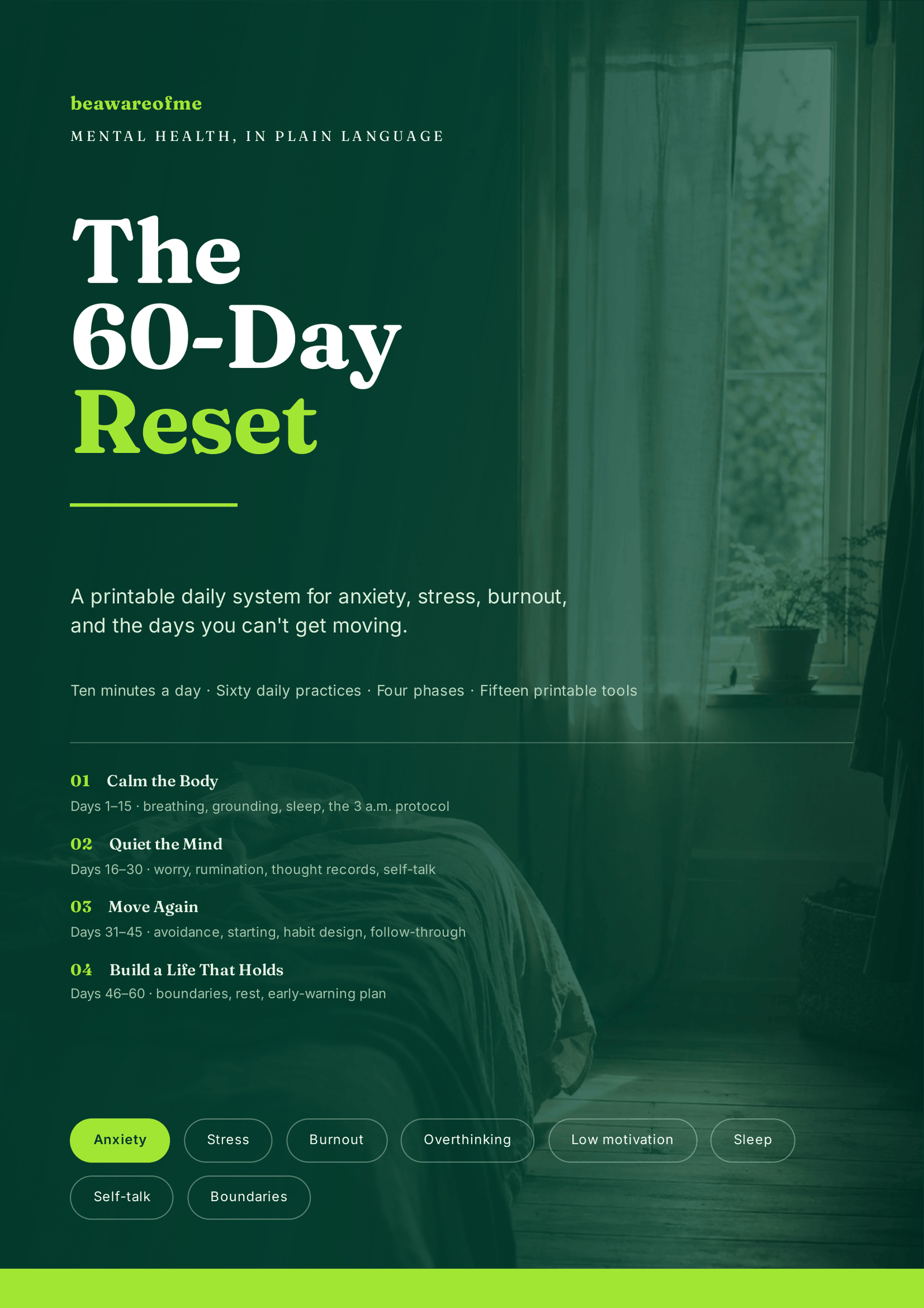
The 60-Day Reset
Everything on this page, sequenced into a printable ten-minute daily practice — 84 pages across anxiety, sleep, overthinking and low motivation, with a two-minute version of every day for the hard ones.
Instant PDF · 60 daily practices · 15 printable tools · Educational, not therapy
- Less cognitive function, which makes it harder to focus and figure things out.
- Weakened immune system, which makes you more likely to get sick.
- Higher risk of heart disease because of high blood pressure and cortisol levels that last for a long time.
- Emotional exhaustion and burnout can make you not want to work anymore.
Why Professionals Are More Likely to Get Sick
Busy professionals have their own stressors that make them feel stressed: heavy workloads, constant connectivity, not enough time off, and the need to do well in competitive settings.
A lot of professionals also internalize stress at work, thinking they have to “push through” even if it hurts their health.
This means that managing stress is not only important for you personally, but also for your job.
Strategy 1: Make Your Physical Health a Top Priority for Resilience

Building a body that can handle stress is one of the best ways to deal with it. Being physically healthy is the basis for being mentally strong.
1.1 Work Out Often
Studies have shown that aerobic exercise, strength training, and even short bursts of movement throughout the day can lower stress hormones and raise levels of mood-regulating neurotransmitters like serotonin and dopamine.
Busy professionals should do “micro workouts” between meetings — short bursts of stretching, brisk walking, or bodyweight exercises that last five to ten minutes.
1.2 Improve Nutrition
Eating a balanced diet keeps your energy stable and makes you less moody. Try to include:
- Whole grains, fruits, and vegetables (complex carbohydrates)
- Lean proteins (fish, legumes, poultry)
- Healthy fats (nuts, seeds, olive oil)
- Hydration: Even a little bit of dehydration can make you feel more stressed.
1.3 Sleep Hygiene

Long-term lack of sleep makes stress responses worse and makes it harder to make decisions.
- Go to bed and wake up at the same time every day.
- Stay away from screens before bed.
- Sleep in a dark, cool room.
Example:
Sheryl, a finance project manager, started walking for 15 minutes during lunch and stopped drinking a lot of caffeine after 2 PM. She noticed more energy and fewer “afternoon crashes” within a few weeks, which helped her stay calm when she had to meet tight deadlines.
Strategy 2: Learn How to Manage Your Time Better to Avoid Too Much Work
Bad time management is a common cause of work-related stress. You can get rid of the frantic “always behind” feeling by learning how to manage your time well.

Understanding why it happens doesn't make it stop.
You can know exactly what your nervous system is doing at 3 a.m. and still be awake at 3 a.m. Reading is where it starts. The Calm Reset Bundle is the part where you do something about it.
See the bundle →2.1 Frameworks for Setting Priorities
The Eisenhower Matrix (urgent vs. important) helps you stay focused on the most important tasks instead of reacting to every notification.
- Important and Urgent: Do it right away.
- Important but Not Urgent: Make a plan.
- Not Important and Urgent: Give it to someone else.
- Not Important and Not Urgent: Get rid of it.
2.2 Blocking Time
Setting aside certain times for deep work, meetings, and breaks keeps tasks from getting in the way of each other and helps you stay focused.
2.3 Group Similar Jobs
Instead of constantly checking your inbox, you can save hours a week and reduce mental fragmentation by answering emails in two 20-minute windows.
Expert Insight:
Cal Newport, a productivity expert, says that working on one task for a long time without stopping not only makes you more productive, but it also lowers cognitive stress by making it easier to switch between tasks.
Strategy 3: Learn How to Control Your Emotions

Even if you live a healthy life and manage your time well, you will still have to deal with stress. Emotional regulation helps you stay calm instead of acting on impulse.
3.1 Being Aware – Meditation
Research from Harvard and UCLA indicates that mindfulness can lower cortisol levels, enhance concentration, and increase emotional resilience. Five to ten minutes a day can help.
3.2 Ways to Breathe
Deep diaphragmatic breathing turns on the parasympathetic nervous system, which stops the fight-or-flight response.
- Breathe in for 4 seconds.
- Hold for 7 seconds.
- Breathe out for 8 seconds.
3.3 Changing the Way You Think
When you have negative thoughts, ask yourself:
“Is there another way to look at this situation?”
This change can help lower the level of stress.
Understanding why it happens doesn't make it stop.
You can know exactly what your nervous system is doing at 3 a.m. and still be awake at 3 a.m. Reading is where it starts. The Calm Reset Bundle is the part where you do something about it.
See the bundle →Case Study:
A high-level marketing executive started taking short breaks to breathe before big presentations. This easy habit not only calmed her nerves, but it also made her delivery better and got the audience more involved.
Strategy 4: Keep Your Boundaries Healthy

Setting limits protects your time, energy, and mental health. Without them, work can take over every part of life.
4.1 Set Limits on Communication
Set “offline” hours so you don’t have to check your email or messages all the time. Make sure your team understands these clearly.
4.2 Learn to Say No
Saying no to things that aren’t necessary gives you more time for important tasks and your own health.
4.3 Keep Your Personal Time Safe
Set aside time for family, hobbies, or rest that you can’t change — and treat it like a work meeting.
Example:
An IT consultant made it a rule not to check emails after 7 PM. At first, she was worried about how her clients would react, but most respected her clarity, and her productivity went up.
Strategy 5: Make Social Support Networks Stronger

Social connections help people deal with stress by giving them a different point of view, emotional support, and a sense of belonging.
5.1 Help from Professionals
When things get tough, mentors, coworkers, and industry groups can help and reassure you.
5.2 Relationships with Others
Having strong friendships and family ties makes you feel stable. Even short visits can make relationships stronger.
5.3 Get Help from an Expert When Necessary
Therapists, counselors, and coaches can give you tools and tips for dealing with stress in a good way.
Research Insight:
The American Psychological Association says that people who have a lot of social support have less health problems related to stress over time.
Strategy 6: Develop a Mindset for Growth

How you think about things affects how you deal with stress. Seeing problems as chances to learn can change stress from a threat to a source of motivation.
6.1 Accept Challenges
Instead of avoiding hard projects, see them as chances to learn new things and become stronger.
6.2 Learn from Your Mistakes
Don’t think of mistakes as personal failures; think of them as feedback.
6.3 Learning All the Time
Continual professional development helps you stay flexible and sure of yourself.
Example:
A lawyer who had a lot of cases due soon started looking at them as chances to improve her efficiency. This change made people less anxious and happier at work.
Strategy 7: Include Recovery Time Every Day – Rituals
Recovery isn’t just about taking time off; it’s also about daily habits that help you feel better and think more clearly.
7.1 Recovery in Action
Yoga or walking, which are both light forms of exercise, can help you relax.
7.2 Ways to Be Creative
You can take a break from analytical work by doing art, music, or writing.
7.3 Being Outside
Spending time outside lowers blood pressure and stress hormones.
Quick Tip for Busy People:
Getting some fresh air for just 10 minutes between meetings can really help you feel better and stay focused.
Putting It All Together: A Plan for Managing Stress That Will Last

Here are some ideas for how you could use these strategies in your daily and weekly life:
In the morning:
- Meditation for 10 minutes of mindfulness
- A healthy breakfast with whole grains and protein
- Use the Eisenhower Matrix to look over your daily tasks
On the job:
- Set aside time for deep work sessions
- Walk or stretch at noon
- Responses to multiple emails
Night:
- Offline hours start at 7 PM
- Dinner with friends or family
- A quick thought or writing in a journal before bed
Stress can be handled better when you use these timeless strategies, even in high-pressure jobs.
Last Thoughts
Stress management for busy professionals doesn’t mean getting rid of problems; it means building the strength and systems to deal with them well.
The ideas in this article, which range from managing your time and physical health to controlling your emotions and getting help from others, are based on scientific research and real-life success stories.
They aren’t based on short-lived trends in the workplace or changes in technology, so they’ll still be useful for years to come.
Begin with one or two strategies, make them a habit, and then add more over time.
What happened? More work done, better health, and a career that will last you a long time.

Quiet the noise — without burning your phone in a field.
Get Beat Information Overload free, plus the occasional calm, no-hype note from me.