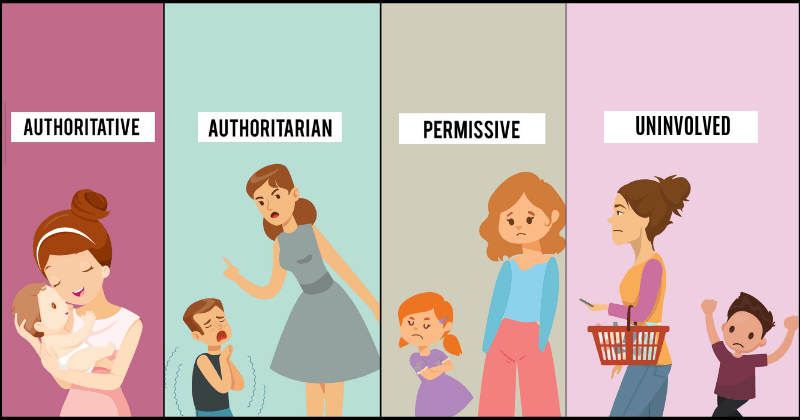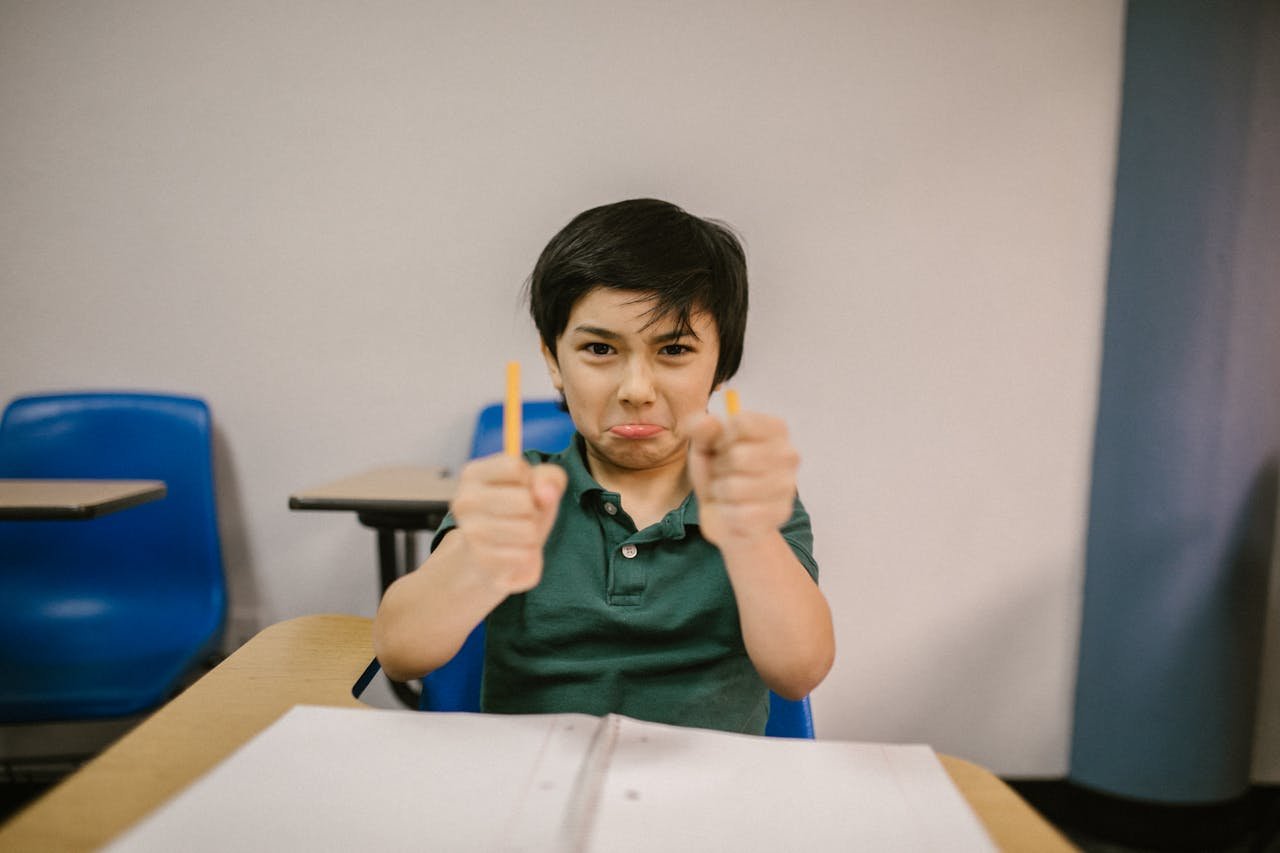

People often say that being a parent is one of the most rewarding but also one of the hardest things to do in life. But for parents who are anxious, the responsibilities can be too much, too tiring, and sometimes even too lonely. Being an anxious parent doesn’t mean you’re a failure or not good enough; it just means you’re dealing with the difficulties of raising kids while also taking care of your mental health. With the right information, help, and plans, anxious parents can stop harmful patterns, boost their own confidence, and make safe spaces where both kids and caregivers can thrive.

It's rarely a motivation problem. It's five apps and no single page.
Habits in one place, money in another, notes in a third, and nowhere that shows you how the month is actually going. The Digital Life Planner is one spreadsheet that holds all of it and does the arithmetic while you get on with your life.
See how it works →This guide has long-term strategies, expert advice, and useful tools to help parents deal with their own anxiety while raising kids who are emotionally healthy and strong.
How to Understand Parenting When You’re Anxious

What Does It Mean to Be a Parent with Anxiety?
Parenting with anxiety means raising kids while dealing with symptoms of generalized anxiety disorder (GAD), panic disorder, social anxiety, or situational anxiety that comes up when you’re a parent. Millions of parents go through this every day, so it’s not a weakness. The National Institute of Mental Health (NIMH) says that almost one in five adults has an anxiety disorder every year, and a lot of them are parents.
Some of the signs are:
- Constantly worrying about your child’s health, safety, or future.
- Parents who have trouble letting go of their child (separation anxiety).
- Afraid of making mistakes or not being a “good enough” parent.
- Physical signs include a fast heartbeat, tension, or trouble sleeping.
- Not going to social events, school activities, or other parenting duties because of anxiety.
The first step to breaking the cycle of stress and learning to parent with confidence is to understand these signs.
The Link Between Parental Anxiety and Kids
Kids pay close attention to things. The American Psychological Association (APA) has done research that shows that kids whose parents are anxious are more likely to become anxious themselves. This doesn’t mean it will happen, but it shows how important it is to be aware and offer help before it happens.

Most of what you read this week will be gone by Thursday.
That isn't a discipline problem. It's what happens to information you never write down. Beat Information Overload is a free 35-page workbook that turns reading into something that stays.
Get the free workbook No cost · unsubscribe in one clickParental anxiety can affect children in the following ways:
- Modeling behaviors: Kids might copy their parents’ worrying or avoiding behavior.
- Attachment styles: Anxiety can cause parents to be too protective, which can make it hard for kids to be independent.
- Stress levels in the family: Stress in the home can have an effect on emotional growth.
But it is possible to break these patterns. Even in homes where anxiety is present, children can learn how to be strong, confident, and in control of their emotions with consistent strategies.
Common Problems Parents Face When They Have Anxiety

- Thinking too much about everyday choices: Parents who are worried often feel stuck when it comes to making everyday decisions, like picking schools or planning meals.
- Fear of Being Judged: A lot of anxious parents worry that other people (teachers, family, and friends) are judging their parenting.
- Hard to Set Limits: Parents may say “yes” too often to avoid conflict because they are anxious, which can lead to burnout.
- Signs of Physical Illness Getting in the Way of Parenting: When you’re tired, stressed, or panicking, everyday tasks can be harder.
- Finding a Balance Between Work, Parenting, and Mental Health: Parents often feel anxious when they have too many things to do at once.
When you see these problems, you can find ways to solve them that will last.
Putting an End to the Cycle of Anxious Parenting

To break cycles of anxiety, you need to be aware of yourself, stick to healthy habits, and show kids how to cope in healthier ways. Here are some strategies that have been proven to work over time:
1. Accept and Make Your Anxiety Normal
Hiding or denying anxiety only makes it stronger. Talking to kids about their feelings in ways that are appropriate for their age teaches them that mental health is a normal part of life, not a sign of weakness.
Most of what you read this week will be gone by Thursday.
That isn't a discipline problem. It's what happens to information you never write down. Beat Information Overload is a free 35-page workbook that turns reading into something that stays.
Get the free workbook No cost · unsubscribe in one clickFor example:
“Sometimes I worry a lot, and I’m learning how to relax.” It’s okay to ask for help because everyone has feelings.
2. Be Kind to Yourself
A lot of worried parents blame themselves for having a hard time. Being kind to yourself can help you feel less guilty and stop you from being hard on your kids.
Affirmations like:
“I am doing my best, and that is enough” are a good way to help.
3. Stop Thinking About Bad Things

When anxiety makes small problems seem huge (“My child is late for school—what if something terrible happened?”), stop and question the thought with facts. Thought reframing and other cognitive-behavioral therapy (CBT) techniques work very well.
4. Don’t Be Too Protective
It’s normal to want to protect your kids, but too much control can make them less independent. Let them take small, age-appropriate risks, like letting them work out small problems or make decisions.
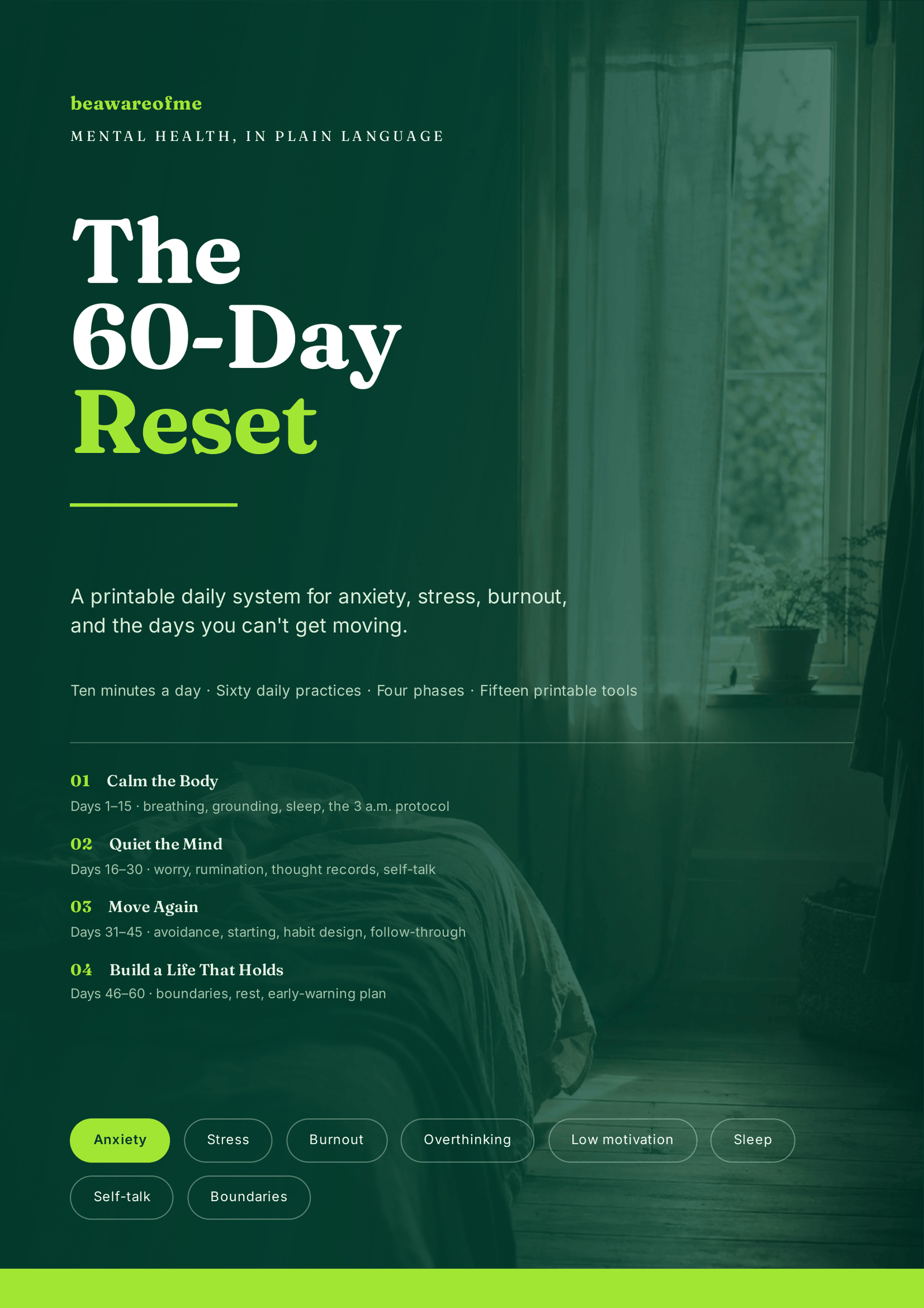
The 60-Day Reset
Everything on this page, sequenced into a printable ten-minute daily practice — 84 pages across anxiety, sleep, overthinking and low motivation, with a two-minute version of every day for the hard ones.
Instant PDF · 60 daily practices · 15 printable tools · Educational, not therapy
5. Be a Parent Right Now
Instead of always worrying about the future, try being present during simple things like reading bedtime stories, eating together, or going for a walk. These little things make strong, lasting connections.
Advice from Experts for Parents Who Are Worried

Therapists and parenting experts say that a mix of therapeutic approaches and changes to your lifestyle is best:
Different Types of Therapy
- Cognitive Behavioral Therapy (CBT): Helps parents deal with their irrational fears and learn to think in healthier ways.
- Acceptance and Commitment Therapy (ACT): Teaches people to accept their feelings instead of fighting them.
- Family Therapy: Helps parents and kids talk to each other more openly.
Useful Tools
- Writing down anxious thoughts and looking for patterns.
- Doing grounding exercises, like deep breathing or the 5-4-3-2-1 sensory technique.
- Making structured routines to lower stress and make things more predictable.
Help from Professionals
Getting help from therapists, counselors, or anxiety support groups can make things seem more normal and give each family the tools they need.
Long-Term Ways to Boost Your Confidence as a Parent

Being confident doesn’t mean never feeling anxious; it means learning how to be a parent even when you’re anxious. These are some tips that will always work, no matter what the latest parenting trend is:
1. Set Up Routines That People Can Count On
Kids do better when things are the same, and parents with anxiety do better when things are stable. To reduce stress, make sure you wake up, eat, and go to bed at the same times every day.
2. Put Self-Care First Without Feeling Bad About It
A parent who is well-rested and mentally balanced is better than one who is always running on empty. Taking care of yourself is not selfish; it’s necessary. This could include:
- Walks every day for a short time
- Meditation or prayer
- Reading or doing creative things
- Good sleep hygiene
3. Make a Network of People Who Can Help You
You shouldn’t have to do it all by yourself as a parent. Reach out to friends, family, or local parent groups who can help you. Online forums and local support groups can also be very helpful.
4. Teach How to Read Emotions
Help kids name their feelings by saying things like, “You seem angry. Do you want to talk about it?” Kids are less scared of feelings when they know what they are.
5. Be a “Good Enough” Parent
Psychologist Donald Winnicott came up with the idea of the “good enough parent,” which is someone who loves, structures, and supports their child without trying to be perfect. This idea is especially helpful for parents who are worried about making mistakes all the time.
Most of what you read this week will be gone by Thursday.
That isn't a discipline problem. It's what happens to information you never write down. Beat Information Overload is a free 35-page workbook that turns reading into something that stays.
Get the free workbook No cost · unsubscribe in one clickReal-Life Examples of Parenting While Anxious

Case Study 1: Maria’s Overprotection
Maria was always worried that her son would get hurt while playing. She learned to take a step back slowly with therapy. Maria is more relaxed now that she is focusing on small, realistic safety steps. Her son enjoys playing outside.
Case Study 2: David’s Fear of Being Judged
David didn’t go to parent-teacher conferences because he was afraid of talking to people. He started going after practicing CBT techniques and bringing a friend who was supportive. He realized that most parents had the same worries.
These examples show that anxiety is real, but it doesn’t have to control how you parent.
Tips for Parents Who Are Always Worried
Here are some useful, timeless tips that can help you be a better parent every day:
- Get Ready for Changes: Before changes like bedtime or leaving the park, give kids (and yourself) a heads up. Knowing what will happen lowers stress.
- Use Schedules with Pictures: Visual aids help kids stick to their routines and give parents a sense of order.
- Don’t Read Too Much Bad News: Parents who are worried often spiral after reading upsetting news. Less news can help ease fear.
- Celebrate Little Victories: Did you stay calm when your child threw a fit? Did your kid do something new? Accept progress instead of perfection.
- Talk to Each Other: Tell kids it’s okay to ask questions and talk about their fears. This helps people trust each other and be strong.
Long-Term View of Mental Health in Parenting

It’s not about getting rid of anxiety when you’re a parent; it’s about managing it over the long term and being strong. This is what matters most:
- Long-term Strategies: Routines, self-care, and therapy are better than quick fixes.
- Generational Healing: Stopping cycles of anxious parenting stops patterns from being passed down to future generations.
- Role Modeling: Teaching kids how to deal with stress gives them skills they can use for the rest of their lives.
Help for Parents with Anxiety
Parents should never feel like they have to deal with anxiety on their own. There are many lasting sources of help:
- Professional Therapy: Psychologists or counselors who are licensed and work with anxiety and family issues.
- Parent Support Groups: In-person or online groups help people feel less alone.
- Books: The Anxiety and Phobia Workbook by Edmund Bourne gives helpful advice.
- Hotlines and Helplines: When you’re really stressed out, getting help right away can stop things from getting worse.
Creating a Resilient Family Culture

Parents can still make their home a place of resilience, even when they’re feeling anxious:

There's a version of this that asks you questions back.
An article can tell you what burnout is. A workbook makes you locate where you actually are in it, on paper, in your own handwriting. That's The Burnout Fix — ninety-odd pages of it.
Look at the workbook →- Encourage children to solve problems instead of avoiding them.
- Show them how to breathe calmly when things get stressful.
- Share stories about overcoming challenges to show that problems are part of growing up.
- Prioritize family bonding activities like meals, game nights, and hobbies.
A strong family culture makes sure that both kids and parents feel supported, understood, and empowered.
Conclusion: It’s Possible to Be a Parent Even When You’re Anxious
Being a parent with anxiety doesn’t mean getting rid of all your fears or trying to have perfect control. It means recognizing the problem, breaking bad habits, and building confidence one step at a time. Parents who are anxious can raise happy, healthy kids by being kind to themselves, asking for help, and focusing on long-term strategies that work.
By using tips for anxious parents, putting mental health first in parenting, and getting reliable anxiety support for parents, caregivers can make homes that are full of understanding, strength, and confidence.
Every little thing that helps the parent find balance helps the whole family, and that effect can last for generations.

Quiet the noise — without burning your phone in a field.
Get Beat Information Overload free, plus the occasional calm, no-hype note from me.